

A Young Designer’s ‘Green Steel’
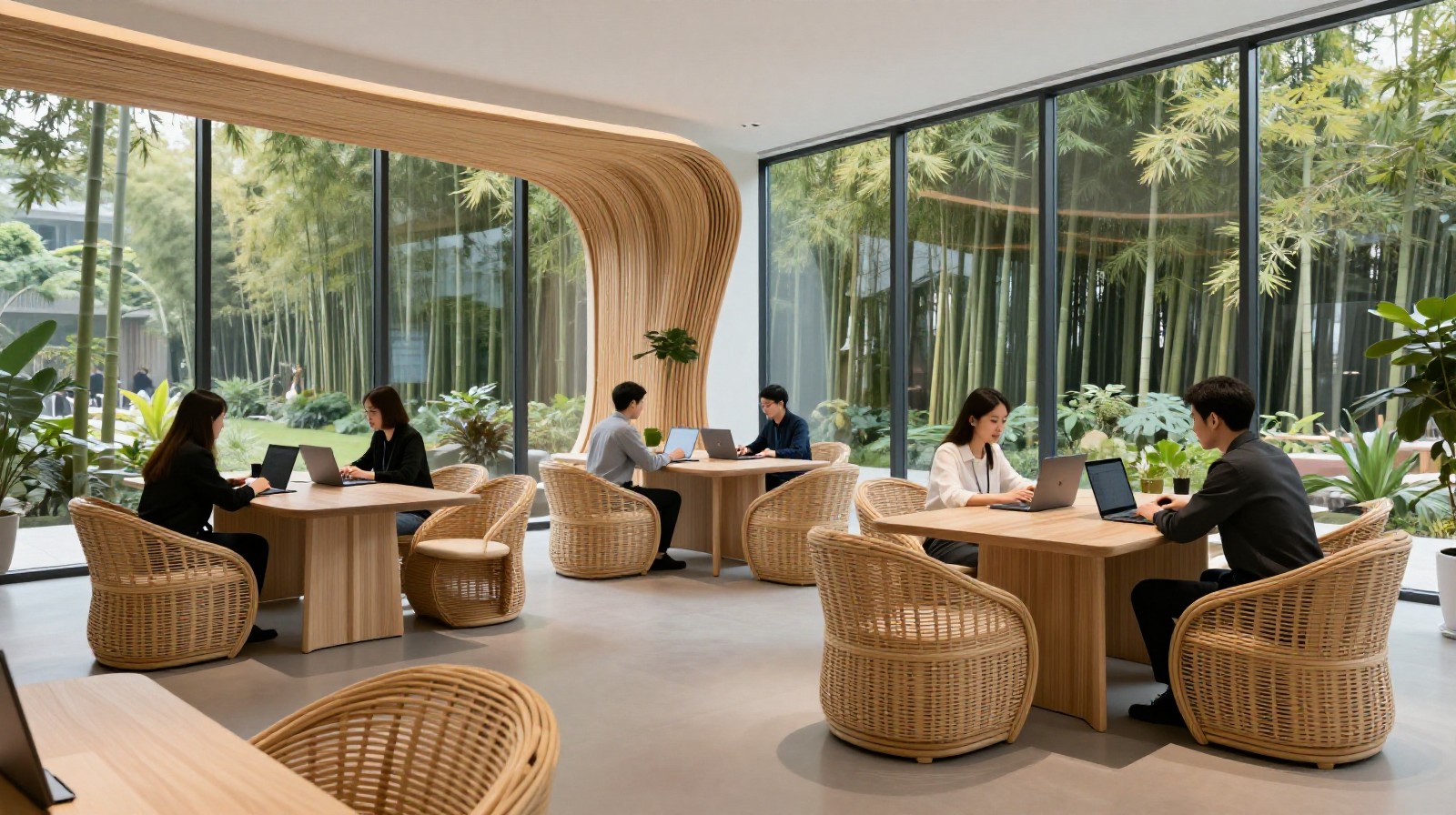
Walk into a co-working space in Chengdu, and you won’t find the usual plastic or steel furniture. Instead, you’ll see chairs with intricate woven backs that look like they were pulled from a forest floor, yet feel as sturdy as metal. This is the work of Lin Hao, 28, a product designer who treats bamboo not as a fragile relic of the past, but as the ‘green steel’ of today’s sustainable architecture.
Lin and his generation are rewriting the rules. For decades, Western design schools taught that modernity meant glass, concrete, and synthetic polymers. Bamboo was often relegated to souvenirs or rustic garden decor. But Lin sees a different future: one where this fast-growing grass replaces plastic in everything from smartphone cases to high-rise facades.
From Hands to Algorithms
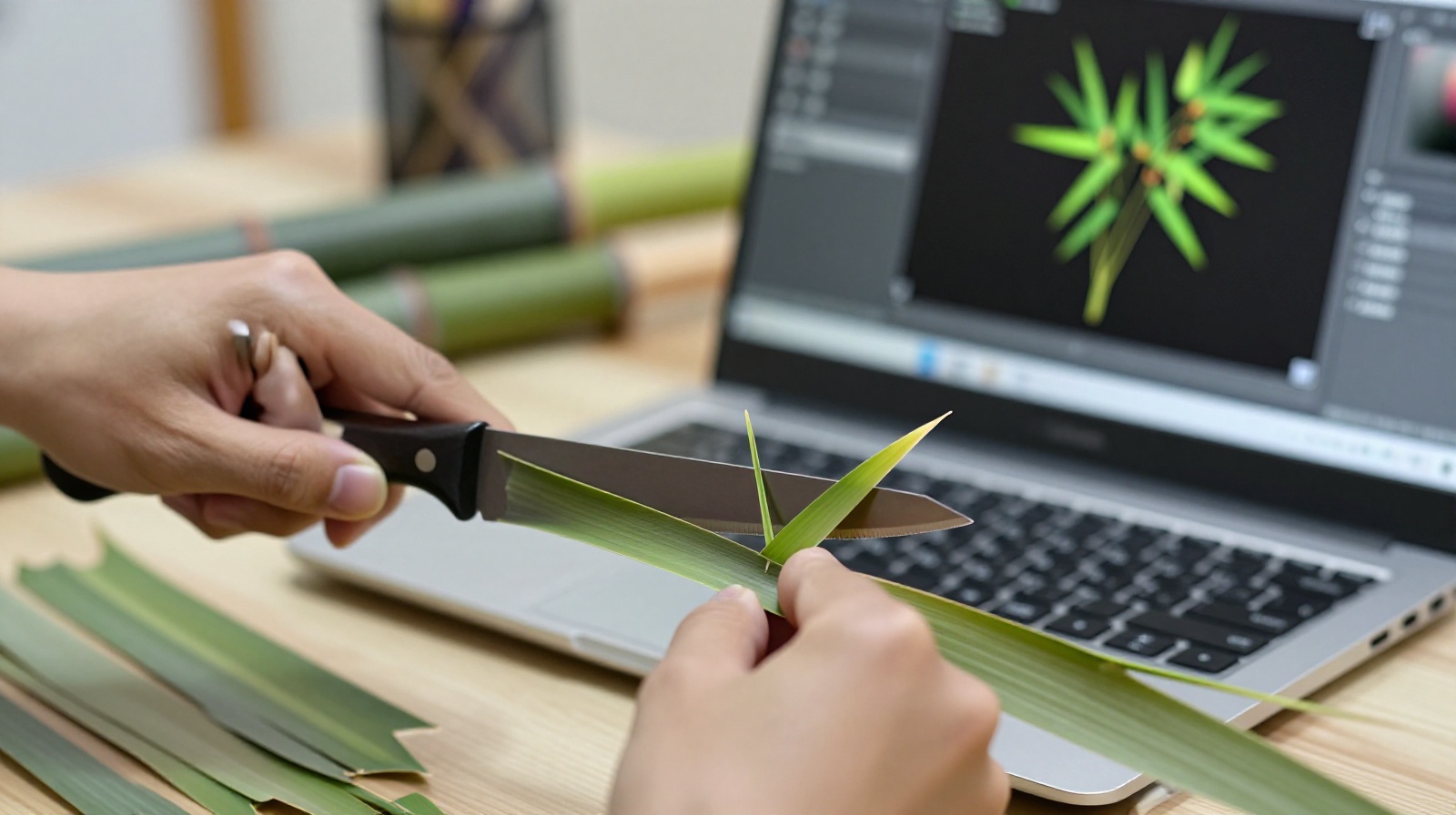
The magic happens in the workshop, not just on the drawing board. Follow the hands of Master Weaver Zhang Liang, whose fingers move with a speed that seems impossible for such delicate work. He isn’t just copying old patterns; he is feeding them into AI-assisted cutting machines.
Traditional bamboo weaving required years of training to master the tension and curvature. Today, 3D scanning technology allows designers to map complex geometries before a single strip is split. Zhang can now create interlocking hexagons or flowing curves that would have snapped under their own weight in previous centuries. The result? Structures that are lighter than aluminum but stronger than many plastics.
This fusion of ancient rhythm and digital precision has turned bamboo into a high-tech material. It’s no longer about ‘craft’ in the folk art sense; it’s about engineering with nature.
From Market Stalls to Global Showrooms
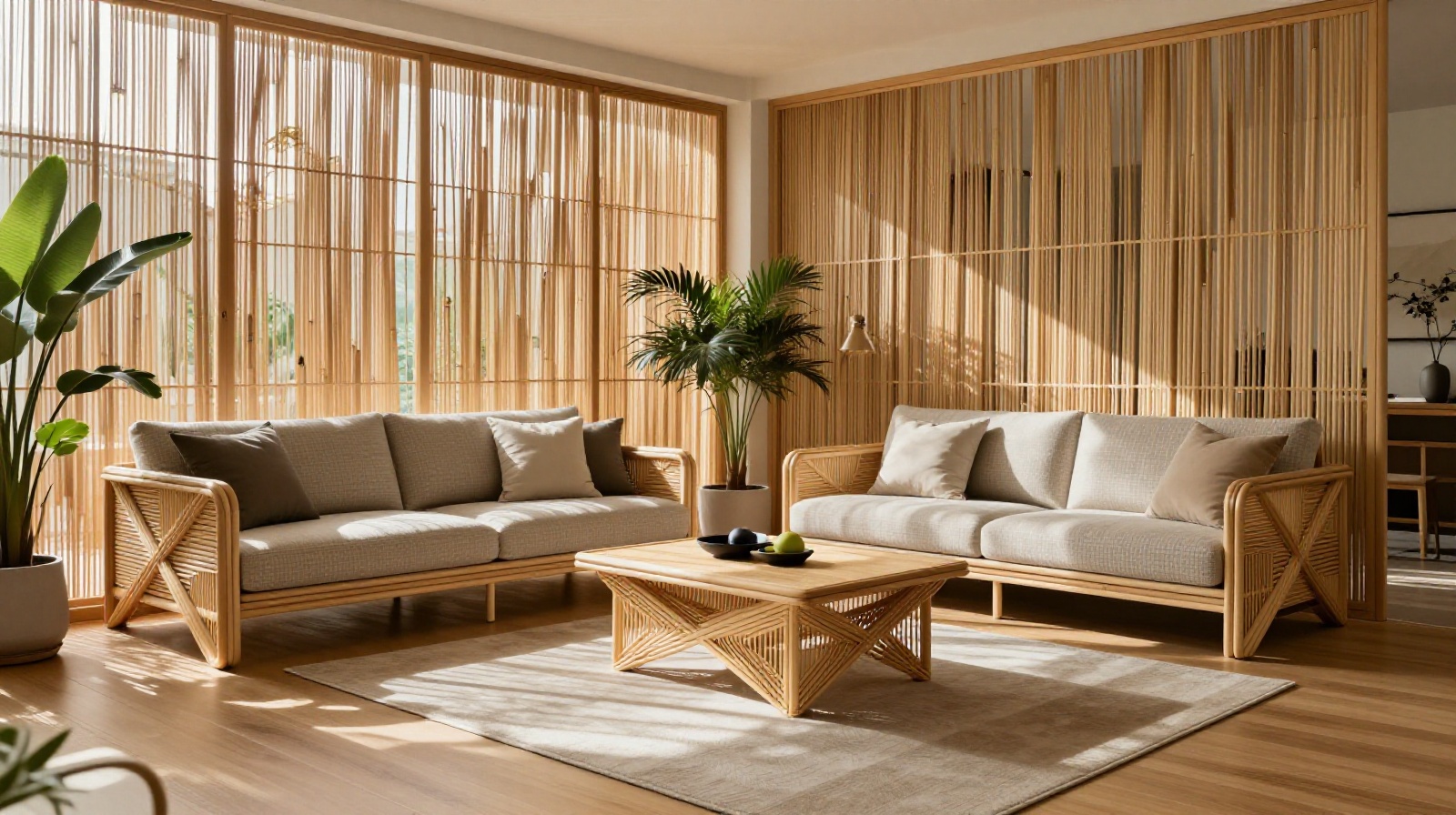
The shift isn’t just happening in studios; it’s changing what ends up in your home. Walk through a trendy café in Shanghai or a boutique hotel in Chengdu, and you’ll find lampshades, room dividers, and even flooring made entirely of woven bamboo.
These aren’t cheap imports from the past. They are high-end products finding their way into minimalist apartments in New York and London. Designers in these cities are ditching plastic for the organic warmth of bamboo, driven by a global demand for eco-friendly lifestyles. The material is biodegradable, carbon-negative during growth, and incredibly durable when treated correctly.
The journey from local market stalls to global luxury showrooms shows how China’s supply chain has evolved. A simple strip of bamboo harvested in Sichuan can now be engineered in Chengdu and sold as a statement piece in Paris within weeks.
Gen-Z: The Cool Factor
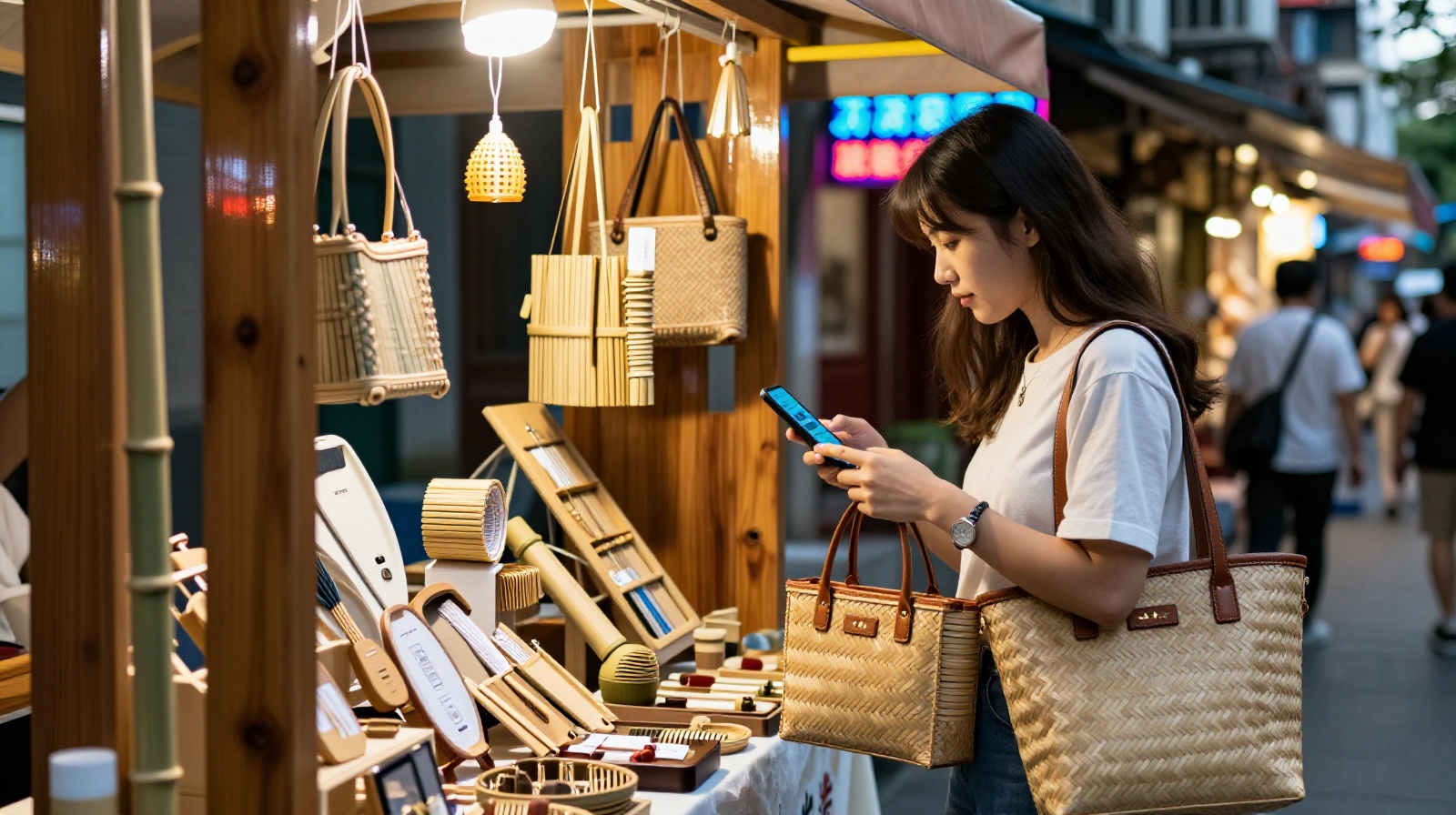
What makes this revival stick? For the younger generation, it’s not just about saving the planet; it’s about style. In university design studios across China, you’ll find students treating bamboo weaving as a cool, conscious lifestyle statement.
‘My grandmother taught me to weave at seven,’ says Chen Wei, a 24-year-old fashion student in Hangzhou. ‘But today, I’m not making fans or baskets. I’m making avant-garde handbags and sneakers that look like they belong in the year 3000. It’s our heritage, but it feels futuristic.’
Social media platforms are buzzing with #BambooDesign content. Young creators show off their latest projects—wearable art made of split bamboo, eco-friendly phone cases, and even furniture that glows when light passes through the weave. They aren’t just preserving culture; they are making it relevant again.

The Future Looks Like the Past
China’s ancient bamboo weaving is no longer a niche craft confined to rural villages. It has become a global solution to the modern waste crisis. By reimagining this material with cutting-edge technology, young designers are proving that sustainability doesn’t mean sacrificing aesthetics.
As we face a world drowning in plastic and concrete, China’s answer might be surprisingly simple: go back to the roots. But as Lin Hao puts it, ‘The roots aren’t just growing; they are evolving into something stronger.’