

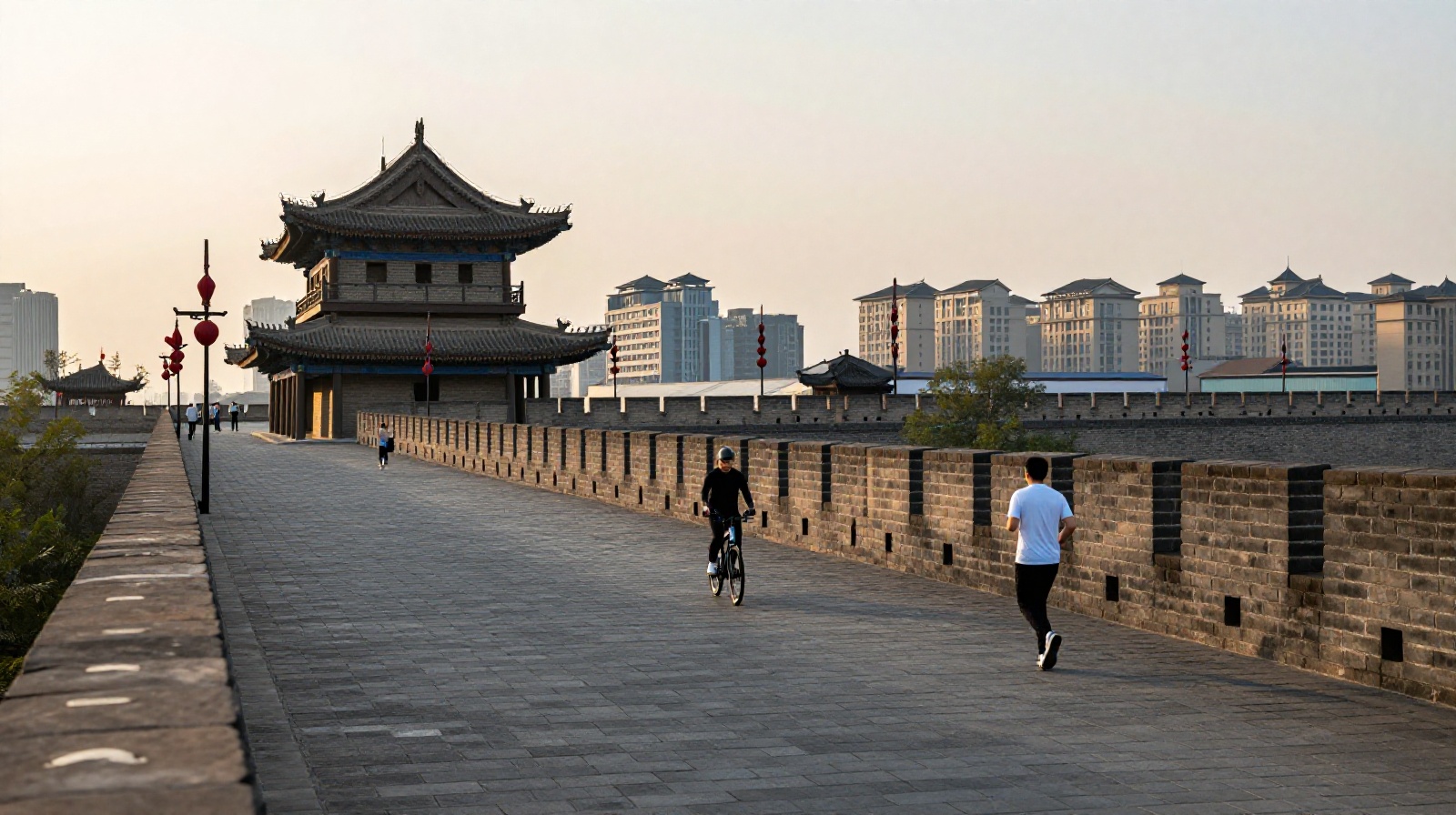
A Morning Run on a Two-Thousand-Year-Old Wall
At 6:30 AM, the mist still clings to the grassy ramparts of Xi’an’s ancient city wall. But the scene isn’t one of silent ruins waiting for archaeologists. It is alive with joggers in neon tracksuits, elderly tai chi practitioners moving in slow motion, and delivery drivers zipping by on electric scooters. This 14-kilometer perimeter, built during the Ming Dynasty to defend against invaders, has become a central artery for modern urban life.
For many visitors from abroad, China’s heritage sites are imagined as static displays—dusty halls filled with bronze vessels and stone tablets. But in Shaanxi province, the narrative is shifting. The goal isn’t merely to freeze history in amber; it is to make these monuments breathe again. Through a blend of rigorous conservation technology and creative public use, Xi’an is proving that ancient sites can be the beating heart of a futuristic city.
Technology as a Bridge, Not a Barrier
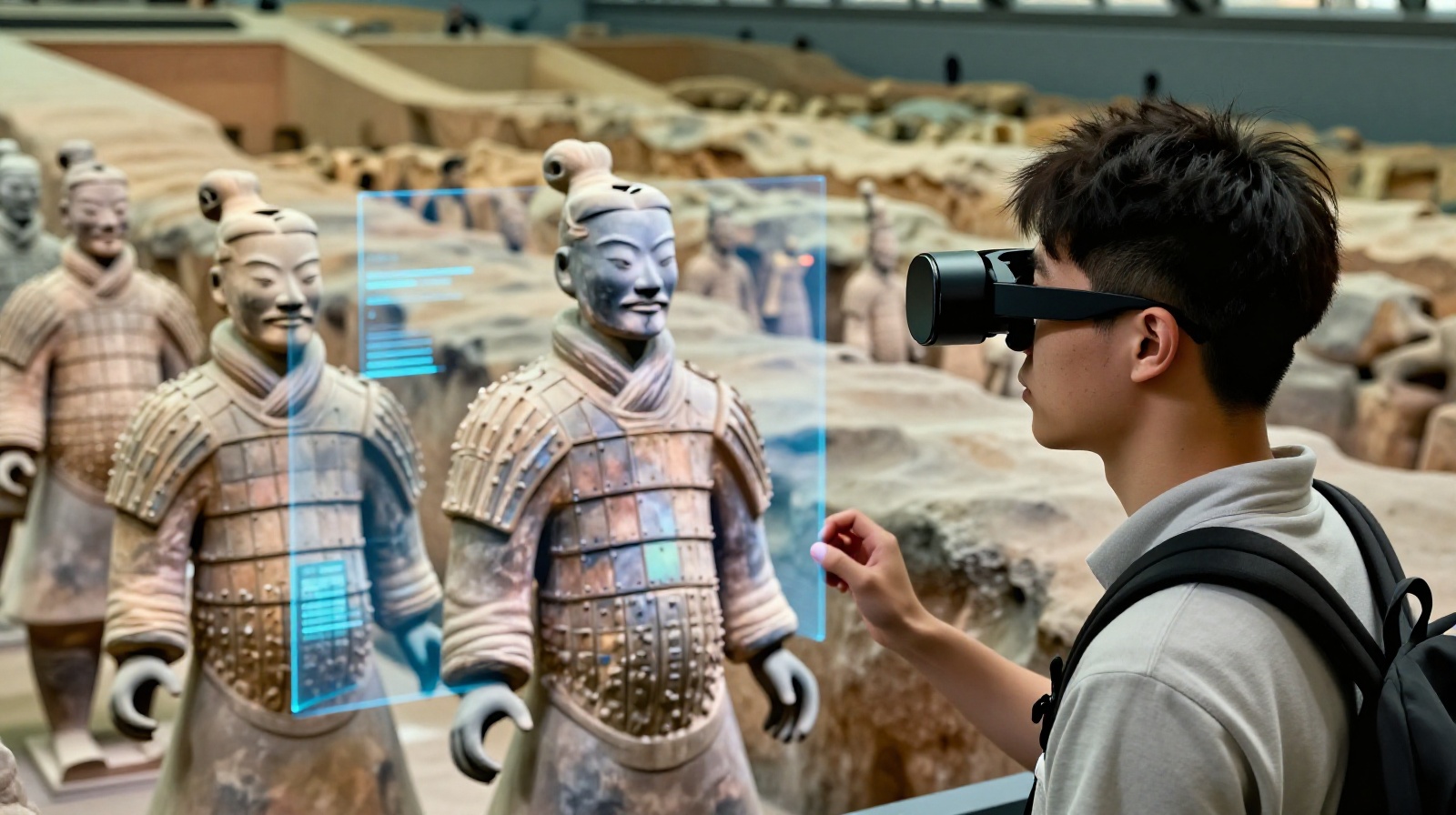
The most visible change is how technology has dissolved the barrier between the viewer and the artifact. At the Terracotta Army Museum, just outside Xi’an, visitors no longer simply stare at rows of silent clay soldiers from behind ropes.
Here, augmented reality (AR) glasses allow users to visualize the warriors in their original splendor—colorful armor, vibrant banners, and horses with flesh-and-blood details. A tablet app can reconstruct the excavation process in real-time, showing how a single potter’s fingerprint was preserved for millennia. This isn’t about replacing the ancient; it is about layering new understanding on top of the old.
Local guides note that this approach changes the demographic entirely. “Young people who usually find museums boring are now coming,” says Li Wei, a guide at the site. “They come to take photos for their social media, but they stay to learn. The technology makes history feel immediate and personal.”
From Monuments to Neighborhood Living Rooms
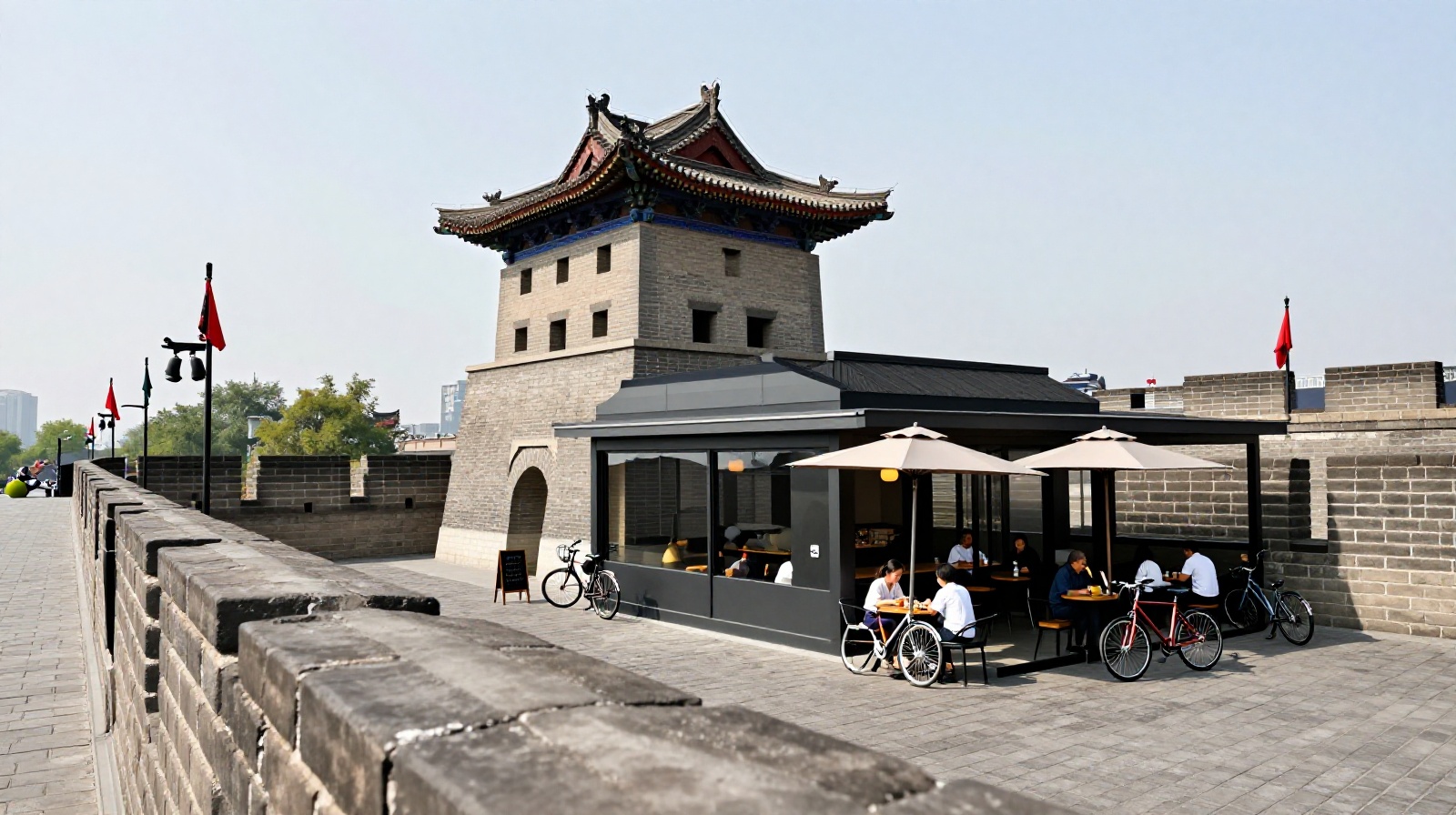
The transformation extends beyond the major tourist traps into the fabric of daily life. The 14-meter-high city wall, once a strict military boundary, is now a multi-purpose public park.
Cycling lanes run along the top, connecting ancient watchtowers with modern bike-sharing stations. Inside the watchtowers, which were once used to store grain or weapons, you will now find small cafes serving local tea, art galleries displaying contemporary Shaanxi artists, and even co-working spaces for digital nomads.
This adaptive reuse strategy is critical for sustainability. If a historical site only serves as a ticketed attraction, it remains isolated from the community. By turning these structures into functional spaces where locals eat, work, and exercise, the city ensures that residents feel a sense of ownership. When people protect what they use, preservation becomes natural rather than enforced.
The Challenge of Balance
However, this vision is not without its friction points. As Xi’an attracts millions of visitors annually, overtourism threatens to disrupt the very communities that keep these sites alive.
In the narrow alleys surrounding the Muslim Quarter and near the Drum Tower, rising commercial rents have pushed out traditional family-run noodle shops, replaced by souvenir stalls selling generic trinkets. The city administration is now grappling with strict zoning laws to limit new chain stores in historic zones and subsidizing local artisans.
The future of Shaanxi’s heritage lies in this delicate negotiation: how to welcome the world without losing the soul of the place. It requires constant vigilance from planners, tourists who choose respectful engagement over selfie-stick dominance, and a community that feels empowered to shape its own narrative.