

The Smell of Stir-Fry and the Hum of Robots
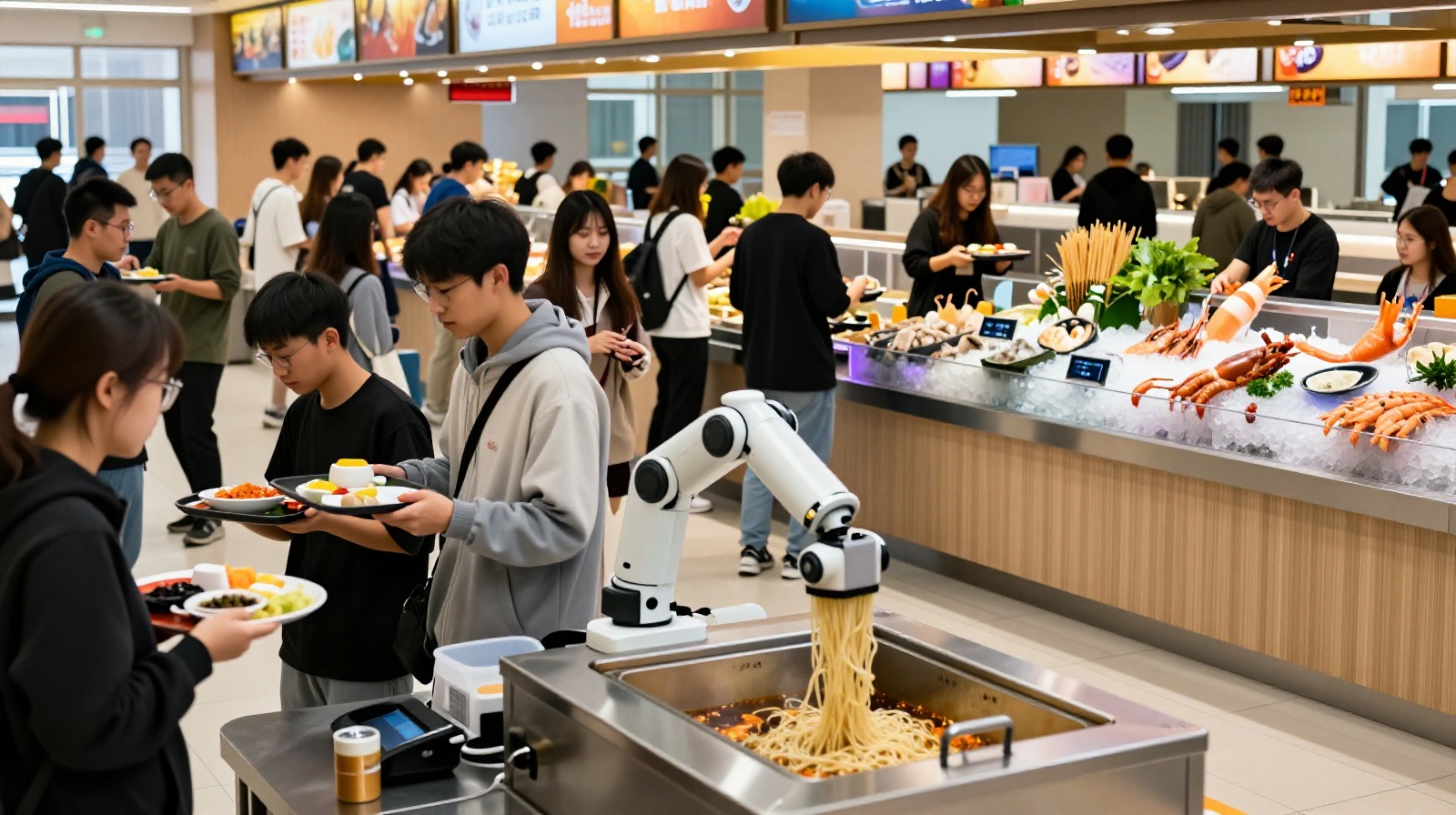
It’s 11:30 AM on a Tuesday at Nanjing University. The air is thick with the scent of garlic, chili oil, and steamed buns. Students don’t just rush to the canteen; they navigate it like a shopping mall. On one side, a stall sells spicy Sichuan small-plate stir-fries for 12 yuan ($1.70). Ten meters away, another offers a seafood buffet where fresh crabs and prawns are laid out on ice.
For international observers used to the idea of university food as an afterthought, this diversity is startling. In China’s top universities, the canteen has evolved from a basic welfare facility into a fiercely competitive marketplace. It’s not just about feeding students; it’s about survival for vendors and satisfaction for the consumer.
From Canteen to Culinary District
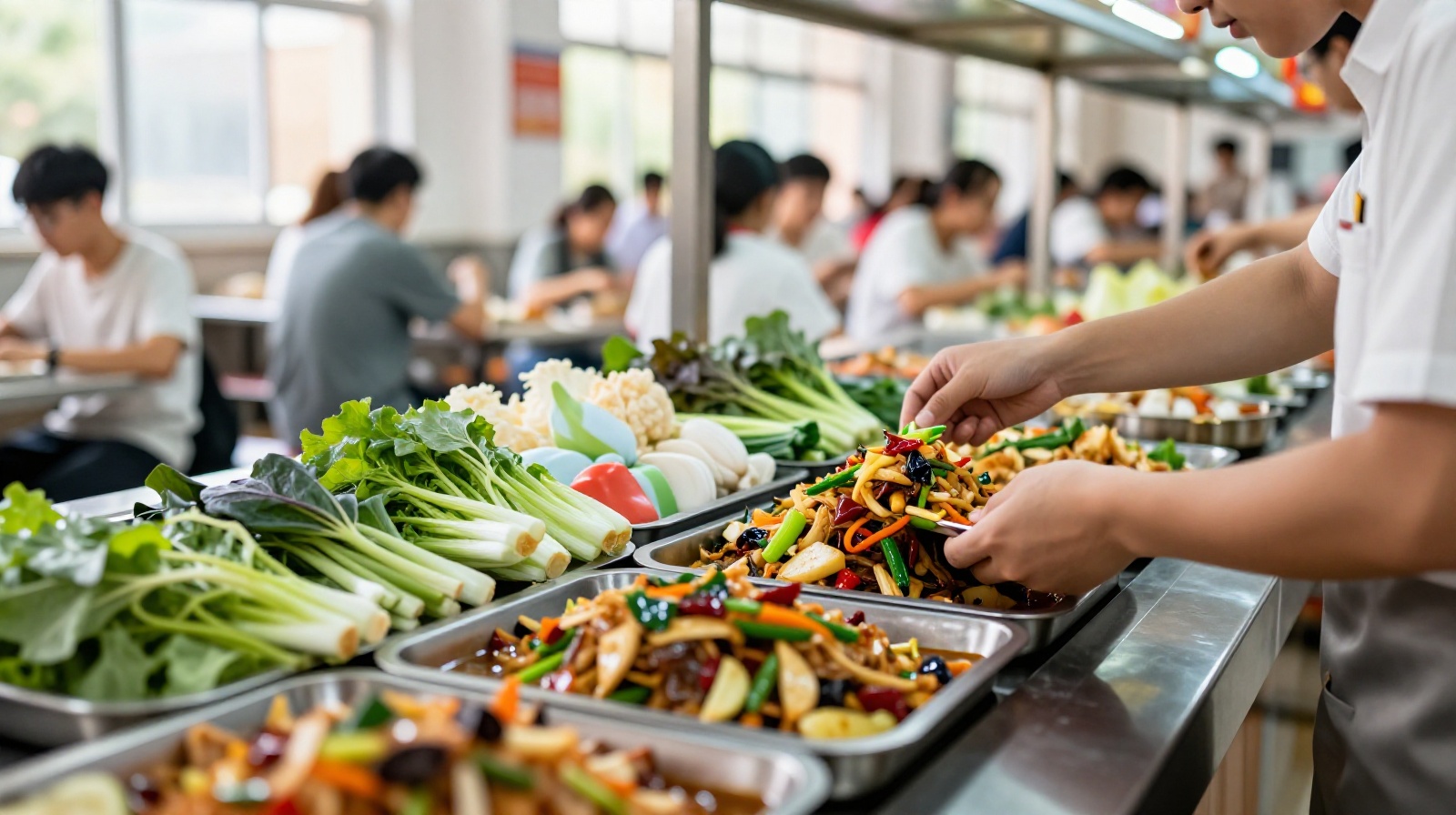
The term “juan” (involution) usually describes intense, often futile competition. But in Chinese university cafeterias, this competition has yielded tangible benefits for students. Five years ago, a meal likely cost 5-8 yuan and tasted the same everywhere. Today, price points range wildly.
At Peking University, I saw a stall selling braised pork rice for just 10 yuan. But in the “premium” zone of the same cafeteria, a student was selecting oysters from a chilled display to go with his lunch. Prices here can reach 40-50 yuan ($6-$7) for a high-end set meal.
This shift isn’t accidental. Universities are under pressure to improve living standards. Many now outsource canteen operations to private companies that compete for contracts based on food quality and variety, not just price. The result is a landscape where a student can choose between a cheap bowl of noodles or a full seafood feast without leaving campus.
The Rise of the Robot Chef
Technology has also found its way onto the serving line. In some universities, like those in Shenzhen and Hangzhou, you won’t just see human cooks; you’ll see arms moving with mechanical precision.
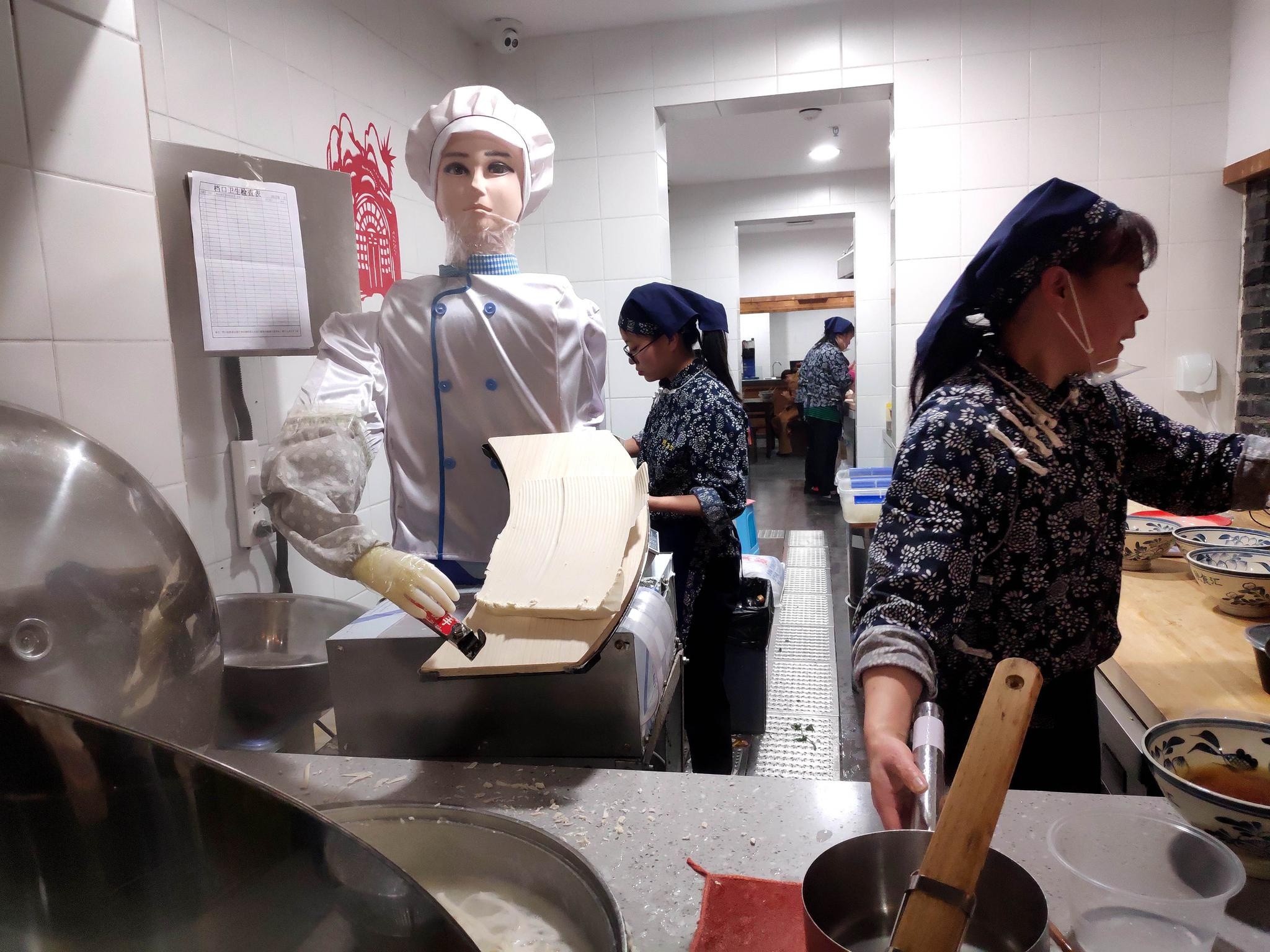
In a canteen at Zhejiang University of Technology, I watched an automated cooking station prepare noodles. A robotic arm grabbed dough, flattened it, and sliced it into uniform strips before dropping them into boiling water. Then, a second robot tossed the sauce. The entire process took less than three minutes.
Is this just for show? No. These machines handle repetitive tasks—frying potatoes, cooking eggs, or slicing meat—reducing labor costs and ensuring hygiene. However, they haven’t replaced human chefs entirely. Complex dishes like stir-fried vegetables still require the “wok hei” (breath of the wok) that only a human can provide. The technology is currently used to standardize staple foods while humans handle the variety.
Real Voices, Real Prices
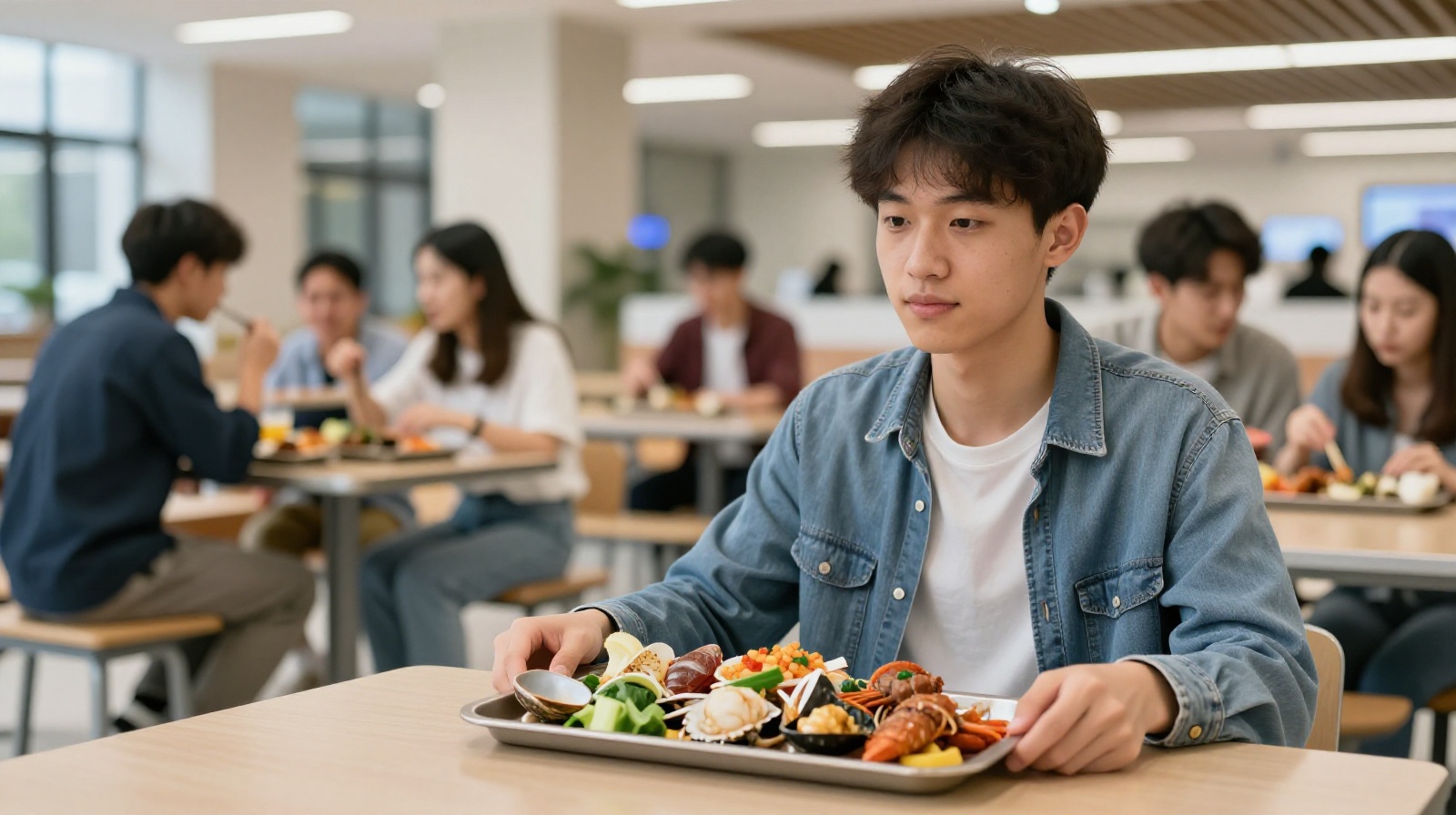
To understand if this is hype or reality, I asked students about their spending habits. Li Wei, a junior majoring in computer science, told me he spends about 15 yuan ($2.10) per meal on average.
“Sometimes I get the cheap noodles for 6 yuan,” Li said, holding his tray. “But last week, my friends and I went to the seafood section. We ordered a crab dish for 35 yuan each. It was fresh, not frozen. On campus, it felt like a treat, but still cheaper than off-campus restaurants.”
Another student, Zhang Min, noted the pressure on vendors. “The canteen is like a market,” she explained. “If the food isn’t good or the price is too high, people just walk away to the next stall. The competition forces them to keep prices low while improving quality.”
Why This Matters
The evolution of university cafeterias reflects broader changes in China’s economy and social structure. It signals a generation that values experience over mere survival. It shows how private capital and technology are being integrated into public services to meet rising consumer expectations.
For the average student, this means their daily life is more comfortable than it was for previous generations. The canteen is no longer a place of last resort; it’s a hub of choice. Whether you want a 5-yuan bowl of rice or a 40-yuan seafood platter, the infrastructure supports both.