

The Hum of Servers in the Clouds
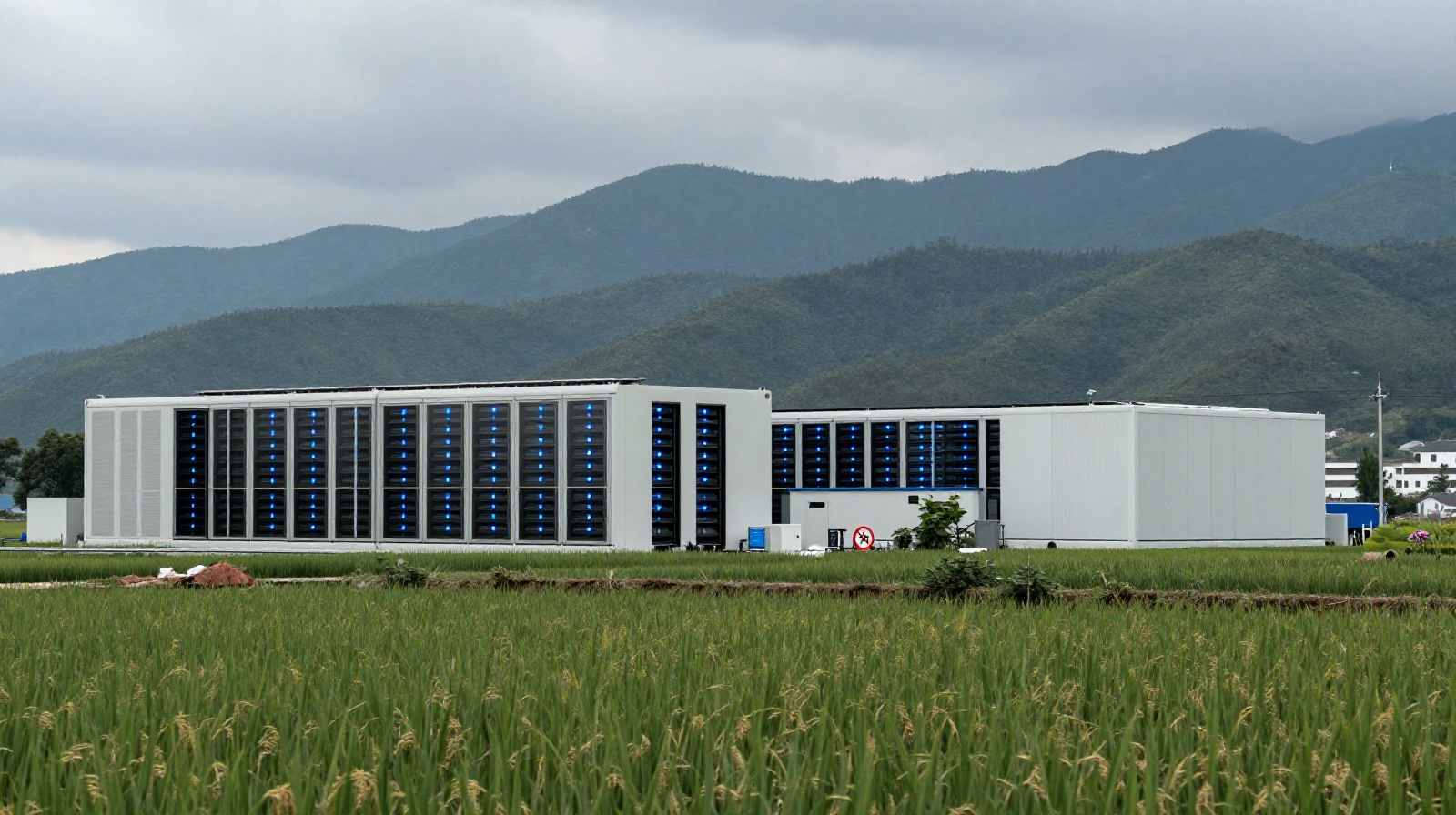
Imagine standing on a ridge in Guizhou province at dusk. The air is cool and smells faintly of rain and wet earth. Before you, stretching into the valley below, lies not a village or a rice paddy, but a sprawling complex of white buildings with glowing blue lights. This is the Guian New Area, home to one of China’s largest data centers.
Inside these facilities, thousands of servers process vast amounts of information for banking, streaming, and artificial intelligence. It feels like something out of a sci-fi movie—a ‘cyberpunk’ landscape built right in the mountains. The reason? Guizhou’s cool climate keeps the machines from overheating, and its abundant renewable energy makes it an ideal location to store the world’s digital future.

From Digital Clouds to Physical Terraces
Ten minutes away, driving down a winding mountain road, the scene shifts entirely. The blue lights of the data center fade into the distance. Now, you are surrounded by emerald-green terraced fields carved into the steep hillsides. This is the homeland of the Miao people.
Here, life moves to the rhythm of the seasons rather than server cycles. Farmers in traditional indigo-dyed clothing guide water through wooden aqueducts to irrigate rice paddies. Silver jewelry glints in the sunlight as they talk about the coming harvest. It is a stark contrast: high-tech infrastructure just miles away, yet the daily life here has remained largely unchanged for centuries.

Why These Worlds Coexist
You might wonder how these two worlds fit together. In reality, they are deeply connected. The data center doesn’t replace the village; it powers a new kind of connection.
Local farmers now use smartphones to sell their organic honey and silver crafts directly to customers in Shanghai or Beijing via e-commerce platforms. High-speed internet from the nearby hub allows young people to stream content, work remotely, and even start online businesses without leaving their ancestral homes. The ‘cyberpunk’ infrastructure is actually giving a voice to these remote communities.

What Locals Say
I spoke with Li Wei, a local guide who grew up in one of these villages. “When I was young,” he told me, “the internet here was slow and unreliable. Now, the fiber optic cables run right through our fields.”
Li points out that while the data centers bring jobs and better connectivity, they haven’t erased the culture. Instead, technology has become a tool to preserve it. Tourists come from all over the world not just to see the mountains, but to experience this unique blend of ancient tradition and modern speed.

A New Kind of Travel
For travelers seeking something beyond the usual landmarks, this route offers a fascinating glimpse into China’s complex reality. It challenges the stereotype that modernization means erasing the past. Here, the future is built around the old, not on top of it.
Cyberpunk meets minority villages is not just a visual paradox; it’s a story of adaptation. As you drive from the silent servers to the bustling rice fields, you see how China is rewriting its own definition of progress—one where digital speed and human history walk hand in hand.