

The Myth of the “Weird” Menu
When my American friend Mark first arrived in Chengdu, he asked me a nervous question over dinner: “So, are you guys really going to feed me bugs?” I laughed so hard I nearly choked on my spicy beef. The truth is, while China’s culinary map is vast enough to make even the bravest traveler dizzy, 90% of what we eat looks exactly like food your grandmother might cook.
The internet loves to highlight the exotic—stinky tofu, bird’s nest soup, or those infamous geoducks. But if you walk into a random office canteen in Beijing at noon, you’ll see steamed buns with pork, stir-fried broccoli, and rice. It’s familiar. It’s comforting. The “weird” stuff is a small slice of the pie, often reserved for specific regions or special occasions, not your daily survival fuel.
Why Does Food Change Every Hour?
If you think Chinese food is just about the dishes on the plate, you’re missing half the story. The real magic happens in the timing and the location. Take breakfast, for instance. In many Western countries, breakfast is a quick coffee or a bowl of cereal at home. Here, it’s a chaotic, delicious rush.
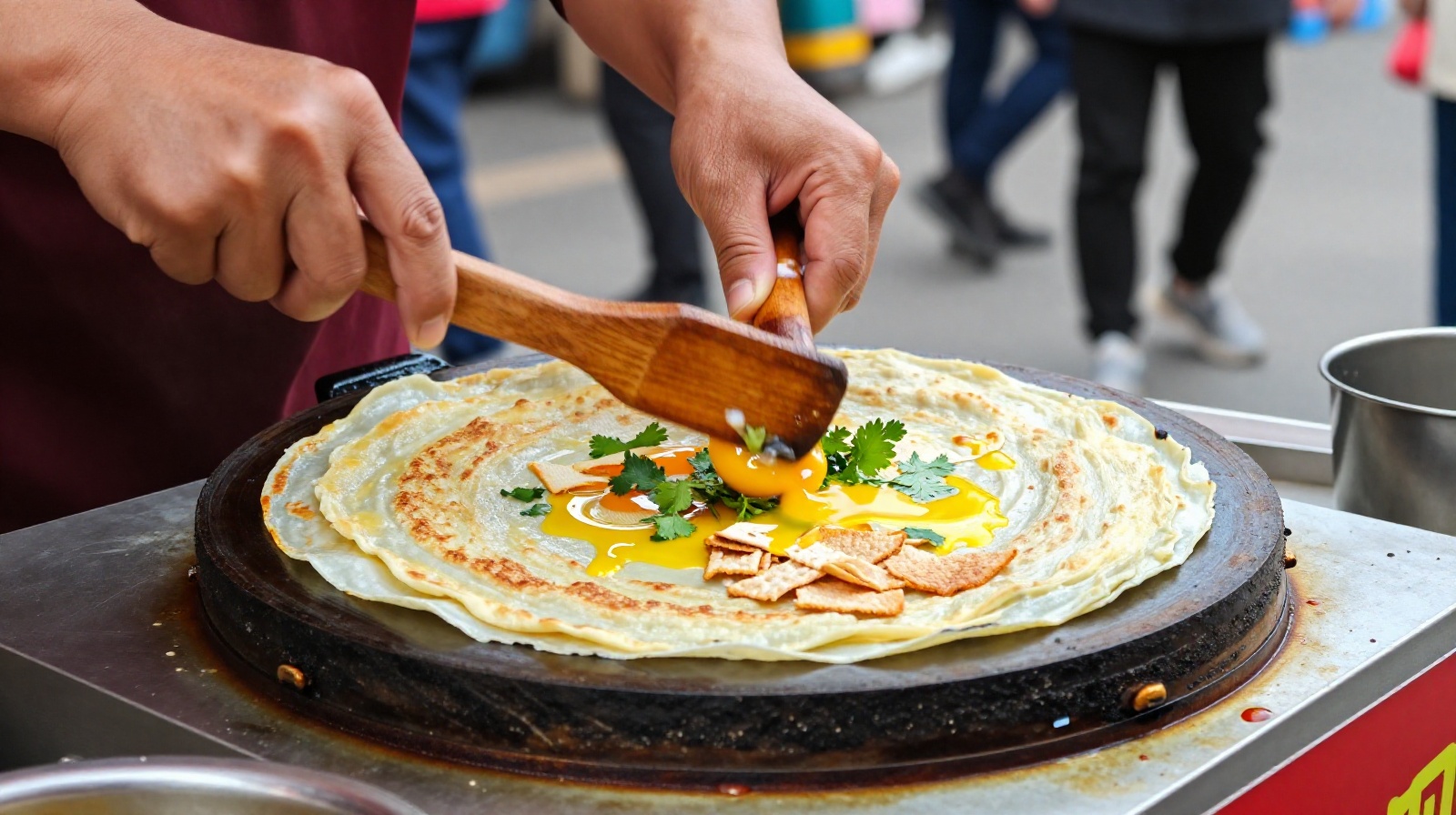
At 6:30 AM in Shanghai, I watched a line form outside a tiny stall selling jianbing (savory crepes). The vendor flipped batter with the speed of a magician, filling the crepe with egg, crispy wonton crackers, and cilantro. He handed it to a student rushing to school, who took a bite while walking into a subway station. That’s the rhythm: food is fast, portable, and designed for a life on the move.
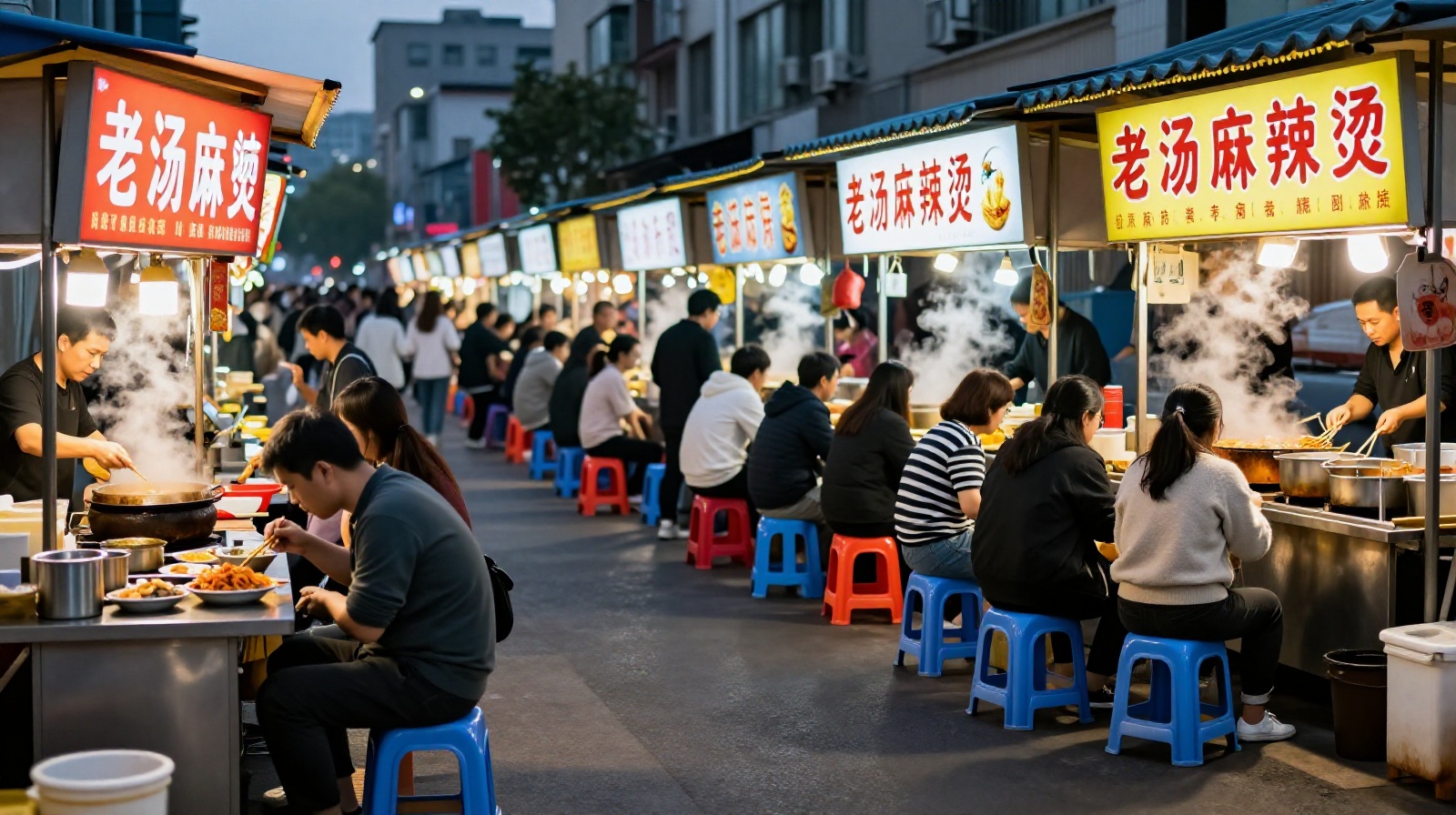
And then there are the late nights. While New York might have a 24-hour pizza place, China has ye shi (night market culture) that truly never sleeps. At 11 PM in Guangzhou, street stalls are just waking up. Grills sizzle with lamb skewers, and friends gather on low plastic stools to drink beer and chat about work or life.
The Logic Behind the Chaos
You might wonder: How does a country of 1.4 billion people feed itself so efficiently? The answer lies in density and community. In cities like Shenzhen or Chengdu, where high-rises tower over narrow streets, space is expensive but social life is cheap.
Street food isn’t just about convenience; it’s the lifeline of local communities. A small stall selling noodles might have served three generations of neighbors for twenty years. The owner knows your name, your order, and whether you want extra chili or not. It creates a safety net that no app can replace.
This system works because of our pace. We are fast. We work long hours. A hot meal ready in five minutes isn’t a luxury; it’s a necessity to keep the city moving. The “magic” you see—the smoke, the noise, the sheer variety—is actually just people solving the problem of hunger and connection with maximum efficiency.
It’s Not About Performance
Many travelers come to China expecting a food show, where every dish is an elaborate performance. But for us, eating is as mundane as brushing your teeth. It’s how we recharge after work, how we celebrate a child’s birthday, and how we comfort each other during hard times.
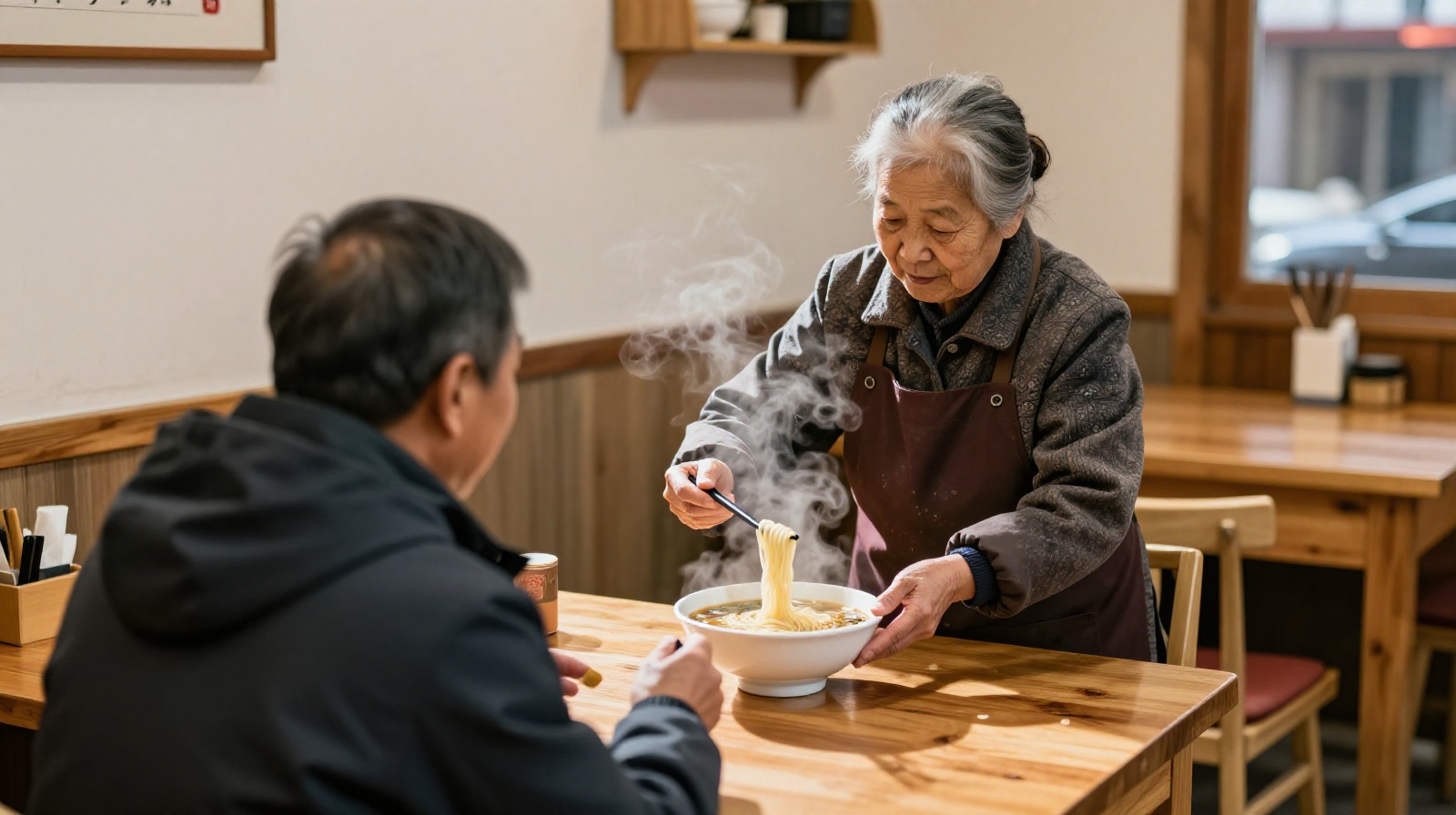
I remember a rainy Tuesday in winter. The temperature dropped below freezing. I stopped at a small noodle shop tucked between two apartment buildings. The owner, an older woman named Auntie Li, served me a steaming bowl of mutton noodles with garlic vinegar. She didn’t ask for a photo or try to explain the history of the dish. She just said, “Eat up, you look cold.” That moment wasn’t about food tourism; it was pure human warmth.
What Should You Actually Try?
If you want to experience China like a local, forget the fancy restaurants on the first page of Google. Go where the lines are long and the chairs are plastic. Don’t be afraid to point at what others are eating if you can’t read the menu.
Start with street food: jianbing in the north, xiaolongbao (soup dumplings) in Shanghai, or rice rolls in the south. Visit a night market to see the social side of dining. And yes, try some spicy food, but remember: “Spicy” means different things in different places. Sichuan food is numbingly hot; Hunan food is dry and fiery; Guangdong food might just be fresh seafood with a hint of ginger.
The best advice? Follow the locals. If you see an elderly person sitting on a plastic stool, that’s your cue to sit down too. The food there will always be authentic, affordable, and served with a smile.