

Not a Spa, But a Living Room
The air conditioning in “Happy Feet” hums quietly. The scent of herbal tea and eucalyptus hangs in the mix. It’s 8 PM on a Saturday, and the small waiting area is packed. I’m sitting next to Mr. Zhang, a 54-year-old logistics manager from Shenyang, who just finished his shift.
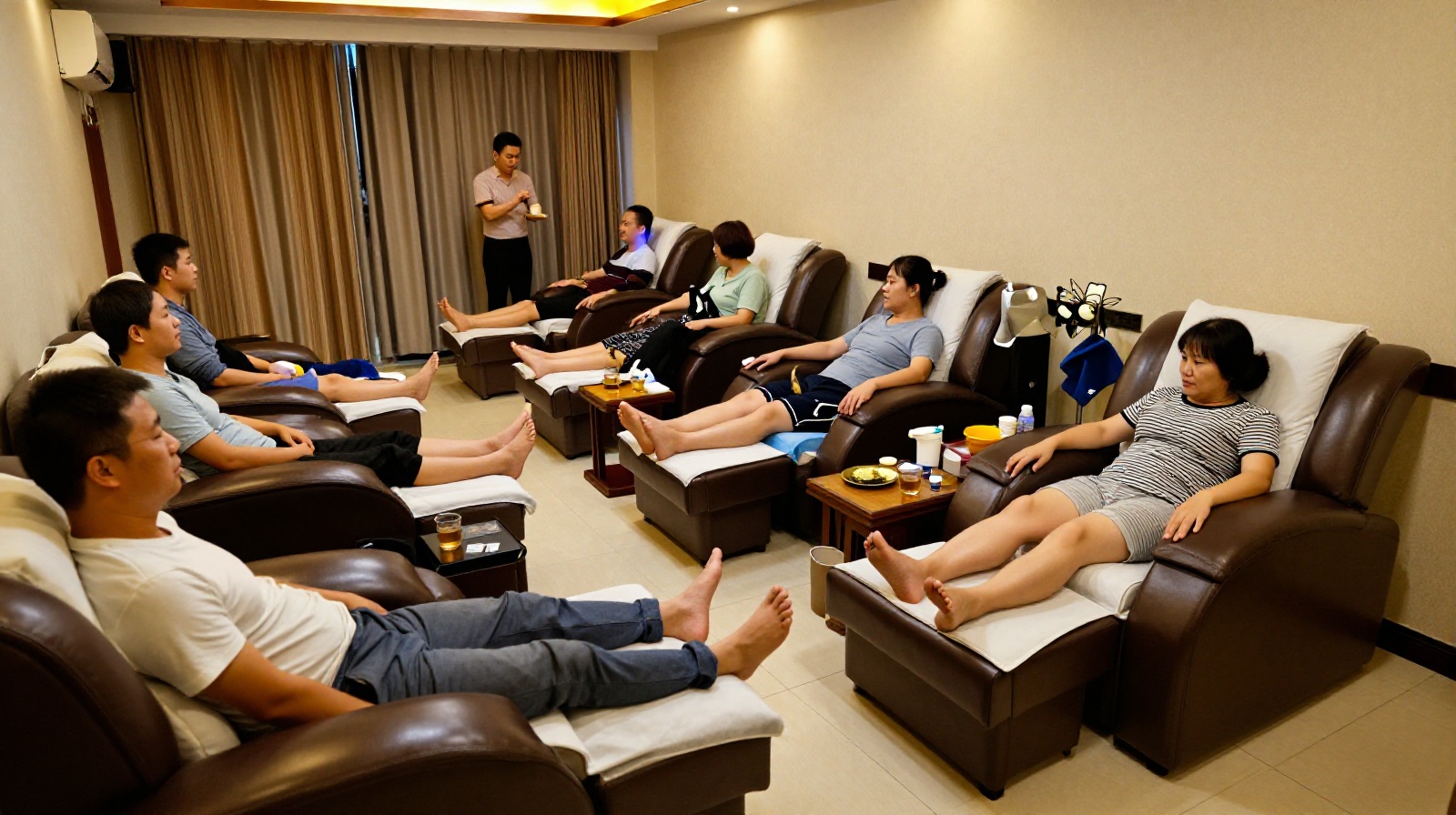
“You look tired,” he says, gesturing to my stiff shoulders. “This is how we recharge. Not with wine or dinner, but with this.” He points to the row of reclining chairs where men and women in casual clothes are already getting their feet worked on.
In many Western countries, a professional foot massage is often seen as a luxury spa treat—expensive, reserved for special occasions, or something you only book after a long week of intense stress. But here, in cities across China from Shenzhen to Chengdu, it’s different. For the average worker, this isn’t an indulgence; it’s basic maintenance.
The Price of Relief
I asked Mr. Zhang how much he spent. “One hour and thirty minutes,” he said, “for 98 yuan.” That is roughly $13 USD. In his city, a similar session might cost between 60 and 150 yuan depending on the shop’s level of luxury.
This price point changes everything. It means you can visit twice a month without breaking the bank. For Mr. Zhang and his colleagues, this is a predictable part of their household budget, just like grocery shopping or paying the subway fare. They don’t save up for it; they schedule it like a dentist appointment.
A wide shot of a busy Chinese foot massage parlor at night, showing rows of customers in casual clothes relaxing on reclining chairs with herbal tea cups nearby.
More Than Just Feet
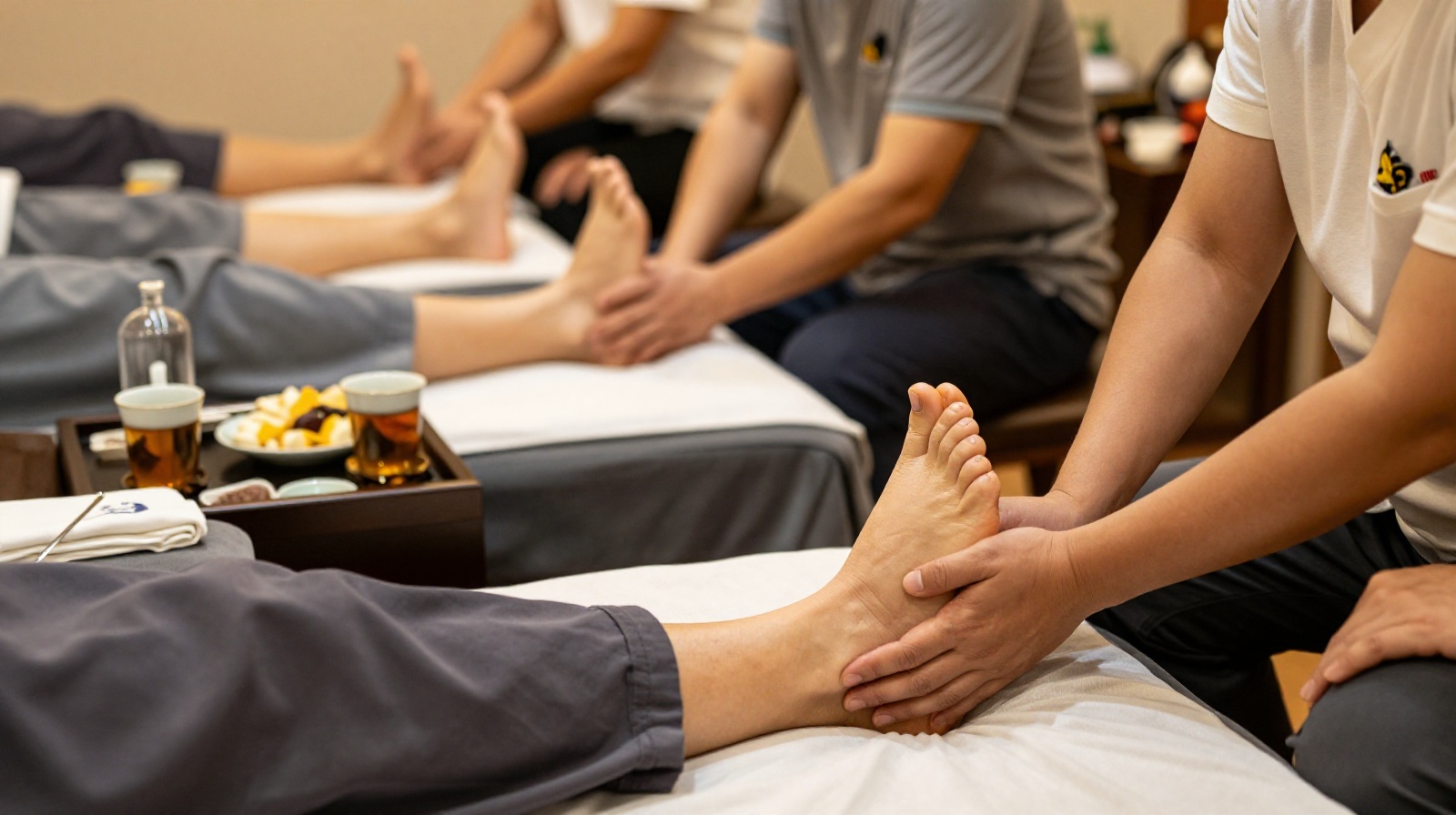
The service itself is a social hub. While the therapists work their magic—using thumbs to knead pressure points along the soles and legs—the room fills with conversation. It’s not silent relaxation; it’s lively chatter about stock prices, children’s school performance, or weekend hiking plans.
For Mr. Zhang, this is where he catches up on news and socializes. “We talk more here than at our office dinner parties,” he laughs. The therapists are often chatty too, offering advice on health or sharing gossip from the neighborhood. It’s a community center disguised as a wellness shop.
The environment is functional, not pretentious. You’ll find plastic trays for snacks, vending machines selling drinks, and sometimes even small gaming consoles or TVs showing sports matches in the corner. There are no silk robes or expensive candles. Just comfortable chairs, warm towels, and skilled hands.
A Necessity for a Hard Life
Why is it so popular? The answer lies in the lifestyle. Many Chinese professionals work long hours, often from 9 AM to 9 PM, six days a week. Standing or sitting for ten hours straight takes a physical toll that regular stretching can’t fix.
The foot massage offers immediate relief. It targets the body’s “root” system according to traditional Chinese medicine principles, believing that relieving pressure in the feet helps balance energy throughout the whole body. For Mr. Zhang and millions like him, it’s not just about feeling good for an hour; it’s about maintaining the physical stamina required to keep working.
Unlike high-end spas that charge hundreds of dollars for a single session, these shops are accessible to everyone. You don’t need to wear special clothes or dress up. Many people even bring their own slippers and come in street clothes. It is democratic, practical, and deeply integrated into the daily rhythm of life.
Breaking the Stereotype
When foreigners think of Chinese consumerism, they often imagine high-end malls, luxury brands, and expensive dining. But the reality of ordinary life is found in places like “Happy Feet.” These shops represent a different kind of prosperity—one where wellness is affordable, accessible, and a shared cultural habit rather than a status symbol.
As Mr. Zhang finishes his session, he stands up, stretching his legs with a visible sigh of relief. “Now I can sleep well,” he says, grabbing his bag and heading out into the cool night air. To him, this wasn’t a luxury; it was just another Tuesday night routine.
For anyone visiting China or trying to understand its people, look past the neon lights and skyscrapers. The true pulse of the country beats in these quiet corners where ordinary people take care of themselves, one hour at a time.