

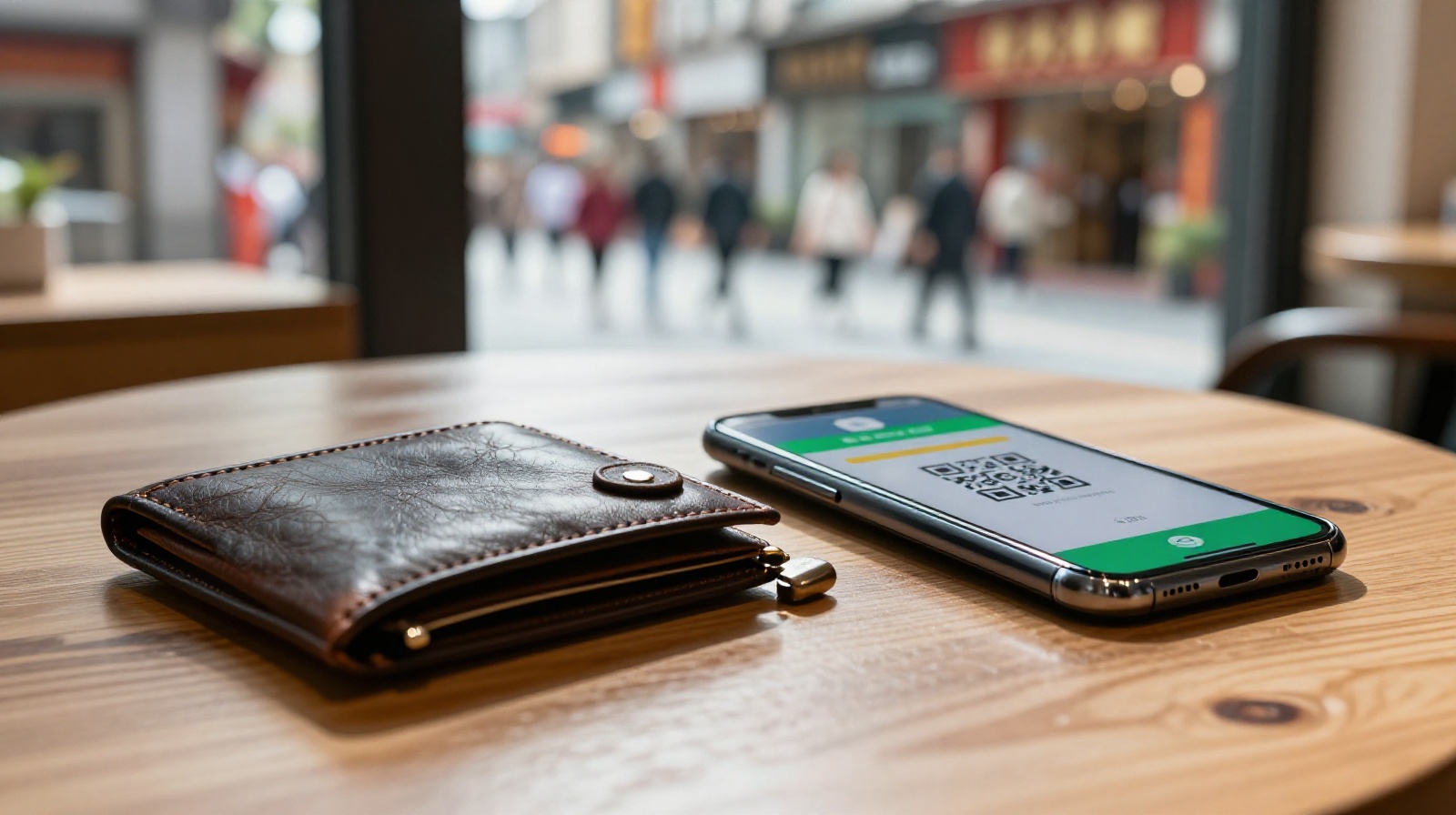
Introduction: The Empty Wallet
The morning light hit the kitchen table, and I placed my last crumpled banknotes into a locked drawer. No more pockets full of coins clinking against keys. No more fumbling for small change at the market stall. For the next 30 days, I was committing to living entirely in China’s digital payment ecosystem.
For many foreigners, “cashless” sounds like a futuristic dream or a security nightmare. In reality, it is simply Tuesday morning in Shanghai, Beijing, or Chengdu. My goal wasn’t just convenience; it was to understand how this shift has fundamentally rewired the daily rhythm of life for ordinary people.
Week One: The Friction of Habit
The first three days were a lesson in panic. I tried to buy a bottle of water at a small street vendor’s stall, and the old man behind the counter held out his hand expectantly. When I tapped my phone, he squinted, confused. “Do you have cash?” he asked gently.
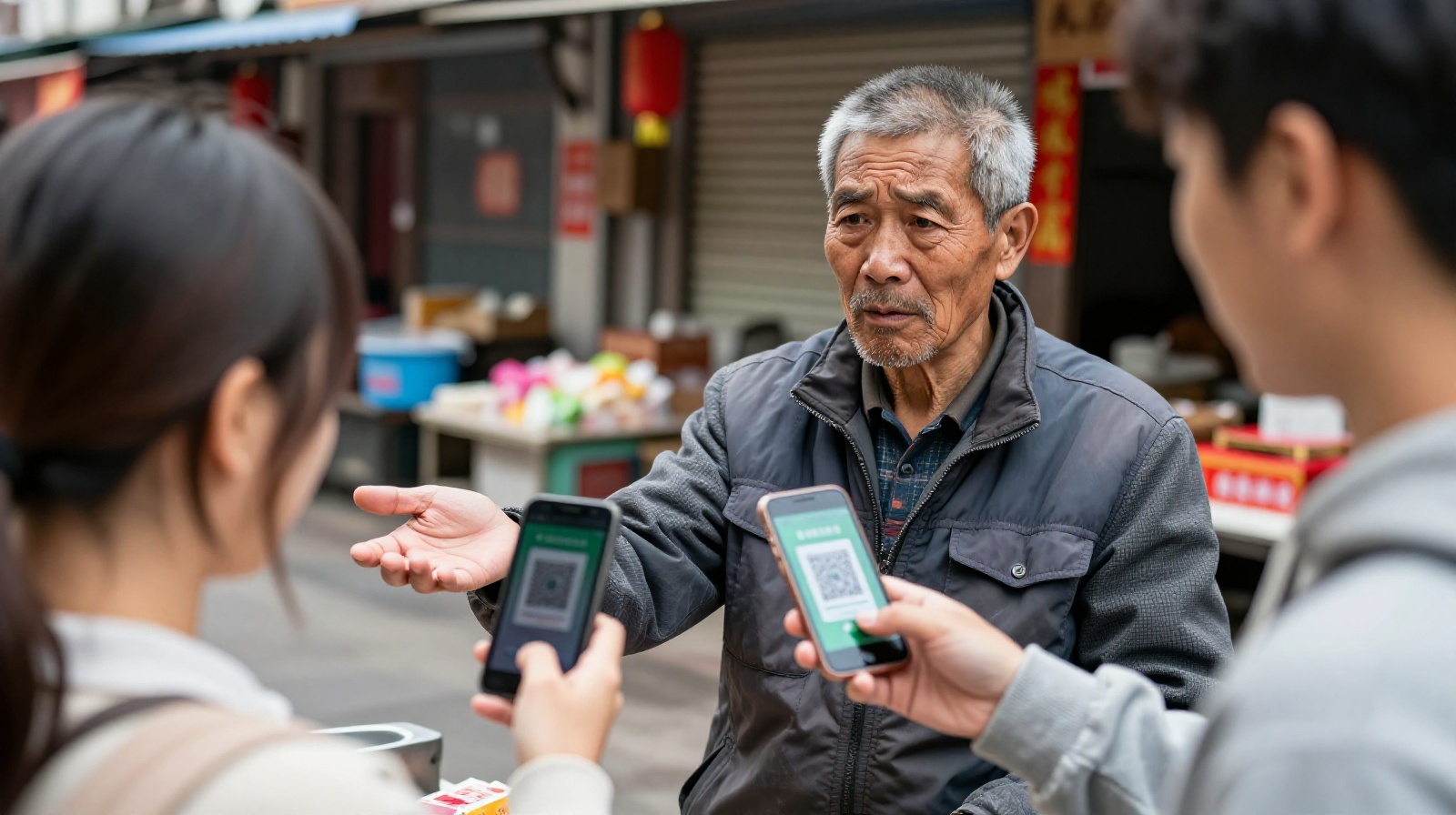
A street vendor in an old neighborhood hesitates as a customer tries to use a mobile payment QR code for the first time.
That moment of friction was common. While Alipay and WeChat Pay cover 95% of urban transactions, they aren’t universal. In remote rural villages or at small family-run businesses in older districts, cash remains king. I spent hours learning to navigate these blind spots, realizing that my “smart” phone was actually a key that didn’t fit every lock.
The Mid-Game Shift: Efficiency and Psychology
By the second week, the panic faded into a strange sense of flow. The sheer efficiency was undeniable. Paying for a subway ride, ordering breakfast from a delivery driver, or splitting a dinner bill took seconds. There was no counting coins, no worrying about receiving counterfeit bills.
But the real change happened in my head. Without physical cash leaving my hand, I felt a detachment from spending. Paradoxically, this led to better budgeting. Every transaction generated an instant digital receipt. At the end of each day, I could see exactly where every yuan went—a feature missing when you just toss crumpled bills into a drawer.
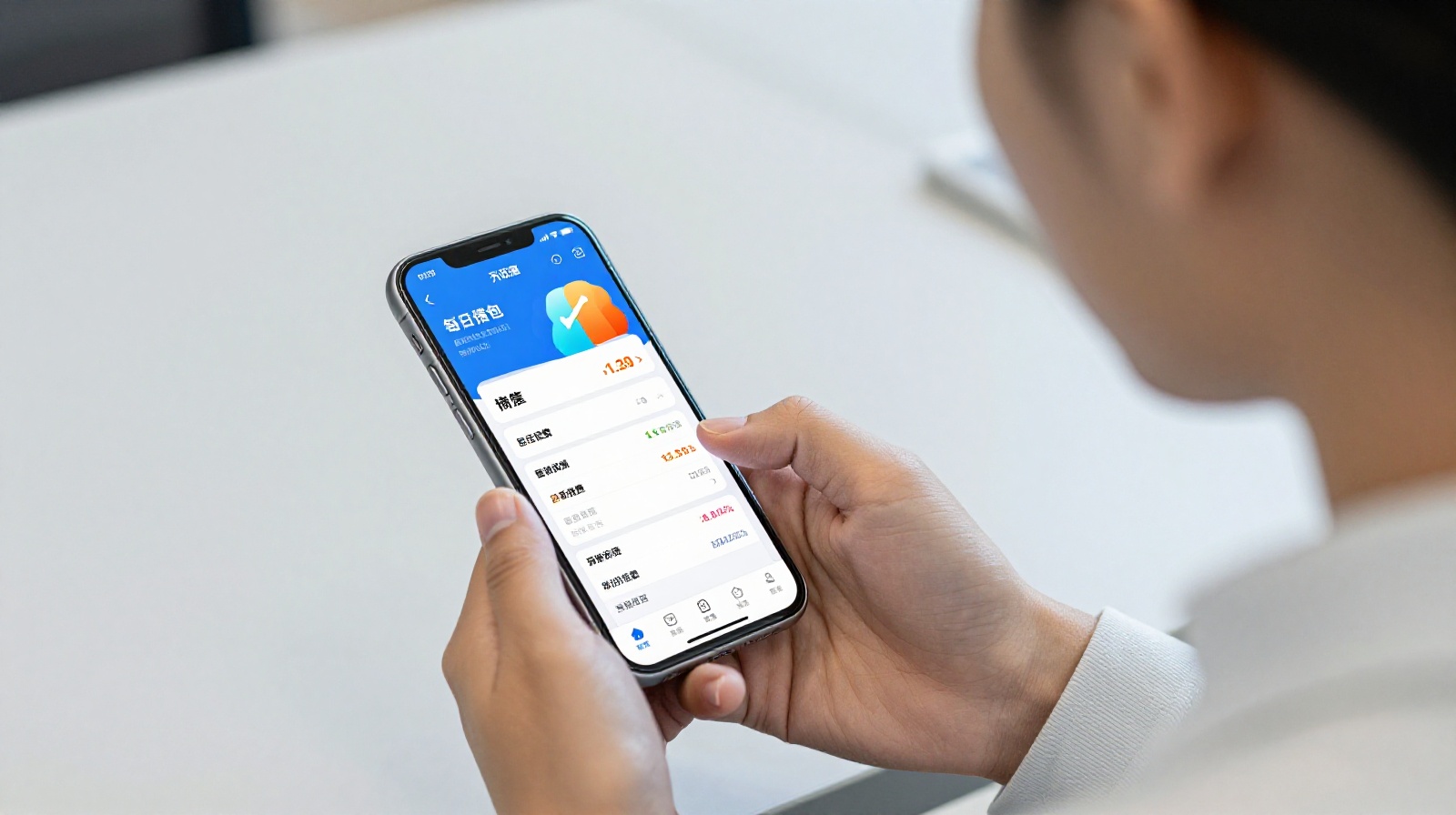
A young professional checks their phone screen showing a detailed spending breakdown from a digital wallet app in a modern office.
This visibility altered my psychology. I stopped buying that extra cup of coffee “just because.” The digital ledger made the cost feel real, almost tangible, even without physical money changing hands.
Deep Dive: Privacy and the Digital Divide
However, the cashless experiment revealed cracks in the system. The first concern was privacy. In a world where every purchase is recorded by tech giants, who owns my data? I noticed that algorithms began to suggest products with uncanny accuracy, raising questions about how much I am truly being watched.
The second issue hit harder: the exclusion of those left behind. One afternoon, I tried to help an elderly woman pay for her groceries at a supermarket. She froze when she couldn’t find her phone. The cashier, young and impatient, sighed loudly. In this frictionless world, not knowing how to swipe a screen can mean being unable to buy food.
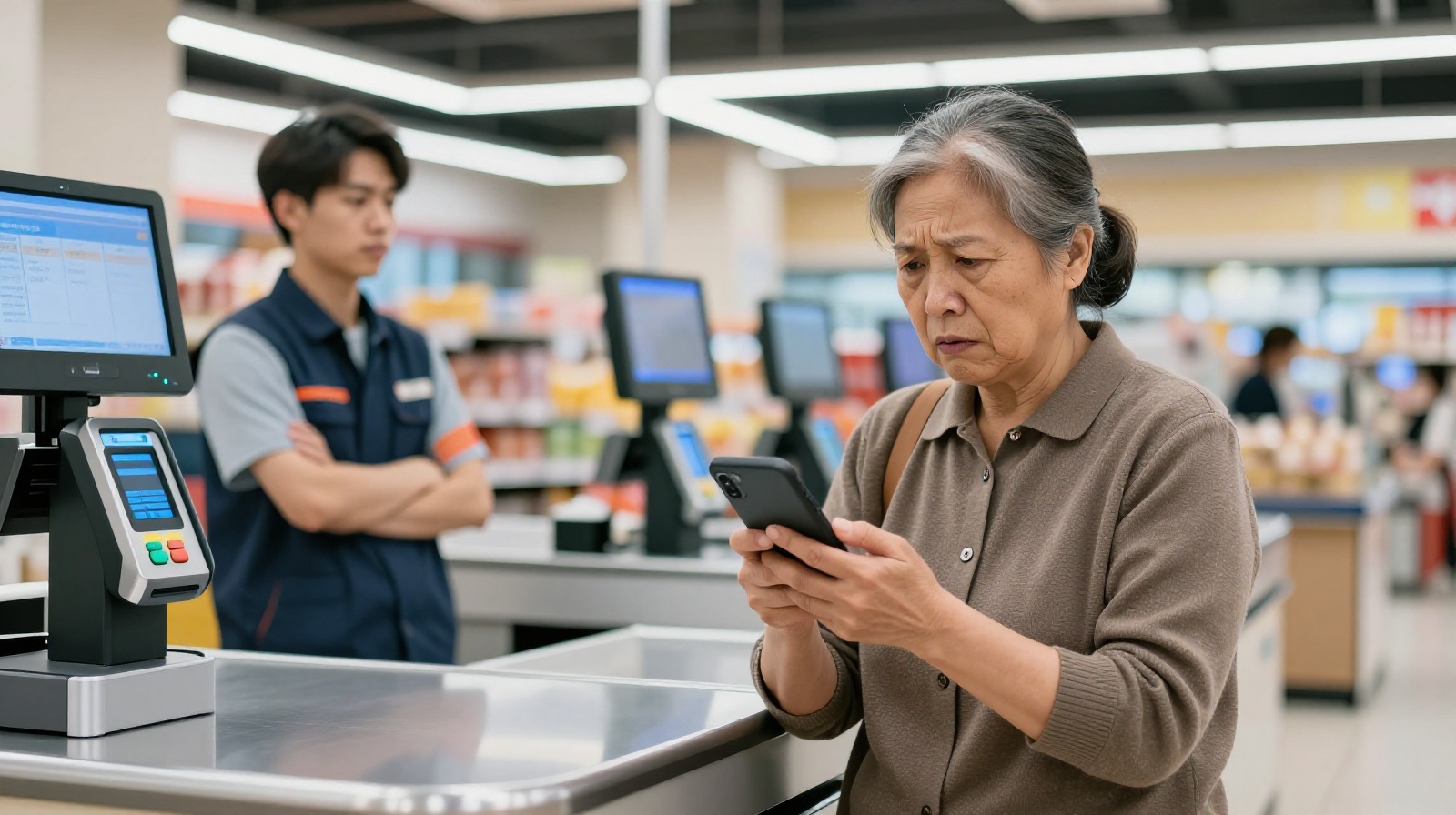
An elderly person stands confused at a modern checkout counter while a younger cashier looks on with impatience.
Data Review: The Numbers Behind the Feeling
Over 30 days, I tracked my expenses against my usual cash habits. My impulse spending dropped by approximately 15%. The ability to categorize expenses instantly helped me cut back on delivery fees and unnecessary subscriptions. Yet, the convenience came with a cost: a deep reliance on battery life and network connectivity.
When the power went out for an hour during a summer storm, I was stranded. A small café that usually accepted cards had no internet. People around me were equally helpless without their phones. It highlighted a vulnerability in our new system—when the digital grid fails, the economy grinds to a halt.
Conclusion: Freedom or a New Kind of Cage?
After 30 days, my wallet remains locked. The cashless society offers undeniable convenience and a level of financial clarity that paper money never could. It has made life smoother, faster, and more transparent for the majority.
But it is not without its shadows. It demands we trust invisible systems with our daily survival. For the elderly, the unbanked, or those who simply value anonymity, the transition feels less like progress and more like a trap. My advice? Embrace the digital tools to navigate this new reality, but never forget the power of physical cash. A true modern society is one that works for everyone, not just those with high-speed internet and full batteries.