

The Monorail That Passes Through an Apartment
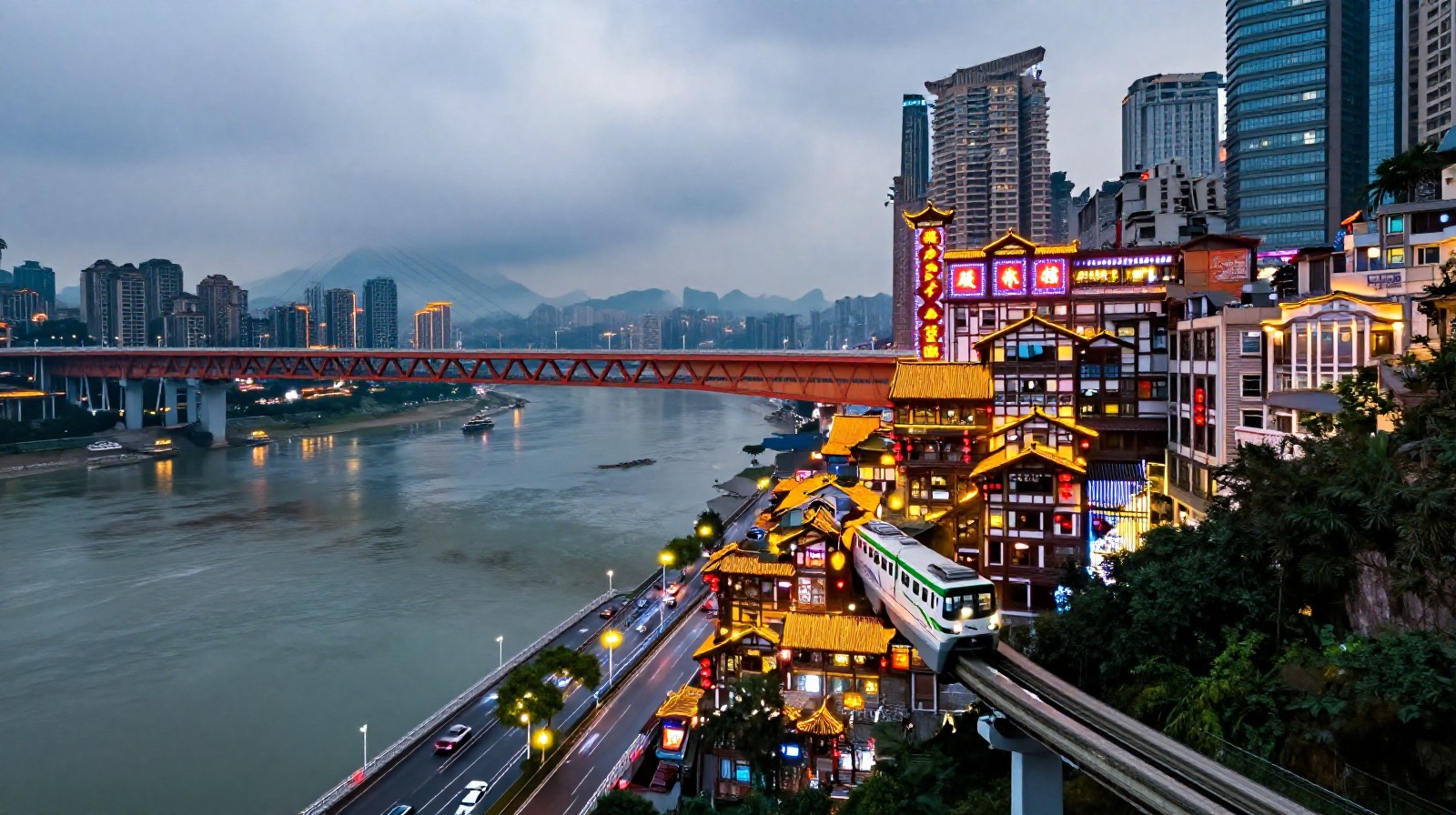
At 8:30 PM, the air in Chongqing is thick with humidity and the smell of boiling chili oil. I stand on a pedestrian bridge overlooking the Jialing River, waiting for Line 2 of the monorail to pass.
It doesn’t arrive from a tunnel or across a distant track. It roars around a corner, just feet away from a residential building that looks like it’s hanging off the cliff. A young man in a delivery uniform steps out of the train, checks his phone for a new order, and vanishes into the crowd below.
Many tourists arrive with this exact image in their heads. They expect to see the dystopian future of Cyberpunk 2077. Instead, they find a city where reality has outpaced fiction. The train isn’t a prop; it’s the daily commute for millions.
Why Chongqing Looks Like the Future
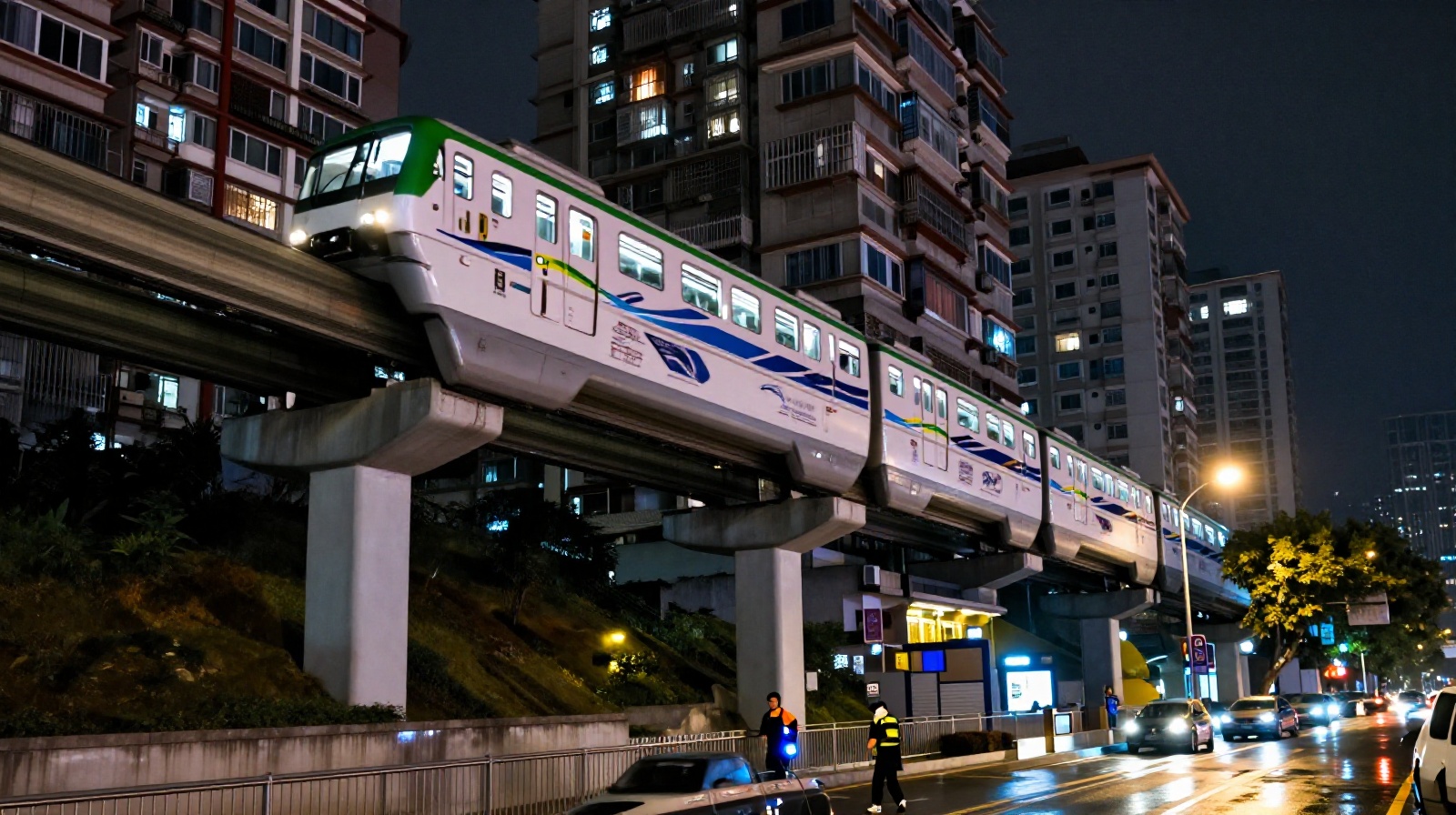
The visual shock of Chongqing comes from its geography. Built on steep mountains and bisected by two major rivers, flat land is scarce. Developers didn’t just build up; they built vertically.
Skyscrapers here don’t sit on a grid. They are stacked like bricks, connected by dozens of levels of roads that twist through the city’s “canyons.” This isn’t a set for a movie; it’s a necessary solution for a population exceeding 32 million people in a mountainous region.
The city is often cited as the most “vertical” metropolis on Earth. A single building can have entrances on different levels corresponding to different streets above and below, accessible only by stairs or elevators that defy gravity.
Neon Lights in a Traditional Neighborhood
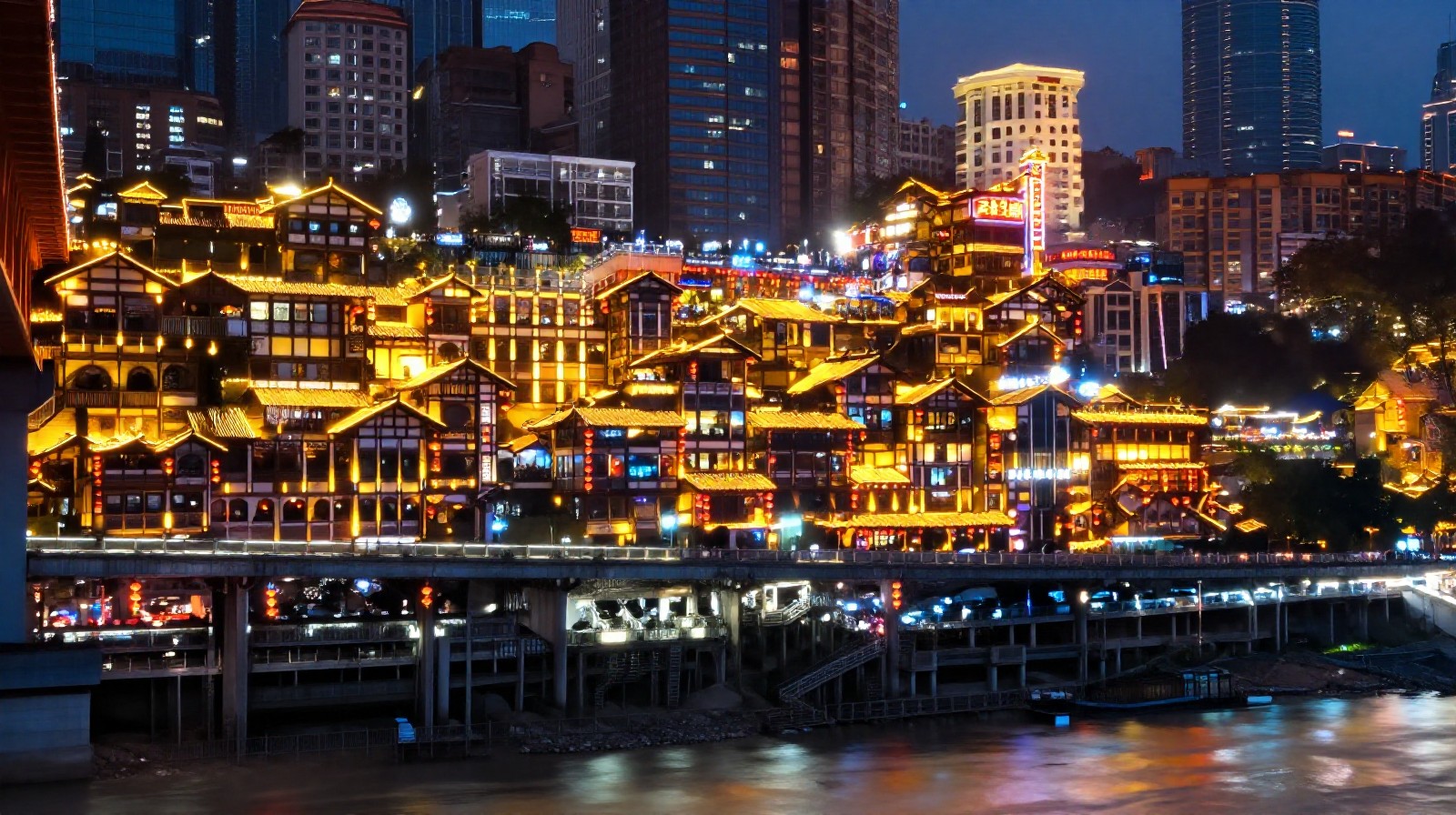
Nightfall transforms Chongqing into a glowing kaleidoscope. The humid air scatters the light from millions of LED signs, turning the streets into rivers of red, blue, and purple.
In the Hongya Cave complex (Hongyadong), traditional wooden architecture is illuminated by thousands of lanterns. It looks like a scene from a fantasy novel or an ancient Chinese drama. But if you walk inside, you won’t find only tourists.
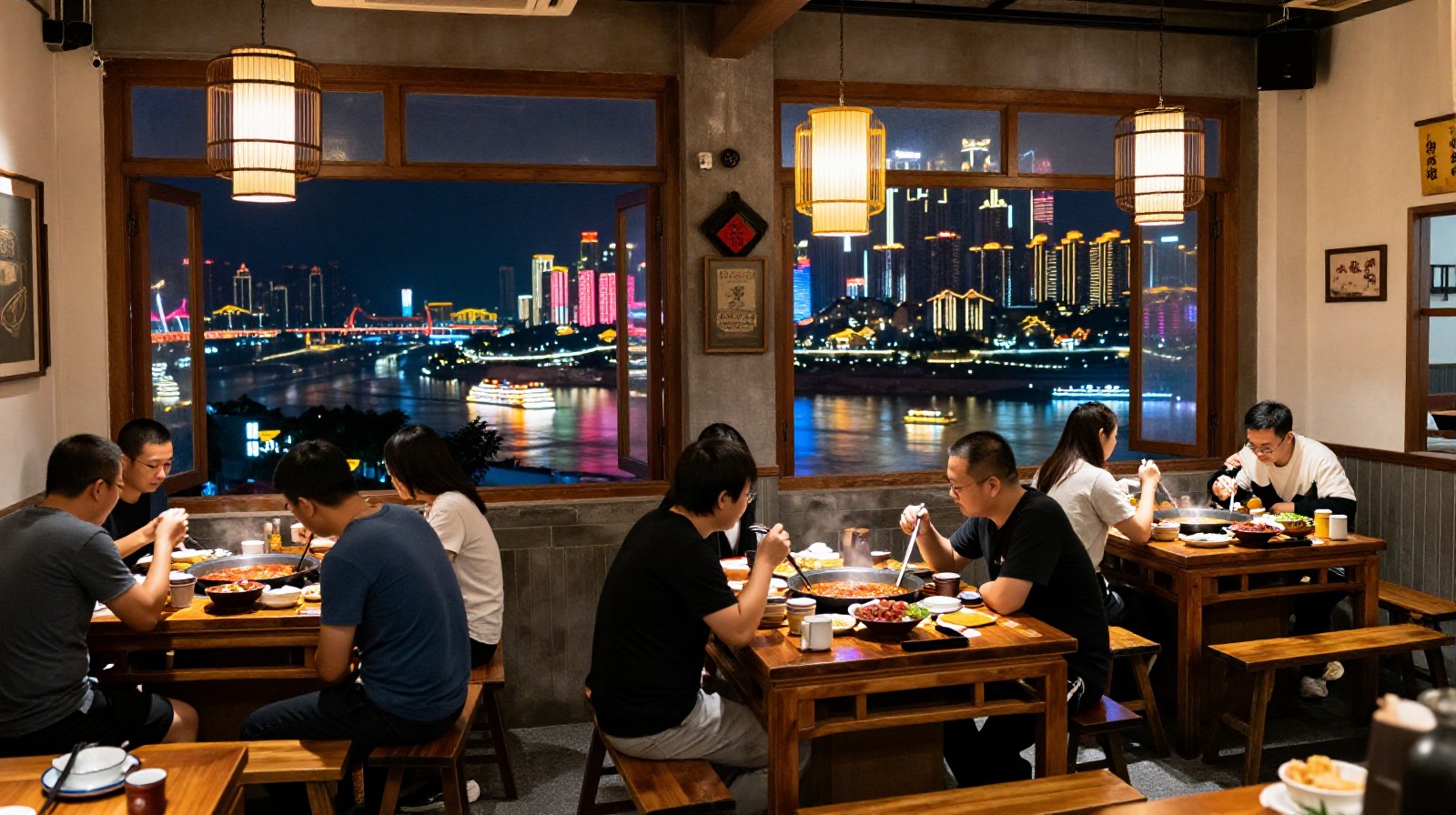
Local families are dining on spicy hotpot at tables that look out over the river. Young professionals are grabbing bubble tea before heading to tech startups located in repurposed warehouses nearby. The contrast is striking: centuries-old building styles house modern digital nomads and traditional tea houses side by side.
Real Life, Not a Dystopia
Despite the futuristic aesthetic, Chongqing is not an anti-utopian warning. It is a bustling hub of commerce, technology, and culture. The “cyberpunk” feel comes from how efficiently the city solves the problem of space.
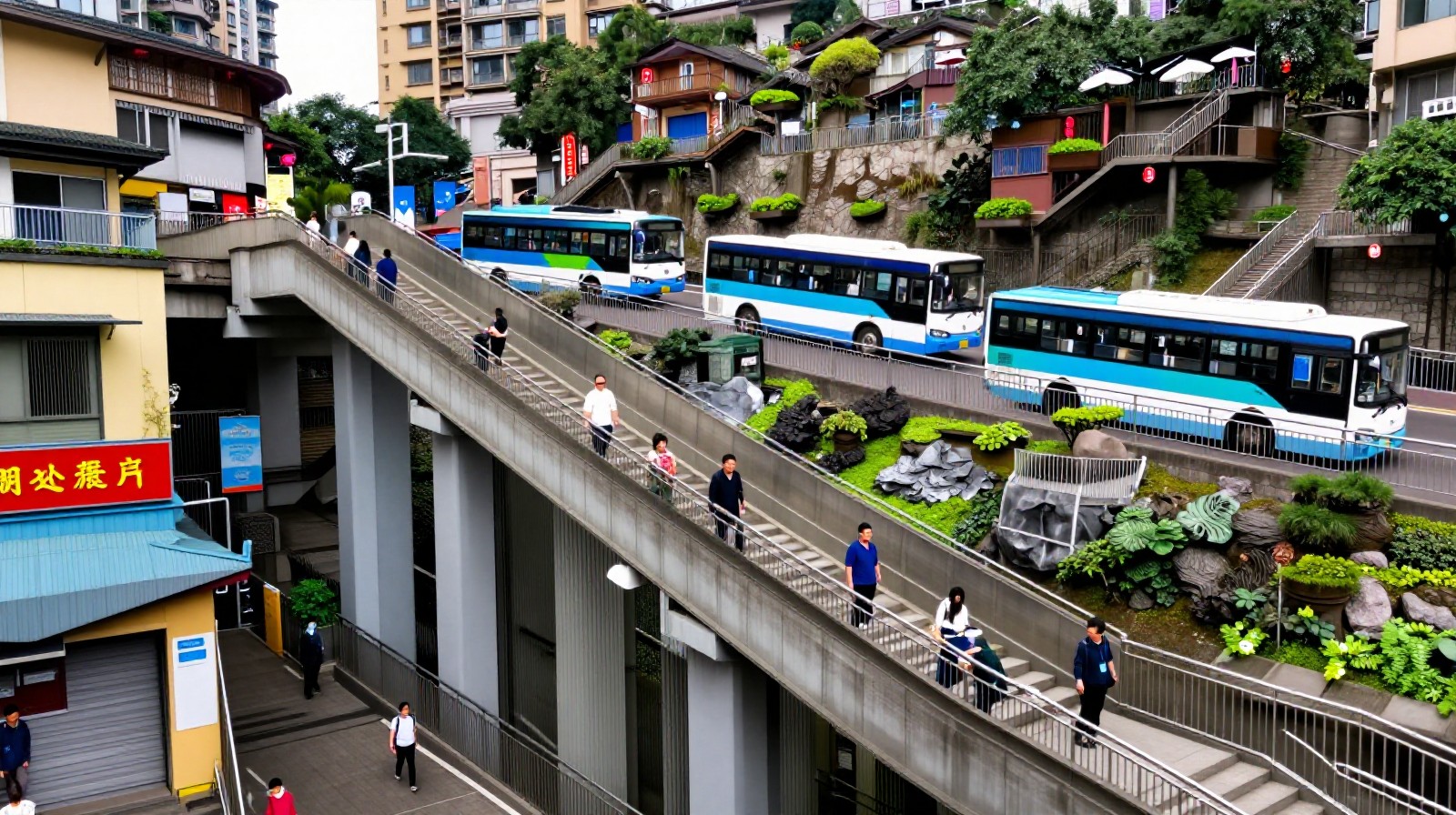
In this vertical world, public transport integrates seamlessly with daily life. Buses climb steep hills that would stump most cars. Pedestrian elevators connect different street levels, allowing people to walk from a high-rise office down to a riverside park in minutes.
Technology here isn’t just about the look; it’s about function. From the smart traffic systems managing the complex road networks to the contactless payment apps used by every street vendor, innovation is woven into the fabric of everyday survival.
A City That Defies Gravity
Chongqing challenges our understanding of urban design. It proves that a city can be both ancient and futuristic without sacrificing its soul. The mountains are not obstacles to be removed, but features to be embraced.
For the traveler, it offers an experience that feels like stepping into tomorrow while standing in yesterday. For the local, it’s simply home—a place where the impossible has become routine.