

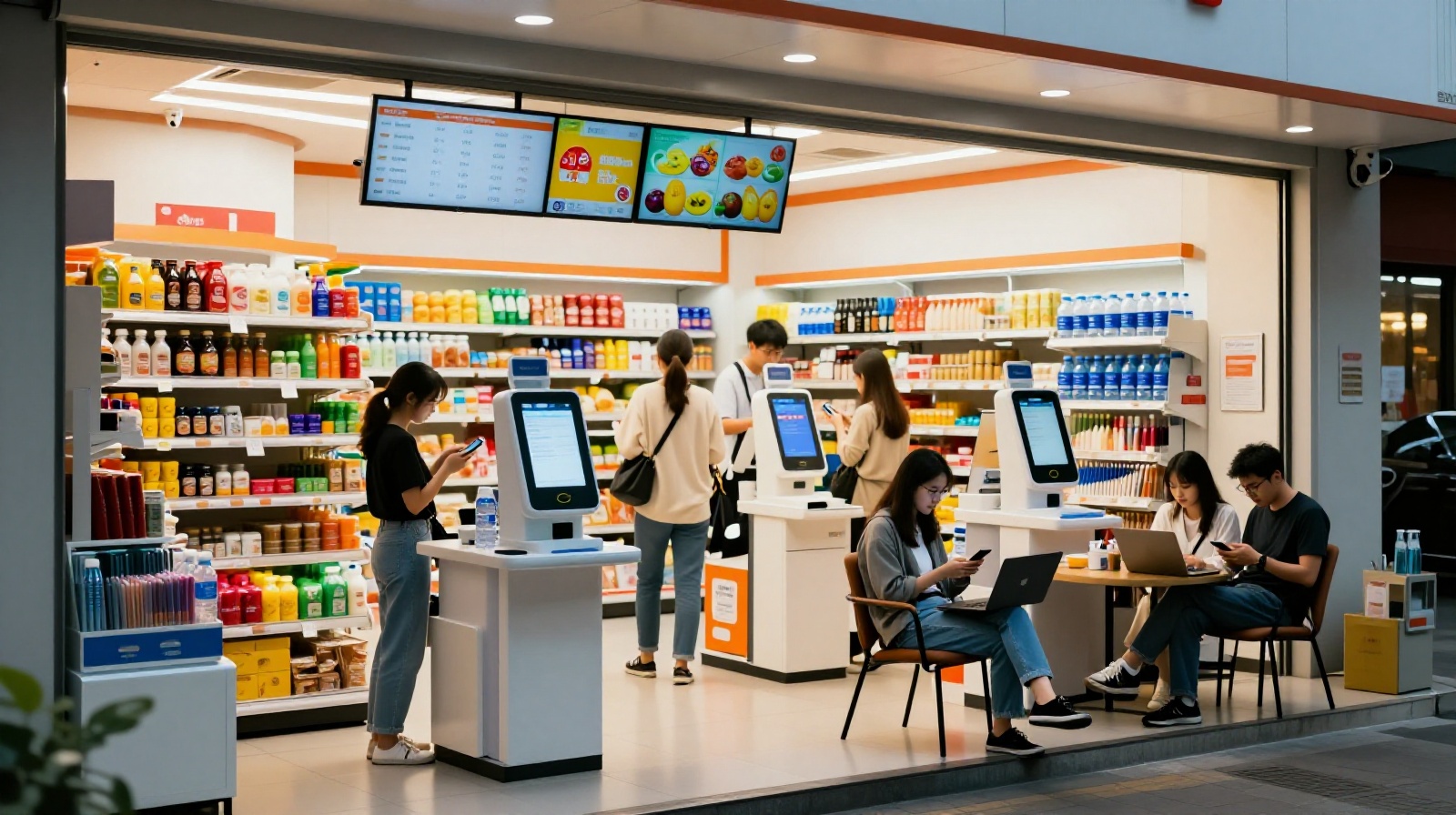
Introduction: More Than Just a Store
Sit down at the counter of a FamilyMart in downtown Shanghai, and you aren’t just buying a bento box. You are interacting with a system that knows your schedule, your taste, and even how fast you like to eat.
In Western media, China is often portrayed as a land of futuristic neon or massive industrial factories. But the real story isn’t in the grand announcements. It’s in the quiet hum of a convenience store (known locally as bianli dian) at 7:00 AM.
Here, technology doesn’t feel like magic; it feels like common sense. For millions of Chinese people, this small shop is the central hub where their digital lives and physical needs merge seamlessly.
Morning Efficiency: When Tech Beats the Rush
For Li Wei, a 28-year-old software engineer in Hangzhou, the morning routine starts before he even leaves his apartment. His phone buzzes with a notification from a local convenience store app: “Your usual coffee and egg sandwich is ready for pickup at Store #402.”
This isn’t just a pre-order feature. It’s a result of predictive algorithms analyzing Li Wei’s past purchases, his work schedule, and even the weather forecast. If it’s raining, the app might suggest an umbrella or hot soup instead.
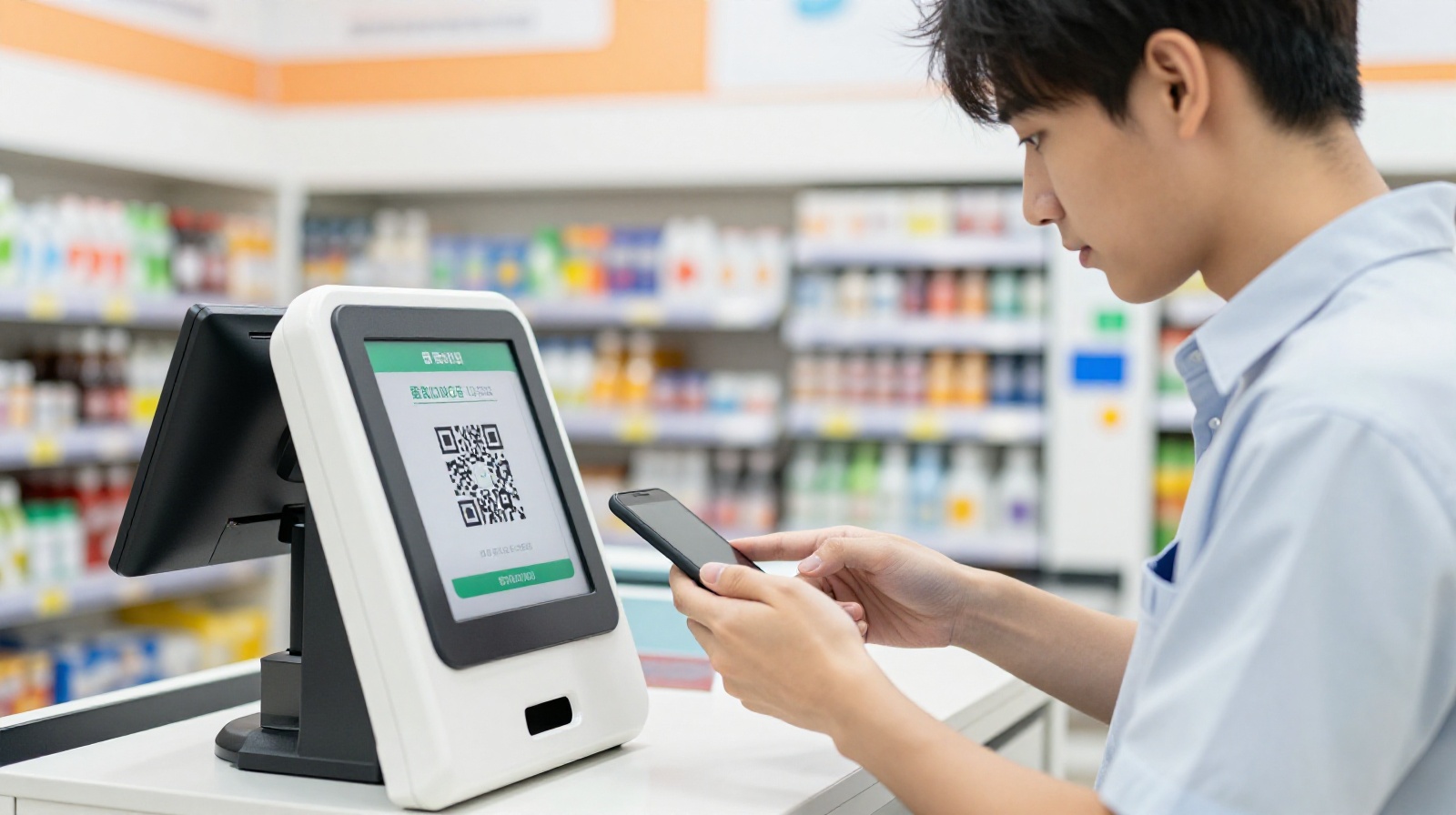
Alt text: A young professional in casual office wear scanning a QR code on their smartphone to pay at a self-checkout kiosk inside a bright, modern convenience store in China.
When Li Wei arrives, he bypasses the cashier entirely. He scans his phone at the electronic register, and within seconds, the door opens. The entire transaction, payment, and receipt generation happen without human interaction. This is smart retail in action—reducing wait times to near zero.
Noon Speed: The Instant Economy
Lunchtime in China isn’t about sitting down for a long meal. It’s about efficiency. For Wang Fang, a graphic designer, lunch is often ordered via an app linked directly to the nearest convenience store or supermarket.
Within 15 minutes, a delivery rider on an electric scooter drops off hot food at her office door. The system tracks the order in real-time, showing exactly where the rider is on a map. This instant retail model has changed how people eat, work, and live.
The convenience stores of today act as micro-warehouses. They stock everything from fresh meals to phone chargers, all optimized for rapid dispatch. The boundary between online shopping and physical proximity has blurred completely.
Evening Space: The New Community Hub
As the sun sets, the vibe in these stores shifts. For Chen Min, a freelance illustrator living in Chengdu, the convenience store becomes her evening lounge.
Sitting by the large glass windows, she watches the city lights reflect on the pavement while sipping a cold drink. The store offers free Wi-Fi, charging stations for devices, and comfortable seating areas. It’s a safe, air-conditioned haven in a bustling metropolis.
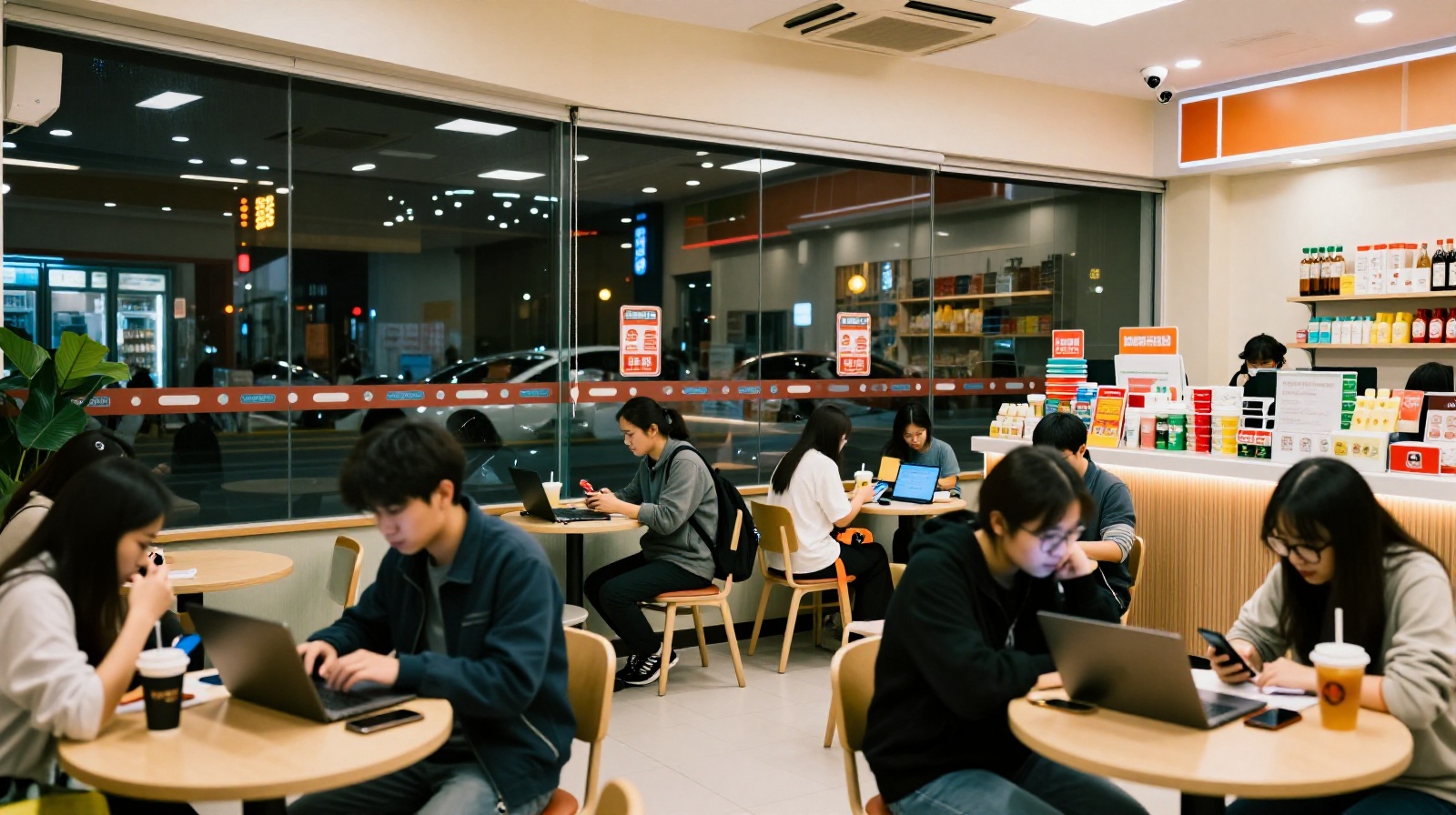
Alt text: A cozy evening scene inside a Chinese convenience store where customers sit at tables with laptops and smartphones, enjoying drinks while the city lights glow outside the large windows.
This transformation turns a simple retail space into a community living room. It’s not just about buying things; it’s about finding a place to rest, work, or socialize when other options are closed. In many Chinese cities, these stores are the only 24/7 public spaces that feel welcoming and safe.
The Invisible Engine: AI and Data
How does this all work? The answer lies in data. Every purchase, every scan, and even the time a customer spends looking at a shelf is analyzed by artificial intelligence.
Stores adjust their stock nightly based on local trends. If a new movie releases nearby, the store might automatically increase its inventory of popcorn and soda. If it’s flu season, they restock vitamins and tissues immediately. This level of precision was impossible in traditional retail.
The system learns from millions of users simultaneously, creating a feedback loop that makes every transaction smarter. It’s not just about selling products; it’s about anticipating needs before the customer even realizes them.
Future Outlook: A Blueprint for Smart Cities
For global observers, Chinese convenience stores offer a glimpse into what a smart city could look like. They are small nodes in a massive network that connects homes, offices, and transportation hubs.
The future isn’t about flying cars or robot waiters. It’s about the seamless integration of digital tools into daily life. When technology disappears into the background, making life easier without drawing attention to itself, that is the true innovation.
For ordinary people in China, this convenience is not a luxury; it’s the new normal. And as these models spread globally, they challenge us to rethink how we design our own cities and communities.