

The Quiet Studio in the Heart of Shanghai
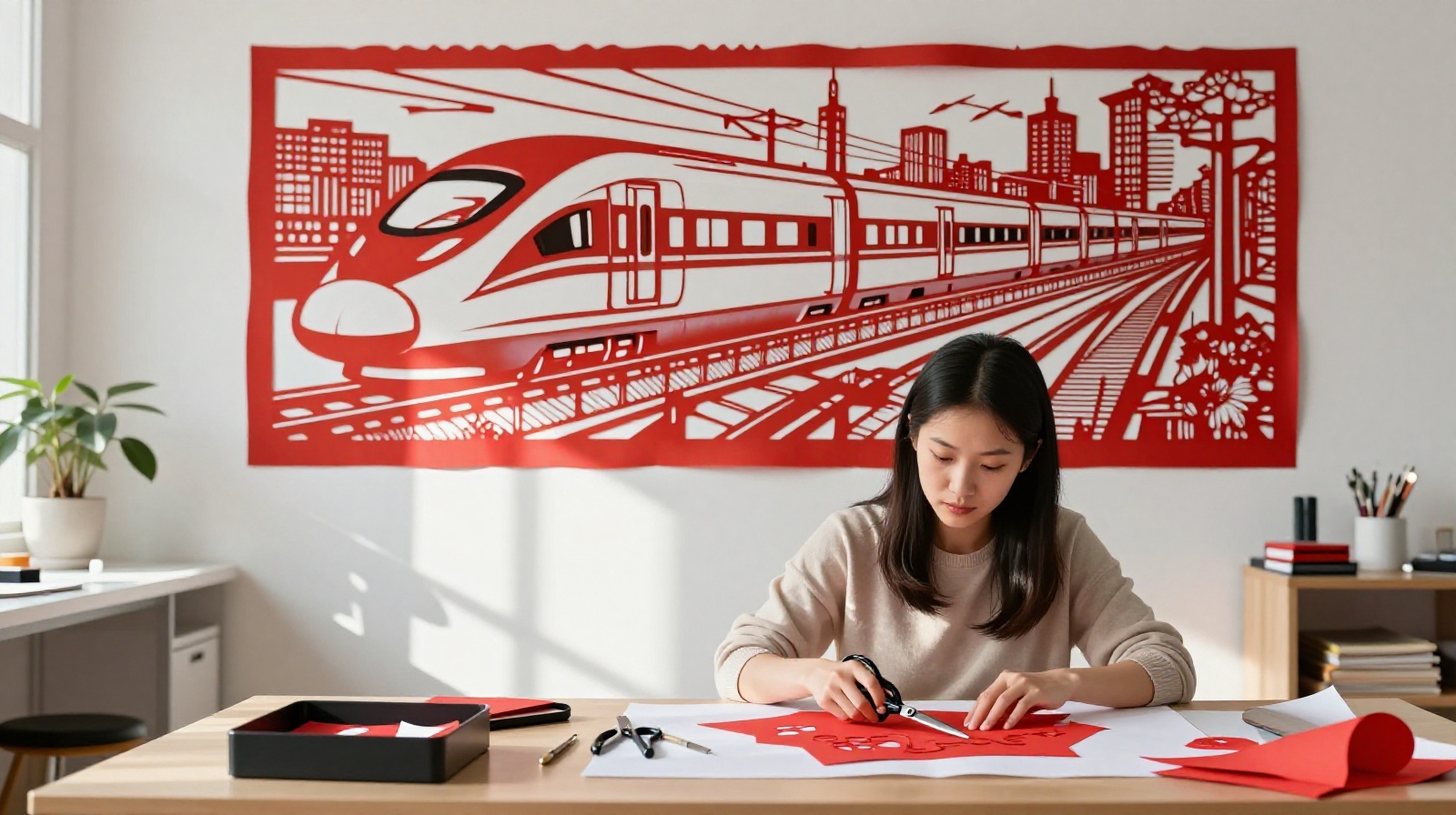
It is 8 PM on a Tuesday. Outside, the Huangpu River glows with neon lights and self-driving taxis navigate the traffic. Inside a small studio in the Former French Concession, 26-year-old Lin Wei sits at a desk cluttered with red paper, steel blades, and an iPad.
She is not making greeting cards for a generic holiday. She is carving intricate patterns that depict Shanghai’s metro system, high-speed trains slicing through mountains, and even the silhouette of a delivery robot. Her hands move with a speed that would make her grandmother proud, yet the world she captures is undeniably modern.
For many Westerners, Chinese paper cutting is a memory from childhood stories—a red window decoration for Spring Festival featuring fish or rabbits. But this craft has not died; it has mutated. It is thriving in the hands of Gen Z creators who treat traditional art not as a relic, but as a living language to describe their reality.
From Grandmother’s Kitchen to Global Social Media
Lin learned to hold the scissors at age six, watching her grandmother cut paper for New Year decorations in their rural hometown. Back then, the patterns were strict: flowers for prosperity, dragons for power. The process was slow, intimate, and strictly local.
Today, Lin’s workshop is a hybrid space. She uses traditional hand-carving tools for the delicate details that machines miss, but she also employs laser-cutting technology to create complex geometric layers for export orders. Her products are shipped to New York, London, and Berlin within 48 hours via express logistics.
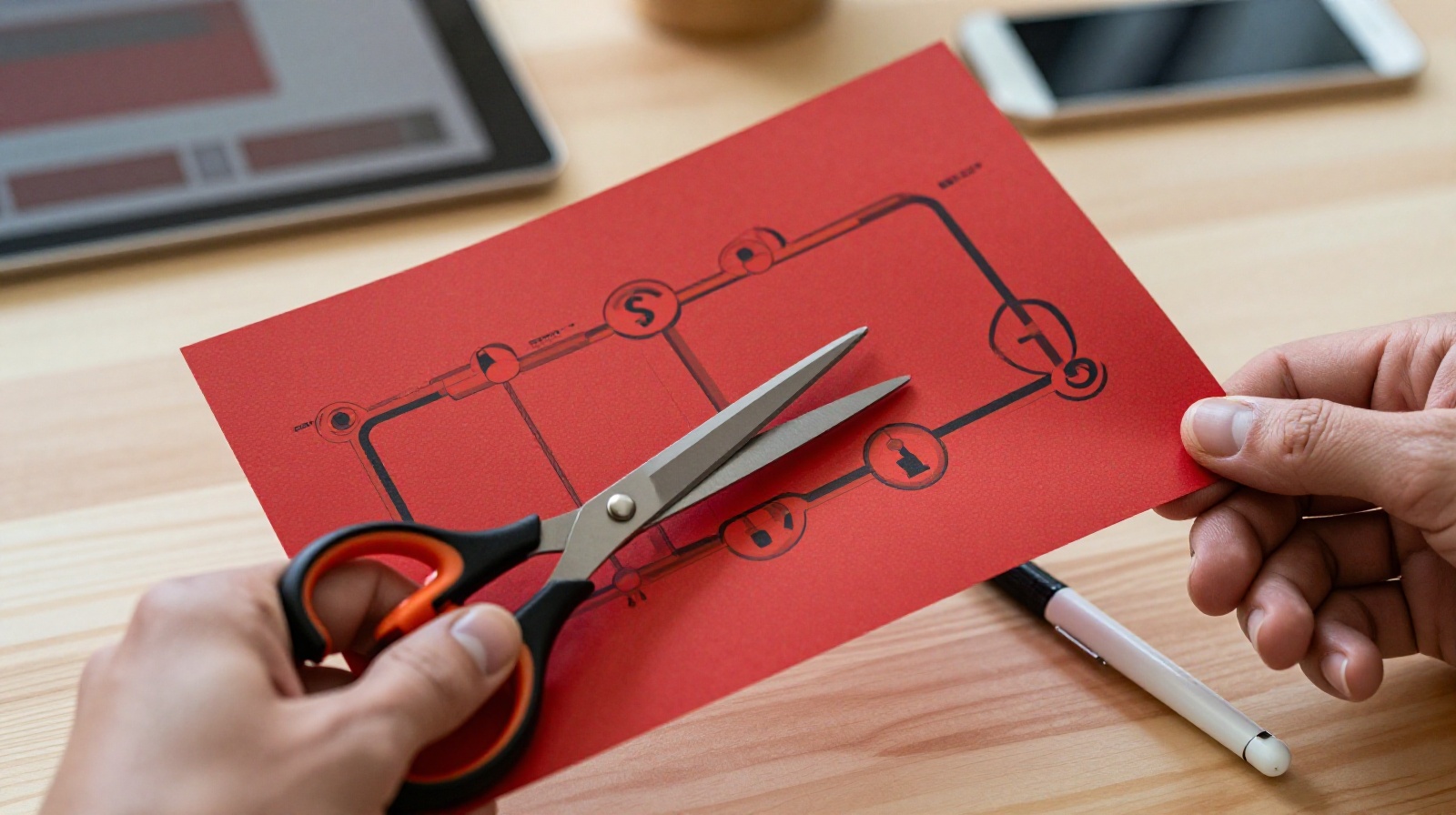
But her biggest audience isn’t in a gallery; it’s on TikTok. In short videos, she films the satisfying *snip-snip* of scissors against paper, explaining how a simple sheet of red paper can become a map of China’s modern infrastructure. These clips have garnered millions of views, not because they are exotic, but because they show a side of China that feels dynamic and relatable.
More Than Folklore: Art That Tells Today’s Story
The shift in subject matter is the most striking change. Old paper cutting focused on folklore: zodiac animals, peach blossoms, and mythical creatures. Modern masters are obsessed with the present.
In Lin’s latest series, you won’t find a traditional phoenix soaring over clouds. Instead, you see the intricate lattice of a subway station in Guangzhou or the sleek curve of a bullet train window. These aren’t just aesthetic choices; they are statements of identity. For young Chinese people, their country is defined by its speed, efficiency, and urban landscape.
“People ask why I cut trains instead of flowers,” Lin says, holding up a piece showing the Beijing-Shanghai High-Speed Railway line carved from paper. “My grandmother cut for good luck. I cut to show what we have built.”
This evolution resonates with international buyers who are tired of seeing China only through the lens of ancient history. They want to see contemporary creativity, and they find it in these red, fragile sheets that capture the pulse of a rapidly changing society.
Where Tradition Meets Technology
There is a misconception that technology destroys traditional crafts. In this studio, however, machines are partners. Lin uses digital design software to sketch patterns before cutting them by hand or laser.
Laser cutters handle the precision work required for mass production, ensuring every export order meets strict quality standards. Meanwhile, human hands remain essential for the final touches—adjusting tension, adding subtle variations, and creating pieces that require a specific emotional depth machines cannot replicate.
This blend of old and new is key to survival. If paper cutting remained only in rural courtyards, it would likely fade away as younger generations move to cities. By integrating modern workflows and global supply chains, artisans like Lin keep the craft economically viable while preserving its cultural soul.
A Global Connection Through Red Paper
The story of Chinese paper cutting is no longer just about preservation; it’s about connection. When a customer in Paris buys one of Lin’s pieces, they aren’t just buying a decoration. They are engaging with a narrative of modernization and resilience.
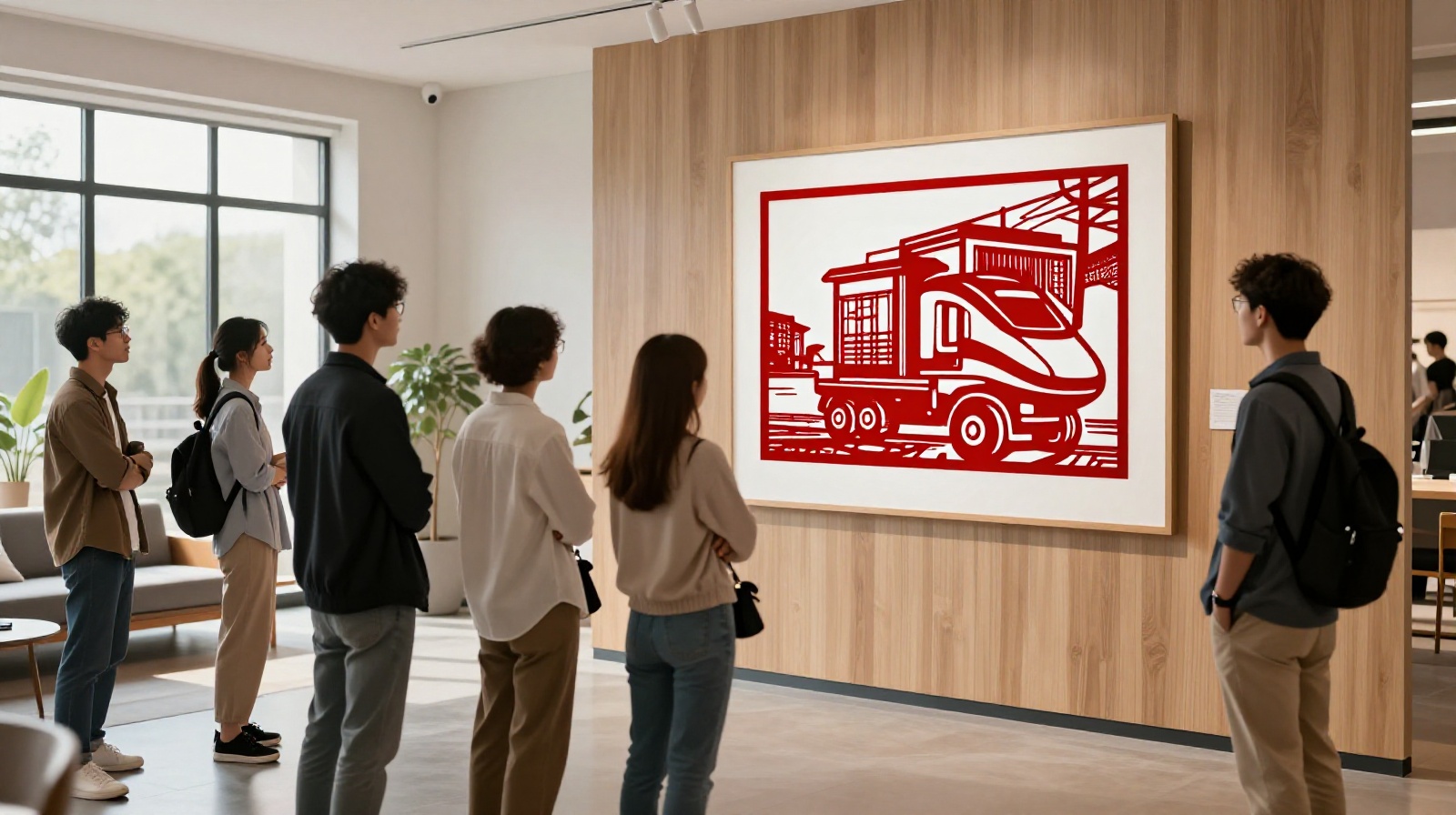
International buyers often tell stories of how these artworks sparked conversations in their living rooms. A paper cutout of a delivery robot might lead to a discussion about logistics efficiency; a depiction of a community park might open talks on urban planning. The art becomes a bridge, bypassing stereotypes and inviting people to see the everyday life of modern China.
The magic is not just in the intricate cuts or the centuries-old technique. It is in the realization that the same hands that cut paper for Spring Festival today are also cutting through the complexities of the 21st century. The art remains, but the story has changed.