

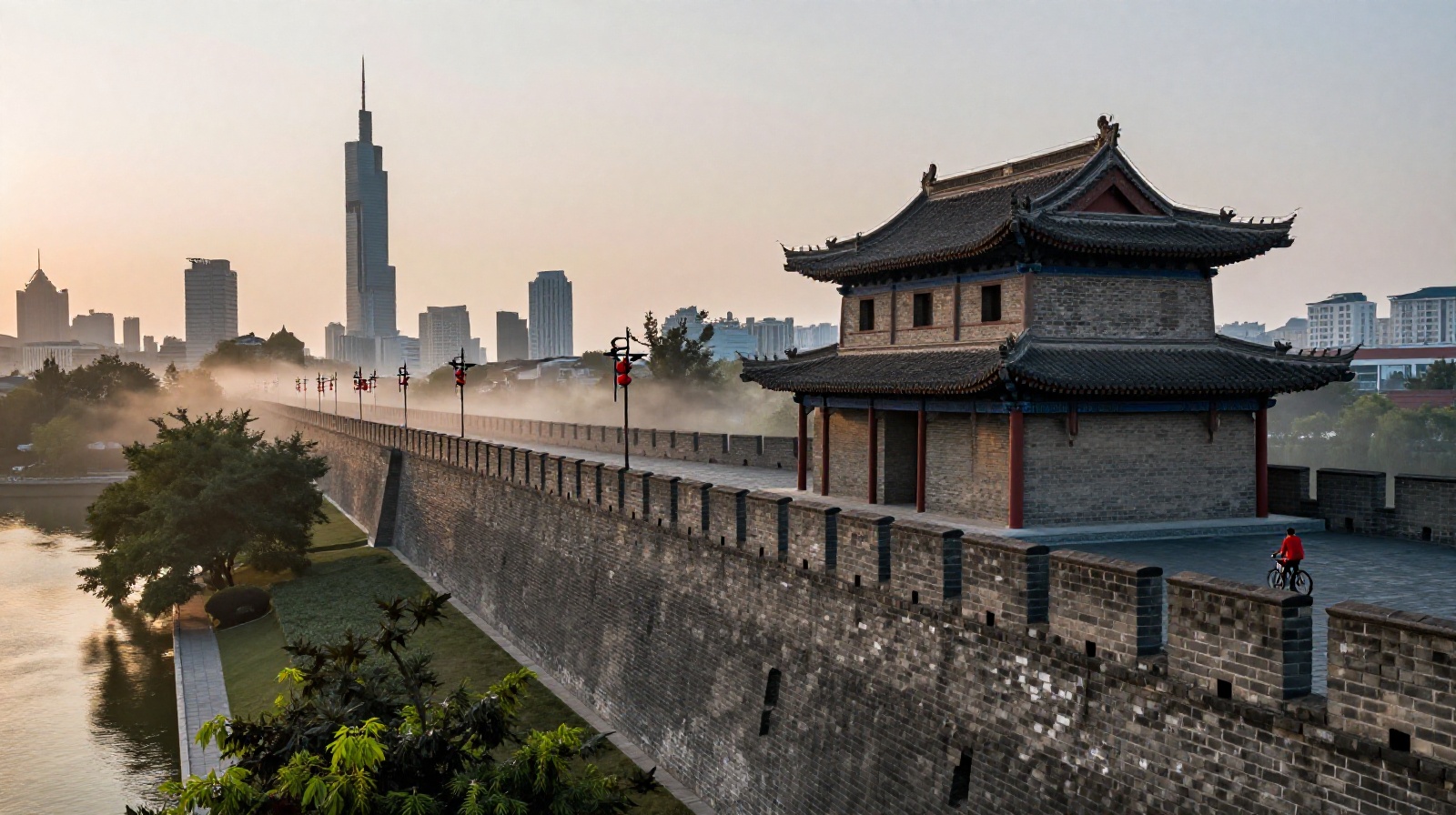
Wheels on Ancient Stone at Dawn
The air in Nanjing this morning is crisp, smelling faintly of roasted sweet potatoes and damp moss. It’s 6:45 AM. I’m not standing in a museum line; I’m pedaling hard on the top of the Ming City Wall.
Here, history doesn’t feel like a relic. The massive stone blocks, laid over six centuries ago, are worn smooth by millions of footsteps. As I ride along this narrow path, the city wakes up below me. To my left, a river glimmers under the grey sky; to my right, residential high-rises rise in neat rows. But between them lies the wall itself—a fortress that has seen empires fall and cities rise.
Most tourists visit the City Wall for an hour before rushing to the Sun Yat-sen Mausoleum. But locals know a different rhythm. I stop to chat with Old Zhang, 68, who cycles here every morning to stretch his legs. “It’s my gym,” he laughs, wiping sweat from his forehead. “Look down there.” He points to the bustling streets far below. “That construction site? It was rice paddies when I was a boy. Now the wall separates the past from the future, but we ride through it all every day.”

Where Does the City Go Underground?
Nanjing is famous for its imperial history, but today’s youth are busy carving out new spaces in the city’s belly. After cycling down from the wall and navigating the chaotic traffic of East Chengmen Gate, I find myself looking for a door that doesn’t exist.
There is no sign on the street. No neon glow. Just an unassuming entrance tucked between a bubble tea shop and a laundromat in a quiet alley near Xinjiekou. This is the entrance to ‘The Void,’ a bookstore hidden entirely beneath the city streets.
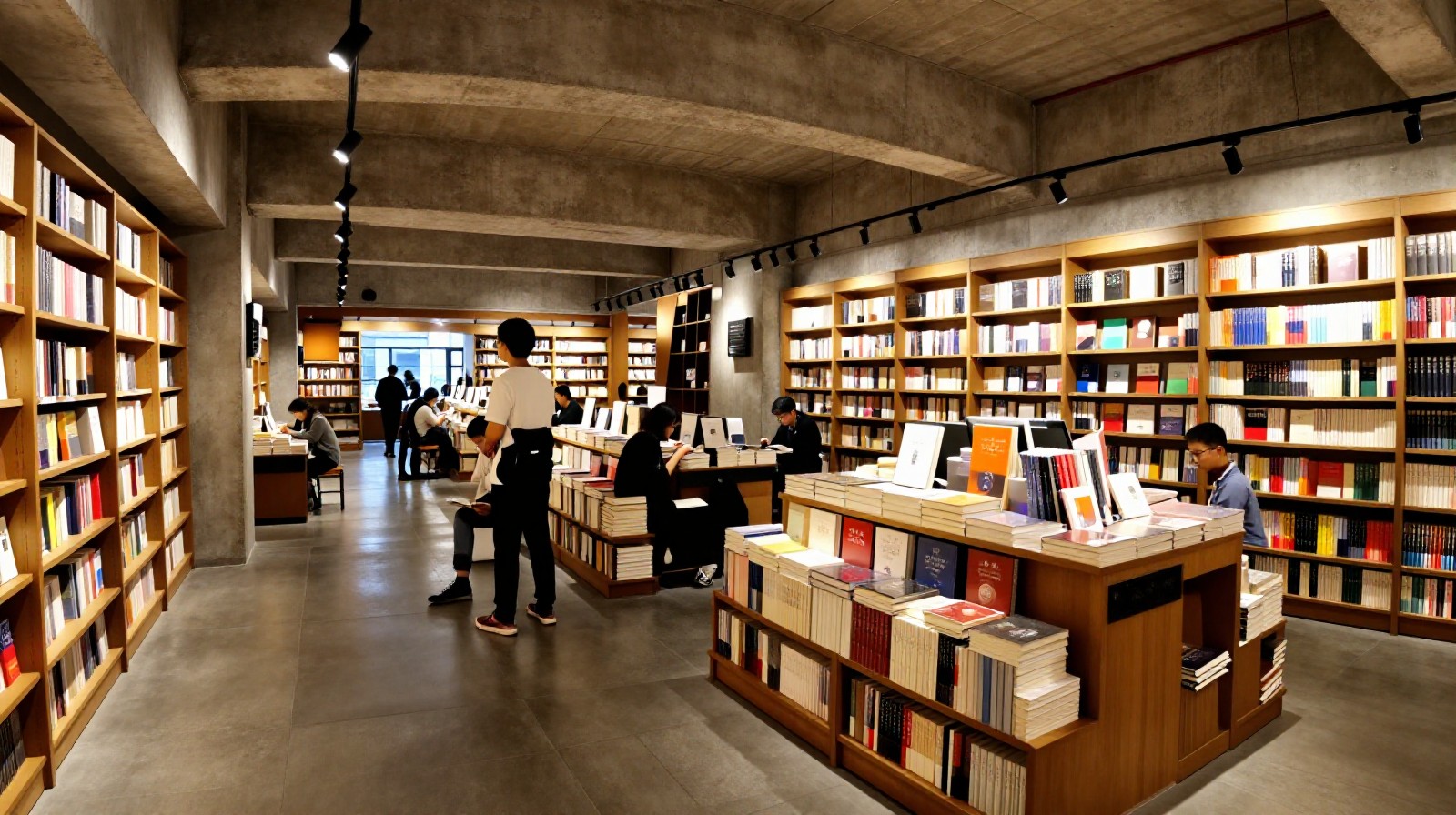
Descending the stairs feels like stepping into another world. The noise of traffic vanishes instantly, replaced by the soft hum of an air conditioner and the smell of old paper mixed with cold brew coffee. The space is intimate—low ceilings, exposed concrete pillars painted in muted tones, and rows of shelves that seem to stretch endlessly.
More Than Just a Bookstore
This isn’t a traditional library where you must whisper. It’s a community hub for Nanjing’s creative class. I watch a group of young designers sketching on napkins while sipping lattes, and students huddled over laptops in the corner reading nooks.
“We didn’t want to be a place for just selling books,” says Lin Wei, 29, one of the founders who helped convert what was once an old subway maintenance tunnel into this cultural space. “Nanjing has so much history above ground that we had to go underground to find our own voice.”
The shop hosts small film screenings and poetry readings almost every night. It’s a stark contrast to the grand, imposing museums up on the wall. Here, culture feels personal, messy, and alive.
How to Navigate Your Own Time Machine
If you want to experience this side of Nanjing, skip the tour groups. Start early at the Zhonghua Gate section of the Ming City Wall (open 6:00 AM – 7:00 PM). Rent a bike at one of the many stations near the entrance—locals often use shared bikes or bring their own.
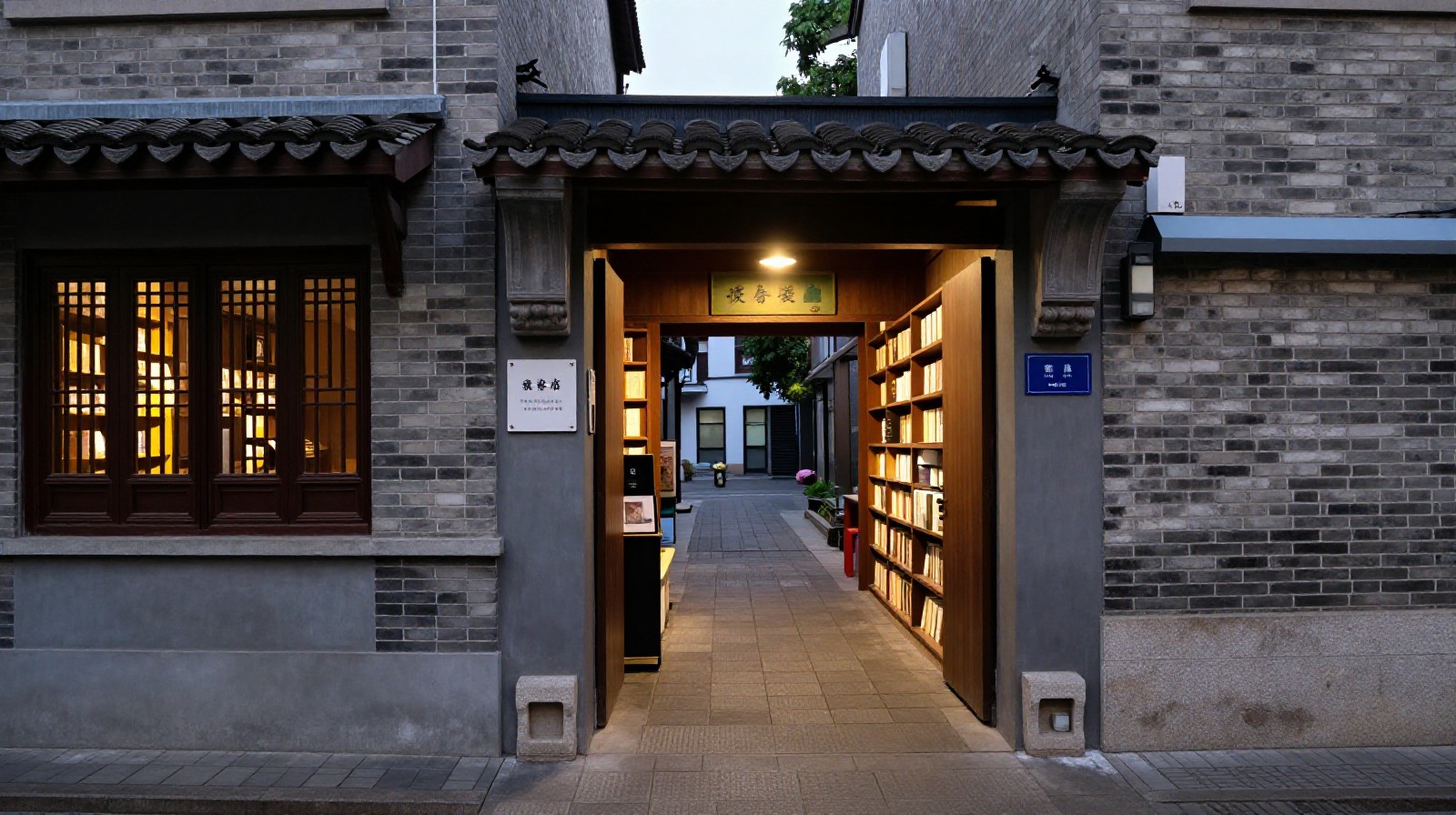
From there, head to the Xinjiekou area. For ‘The Void’ (or similar hidden gems like ‘Underground Reading Room’), look for the unmarked doors in side alleys off Huai Hai Road. Check social media or local community boards for opening hours, as these small spaces often open later in the day and close early.
Nanjing isn’t just a city of ancient tombs and statues. It’s a place where people ride history every morning and hide their dreams beneath the pavement at night. The real story isn’t in the guidebooks; it’s in the silence between the stones and the quiet buzz of the underground.