

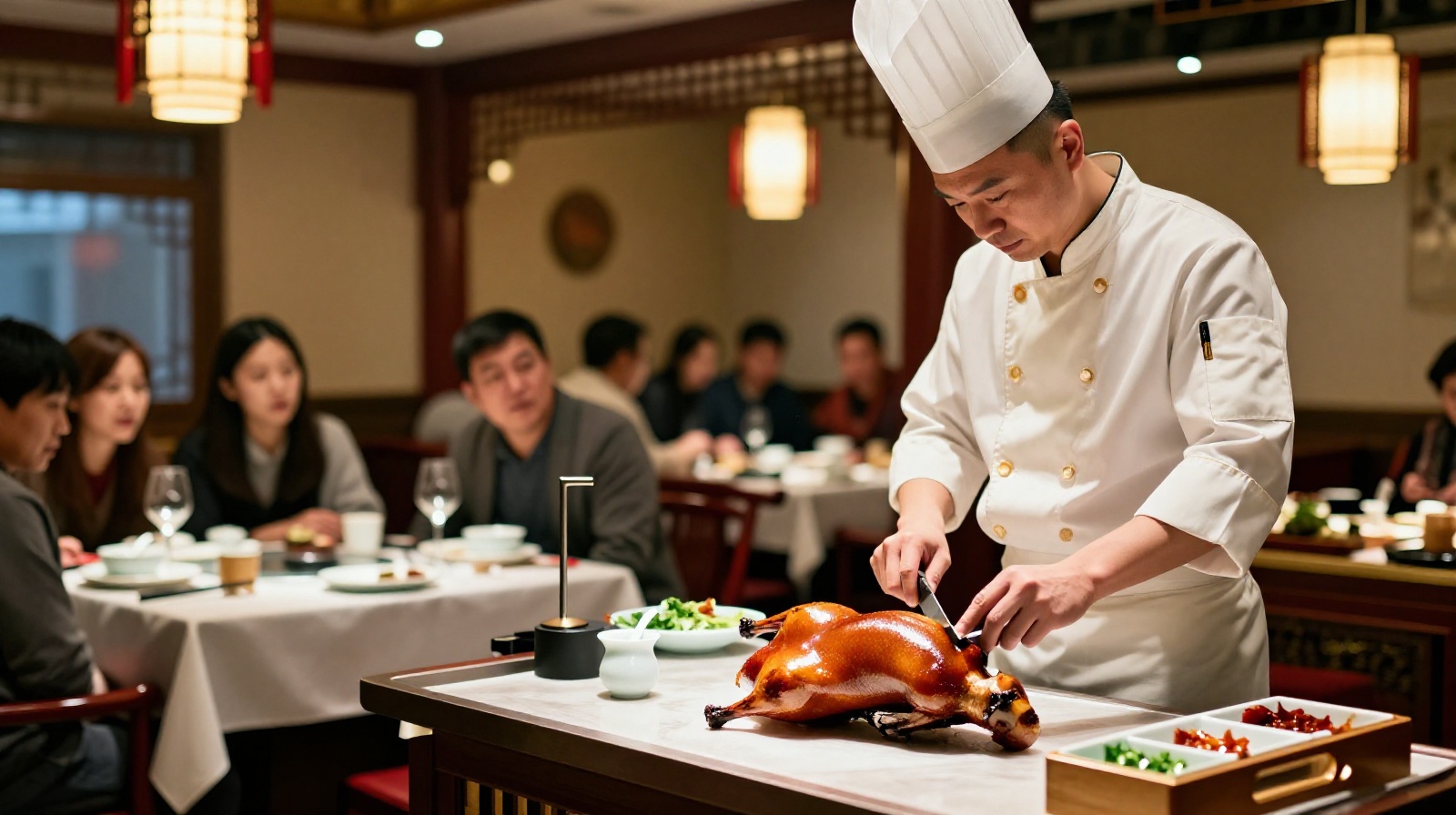
A Three-Day Ritual in a Modern City
You might assume that eating Peking duck in Beijing is as simple as ordering from a menu and waiting ten minutes. But if you watch the master at work behind the glass partition, you’ll realize this dish defies modern speed. The process doesn’t start when the chef picks up his knife; it begins three days earlier.
In the bustling alleys of Beijing, where delivery bikes zoom by and smartphones dominate every table, there is still a quiet corner dedicated to patience. This is the reality behind one of China’s most famous culinary exports. It’s not just food; it’s a slow, deliberate performance that has survived from imperial courts to modern restaurants.
The Invisible Work: Why Three Days?
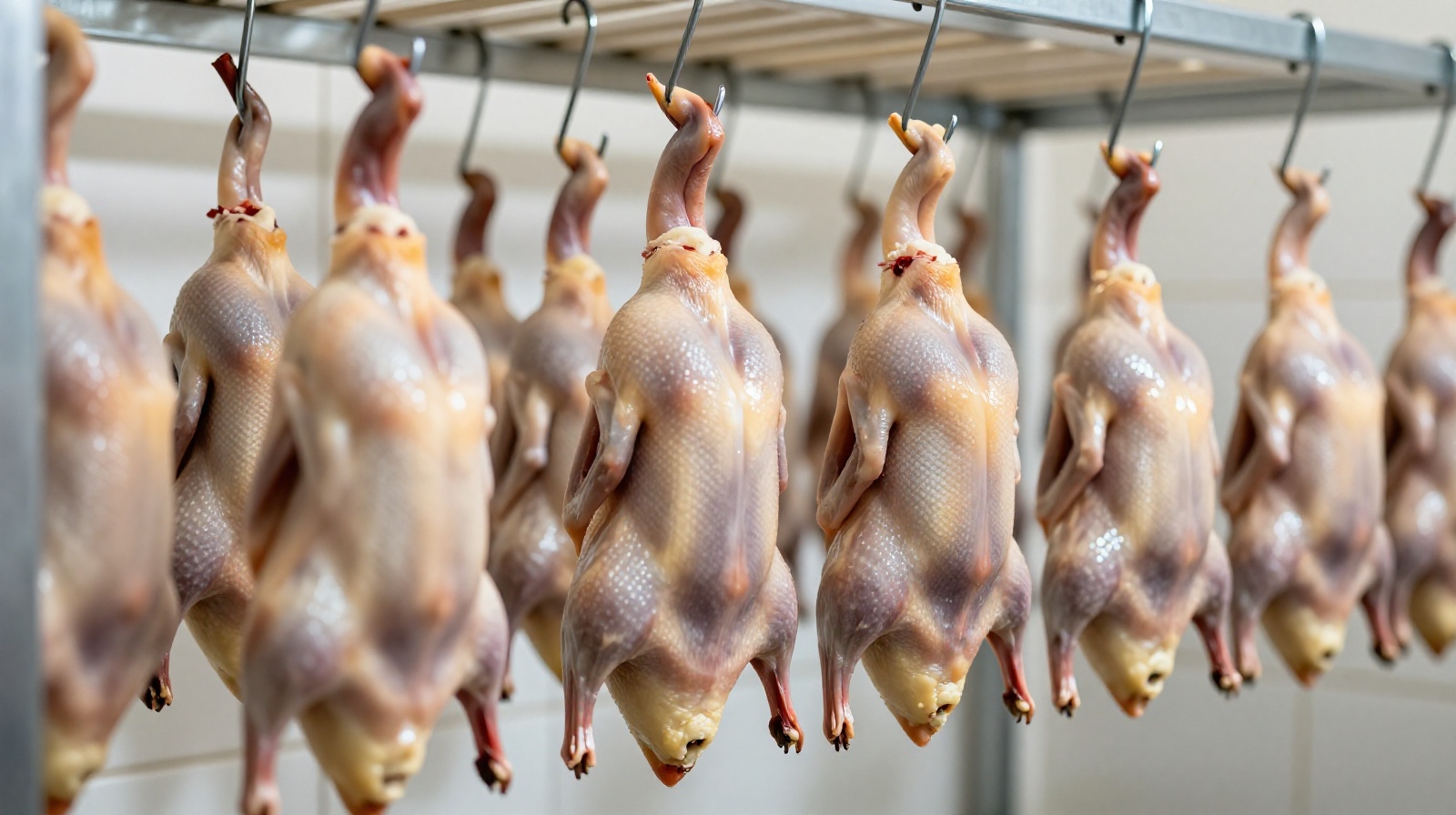
Most people think roasting duck is just about putting meat in an oven. For the authentic version, however, the magic happens before the heat ever touches the bird. The process starts with inflating the duck. Chefs blow air between the skin and the flesh to separate them. This creates a pocket of air that ensures the skin becomes incredibly crispy while the meat stays tender.
Next comes the scalding step. Hot water is poured over the skin to tighten it, followed by a glaze made of malt syrup or honey. This sweet coating will turn into that signature ruby-red color during roasting. Finally, the duck hangs in a wind-drying room for 24 hours. The air circulates constantly, removing moisture until the skin is as dry as parchment paper.
This entire cycle takes three days. It’s impossible to rush. If you skip the drying time, the skin will be chewy and tough, not crisp. This is why a truly authentic meal in Beijing costs significantly more than a frozen version found in Western supermarkets. You aren’t just paying for ingredients; you are paying for the chef’s time and the physics of air drying.
Master vs. Machine: The Last Human Touch
In recent years, automated conveyor belts have appeared in some large factories, churning out thousands of ducks a day. These machines can handle the roasting and slicing with precision, but they lack the intuition of a human master. A seasoned chef knows exactly when to stop the oven based on the smell and the color of the skin—a nuance that sensors often miss.
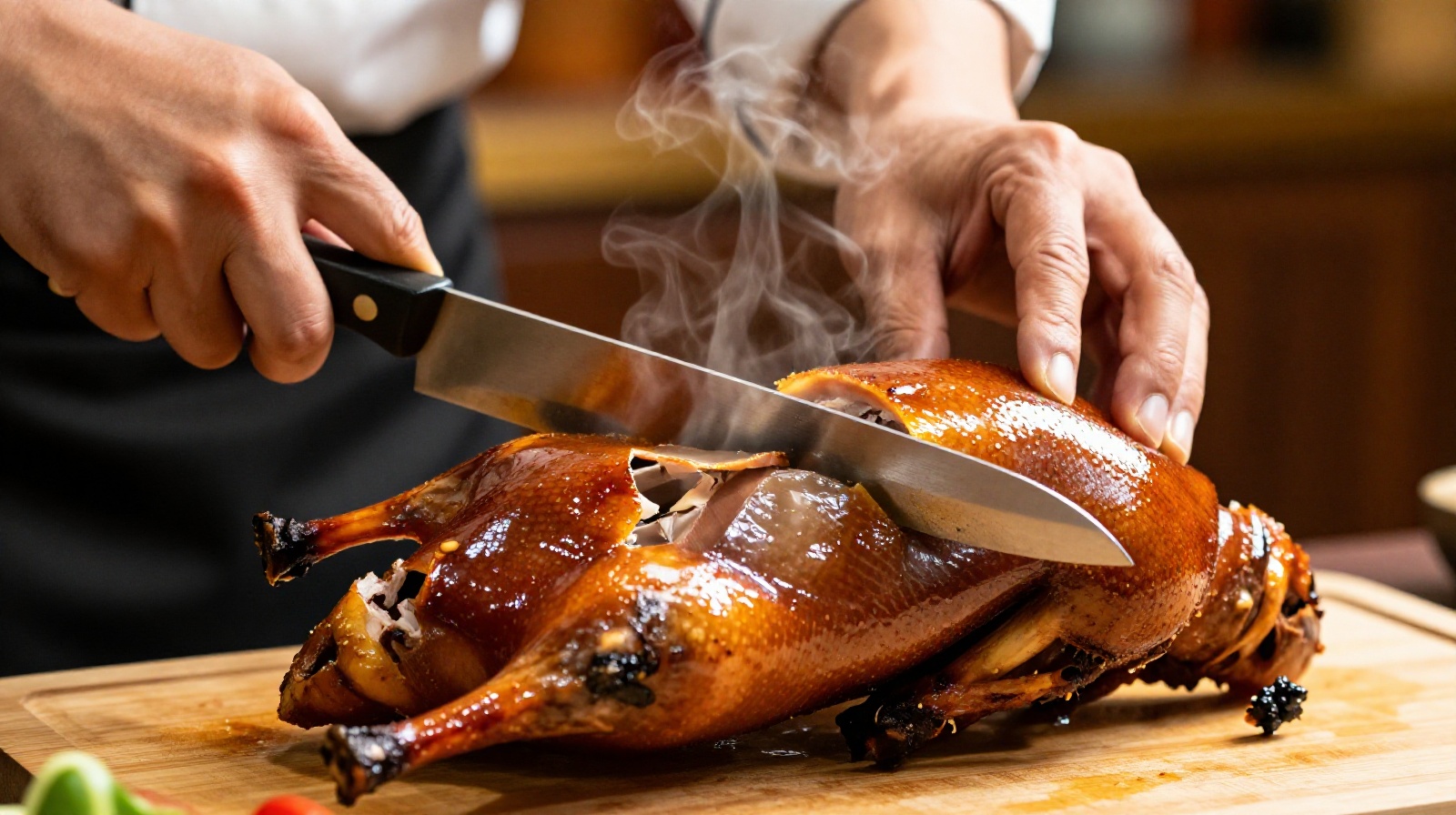
Watch a master chef slice the duck, and it looks like a dance. With one smooth motion, he separates the crispy skin from the meat, ensuring each piece has both elements. The sound is distinct: a soft crackle as the blade cuts through the glass-like skin. This ritual transforms eating into an event.
Eating Like Royalty: The Ritual of Consumption
Serving Peking duck is almost as elaborate as cooking it. You don’t just get a plate of meat. Traditionally, the chef brings a whole duck to your table and slices it right in front of you. Then comes the assembly.
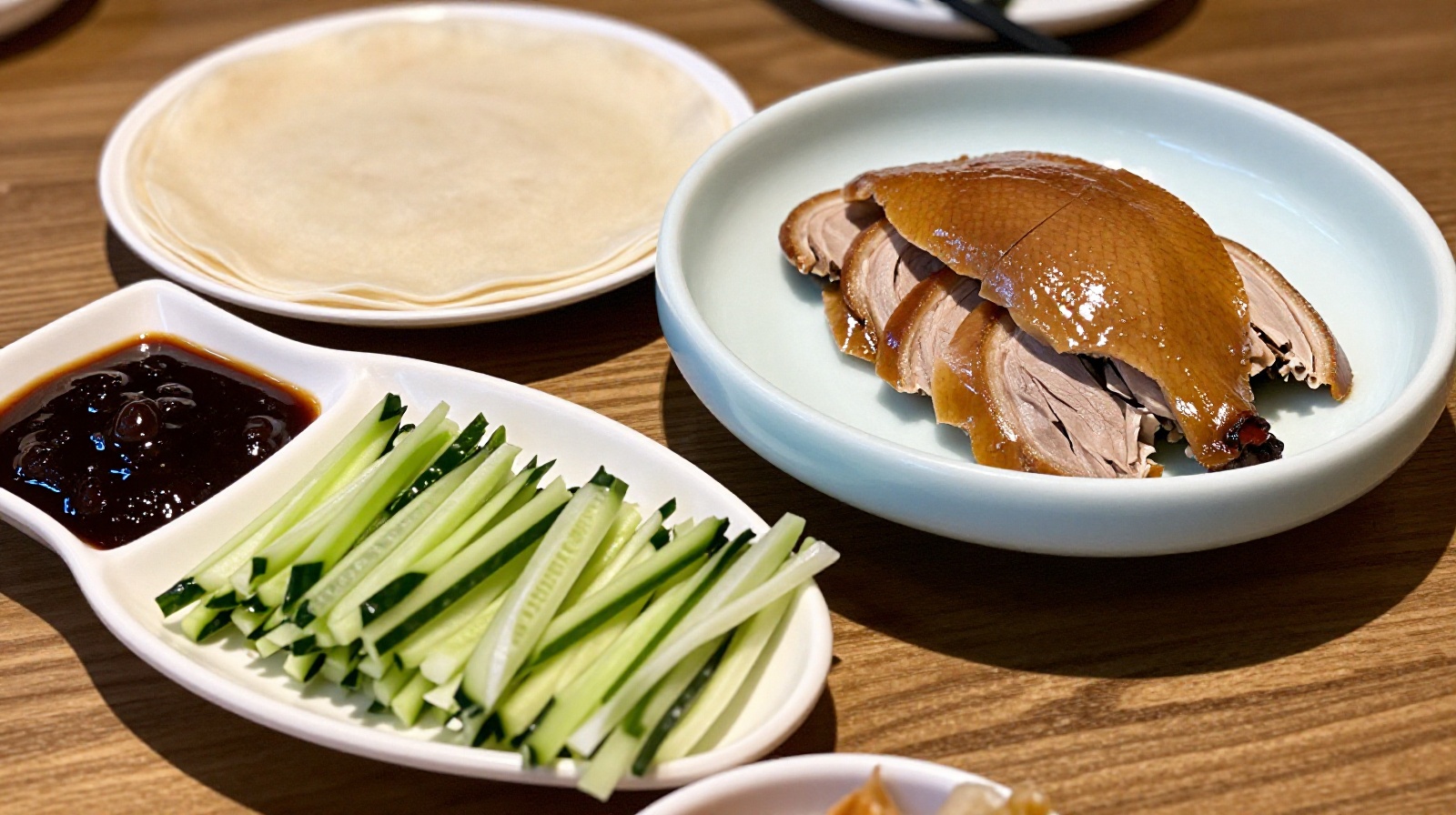
The experience requires specific tools: thin steamed pancakes (lotus leaf wrappers), sweet bean sauce, fresh cucumber strips, and scallion threads. You take a pancake, smear a bit of sauce, add a strip of cucumber, a sliver of duck skin, and roll it up. The contrast is key—the hot, fatty meat against the cool, crunchy vegetables and the soft, warm bread.
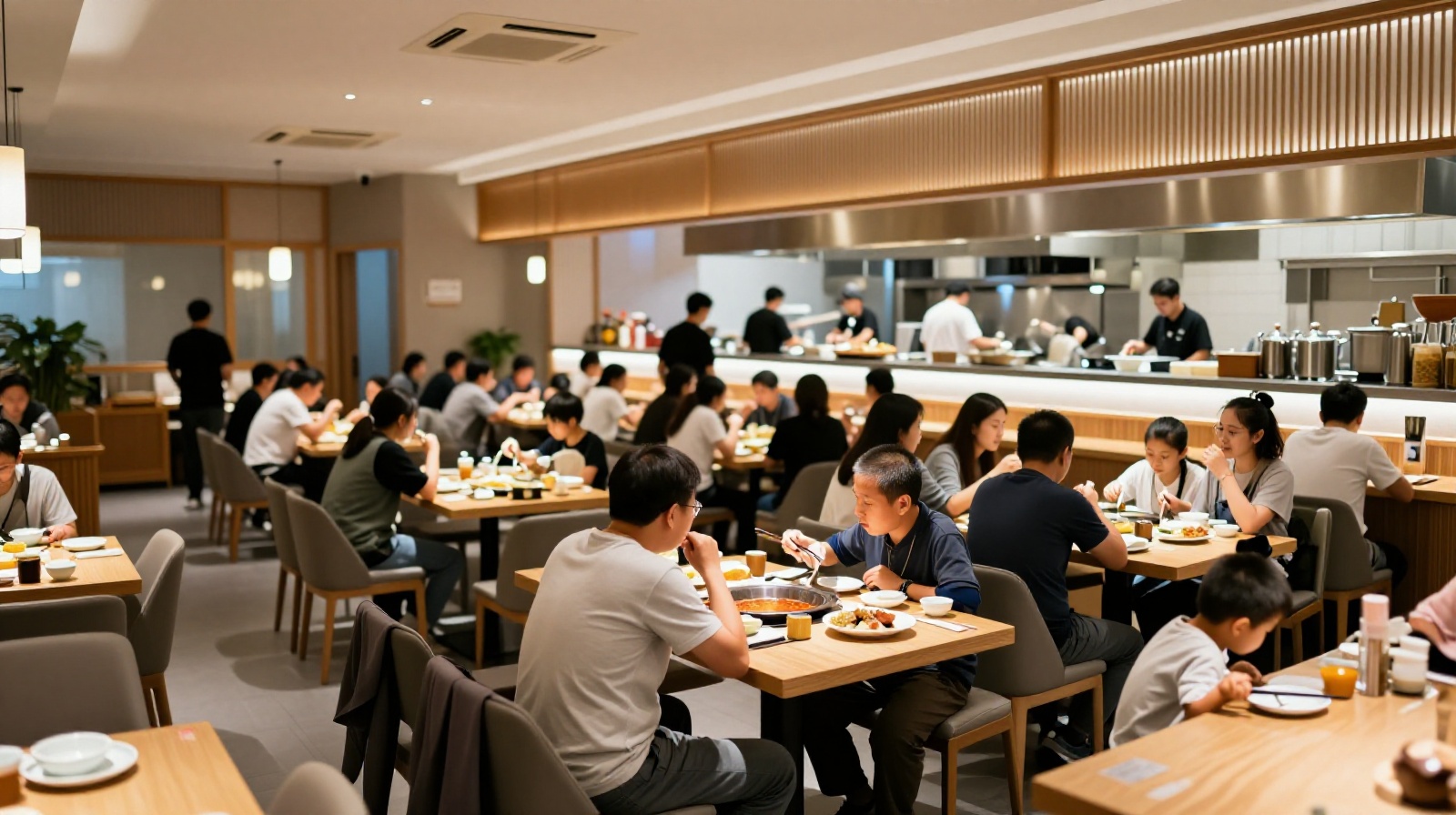
This method turns a meal into a social activity. It slows you down, forcing you to engage with your food and your companions. In a city that runs at digital speed, this ritual offers a rare moment of mindfulness.
A Cultural Bridge on the Plate
Today, Peking duck is more than just dinner; it’s a cultural ambassador. When foreign visitors come to Beijing, few experiences are as memorable as sitting down for this meal. It bridges the gap between ancient history and contemporary life.
The dish tells a story of China’s evolution. From the imperial kitchens of the Yuan Dynasty to the neon-lit restaurants of modern Sanlitun, the core technique remains unchanged. It proves that in a rapidly developing nation, there is still room for traditions that demand time, patience, and human touch.