

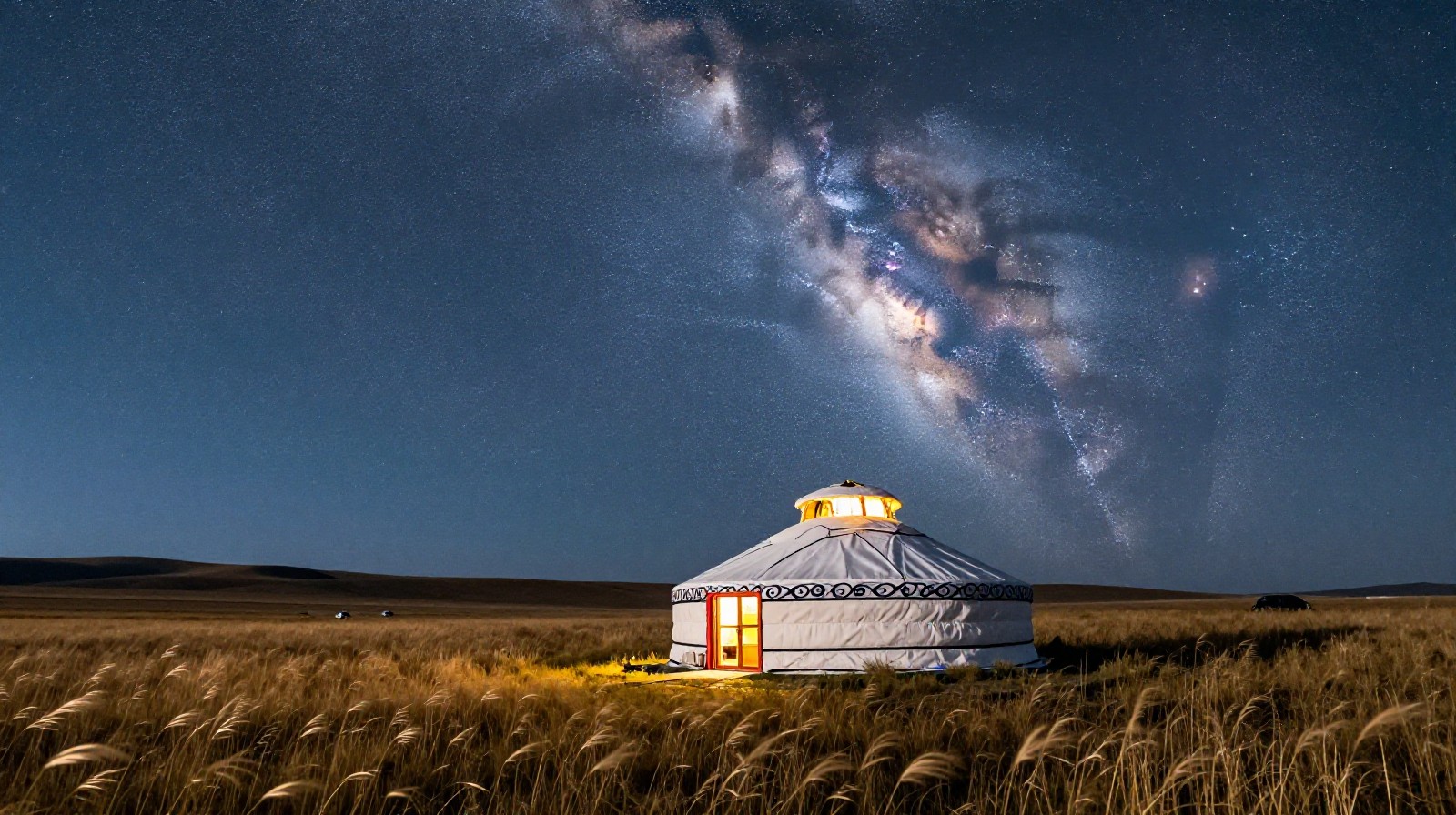
When the City Lights Fade, the Stars Take Over
Imagine driving east from Beijing for eight hours, then realizing your phone has no signal. The highway ends, replaced by a gravel track that winds through golden grass that sways like an ocean. You turn off the engine. There is no hum of traffic, no notification pings. Just the wind whistling through dry stalks and the distant, rhythmic chewing of sheep.
This isn’t a scene from a postcard; it’s Tuesday night in the Xilin Gol League or Hulunbuir region. For travelers used to navigating life by GPS coordinates and 5G speeds, stepping into this vast emptiness feels disorienting at first. But within an hour of stopping, that anxiety dissolves into something rare: total stillness.
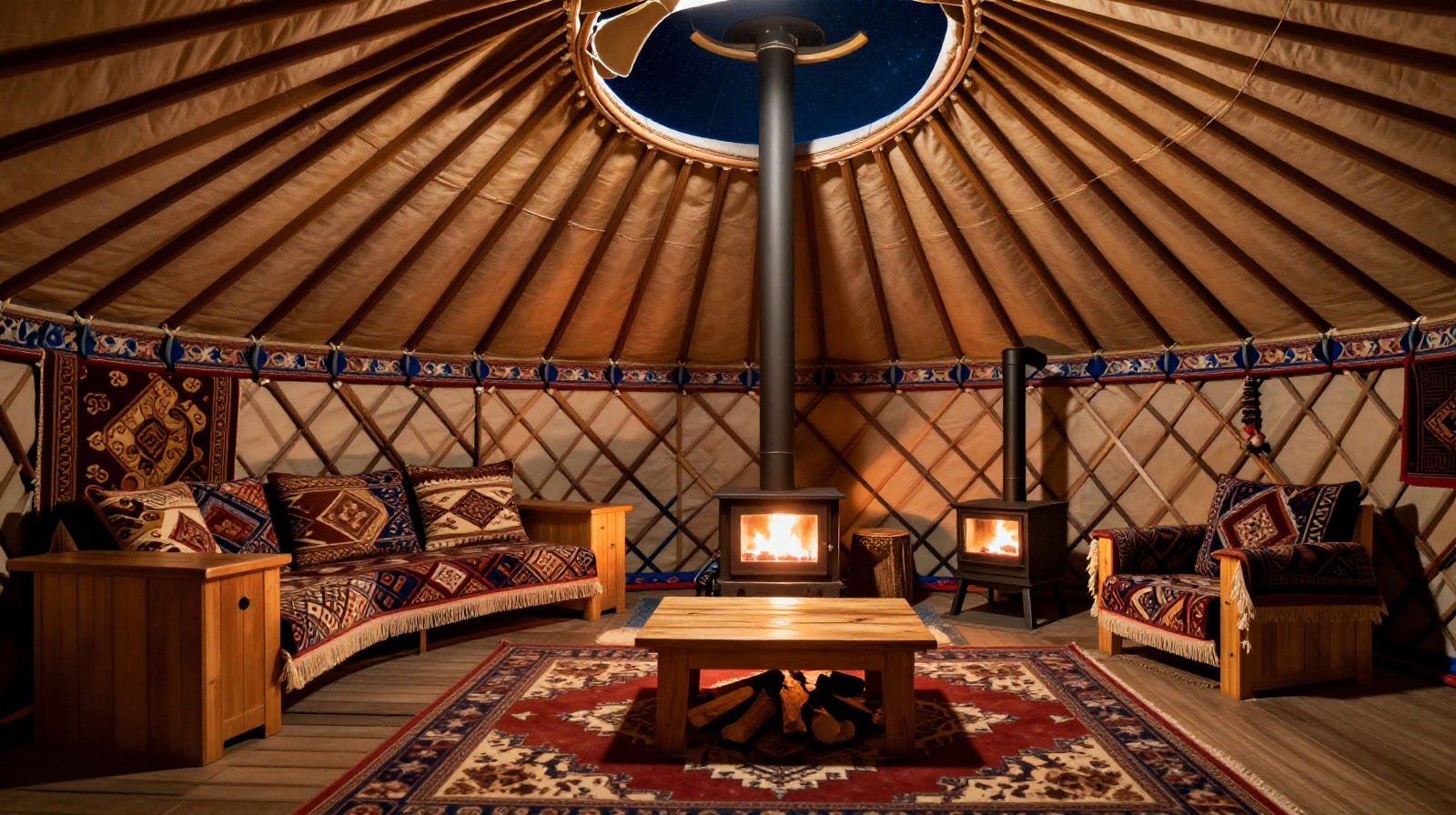
A Modern Home in a Traditional Shell
You might expect to sleep on the hard ground or struggle with primitive conditions when camping in the grasslands. That was true decades ago. Today, finding an eco-friendly yurt (or ger) that blends nomadic aesthetics with 21st-century convenience is easier than you think.
The structure itself remains iconic: round walls of woven lattice and white canvas roofs pitched over wooden frames. But step inside, and the surprise awaits. The floor is covered in thick, patterned carpets. A wood-burning stove keeps the air crisp but warm even when winter winds howl outside. You plug your phone into a USB port to charge it—yes, there is electricity here—and find that high-speed Wi-Fi often works perfectly for uploading photos of the sunset.
Inside, you might find a modern kitchenette stocked with instant noodles and tea bags, alongside traditional pots for boiling milk tea. The bedding is not rough straw but plush duvets, cleaned and pressed by the host family. It’s a seamless bridge between the nomadic past and the connected present.
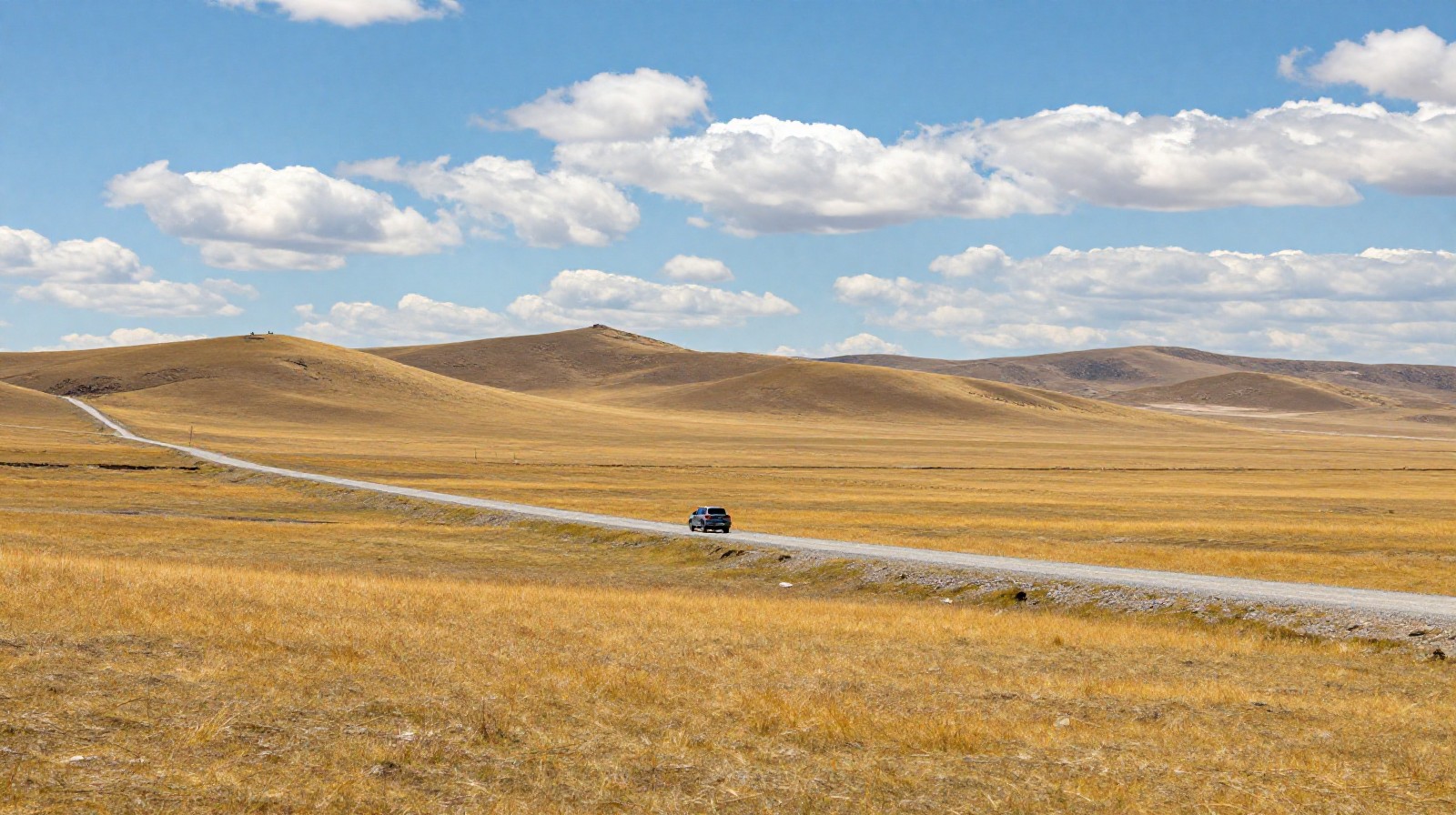
Charting a Route Where No One Else Is Looking
The most common mistake for first-time visitors is sticking to the main highways, which are often lined with souvenir stalls and tour buses. The real magic lies in the unmarked roads. A recommended self-drive route starts from Hailar or Ulanhot, heading south into the grasslands but avoiding the popular scenic loops.
Instead of rushing to a specific landmark, treat the road itself as the destination. Look for signs pointing toward small herder settlements—often just a cluster of yurts visible in the distance. These are your resupply points. You can buy fresh dairy products, local mutton, and firewood at these informal stops.
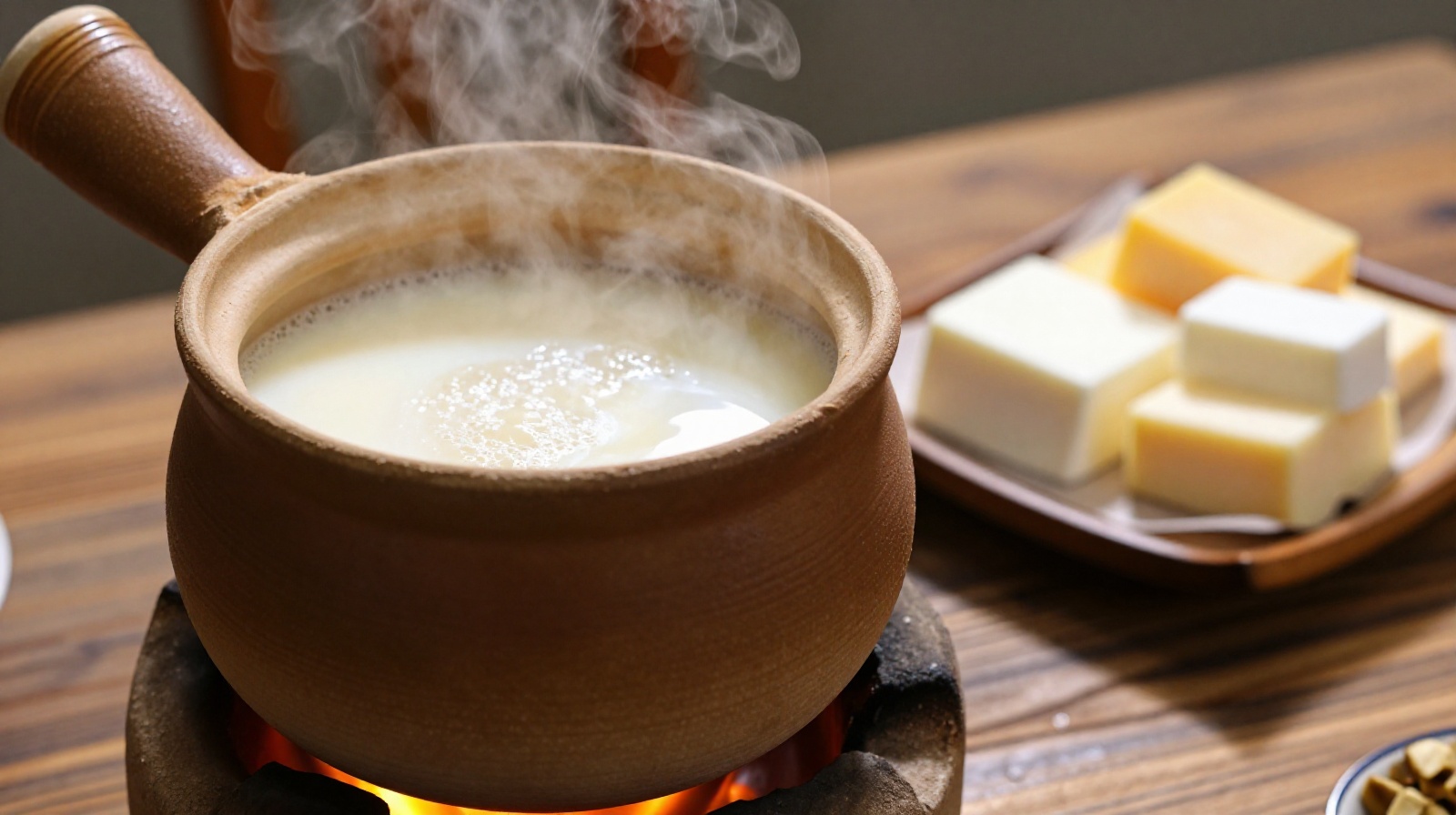
Tea, Food, and the Unspoken Rules of Hospitality
The heart of this journey isn’t just the landscape; it’s the people. When you pull up to a yurt, you are rarely turned away. Hosts in Inner Mongolia follow a deep-seated code of hospitality that predates modern tourism.
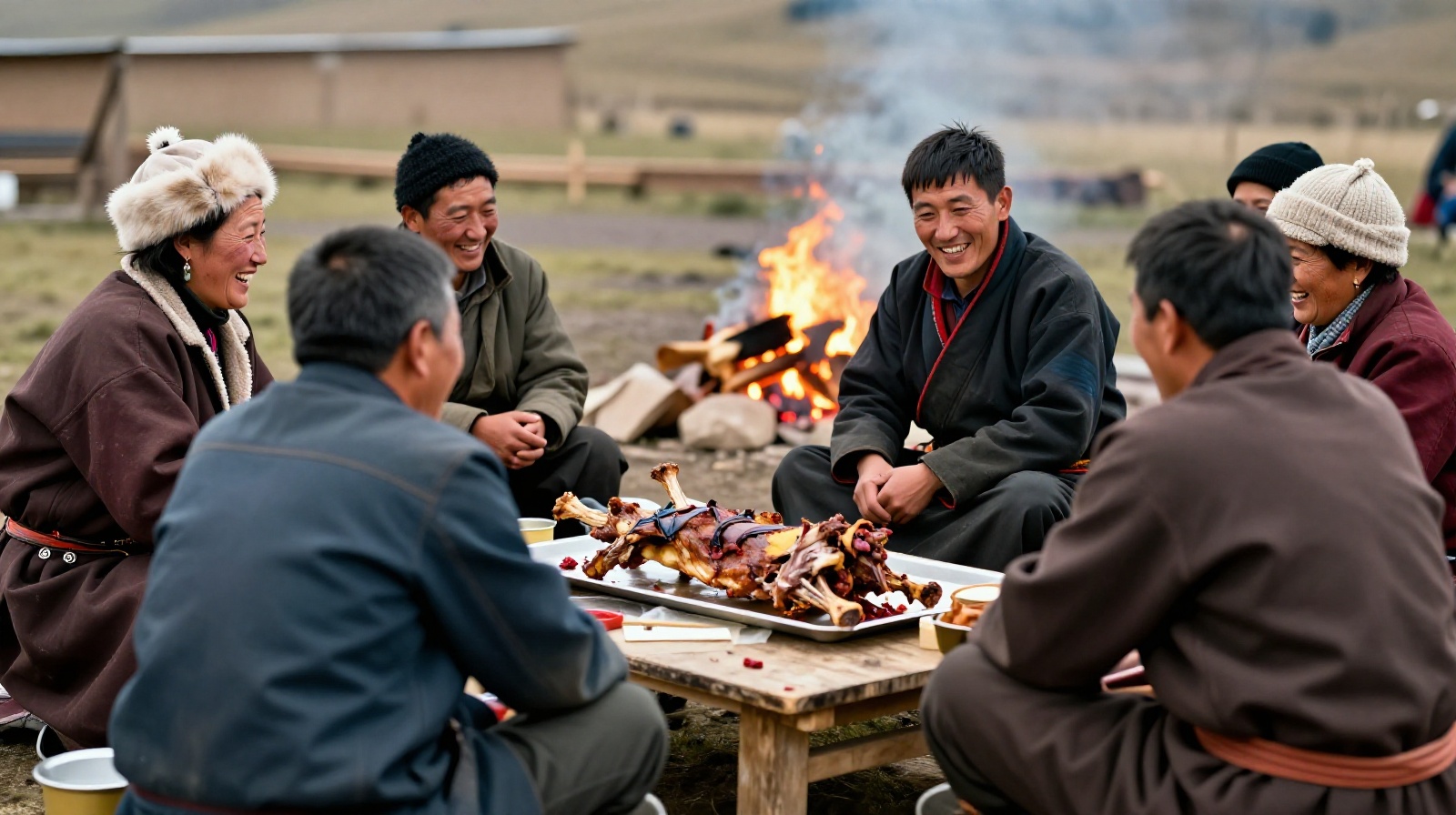
Expect to be offered suan nai (sour milk) or salty milk tea immediately upon arrival. The ritual is simple: the host pours tea from high up, letting it splash slightly into your bowl as a sign of abundance. If you refuse too politely, they might insist again and again until you take a sip.
Dinner often features roasted mutton, a staple that tastes different depending on what the sheep have grazed. The meat is tender, seasoned only with salt and local herbs. There are no fancy menus here; just shared plates passed around a low table while the family shares stories of their livestock or the weather. It’s an exchange that feels less like a transaction and more like joining a temporary tribe.
Respect and Responsibility in the Wild
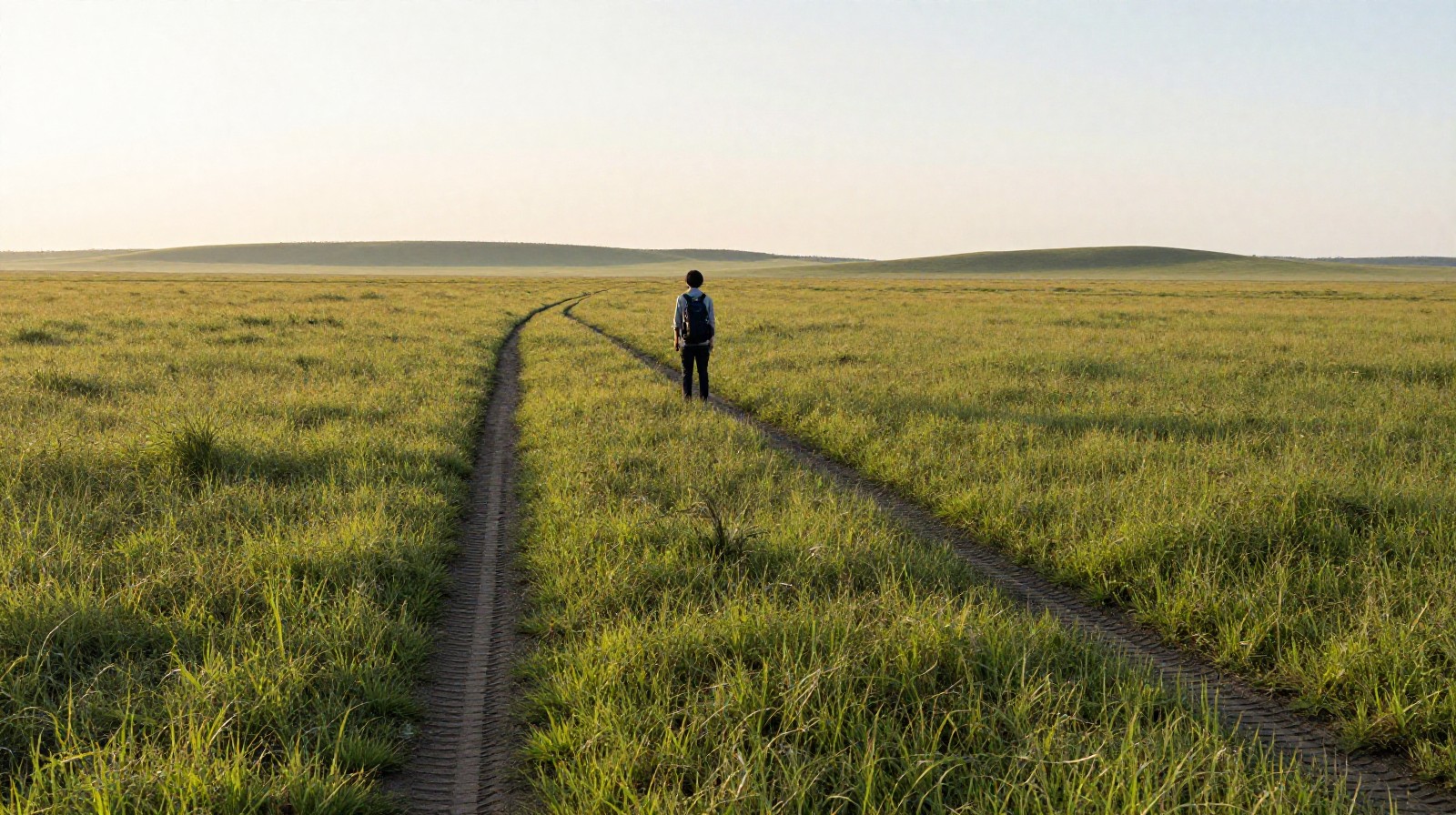
As you drive deeper into these fragile ecosystems, remember that this is not a theme park; it is someone’s home and livelihood. The grasslands regenerate slowly. A single tire track can persist for years, damaging the root systems.
Travelers are encouraged to stay on established tracks or use designated camping areas. If you must drive off-road, do so with extreme caution and always pack out your waste. Plastic bottles left behind are a visible blight in these pristine landscapes. Also, ask before taking photos of the locals or their animals. A smile and a nod go further than any camera lens.
The Silence That Changes You
Back in your yurt, with the stove glowing softly and the Milky Way stretching across the sky like a river of diamonds, you might find that the urge to check email or scroll through social media fades. The sheer scale of the horizon puts daily worries into perspective.
This route offers more than just scenic views; it offers a reset button for life in the digital age. It is a reminder that despite our hyper-connected world, there are still places where the only thing that matters is the wind, the stars, and the people who call this vast silence home.