

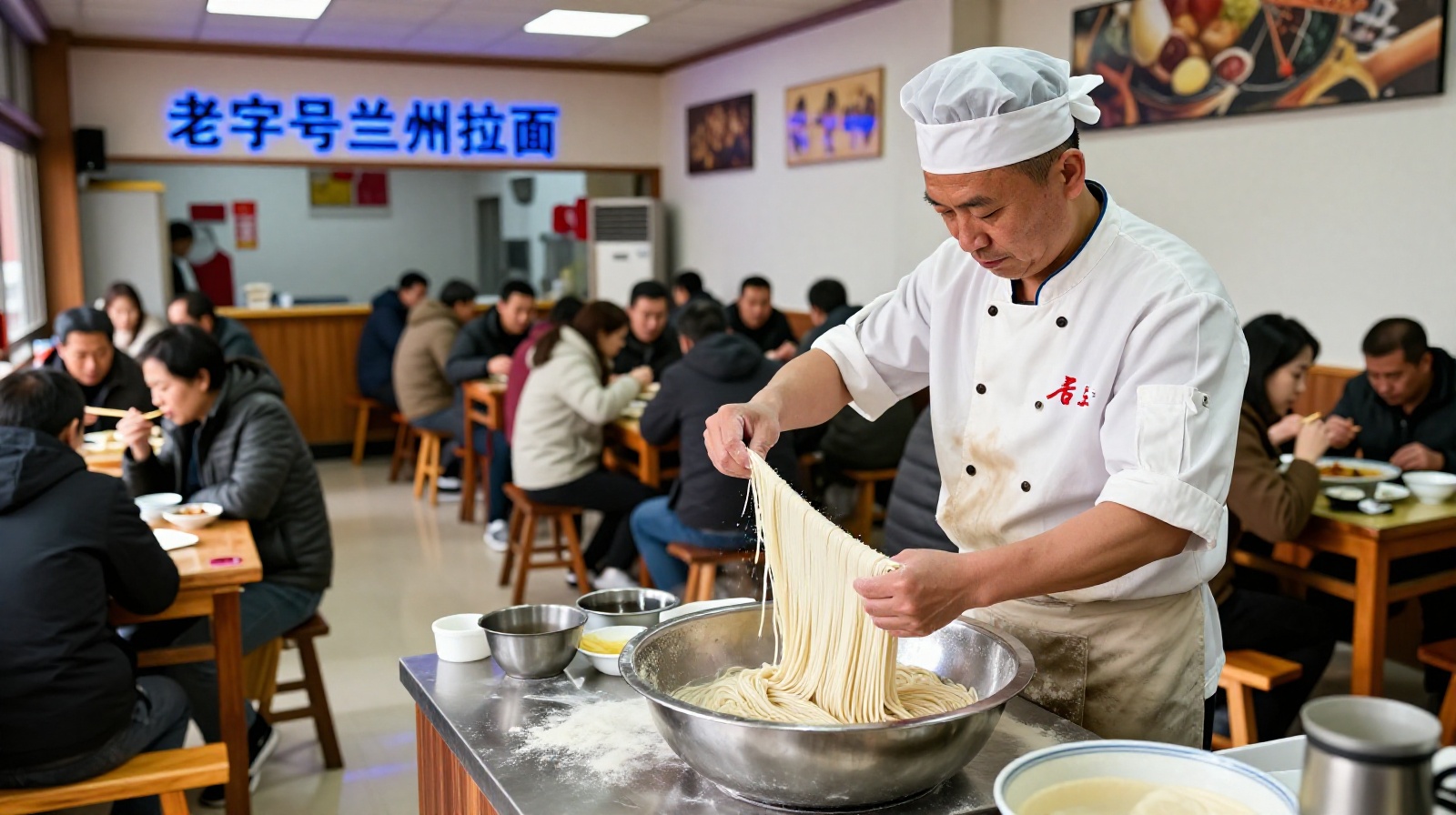
From Gansu Street to Global Chains
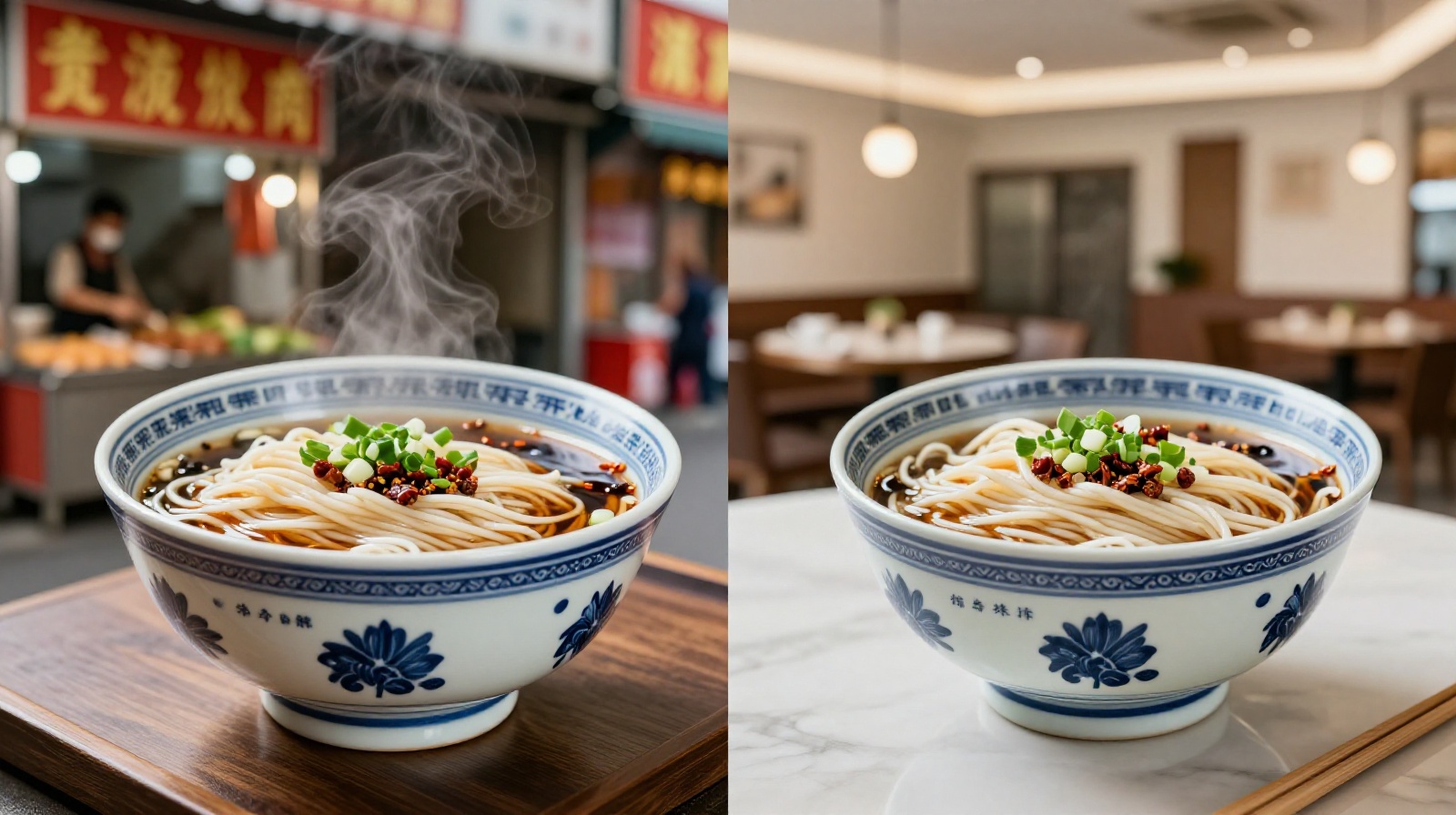
Walk into any noodle shop in a Chinese city, and you will likely see the same neon sign: blue characters on a white background reading “Lanzhou Beef Noodles.” But here is the catch. The actual restaurant chain that most people recognize as “Lanzhou Lamian” (the brand) has little to do with the traditional hand-pulled noodles served in Lanzhou city itself. In China, there is a crucial distinction between a geographical indication product and a commercial franchise.
The real story isn’t about the noodle recipe; it’s about the logistics of scale. In the 1990s, thousands of migrants from Hezhuo County in Gansu province began traveling to Shanghai and other coastal cities. They didn’t just open small family stalls; they created a loose network of mutual aid. This network evolved into a massive industrial ecosystem that could replicate a bowl of noodles anywhere on Earth.
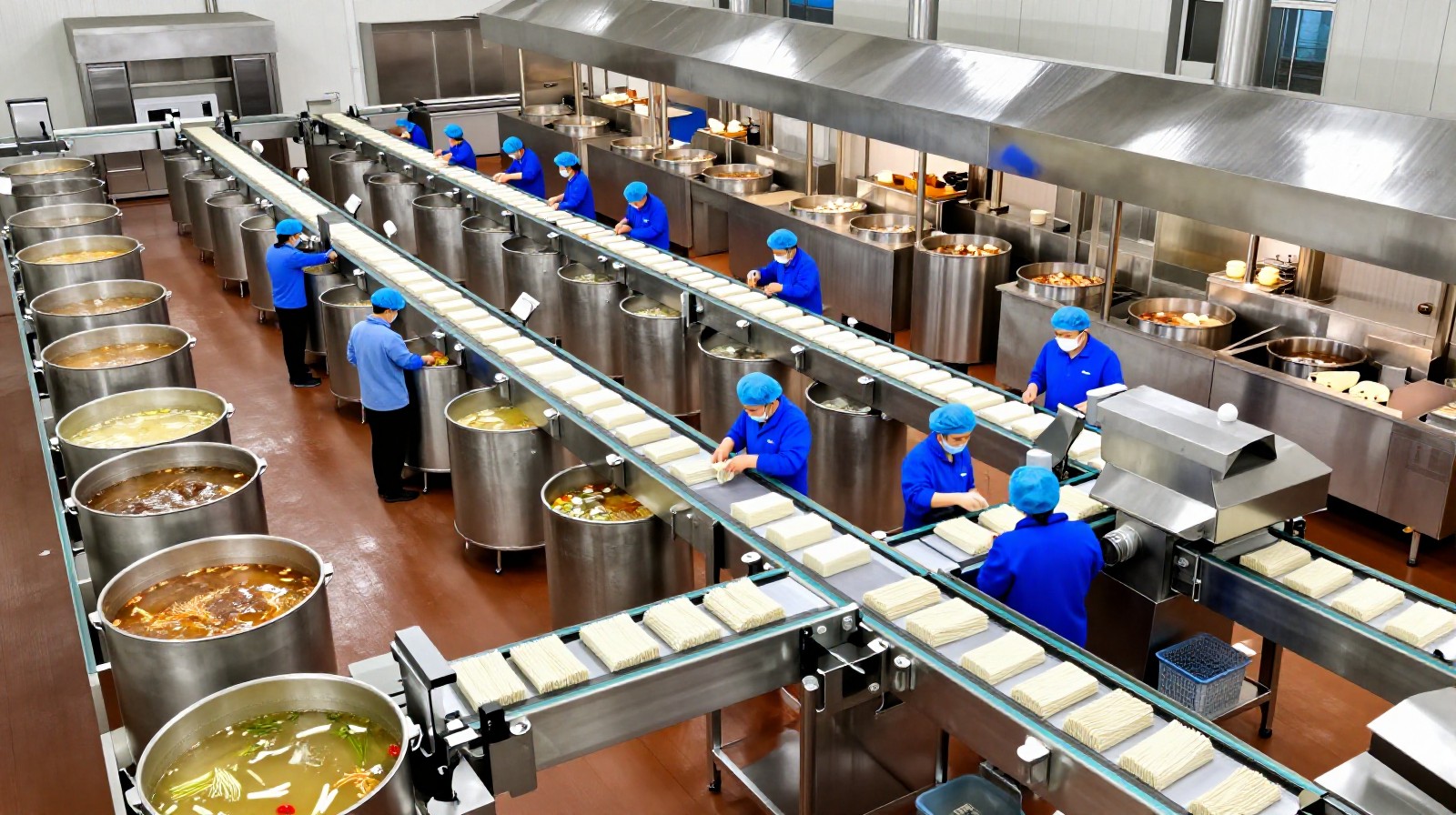
The Math Behind the Bowl
What makes this expansion possible is not magic, but extreme standardization. In traditional Chinese dining, a chef’s “feel” (a specific amount of salt or hand strength) was everything. For Lanzhou beef noodles to scale to over 50,000 outlets nationwide, that human element had to be removed.
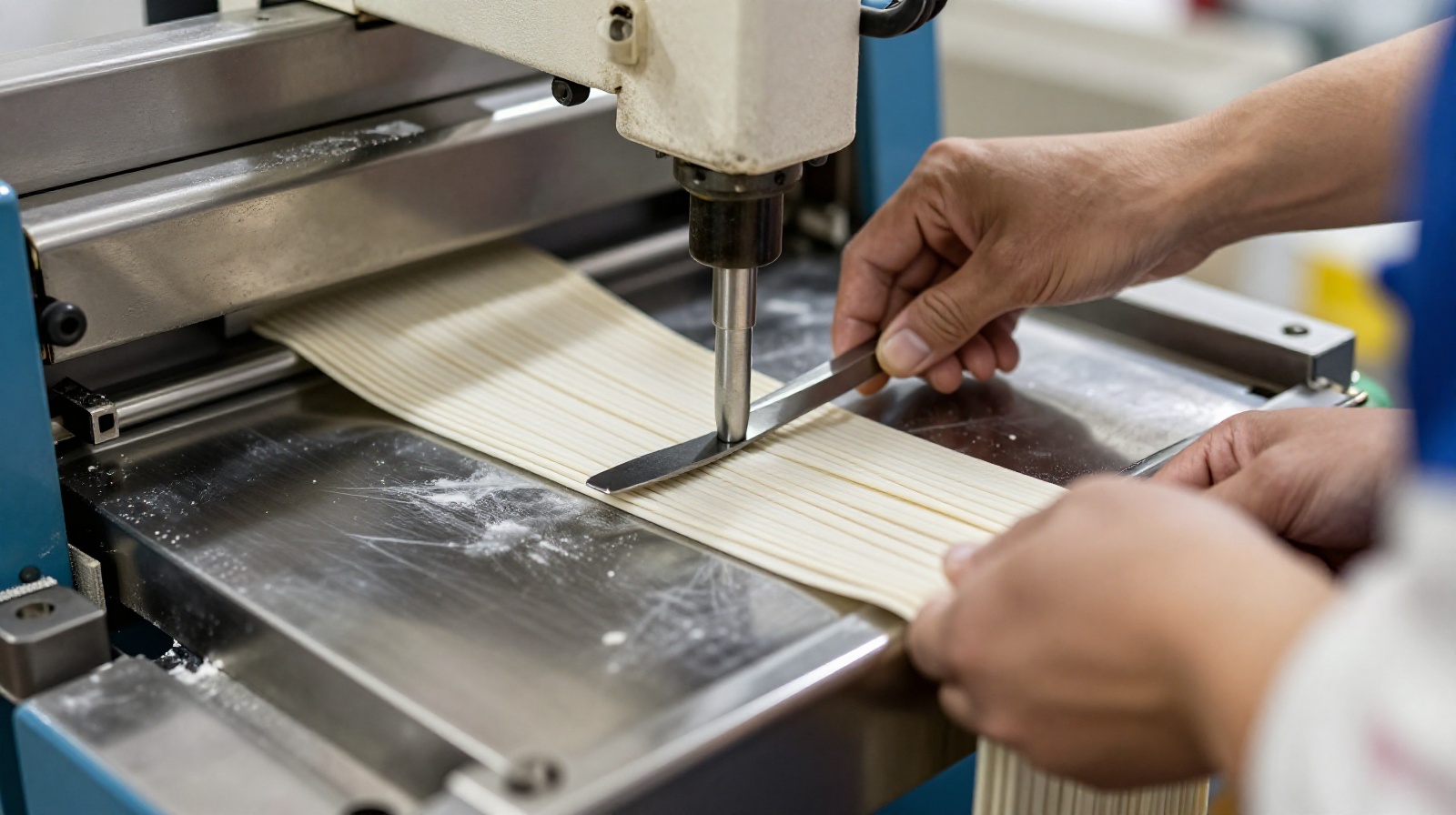
Leading brands have established central kitchens where the broth is cooked in massive vats, seasoned with pre-measured industrial spice blends, and frozen into uniform blocks. The noodles themselves are produced by high-speed machinery that cuts dough into exact millimeter specifications before being flash-frozen. When a store manager receives a delivery, they aren’t receiving raw ingredients; they are receiving a kit.
This system allows a 20-year-old apprentice to run a shop with the same product consistency as a veteran chef in Lanzhou. The result? A bowl of beef noodles that tastes familiar whether you are in Beijing, Shanghai, or even New York City’s Chinatown. It is a triumph of supply chain management over culinary tradition.
The Franchise Model: A Social Engine
Why has this specific model succeeded where others failed? The answer lies in the unique social structure known as “Hezhuo style.” In Hezhuo County, almost every family is related. When a young man wants to open a shop in a new city, he doesn’t seek out investors or banks. He asks his cousins for loans and training.
This informal credit system bypasses traditional banking hurdles. A franchise fee might be low, but the real cost is covered by kinship networks. This allows rapid expansion into lower-tier cities where big chains like McDonald’s hesitate to enter. It turns a family tradition into a decentralized, self-replicating economic engine.
Standardization vs. Authenticity
The trade-off for this efficiency is the loss of local nuance. Critics argue that the “national” Lanzhou beef noodles have become bland, a generic version of a dish that was once deeply regional. The broth lacks the deep, complex layers of a slow-simmered bone stock made with specific local ingredients.
However, the brands are adapting. Some high-end chains are now offering “regional versions” or introducing fresh noodle options in major metros to attract foodies who crave authenticity. They are learning that while standardization builds the skeleton, flavor is the soul that keeps customers coming back.
A Microcosm of China’s Economy
The rise of Lanzhou beef noodles is a perfect microcosm of China’s economic transformation. It mirrors the shift from small-scale, artisanal production to massive, centralized industrial efficiency. Just as Chinese factories produce everything from smartphones to textiles with ruthless precision, these noodle chains apply similar logic to food.
Data shows that the “Lanzhou Beef Noodle” sector generates billions in annual revenue and employs hundreds of thousands of people. It is a testament to how China leverages its massive domestic market to create uniform standards that can be exported globally. The bowl of noodles on your table today is not just dinner; it is a product of a highly sophisticated, standardized, yet deeply human supply chain.