

The Silence Before the Storm
It is 7:45 AM at the Terracotta Army Museum. The air is crisp, carrying a faint scent of damp earth and old stone. While the tour buses haven’t arrived yet, a few early risers—mostly young Chinese students with backpacks and cameras—are already standing in line. They whisper excitedly, pointing at the ticket gates.
When you finally step inside the massive Hall 1, the silence is heavy. Thousands of life-sized soldiers stand in formation, their faces individually carved, each expression distinct. Some look stern, others curious, a few almost smiling. The lighting is dim, creating deep shadows that make the clay figures seem to breathe.
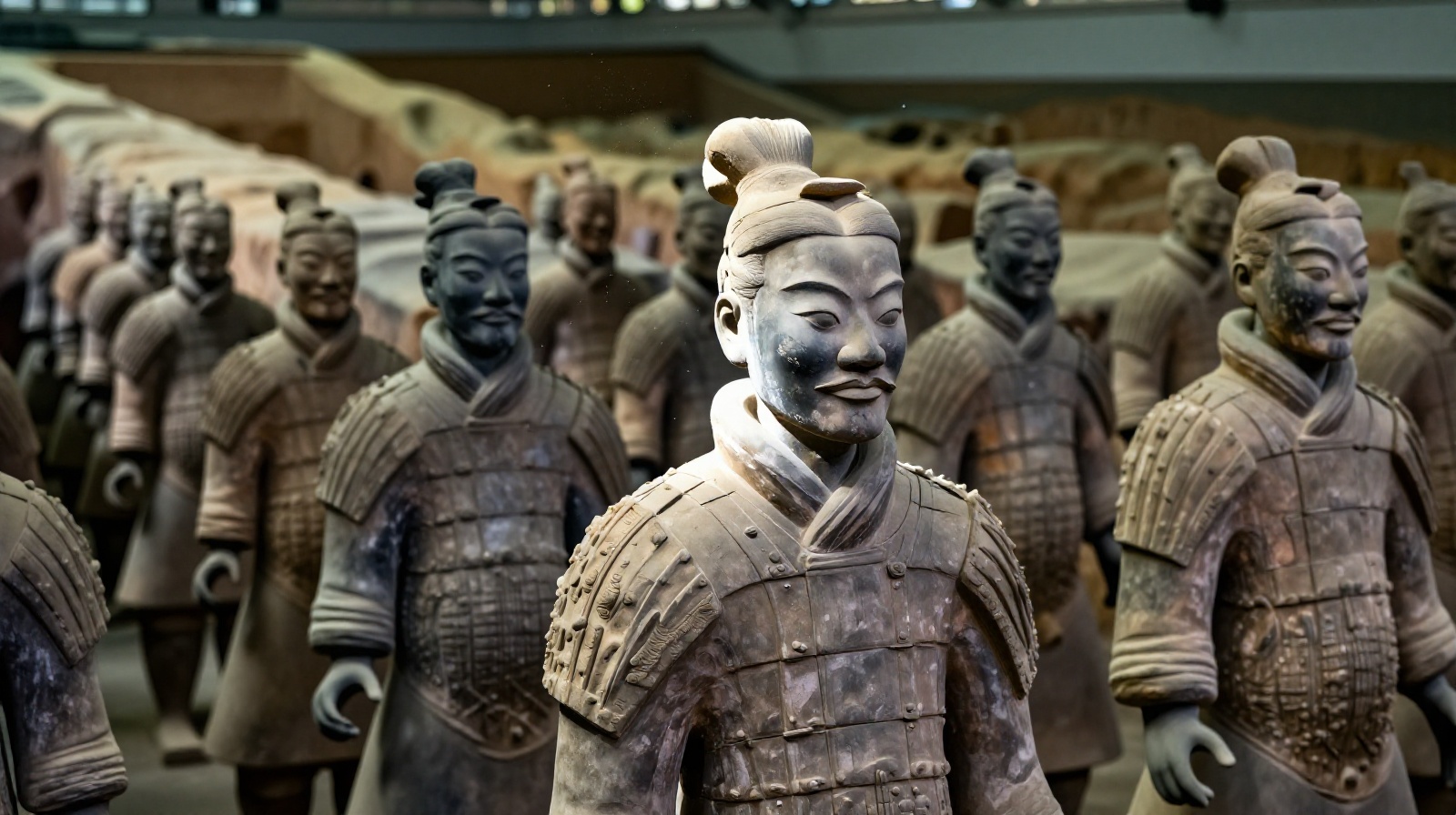
This isn’t just a museum; it’s a confrontation with history. In the West, we often see China as a monolith of economic speed and neon lights. But here, time feels suspended. The contrast is striking: the ancient warriors guarding an empire that fell over two millennia ago, versus the modern high-speed rail station visible from the visitor center window, connecting Xi’an to Shanghai in just four hours.
From Ancient Eyes to Modern Alleys
Lunchtime brings a jarring shift. You take a taxi 30 minutes south into the city center and find yourself in the Muslim Quarter (Huimin Jie). The air changes instantly from dry stone dust to a thick, greasy cloud of cumin, roasted lamb, and vinegar.
Most guidebooks will point you directly to Renmin Road, the main artery. That is where the tourists go. But if you follow the locals, you veer off into the narrow, winding alleys like Beiyuanmen or Yantaizi Alley. Here, the crowds are thinner, but the lines for food are longer.
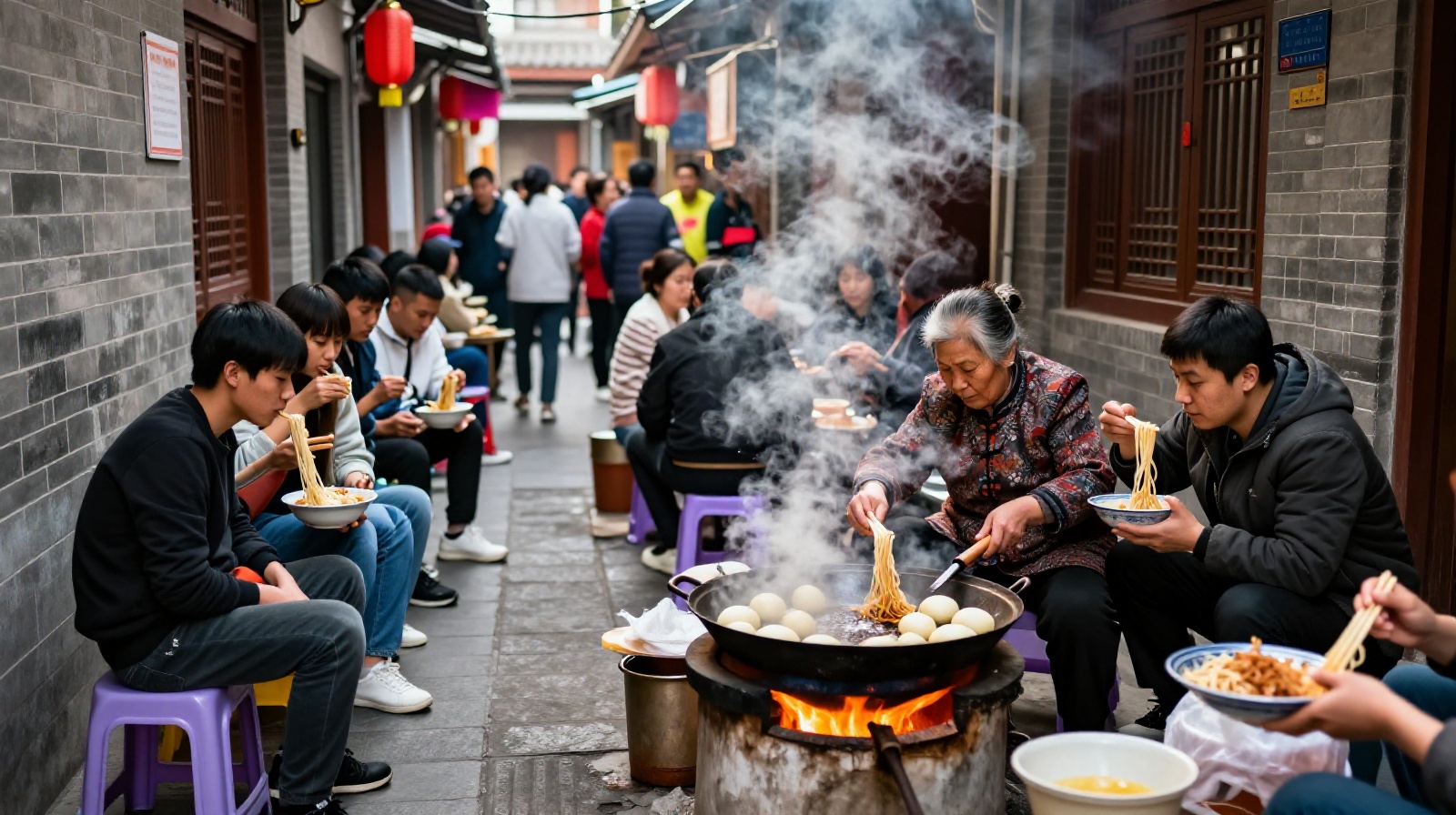
Look at a small shop with no sign, just a plastic stool on the sidewalk. An elderly woman is frying dough (youmo) in a wok over an open flame. Beside her, a young man in a hoodie—likely a tech worker from one of Xi’an’s many internet companies—sits eating a bowl of spicy biangbiang noodles. The scene is chaotic: parents shouting at children, men arguing over the last dumpling, steam rising into the humid afternoon air.
Food as Memory
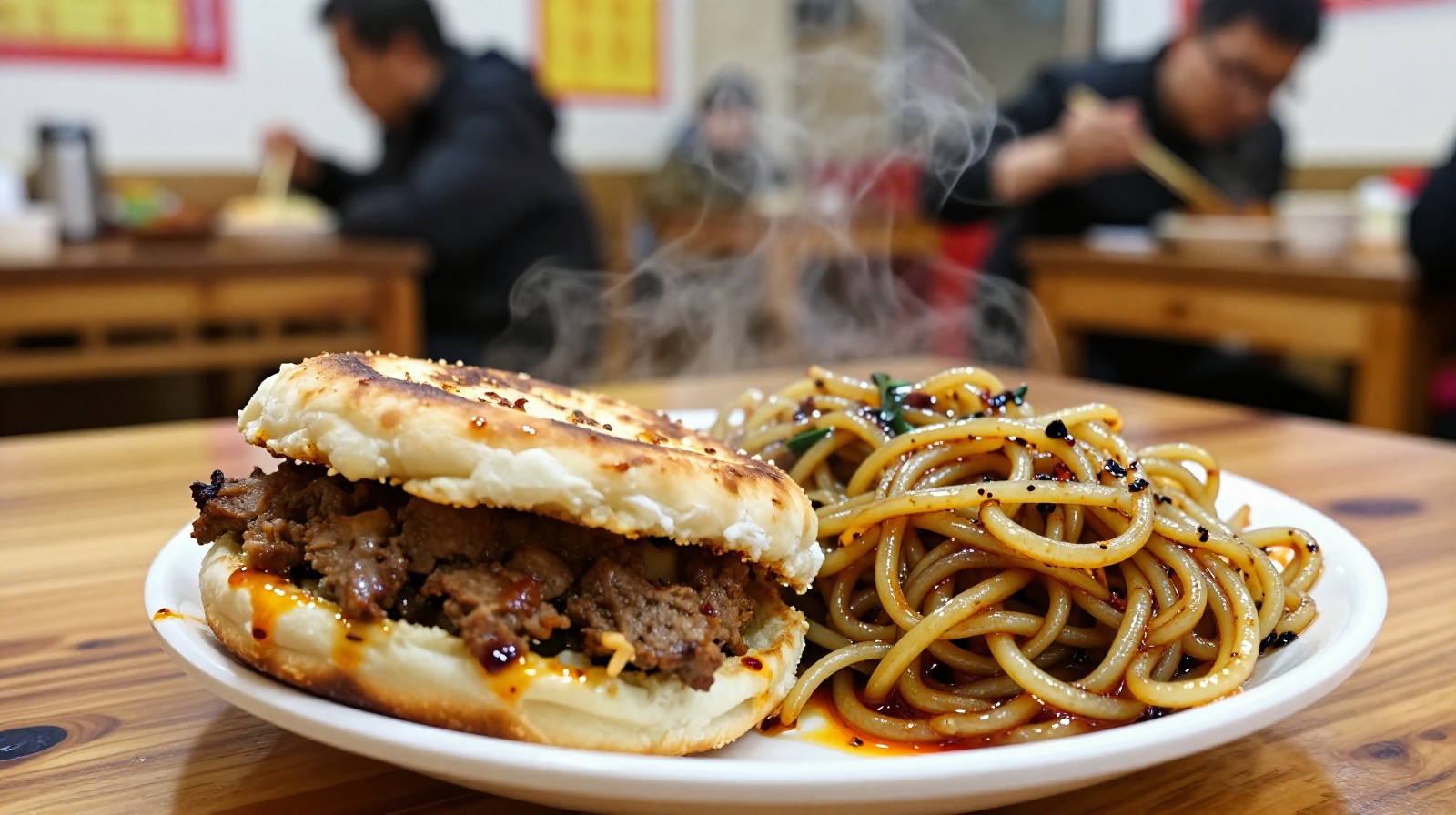
Eating in Xi’an is not just about hunger; it’s an act of remembering. The Roujiamo (meat burger) you buy here tastes different from the one in New York or London because of the specific bread baked right there, hot and flaky. The lamb skewers are marinated with local spices that have been traded along the Silk Road for centuries.
Locals tell me they grew up walking these streets. For them, the Muslim Quarter isn’t a “tourist trap”; it’s their living room. They know which stall has the freshest lamb and which tea house is good for gossiping away an hour. This dual identity—ancient capital versus modern foodie hub—is what makes Xi’an unique.
Balancing the Past and Present
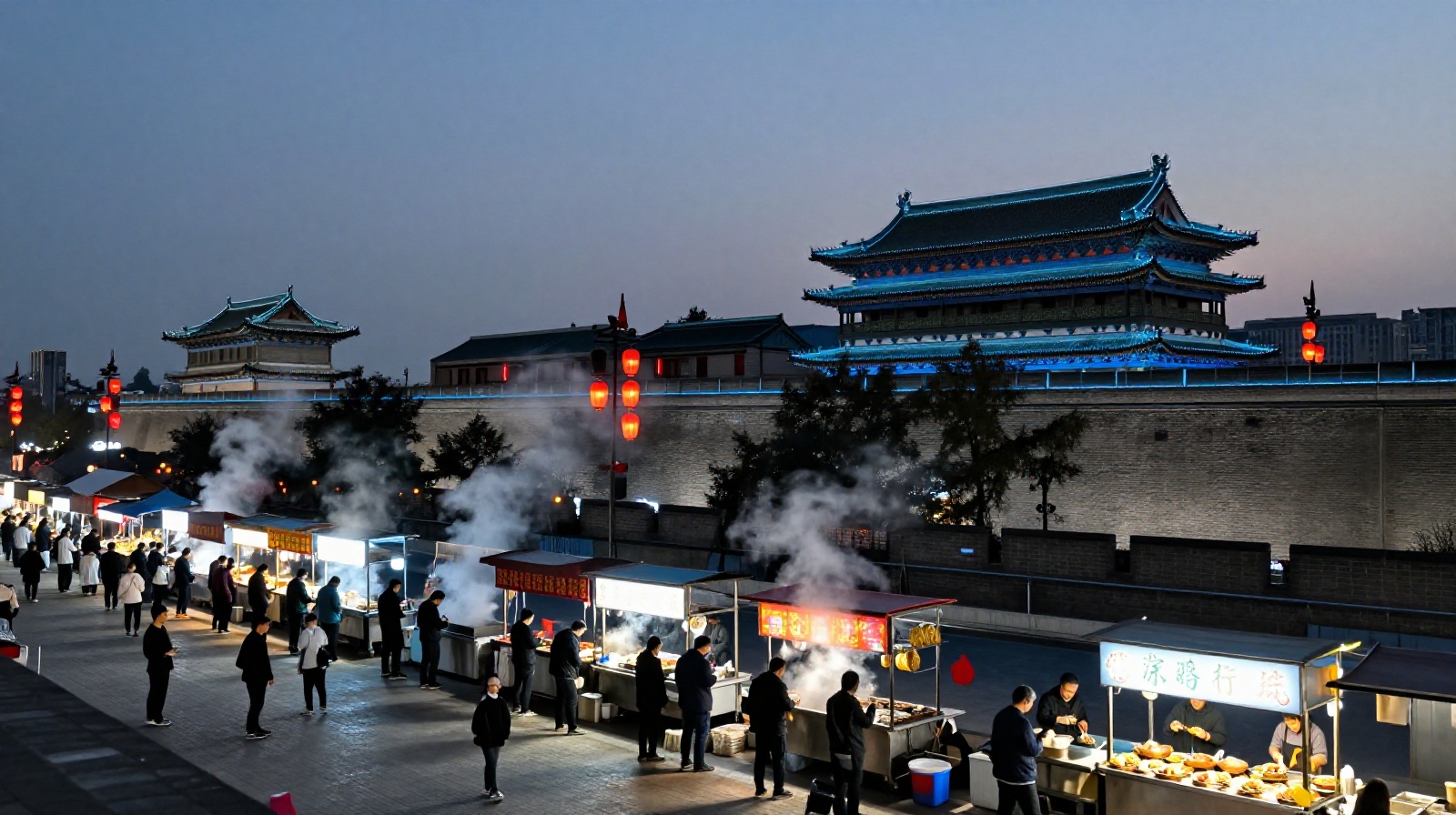
As evening falls, the city transforms again. The ancient city walls are lit up in blue, a stark contrast to the warm yellow glow of the street lamps below. Young people gather at the foot of the wall for night markets, selling handmade crafts and roasted corn.
Xi’an manages to hold two worlds together without one crushing the other. It doesn’t try to be a futuristic concept city like Shenzhen; instead, it leans into its history while embracing the modern economy. The result is a place where you can stare into the eyes of an ancient warrior in the morning and spend your evening eating street food that has been sold in these alleys for 800 years.