

The Silence in the Rush
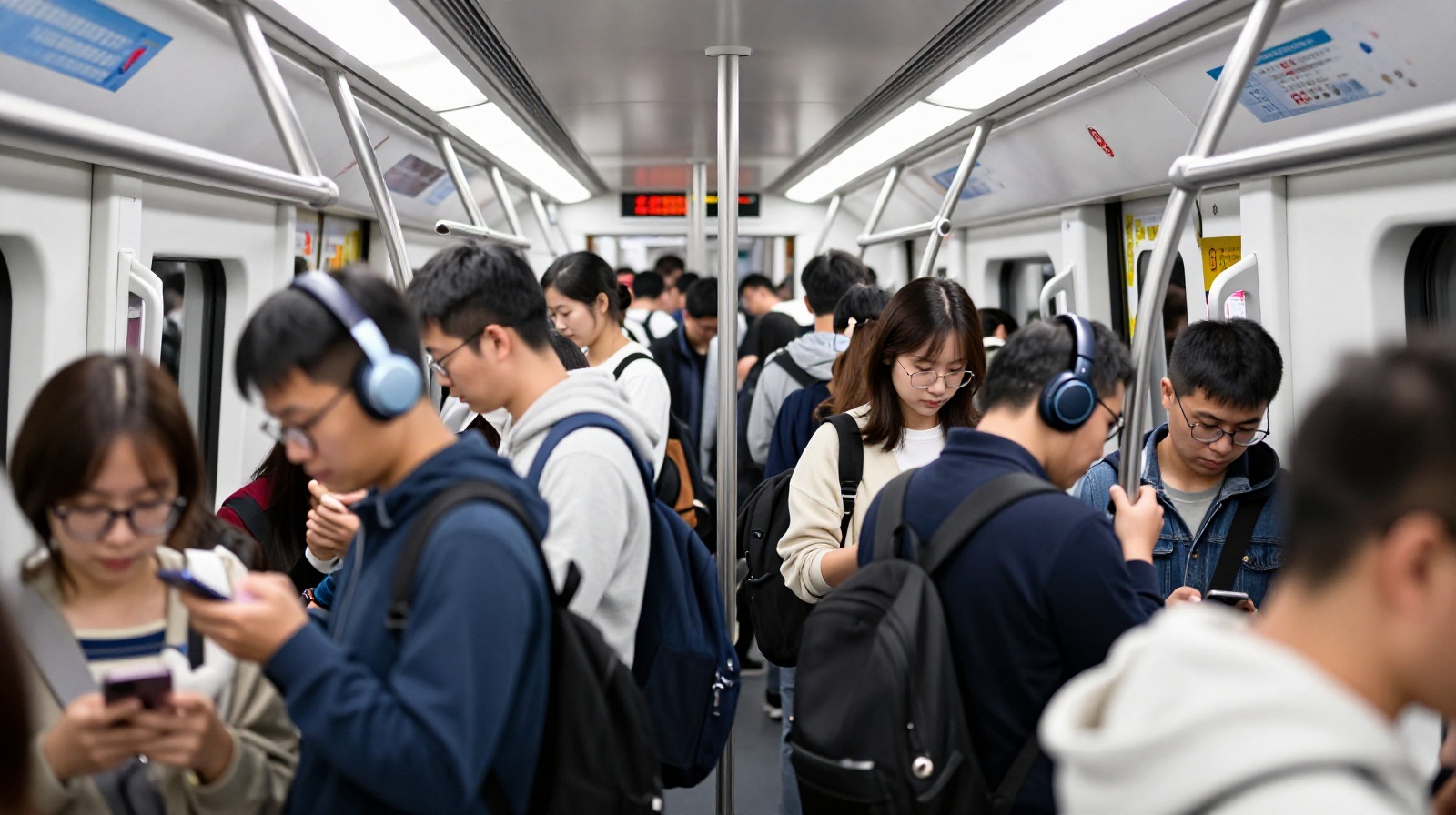
It is 8:15 AM on a Tuesday. The subway platform at Xizhi men Station in Beijing is packed. People stand shoulder to shoulder, waiting for the next train. When the doors slide open, a wave of commuters surges forward. But as soon as they step inside and find their spots—some gripping overhead poles, others leaning against glass—the volume drops.
There is no chatter. No one shouts into a mobile phone. The only sounds are the mechanical hum of the train on tracks, the occasional announcement in Mandarin, and the soft tapping of fingers on smartphone screens. In a space where hundreds of bodies press together in Beijing’s morning rush hour, it feels more like a library than a crowded transit line.
A Sea of Headphones
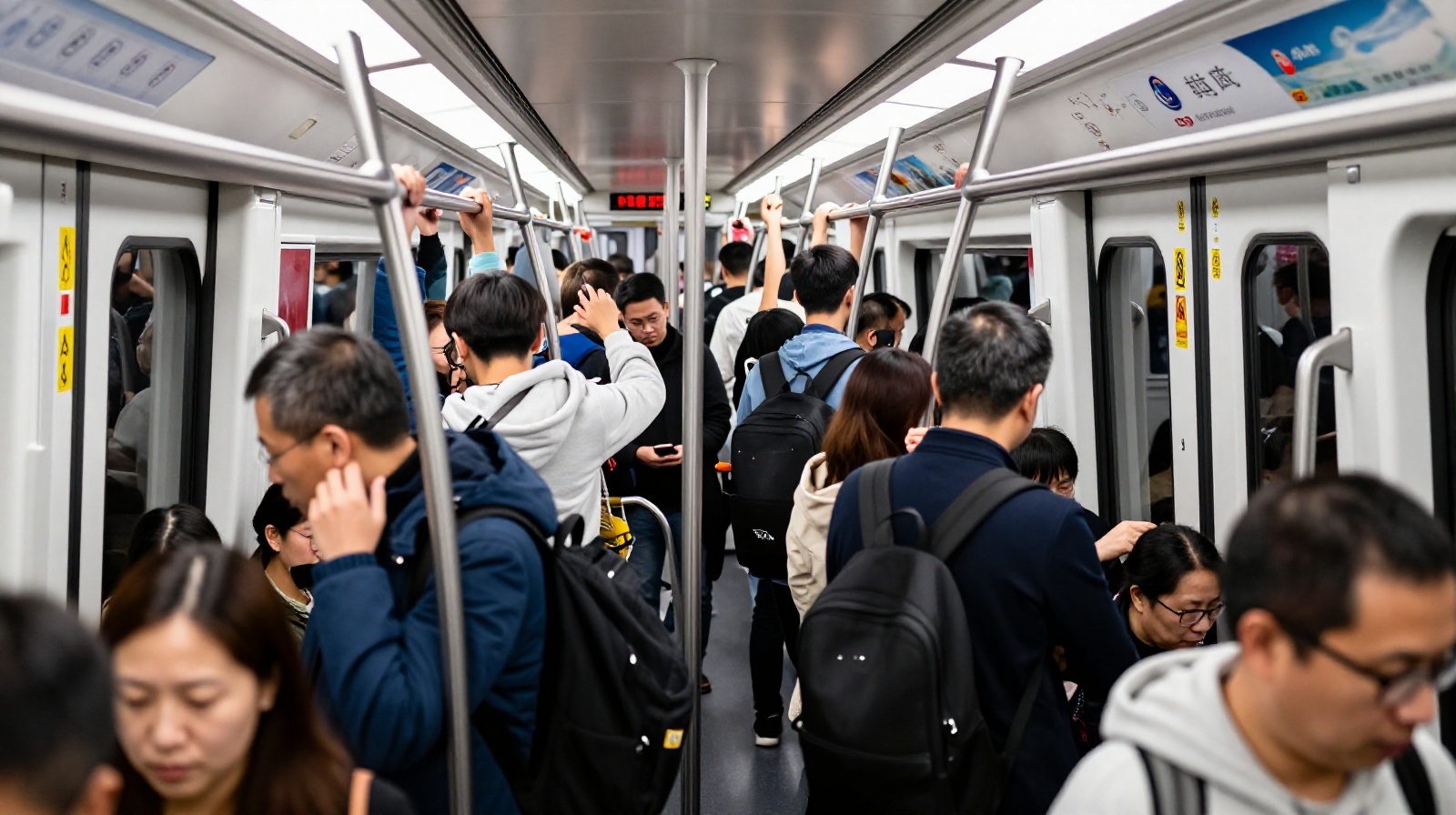
Look closely at the passengers. Ninety percent of them have something over their ears or in their hands. A young woman in a grey coat checks her WeChat while wearing noise-canceling headphones. An older man in a blue work uniform closes his eyes, leaning against the door frame. A student in a hoodie types furiously on a laptop.
This is not accidental. In China’s major cities—Beijing, Shanghai, Guangzhou, Shenzhen—the subway has become a sanctuary of solitude. Even when trains are packed so tight that you can’t move your arms, people retreat into their own digital worlds. The silence isn’t enforced by shouting conductors; it’s a shared agreement.
The Roots of Restraint
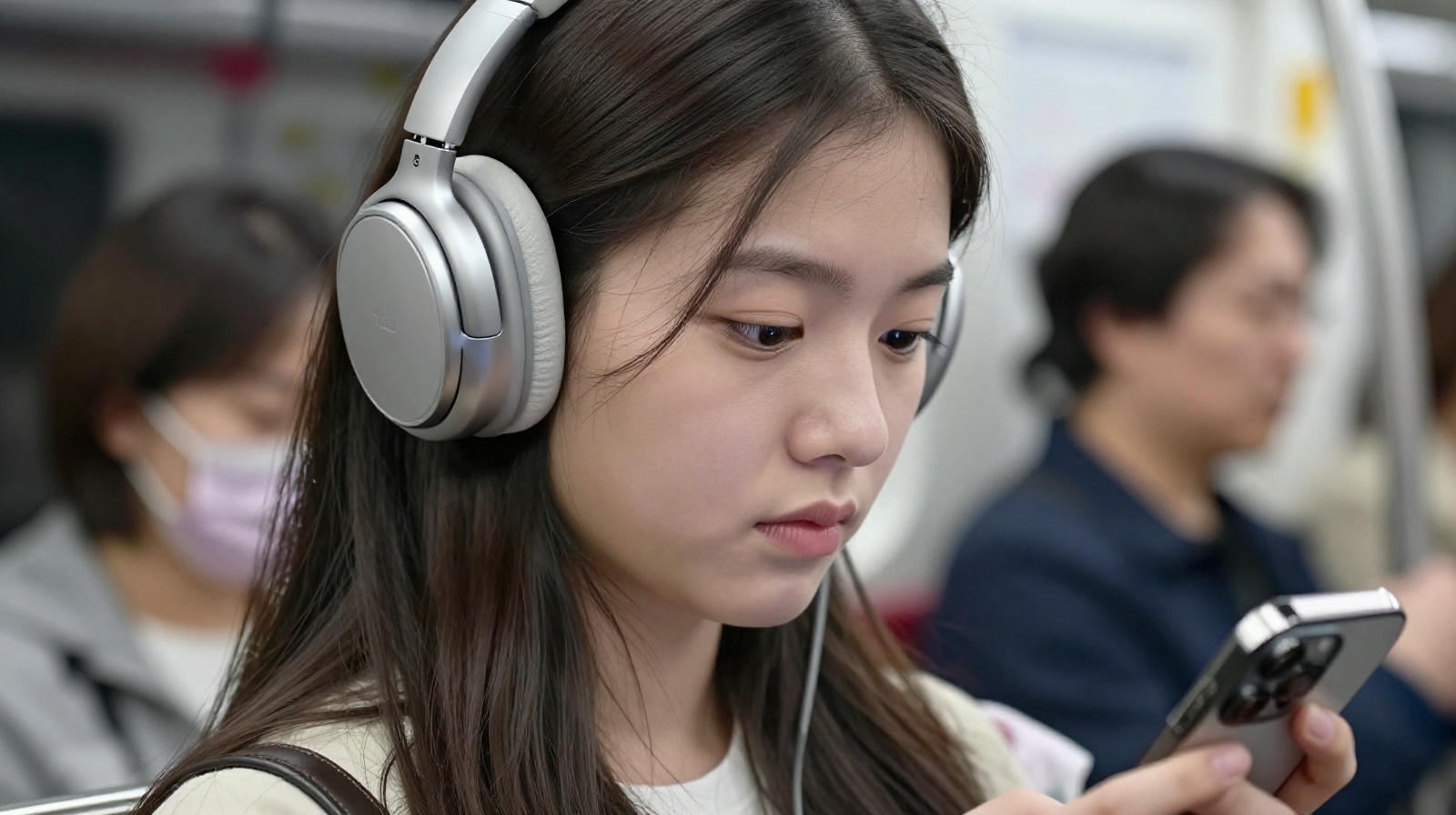
Why is this quietness so pervasive? Partly, it is cultural. For centuries, Chinese social norms have emphasized “not disturbing others” (bu yao zao ren). Confucian values taught that maintaining harmony in a group requires self-restraint. In public spaces, making noise was traditionally seen as selfish or lacking in upbringing.
Today, this old value has merged with modern urban life. The subway is a shared space where everyone is tired after work or rushing to get home. Everyone understands the unspoken rule: keep your space small, and keep your voice down. It’s a form of mutual respect that doesn’t require laws.
Rules That Stick
Culture alone doesn’t explain it entirely. There are also strict rules. In most Chinese subways, eating is banned. Drinking strong-smelling beverages like milk tea or coffee in open cups is frowned upon and sometimes fined. Most importantly, playing music or videos without headphones is strictly prohibited.
These aren’t just suggestions; they are enforced. Subway staff monitor platforms and carriages daily. In Shanghai, for instance, first-time offenders might receive a warning, but repeat violators can be fined up to 500 yuan (about $70 USD). The fines act as a strong deterrent. Combined with the widespread use of public surveillance cameras, the enforcement is visible and immediate.
A Different Kind of Public Space
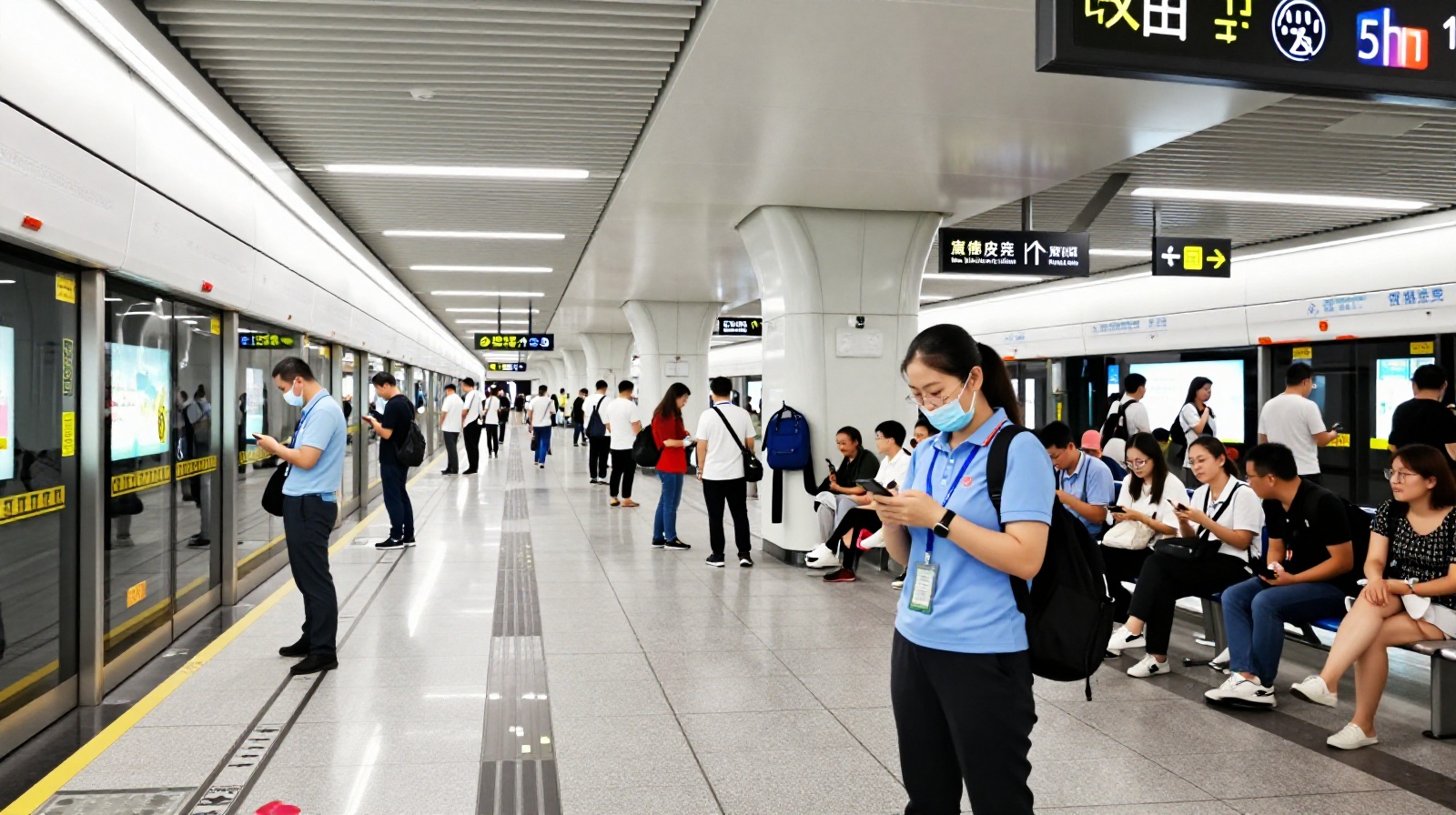
For Western travelers used to subways where people talk loudly, listen to music out loud, or even eat sandwiches, this silence can feel strange. In New York or London, the subway is often a place of social interaction, even if it’s just casual small talk. In China, the subway is a place of isolation within a crowd.
This difference isn’t about being “better” or “worse.” It reflects different priorities in how societies organize public life. The Chinese model prioritizes collective efficiency and individual peace over spontaneous social interaction in transit. For millions of daily commuters, this silence reduces stress. It turns a chaotic commute into a moment of respite.
The Quiet Future
As China’s urban population grows and subway networks expand to cover more cities, this etiquette is spreading. New lines in Chengdu, Hangzhou, and Xi’an follow the same quiet model. Even in smaller towns where subways are newer, the habit of wearing headphones and keeping voices low is quickly adopted by younger generations.
It’s a modern ritual: step into the train, put on your barrier against the noise, and let the city rush by while you stay still. The silence isn’t emptiness; it’s a crowded room full of people who have decided, for the duration of their journey, to respect one another’s peace.