

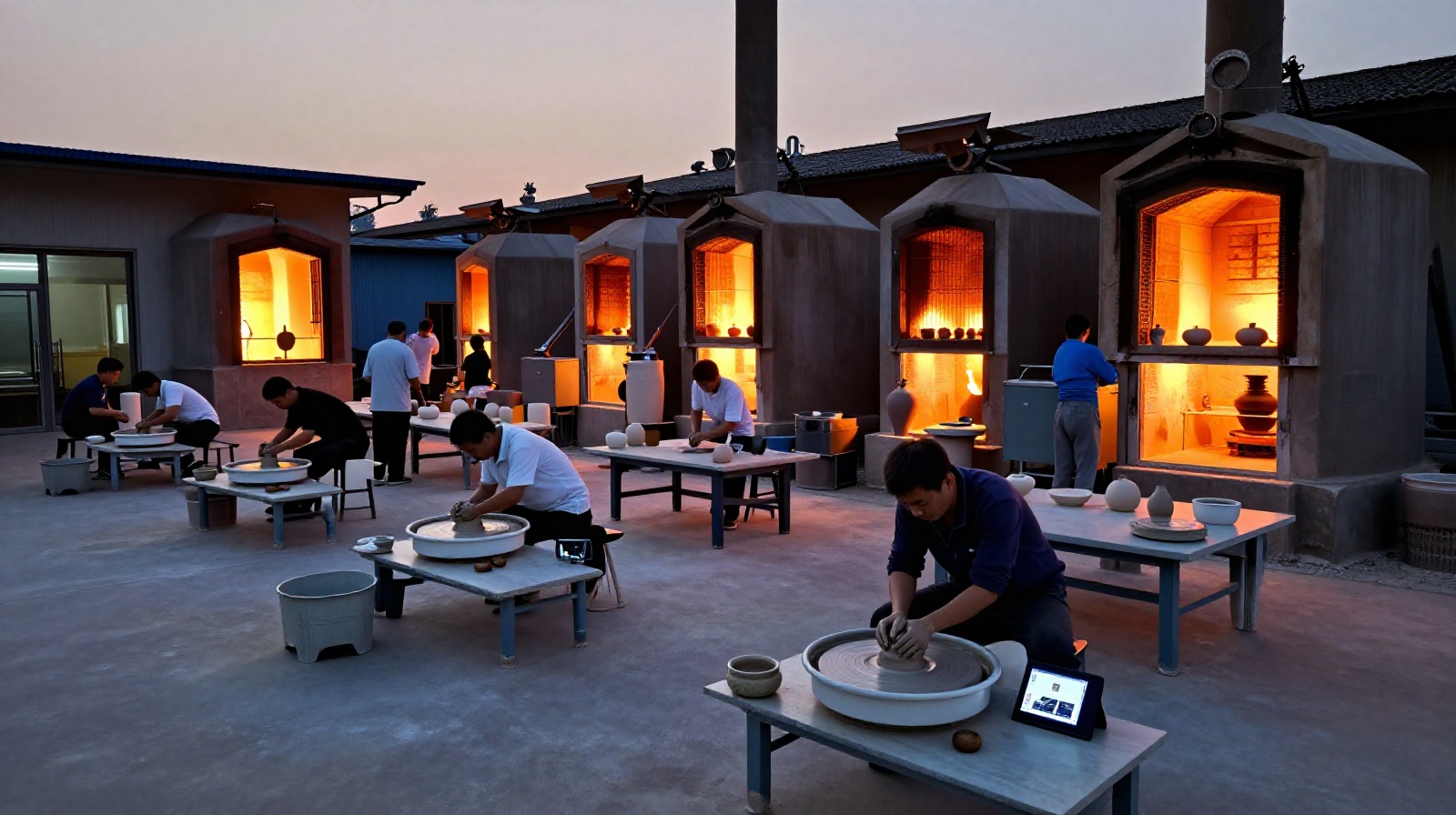
A Scene at Dawn – The Sensory Reality of a Modern Ceramic Village
It is 4:30 AM in Jingdezhen, China. Most people are still asleep, but the air outside this workshop smells intensely of wet earth and burning coal, not ozone or coffee. Inside, the floor vibrates slightly as a machine tumbles thousands of clay molds at high speed. This isn’t a museum piece being dusted off; it is a factory floor humming with energy.
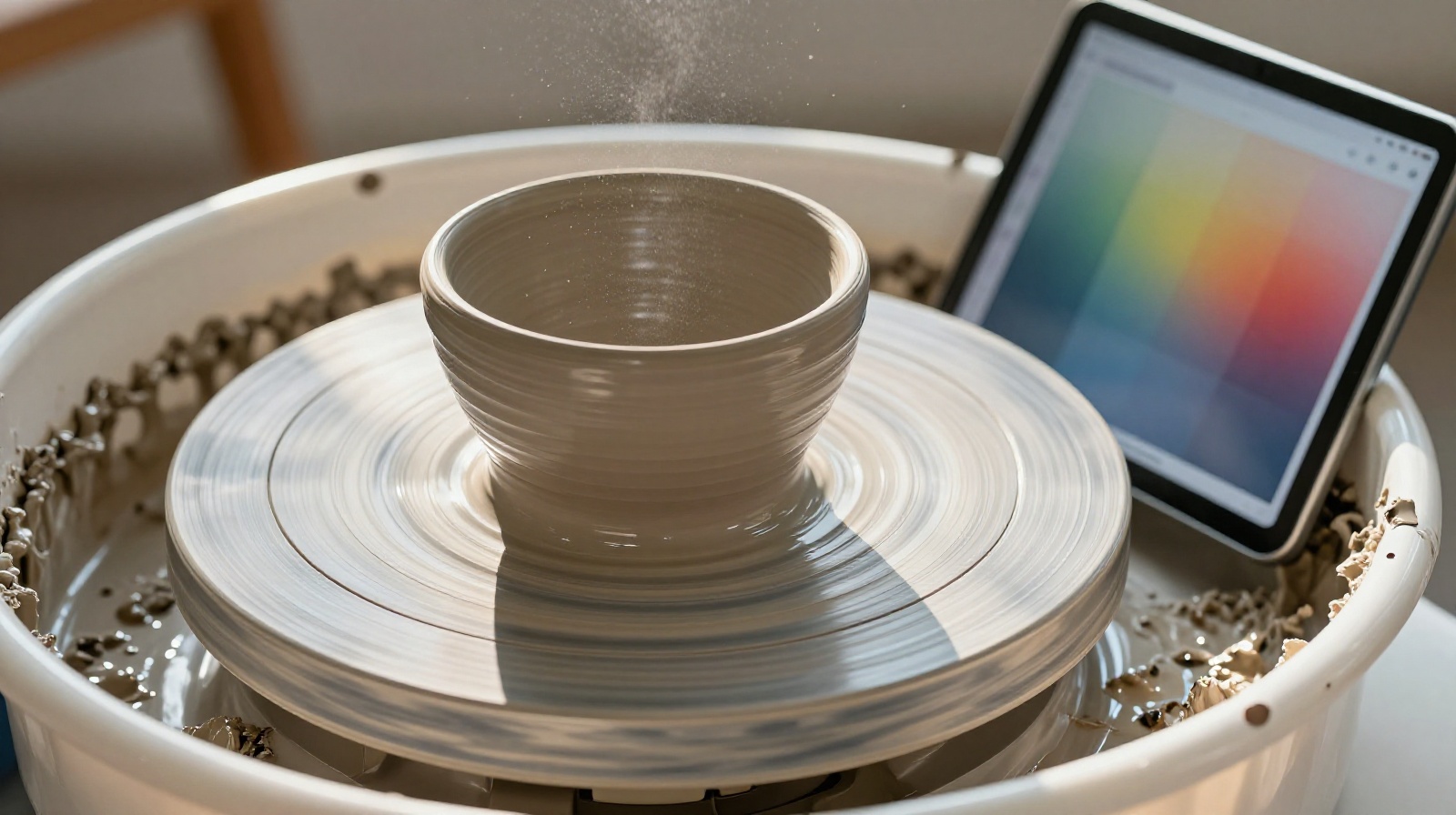
For decades, outsiders imagined Chinese porcelain as something frozen in time—beautiful but static, made by elderly hands that moved too slowly for the modern world. That image is fading fast. Today, you will find potters using tablets to simulate glaze colors before mixing a single drop of chemical. They are not just preserving history; they are aggressively rewriting it.
The Hands Behind the Art: Introducing Three Generations
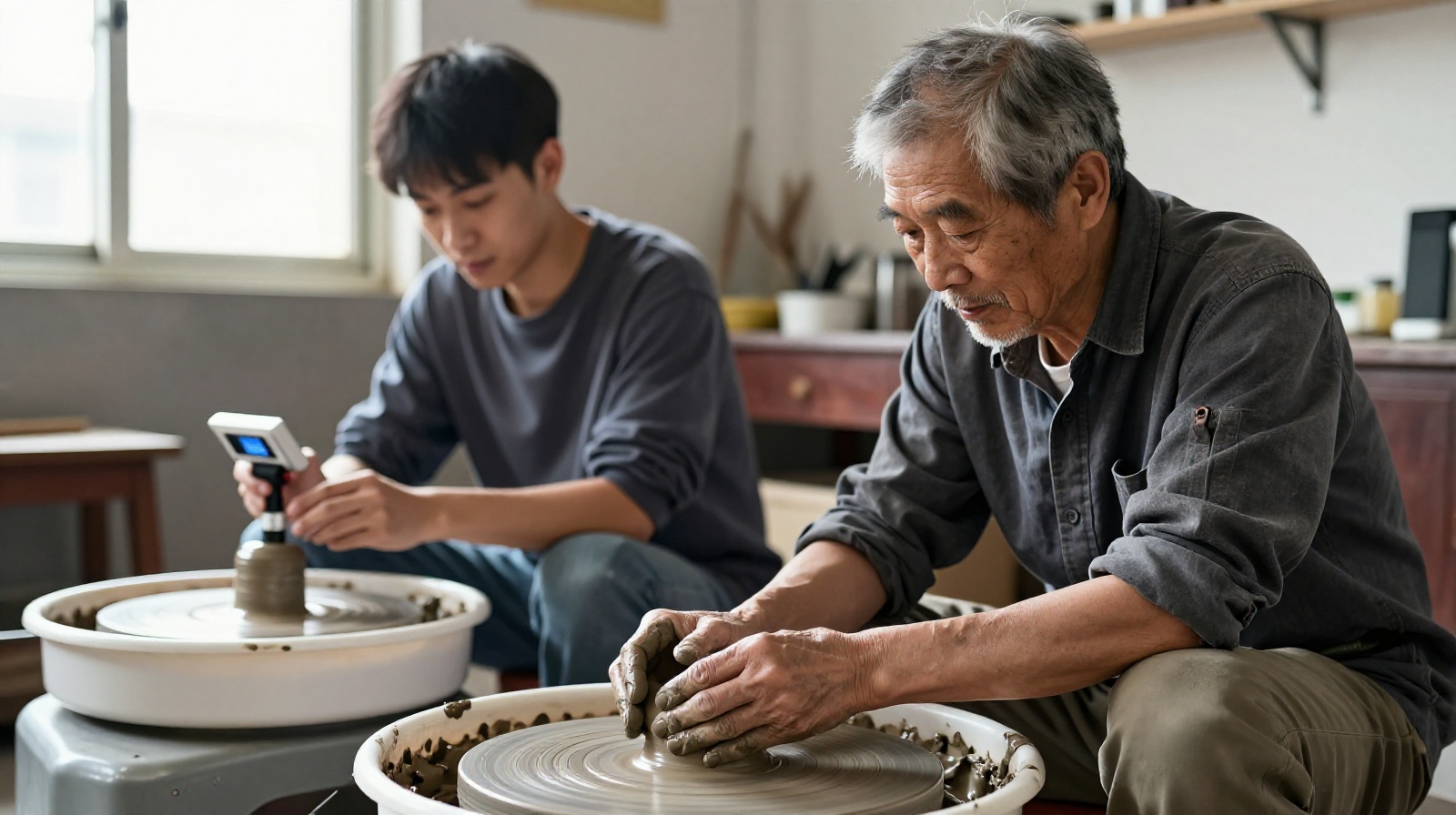
Meet Li Wei, 28, and his grandfather, Old Master Zhang, who has thrown pots for fifty years. They stand side by side at a wheel that looks like something from the Tang Dynasty but is connected to a digital monitor.
The dynamic here is fascinating. The grandfather doesn’t rely on blueprints; he feels the clay’s moisture with his fingertips, judging elasticity by touch alone. “The clay speaks,” he says in broken English during a break. His grandson, however, uses 3D scanning to capture that exact shape and then refines it digitally before sending the file to a kiln.
This isn’t a replacement of skill; it’s a partnership. The AI handles the geometry and consistency—ensuring every cup holds exactly 250ml while looking unique. The human hand provides the soul, the subtle imperfections that make the piece feel alive. In this village, you rarely see young people leaving for big cities to work in factories. Instead, they are returning because the craft now offers a blend of heritage and high-tech career potential.
Bridging Tradition and Tech: AI as the New Master
You might wonder if robots have taken over the wheel. The answer is no. If you look closely at the production line, there are no robotic arms shaping the clay directly. Instead, a new kind of intelligence has entered the studio.
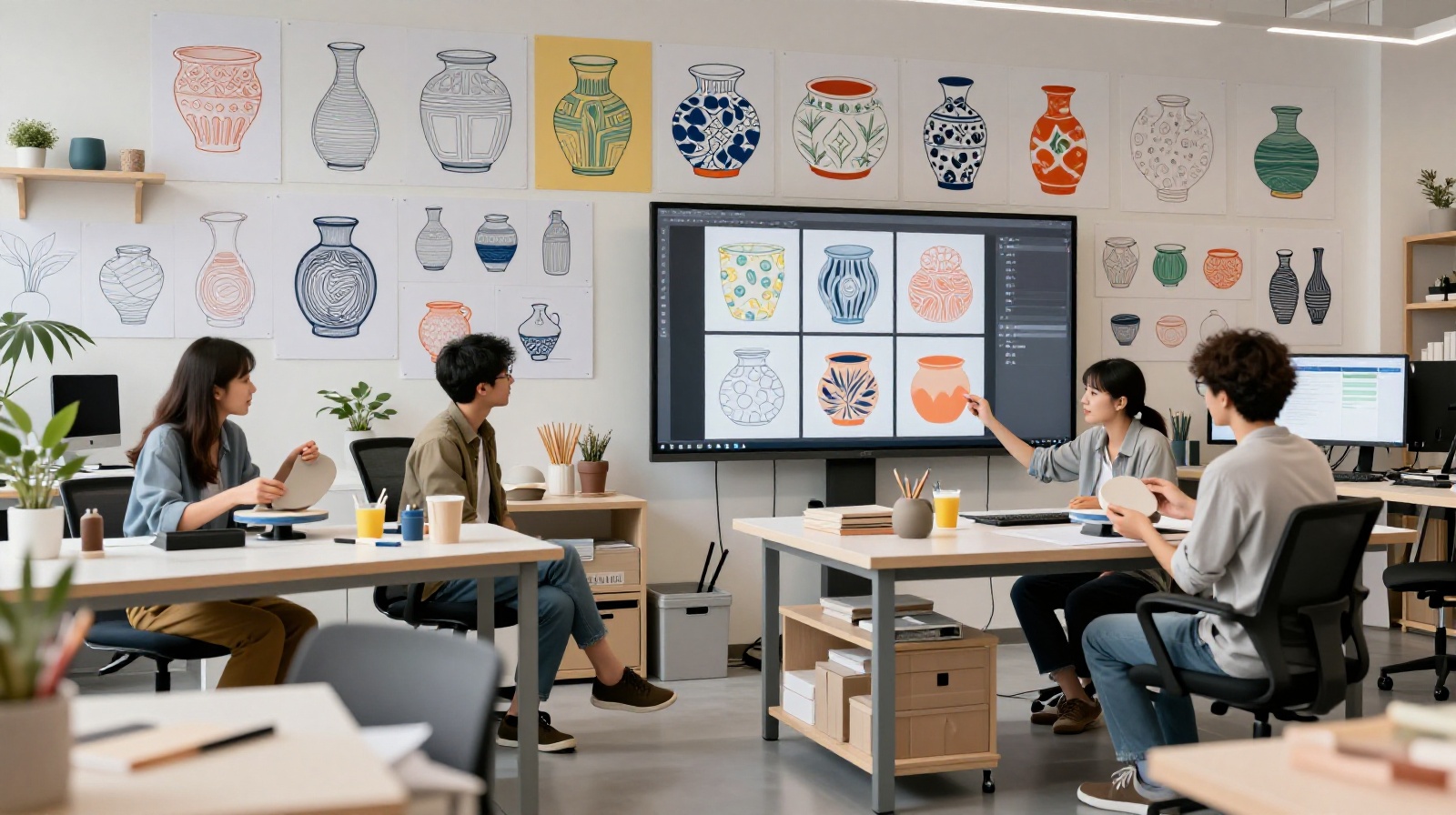
Designers upload photos of ancient patterns or modern fashion trends into an AI system trained on centuries of ceramic history. Within seconds, the system generates hundreds of variations—swirling dragons that fit perfectly on a latte cup, or minimalist geometric cuts inspired by Bauhaus style. The potters then select the best designs and apply them using traditional hand-rolling techniques.
It sounds like science fiction, but it’s standard practice here. One local studio reported that their design time dropped from weeks to hours, allowing them to test 50 new styles a week for international clients. The clay remains stubbornly human; only the planning has become digital.
Beyond the Display Case: Global Supply Chains
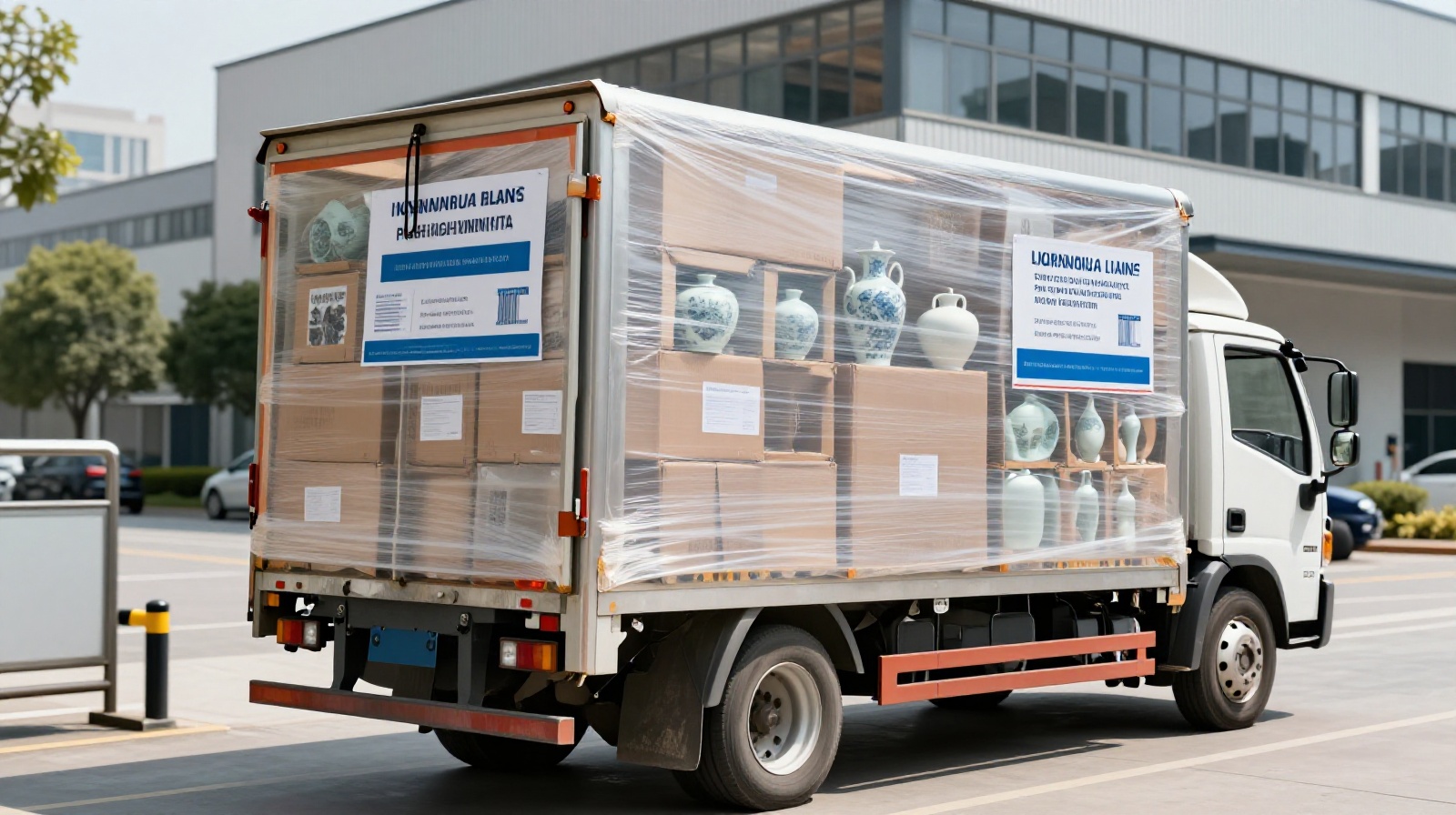
Where do these pieces go? You won’t find them just in local souvenir shops anymore. A single shipment from Jingdezhen can now reach a boutique hotel in New York, a high-end restaurant in Tokyo, or an art gallery in Berlin within three days.
This speed is powered by China’s logistics network. The same delivery infrastructure that gets you fresh strawberries at 3 AM also ships fragile porcelain with shock-absorbing smart packaging. The cost has plummeted, making Chinese ceramics competitive against European brands that took weeks to design and manufacture.
Chinese porcelain industry leaders are no longer just selling “made in China” goods; they are curating cultural experiences. A cup sold today might carry a pattern designed by an algorithm but refined by a human hand, shipped via drone delivery for the final leg in remote areas.
A Day in the Life: Routine, Challenges, and Pride
By noon, the workshop is bright with natural light. Li Wei is teaching a group of international tourists how to throw a bowl on the wheel. He doesn’t just show them the skill; he explains the fire temperatures and the chemical formulas used.
The work is physically demanding. The dust from the clay can be harsh on lungs, and the heat from the kiln in summer is intense. Yet, there is a palpable pride. When a new glaze color turns out perfect after a thousand failed attempts, the whole team celebrates with tea.
These artisans are navigating a complex modern reality. They balance the pressure of global deadlines with the patience required by nature. But as the sun sets and the kilns cool, the glow of the fresh porcelain tells a clear story: this is not just dirt anymore. It is a living, breathing industry that has awakened to meet the future.