

Beyond the Terracotta Warriors
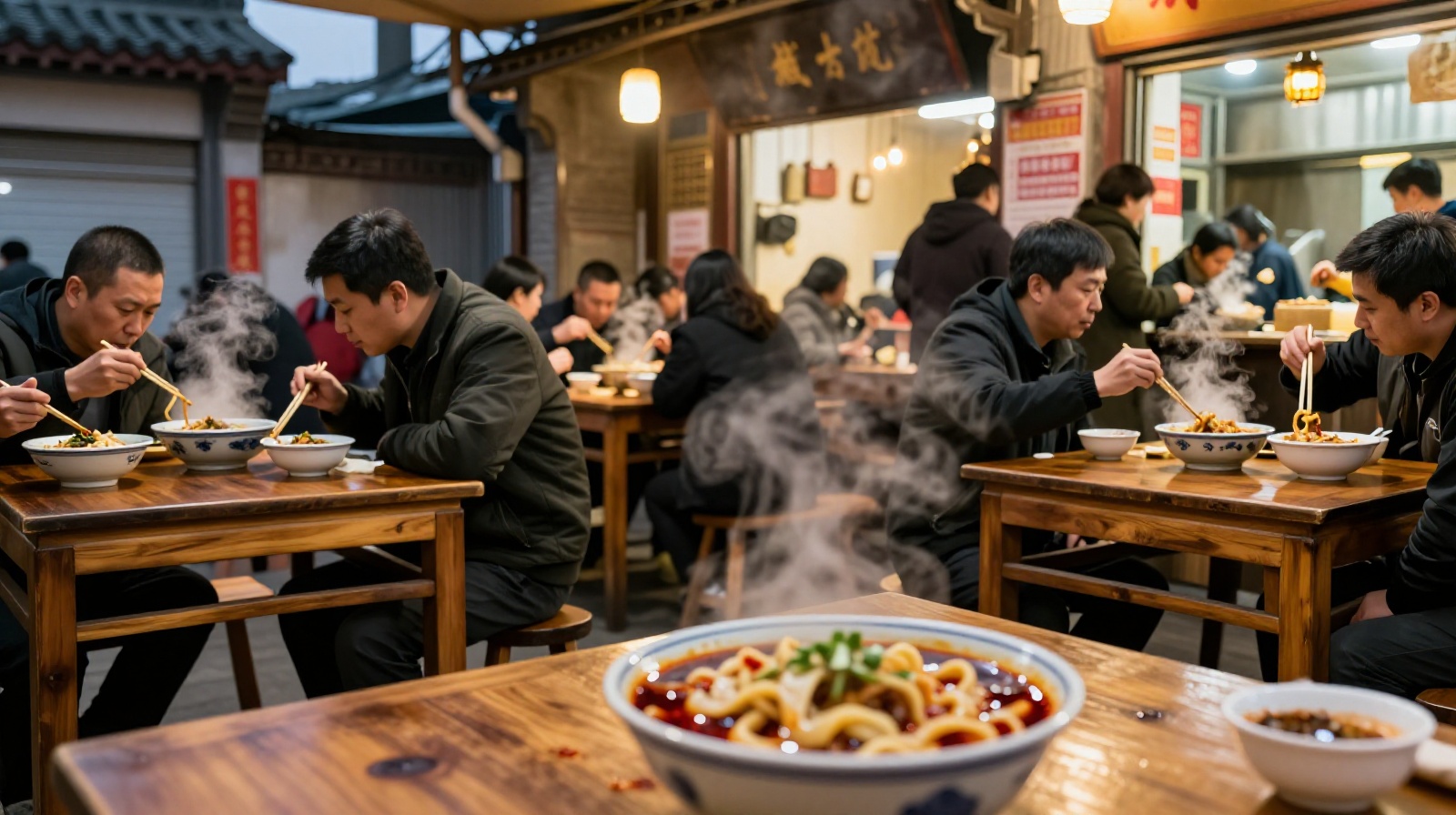
Walk through the streets of Xi’an at dusk, and you might miss the ancient history entirely. The air is thick with the scent of chili oil and roasted cumin, not just incense from nearby temples. Locals aren’t rushing to a gala; they are lining up for lunch at a tiny, unmarked stall where men sit on low stools, slurping noodles that defy every rule of Western dining etiquette.
For travelers used to delicate portions and polished presentations, Northern Shaanxi cuisine comes as a shock. It is loud, messy, and intensely flavorful. This isn’t just about taste; it’s a historical survival strategy from the Loess Plateau, where the wind is harsh and the winters are long. The locals call this collection of habits “The Eight Weird Things of Shaanxi” (Shaanxi Ba Dai Guai), a folk rhyme that has survived for centuries.
While some of these “weird things” refer to architecture or clothing, four are strictly about food. To understand them, you have to look past the novelty and see the logic behind the chaos.
The Noodles That Defy Logic
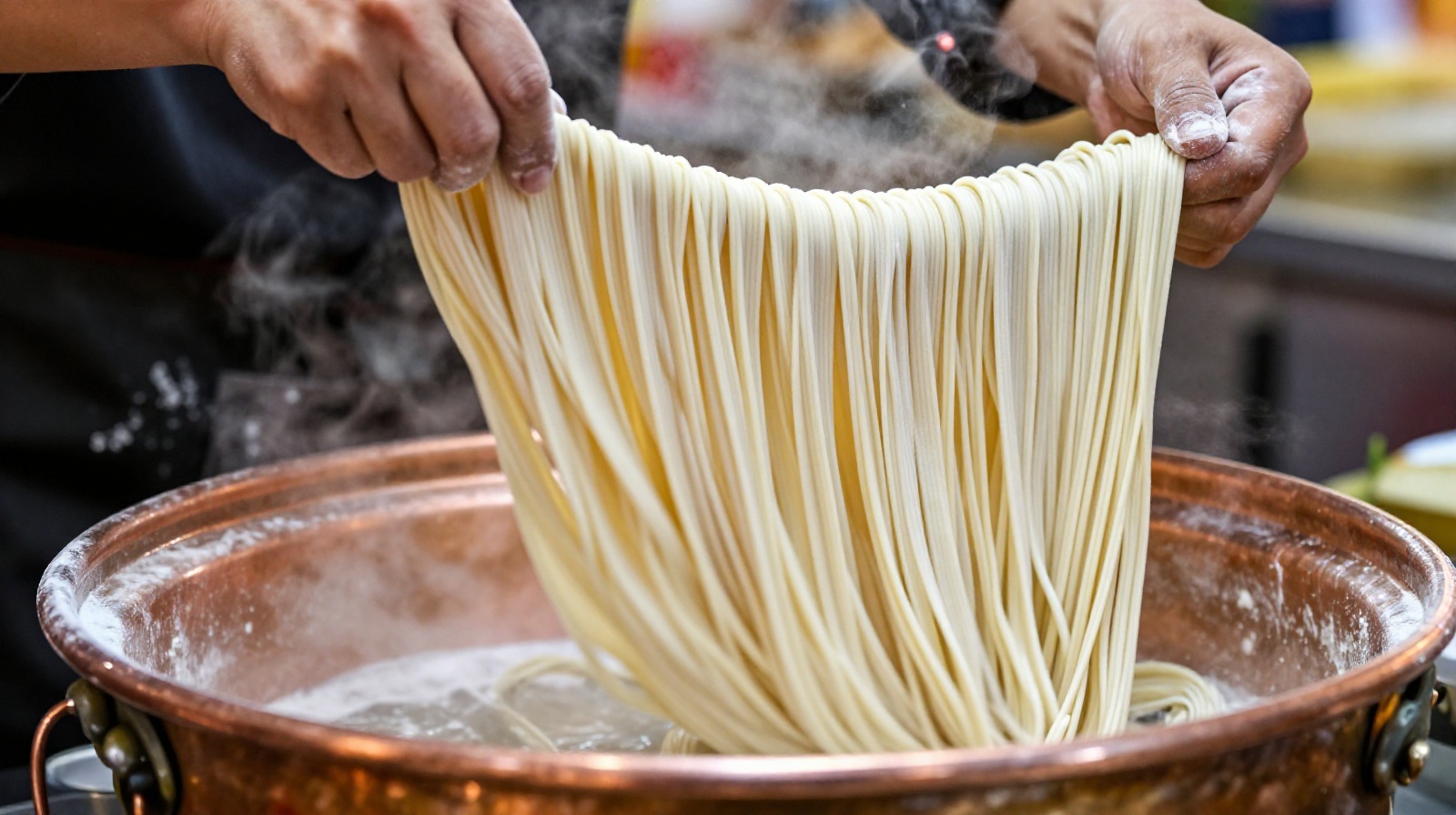
The most famous quirk is “Noodles as wide as a belt” (Mian Tiao Xiang Ku Dai). In many Western cultures, noodles are thin strands or small shapes. Here, you might be served a single strip of dough that is 10 to 20 centimeters wide and up to a meter long.
Why the absurdity? It’s practicality born of necessity. On the Loess Plateau, farmers worked in freezing conditions with heavy physical labor. They needed calories that lasted all day without spoiling. Thick noodles stay warm longer than thin ones and provide a massive energy boost. The “belt” shape means they can be torn into manageable pieces by hand while eating, rather than cut with a knife—a tool often reserved for the kitchen, not the table.
At a bustling old noodle shop in Xi’an, I watched an elderly man slurp his way through a bowl of Biangbiang noodles. The sound is part of the ritual: swoosh, crunch, chew. He didn’t use chopsticks to cut; he used them to lift the massive strip, folded it once or twice, and ate. Next to him sat a young tech worker in a suit, doing the same thing. In this city, social status disappears at the noodle bowl.
Bread That Looks Like a Lid
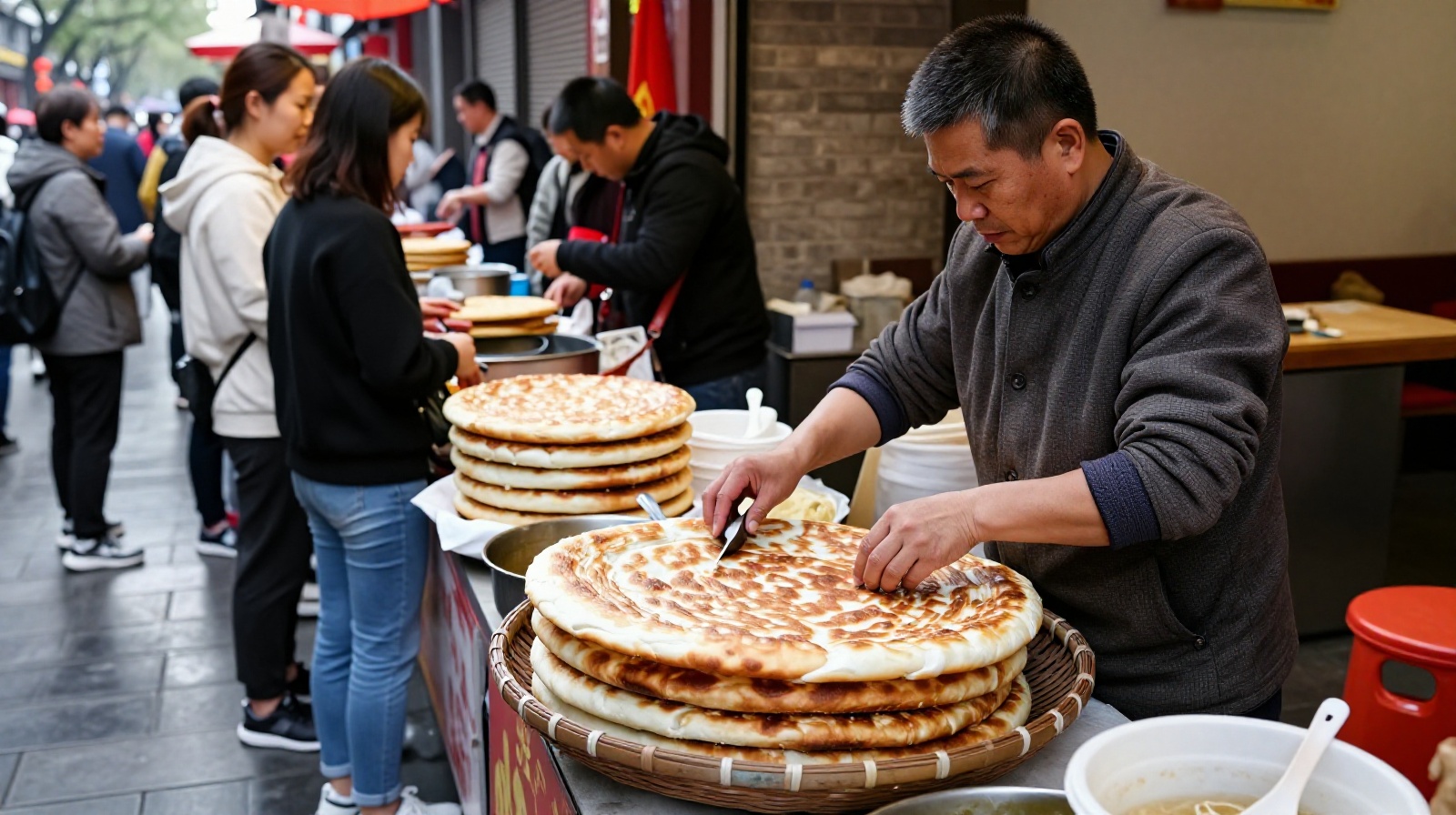
Then there is “Guokui like a pot lid” (Guo Kui Xiang Guo Gai). This isn’t soft bread you find in a bakery. It’s a flatbread, baked inside the walls of a clay oven until it hardens into something that resembles a thick, golden disc.
Visitors often mistake this for a decoration or a heavy prop. But locals know better. In the past, farmers would carry these dense discs to the fields for days without refrigeration. The bread was so dry and hard it wouldn’t mold in the heat. You break off a piece, dip it in water or tea, and eat it slowly. It’s fuel for survival.
Today, Guokui is still sold at every corner, but the context has shifted from survival to nostalgia. The texture is surprisingly crunchy on the outside and chewy inside, with layers of lard and sesame that melt in your mouth. You’ll see grandmas selling them from woven baskets on the street corners, while teenagers snap photos for social media before taking a bite.
The Fire That Doesn’t Burn
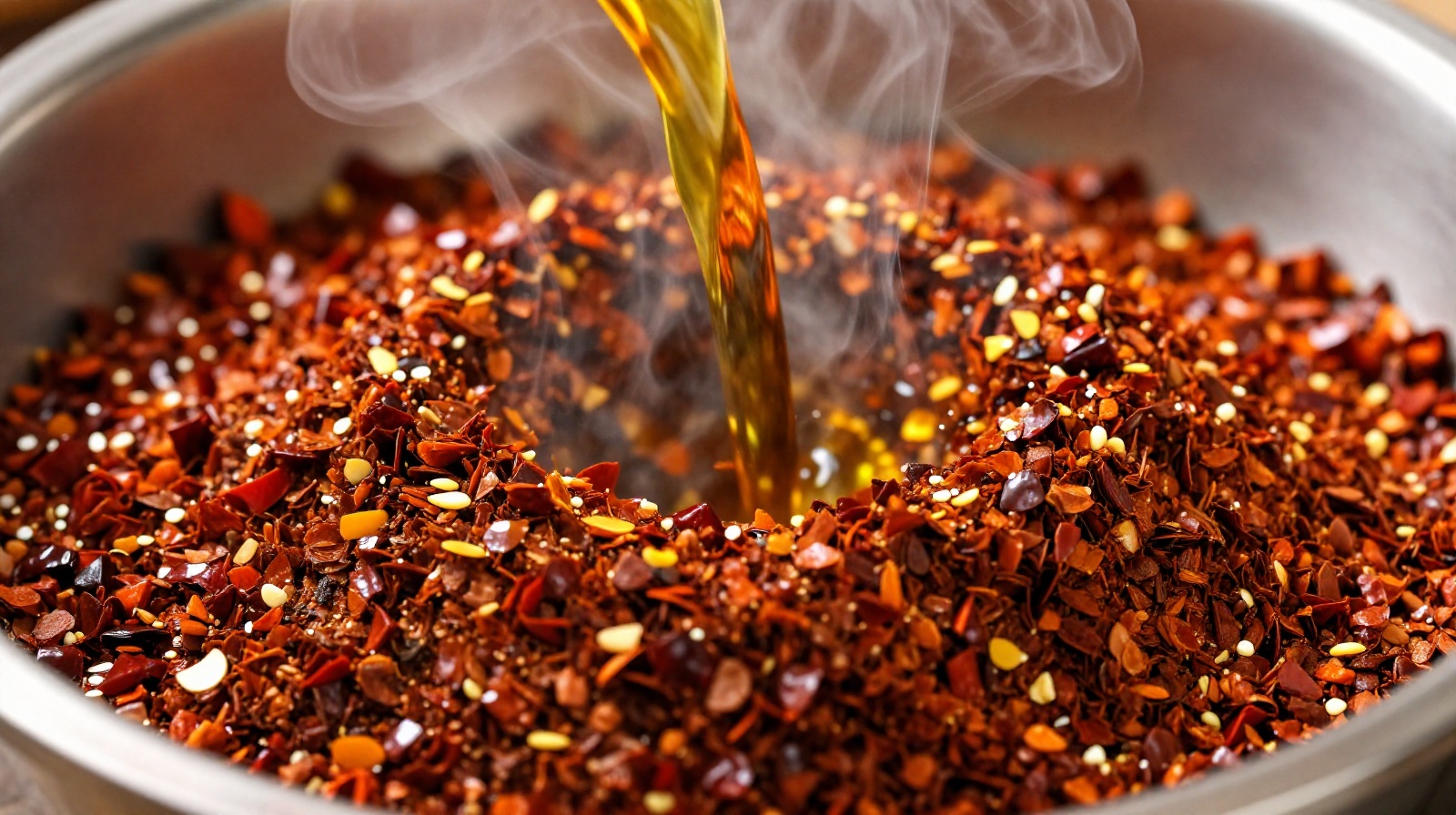
Perhaps the most intimidating element is “Oil泼辣子 as red as fire” (You Po La Zi). This isn’t just ketchup or hot sauce. It’s a bowl of chili flakes covered in boiling oil, sizzling and releasing a fragrance that can be smelled three streets away.
The technique is simple but dangerous if you don’t know the timing. A cook takes raw chili powder, pours scalding oil over it, and watches it bubble violently. The result is a deep red sauce with a smoky aroma and a heat that hits the back of your throat slowly, not all at once.
For foreigners who can’t handle spice, this looks like a health hazard. For locals, it’s the soul of the meal. You see it on everything: on the thick noodles, mixed into rice dumplings (Rou Jia Mo), or even sprinkled on cold tofu. It’s not just about adding heat; it’s about cutting through the grease and waking up your palate.
A Culture of Hardiness
Why do these quirks matter? They aren’t random oddities designed to confuse tourists. They are a testament to the people who lived on the Loess Plateau for millennia. The climate is dry, the soil is dusty, and the winters are biting.
Compare this to the delicate dim sum of Guangdong or the soups of Sichuan. Shaanxi food reflects a different philosophy: efficiency, durability, and intense flavor to compensate for the lack of fresh produce in winter. There is no waste here. Every part of the animal is used; every grain of wheat is stretched as far as possible.
When you eat these “weird” foods, you aren’t just eating dinner. You are participating in a centuries-old conversation about resilience. The loud slurping, the massive bread, the fiery oil—they all say one thing: life here is tough, but it tastes good anyway.