


It’s Not What You Think
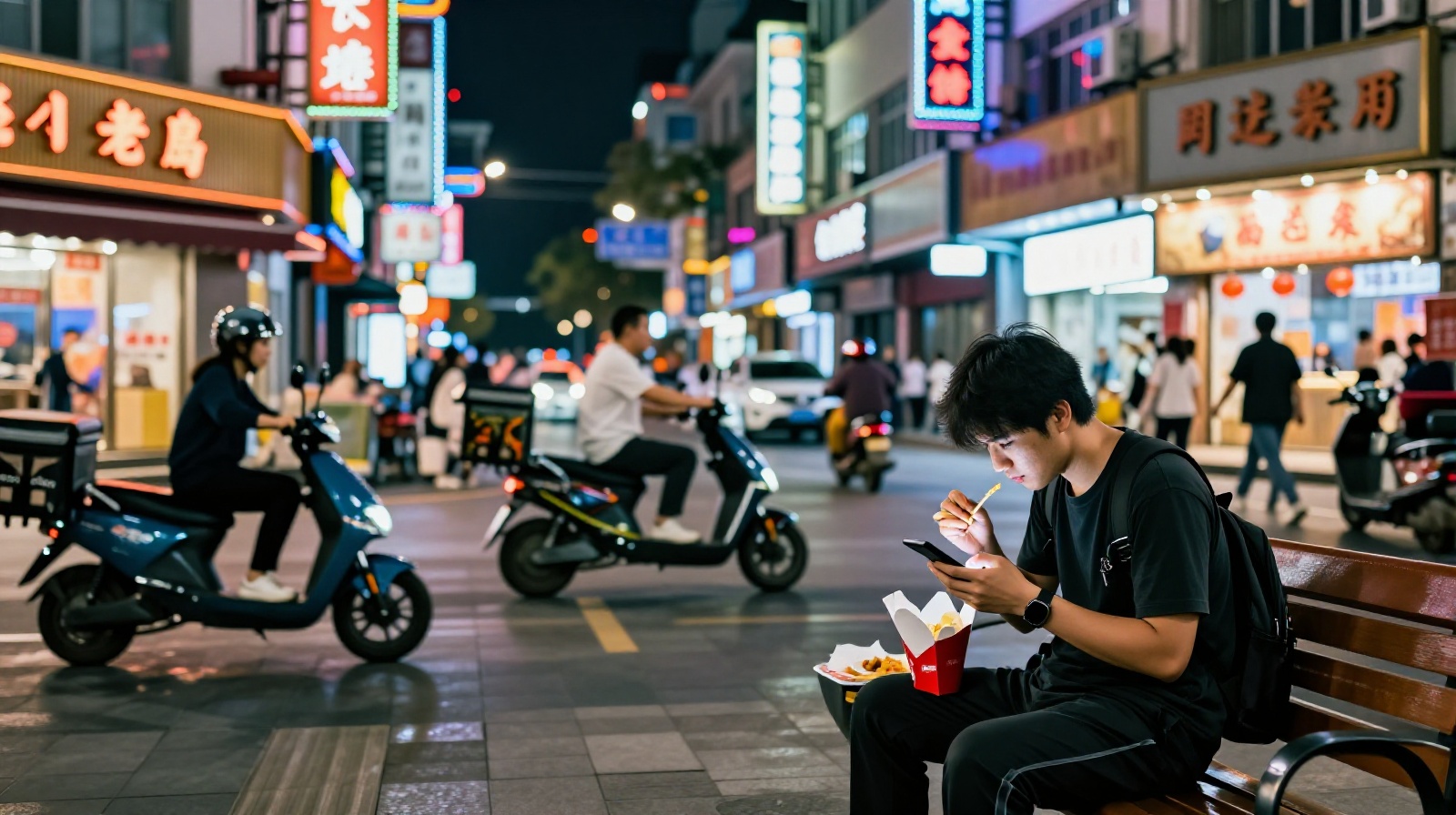
Imagine a 28-year-old software engineer in Shanghai named Li Wei. He lives alone in a one-bedroom apartment, has his own savings, and pays his own rent. By Western standards, he is fully independent.
Yet, every Sunday morning, he video calls his parents in their hometown of Chengdu. They don’t just ask “How are you?”; they discuss the price of pork in his city versus theirs, share stories about their neighbors, and occasionally send him a package of homemade dried tofu. When Li Wei’s car broke down last month, it was his father who drove six hours to help fix it, refusing any payment.
To many Western observers, this might look like an inability to let go or even “helicopter parenting.” But ask Li Wei about it, and he laughs. “It’s not control,” he says. “It’s a partnership. My parents helped me buy my apartment down payment; I help them with their medical insurance online. We are one team, just living in different cities.”
This dynamic challenges the classic Western definition of adulthood: physical separation equals emotional independence. In modern China, these two concepts often move in parallel, not opposition.
The Practicality of Connection
Beyond culture, there are hard economic realities driving this closeness. Housing prices in China’s tier-one cities like Beijing and Shanghai can be shocking to foreigners—often exceeding 20 times the average annual income.
For most young people, buying a home is an impossible dream without family support. The “Six Wallets” phenomenon (two sets of grandparents and one set of parents) pooling resources for a down payment is now standard practice. It isn’t seen as being dependent; it’s viewed as intergenerational cooperation.
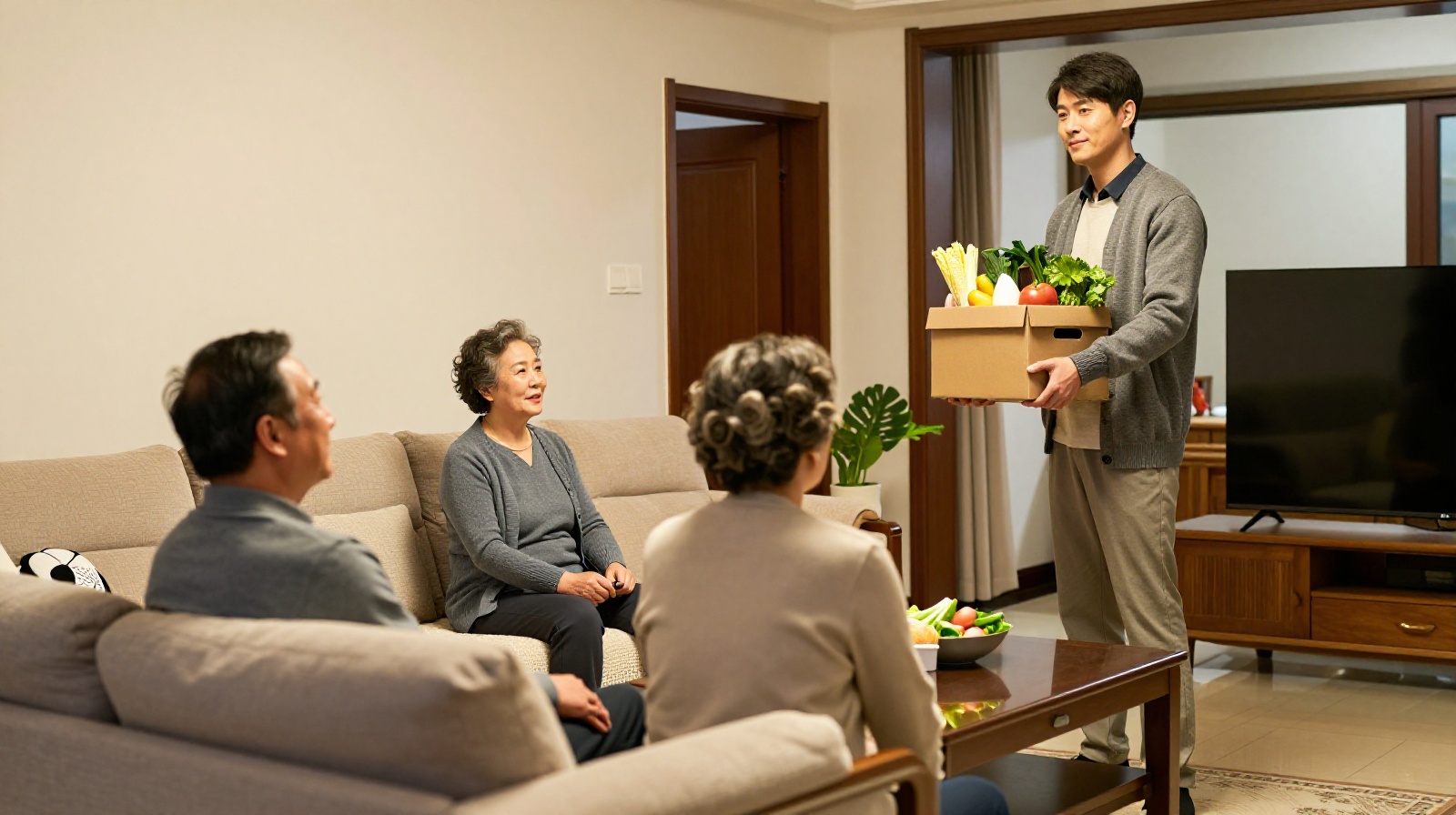
This financial bond creates a natural rhythm of communication. A monthly transfer from the son to the mother, or a grocery delivery arranged by the daughter-in-law, keeps lines open. When emergencies happen—a sudden illness or a job loss—the family network activates instantly. There is no waiting for insurance claims or government bureaucracy; the response is immediate.
Li Wei’s story isn’t unique. In Chengdu, I met 26-year-old designer Zhang Min, who moved to Beijing for work. Despite living 1,500 kilometers away, her parents visit her every few months, and she visits them every two weeks. “My mom cooks my favorite dishes when I come back,” she told me. “It costs money and time, but it’s worth it. In a city of 20 million strangers, they are the only ones who truly know me.”
Roots in Confucianism, Adapted for Today
You might wonder: Isn’t this just old-fashioned Confucian filial piety? Yes and no. Traditional respect for parents is still there, but it has evolved.
In the past, children lived with parents until they married, often in large extended households. Today, privacy is highly valued. Young people want their own space. The modern Chinese family model is a hybrid: physical distance for autonomy, emotional closeness for security.
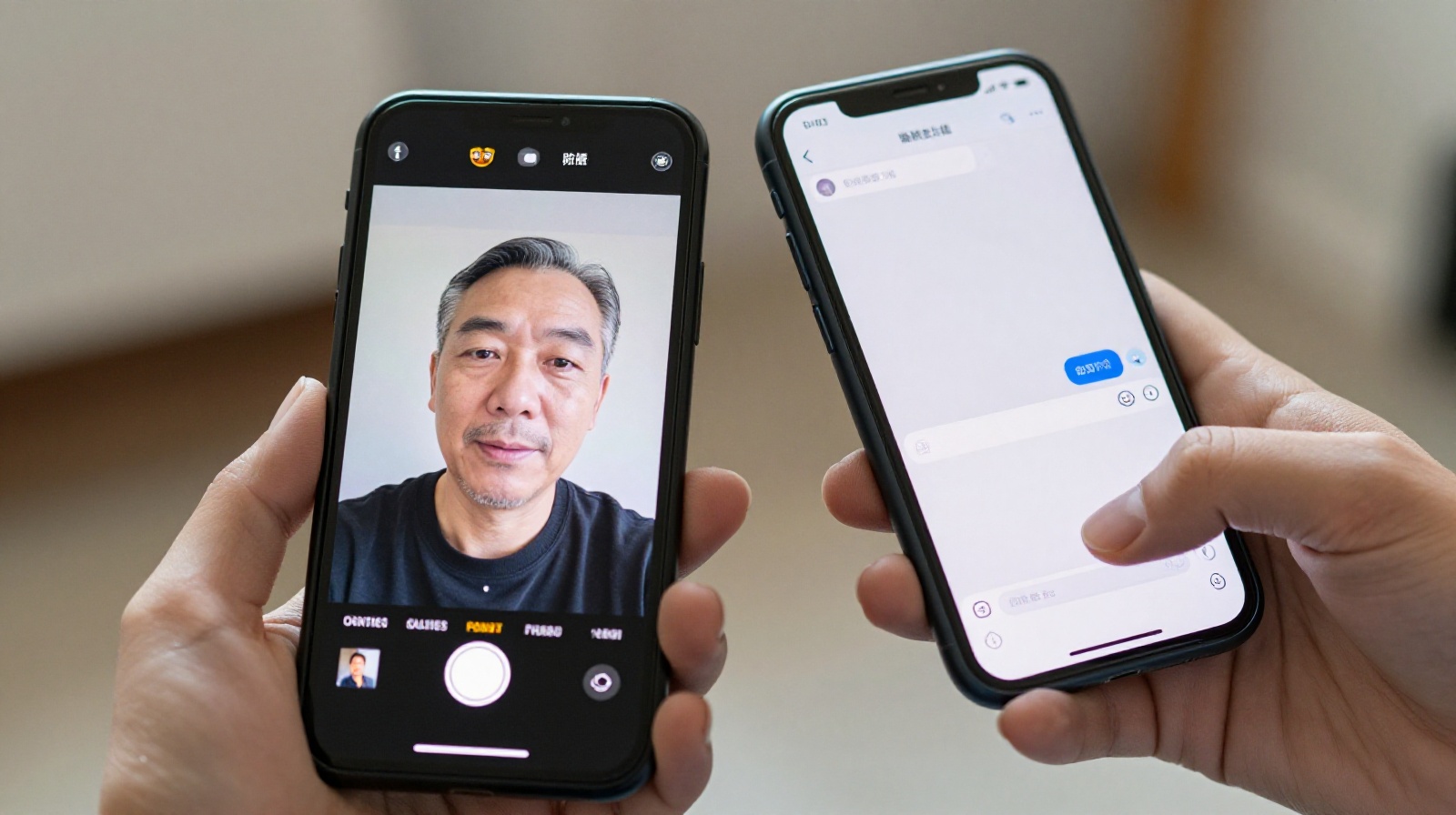
Technology plays a huge role here. WeChat groups are the digital living rooms where three generations gather. Grandparents post photos of flowers; parents forward health articles (even if they aren’t always accurate); children share work achievements or complaints. It’s messy, sometimes annoying, but it functions as a daily life stream.
This isn’t blind obedience anymore. Young people in China are increasingly assertive about their career choices and lifestyle preferences. But the underlying value remains: the family is the ultimate safety net. As one university student put it, “My parents don’t tell me who to date or what job to take. They just want to make sure I have a place to land if I fall.”
Burden or Strength?
Is there a downside? Absolutely. Some young people feel guilty for not visiting enough. Others struggle with the pressure of high expectations, especially regarding marriage and grandchildren.
However, many reject the narrative that this is purely oppressive. They see it as a source of resilience in a fast-changing society. When the economy slows down or social safety nets are thin (compared to some European welfare states), the family fills the gap.
It’s also about identity. In a rapidly modernizing country where traditional community structures have dissolved, the family provides a stable anchor. “If I don’t call my parents,” Li Wei explains, “I feel like I’m floating without an anchor.”
A New Definition of Independence
So, what does independence mean in China today? It’s not about isolation. It’s about the ability to stand on your own two feet while knowing you have a safety net below.
This model offers a different kind of freedom: the freedom to take risks because you know help is nearby. It allows young professionals to navigate high-pressure jobs, expensive cities, and uncertain futures with a psychological cushion that many Westerners envy but don’t understand.
The next time you hear about “controlling Chinese parents,” remember Li Wei’s weekend calls. They aren’t signs of weakness. They are the threads holding a resilient, modern society together—one video call, one grocery delivery, and one shared meal at a time.