

The Canvas in the Market
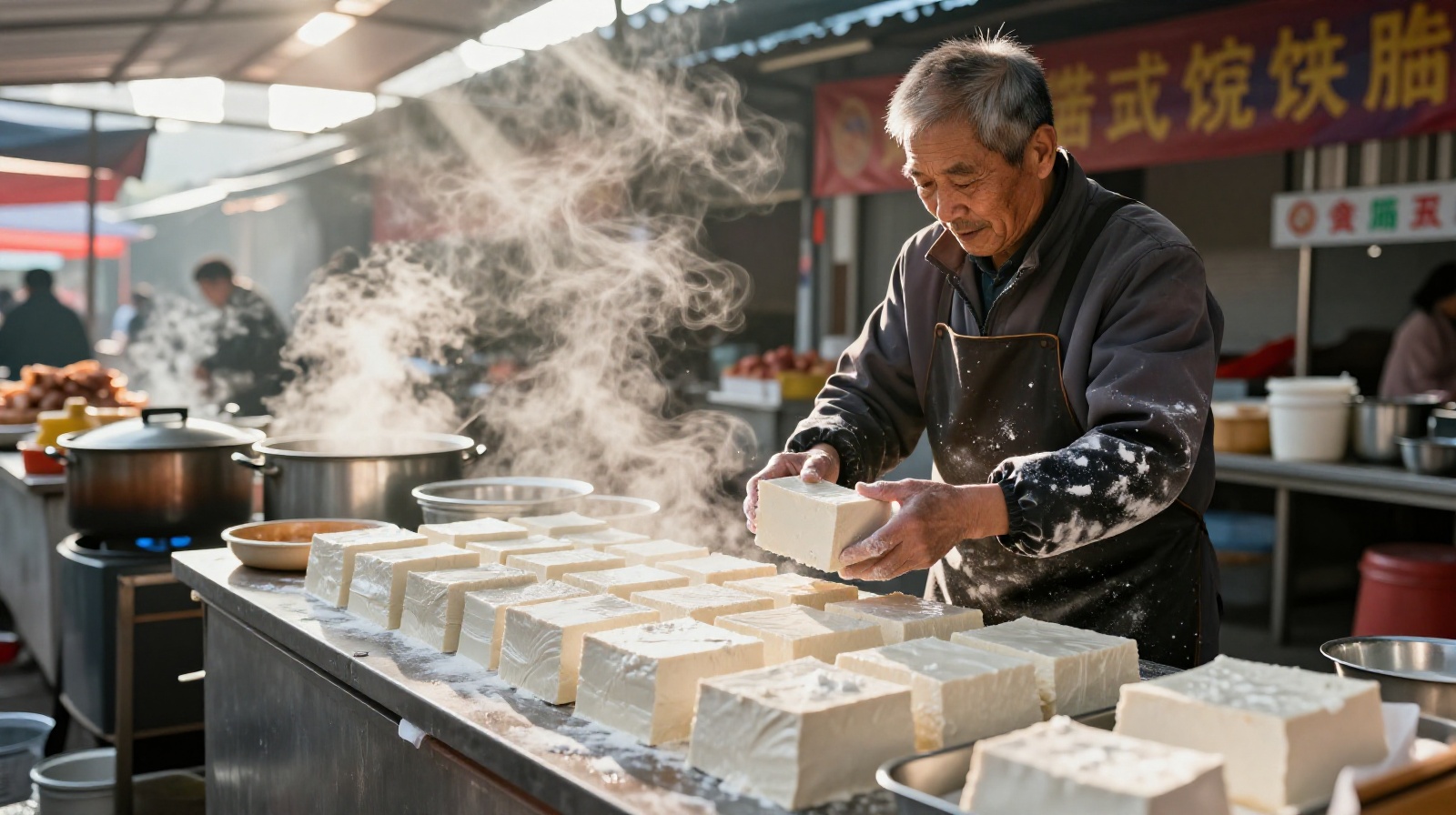
At 6:30 AM in a bustling wet market in Hangzhou, the air is thick with the earthy scent of soybeans and cold river water. Li Wei, a tofu maker with white hair and flour-dusted apron, presses his thumb into a block of fresh curd. It yields slightly but holds firm—a perfect balance between softness and structure.
For many Westerners, “tofu” is a single concept: a bland, white square bought in plastic wrap from a supermarket aisle. But to a Chinese cook, this block of soybean paste is more like a blank canvas or a clay sculpture waiting for the artist’s touch. The same bean can become the crispy skin of a dumpling wrapper, the silky broth of a soup, or a savory street snack that smells pungent and tastes divine.
As Li packs his cart, he explains, “The bean doesn’t change its soul. We just change how we press it, age it, or fry it.” This philosophy is at the heart of Chinese cuisine: taking a humble ingredient and elevating it through technique.
A Spectrum of Textures
The journey begins with texture. In China, tofu isn’t just “soft” or “firm.” It’s a spectrum that dictates how a dish will taste and feel in your mouth.
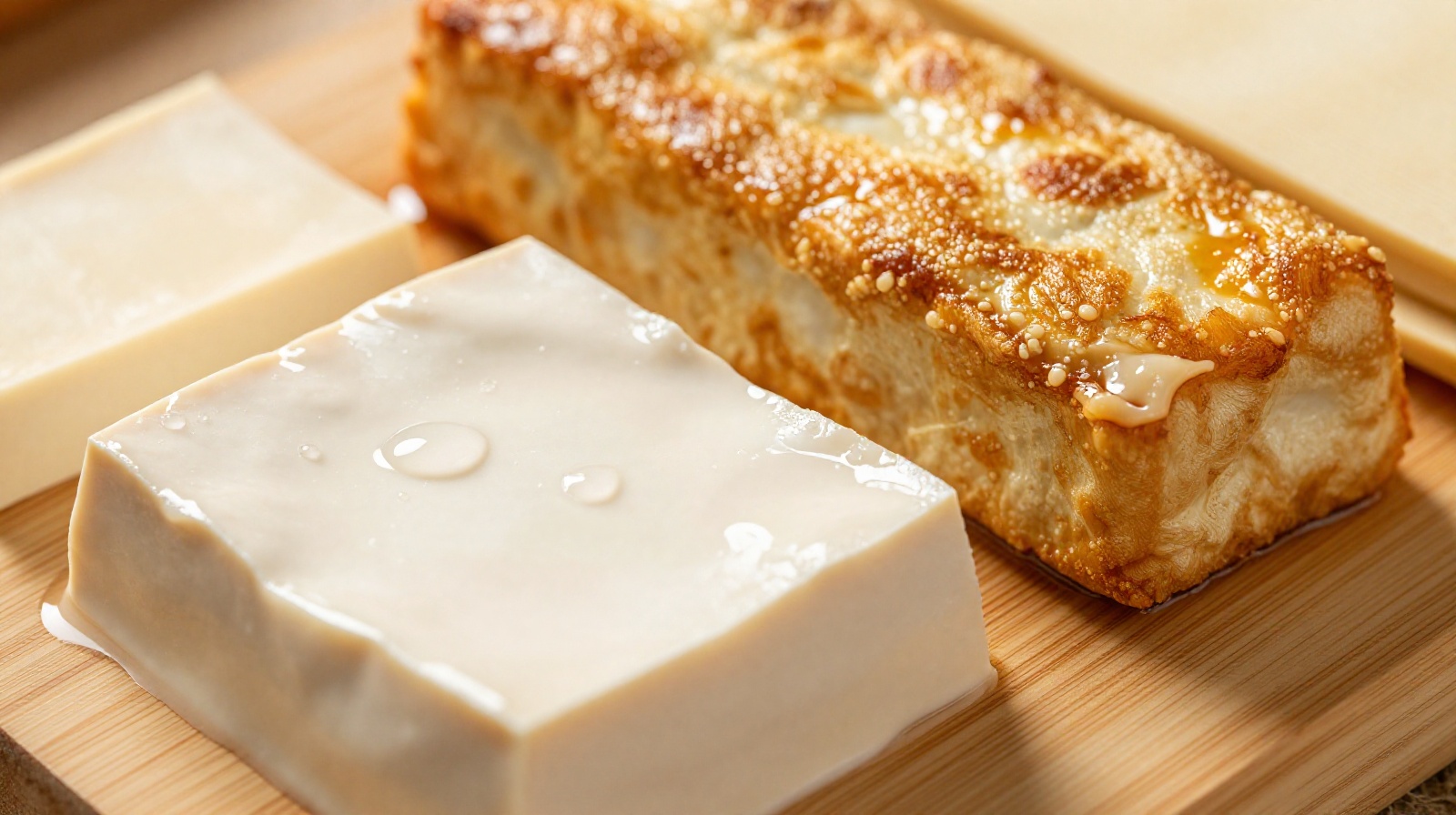
Take doufu hua, the softest variety often called “silken tofu.” It is so delicate it can barely be held with chopsticks. In Yangzhou, master chefs slice this into threads thinner than hair for “Wensi Tofu,” a soup that looks like swirling clouds of milk and snow. The texture melts instantly on the tongue.
On the other end lies lao doufu, or “firm tofu.” Pressed heavily to remove moisture, it has a spongy interior perfect for soaking up sauces. When fried until golden, its exterior crackles while the inside remains custard-like. This is the star of home-cooked meals across the country.
The Art of Transformation: Three Iconic Dishes
How does one ingredient become three completely different culinary experiences? It comes down to preparation and context.
Consider Mapo Tofu, the global ambassador of Sichuan cuisine. Here, soft tofu cubes are gently poached in a boiling vortex of chili oil, ground pork, and numbing Sichuan peppercorns. The heat doesn’t destroy the tofu; it penetrates it. The result is a dish that balances spicy, salty, numb, and fresh flavors. It’s comfort food for millions.
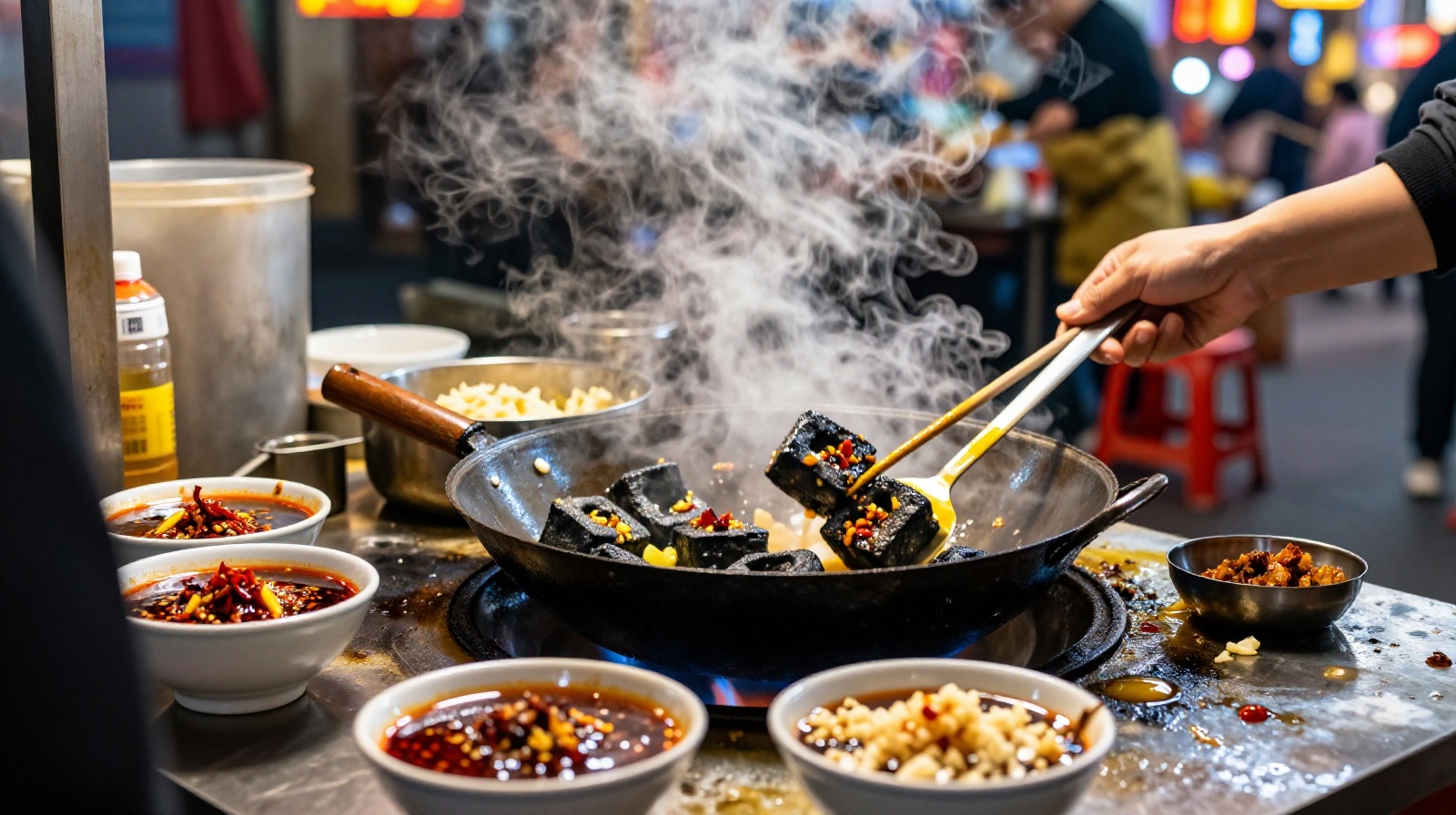
Then there is Stinky Tofu, a polarizing favorite on Chongqing night markets. Unlike its gentle namesakes, this tofu is fermented in brine for weeks, turning black and developing an intense aroma that hits you from ten meters away. Yet, once deep-fried until crisp and dipped in chili-garlic sauce, the texture becomes chewy and savory, much like a rich mushroom or aged cheese. It’s a love-it-or-hate-it experience that defines the chaotic energy of Chinese street food.
Finally, there is Doufu Pi, or soy milk skin. As hot soy milk cools in a large wok, a thin, yellow film forms on the surface. Skimmed by hand, it becomes a wrapper for rolls or an ingredient in soups. It has the texture of silk and absorbs flavors with incredible speed.
The Ultimate Flavor Sponge
Why is tofu so central to Chinese cooking? Because it is a flavor sponge. Unlike meat, which has its own distinct taste, or vegetables with their specific crunch, tofu has no voice of its own.
This neutrality is not a weakness; it’s a superpower. It allows the chef to impose any personality on the bean. In a spicy Sichuan hot pot, it becomes fiery. In a light chicken broth, it turns savory and sweet. This adaptability mirrors Chinese culture itself: able to absorb influences while maintaining its core identity.
When you cook with tofu in China, you are not just cooking; you are conducting an orchestra of flavors where the bean is the conductor’s baton.
Tofu in a Modern World
Today, tofu is finding new life beyond traditional recipes. As plant-based diets gain popularity globally, Chinese chefs are reimagining these ancient techniques for modern health trends.
In cities like Shanghai and Shenzhen, startups are using 3D printing to create “meat-like” textures from soy protein. Others are fermenting tofu with specific microbes to boost probiotics, turning a simple breakfast item into a functional superfood. The bean remains the same, but its role is evolving.
As Li Wei closes his market stall for the day, he watches young customers scanning QR codes to pay for their morning steamed buns and fried tofu. “The world changes,” he says, wiping his hands on a rag. “But as long as people eat, they need something soft to hold them together.”