

Introduction: A Day in the Life of a Beijing Resident
The alarm goes off at 6:30 AM. For Lin Wei, a thirty-year-old graphic designer living in Haidian District, Beijing, the morning routine is simple but precise. She wakes up, brews coffee, and then faces the first hurdle of her day: the kitchen sink.
She separates her used tea leaves into organic waste, rinses the plastic bottle for recycling, and wipes her hands with a disposable cloth destined for general trash. This isn’t just about being tidy; it’s mandatory. Since 2019, Beijing has enforced one of the world’s strictest waste sorting policies. If she gets it wrong during the morning drop-off, the smart bin rejects it.
For Western observers used to seeing vague recycling rules or overflowing landfills, this level of order might seem surprising. But Lin Wei isn’t a robot; she is part of a massive shift in China’s approach to consumption and environment. This is not just about cleaning up streets; it is the practical reality of building a circular economy.
The ‘Smart’ Bin: How Technology Meets Daily Habits
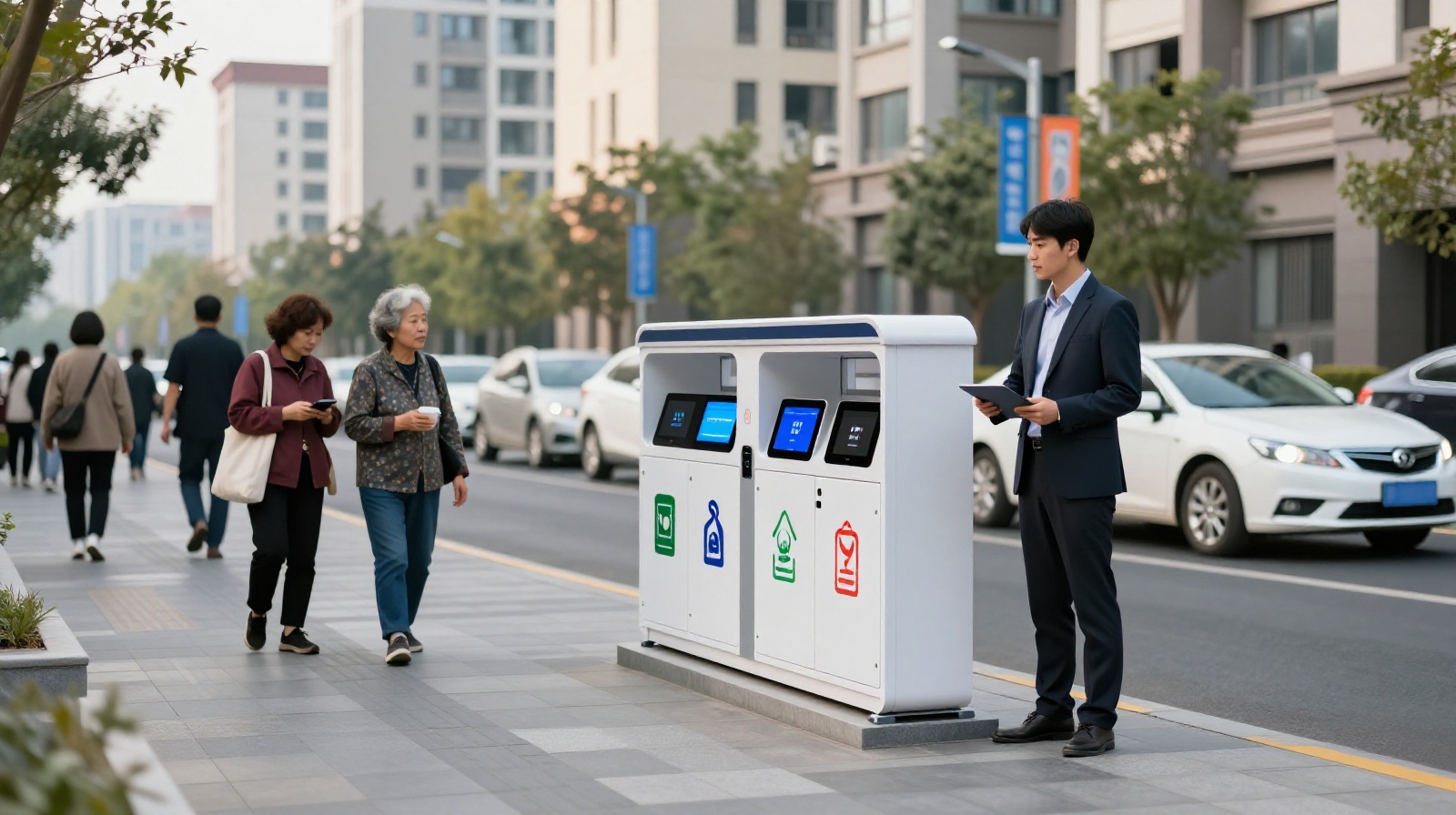
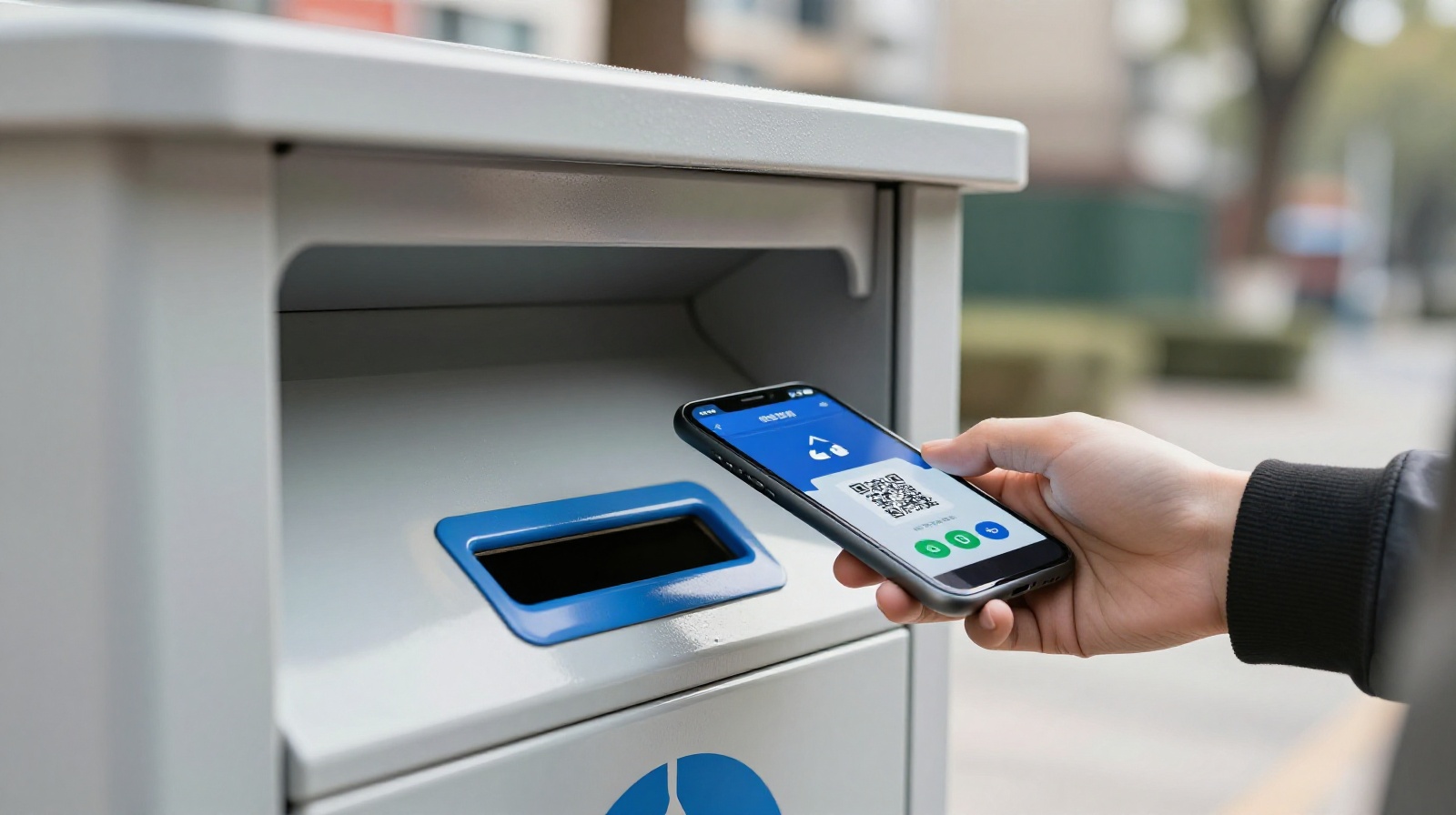
Lin Wei walks to her community’s recycling station, located right outside her apartment block. It looks less like a municipal depot and more like a high-tech kiosk. The bin is an “intelligent” unit equipped with facial recognition cameras and weight sensors.
To open the lid for recyclables, she scans her resident card or uses her phone app. Once the bottle drops in, the system automatically calculates points—digital currency that Lin can later exchange for groceries at a nearby convenience store or mobile credit. This is where technology bridges the gap between policy and human behavior.
Unlike manual inspections in the past, these smart bins collect data in real-time. If a specific neighborhood consistently fails to sort correctly, local community managers get alerts immediately. The goal isn’t just punishment; it’s correction through convenience. According to Beijing Municipal Commission of Urban Management, over 90% of residential areas now use such smart systems.
This digitization transforms waste from a nuisance into an asset. It creates a feedback loop where residents are actively rewarded for participation, making the circular economy feel personal rather than bureaucratic.
Beyond Recycling: Turning Plastic and Food into Energy
The journey doesn’t end at the community bin. Lin Wei’s sorted waste travels to massive processing facilities on the outskirts of the city. Here, the concept of “circular economy” moves from abstract theory to industrial reality.
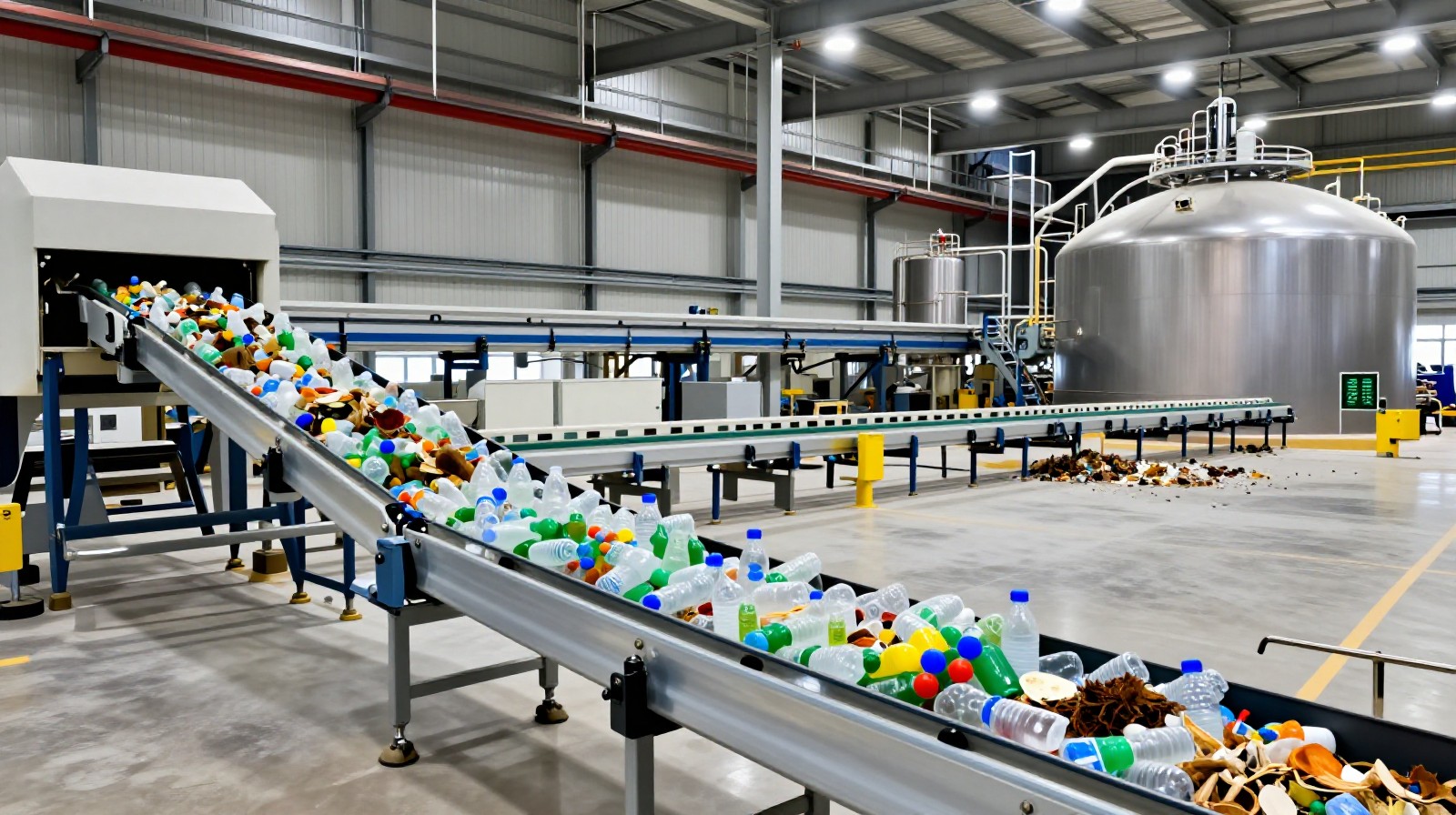
Take food waste, for instance. In Beijing alone, millions of tons are generated annually. Instead of dumping it in landfills where it produces methane—a potent greenhouse gas—these facilities use anaerobic digestion technology. The organic matter is broken down by bacteria in oxygen-free tanks, producing biogas. This gas is then burned to generate electricity that powers the city’s streetlights and even feeds back into the power grid.
Plastics follow a similar path. Advanced sorting lines separate materials with high precision. PET bottles are washed, crushed, and turned into pellets for new products, while non-recyclable plastics are incinerated in waste-to-energy plants to heat district heating systems during winter. This dual approach significantly reduces the volume of material sent to landfills.
China’s waste-to-energy capacity has grown rapidly over the last decade. By 2023, the country processed millions of tons of municipal solid waste annually through thermal treatment, a scale rarely seen in other developing economies. The result is cleaner air and reduced reliance on fossil fuels for energy generation.
The Community Factor: Why Neighbors Help Each Other Sort Trash
Technology alone cannot sustain this system; it needs human cooperation. In Beijing’s residential compounds, the social dynamic plays a crucial role.
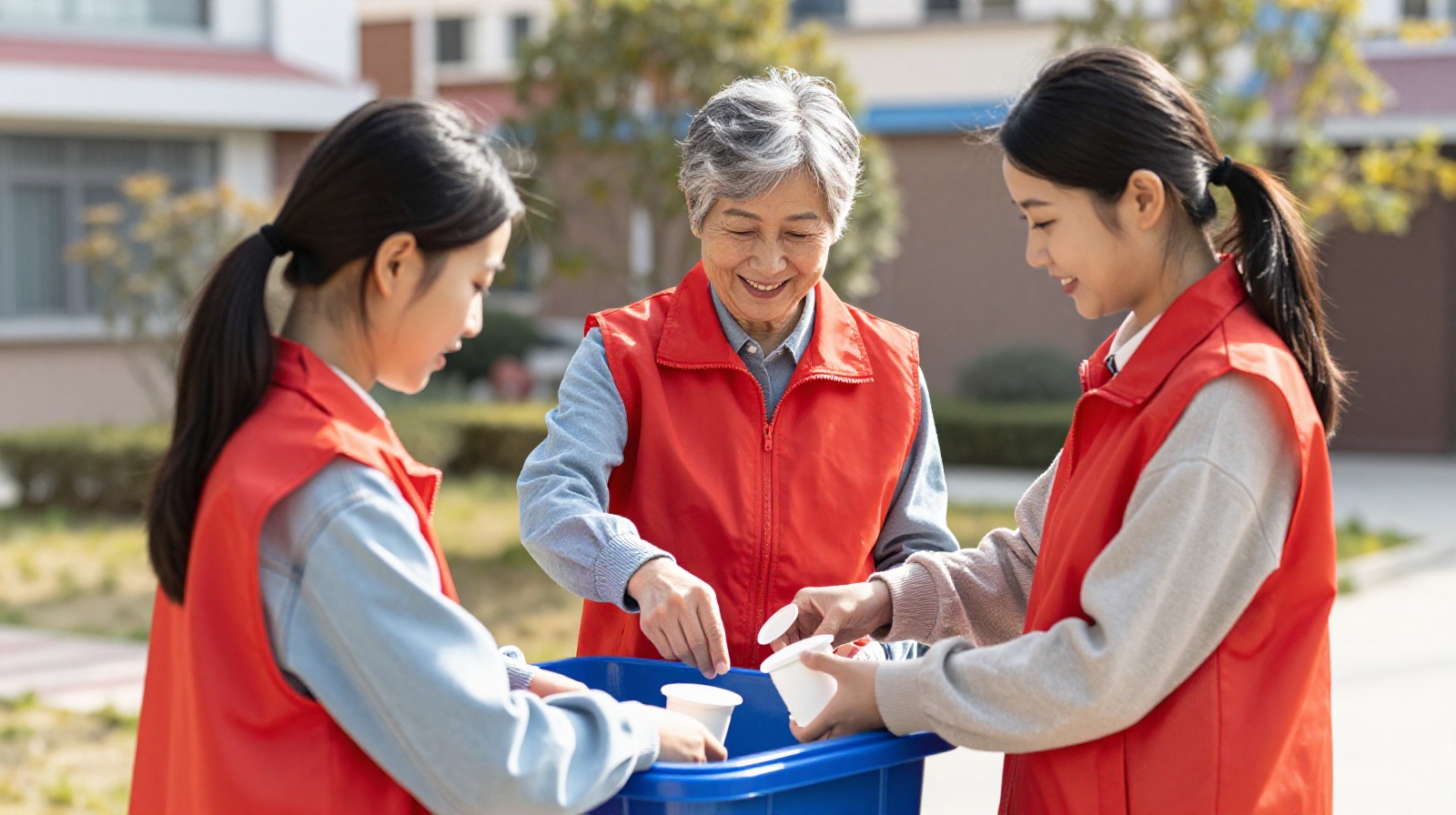
You will often see “waste supervisors”—usually retired community members dressed in red vests—standing by the bins during peak hours (7-9 AM and 6-8 PM). They don’t just watch; they guide. If Lin Wei hesitates, an experienced neighbor steps in to show her which category the item belongs to.
This peer pressure is gentle but effective. It’s part of a broader cultural shift where environmental responsibility has become a marker of civic pride. In many neighborhoods, sorting scores are publicized on community bulletin boards, turning waste management into a collective achievement rather than an individual chore.
For foreign visitors, the sight of elderly people meticulously teaching young professionals how to separate yogurt cups from coffee grounds might seem intense. But it reflects a deep-seated belief: that protecting the environment starts in the backyard and requires everyone’s hands on deck.
Conclusion: What China’s Waste System Can Teach the World
The story of Lin Wei and her neighbors reveals a complex truth about modern China. It is not just a factory producing goods for export; it is a society actively experimenting with sustainable living at scale.
The integration of smart technology, industrial processing, and community mobilization shows that waste management is no longer an afterthought. It is a core component of urban planning and economic strategy. While challenges remain—such as ensuring the long-term stability of these systems and managing costs—the progress in Beijing offers a concrete roadmap.
For the world, China’s experiment proves that a circular economy is not just a theoretical ideal. With the right mix of incentives, technology, and social engagement, it can become the new normal. The trash cans on the street are no longer just containers for refuse; they are the first step toward a future where nothing is truly wasted.