

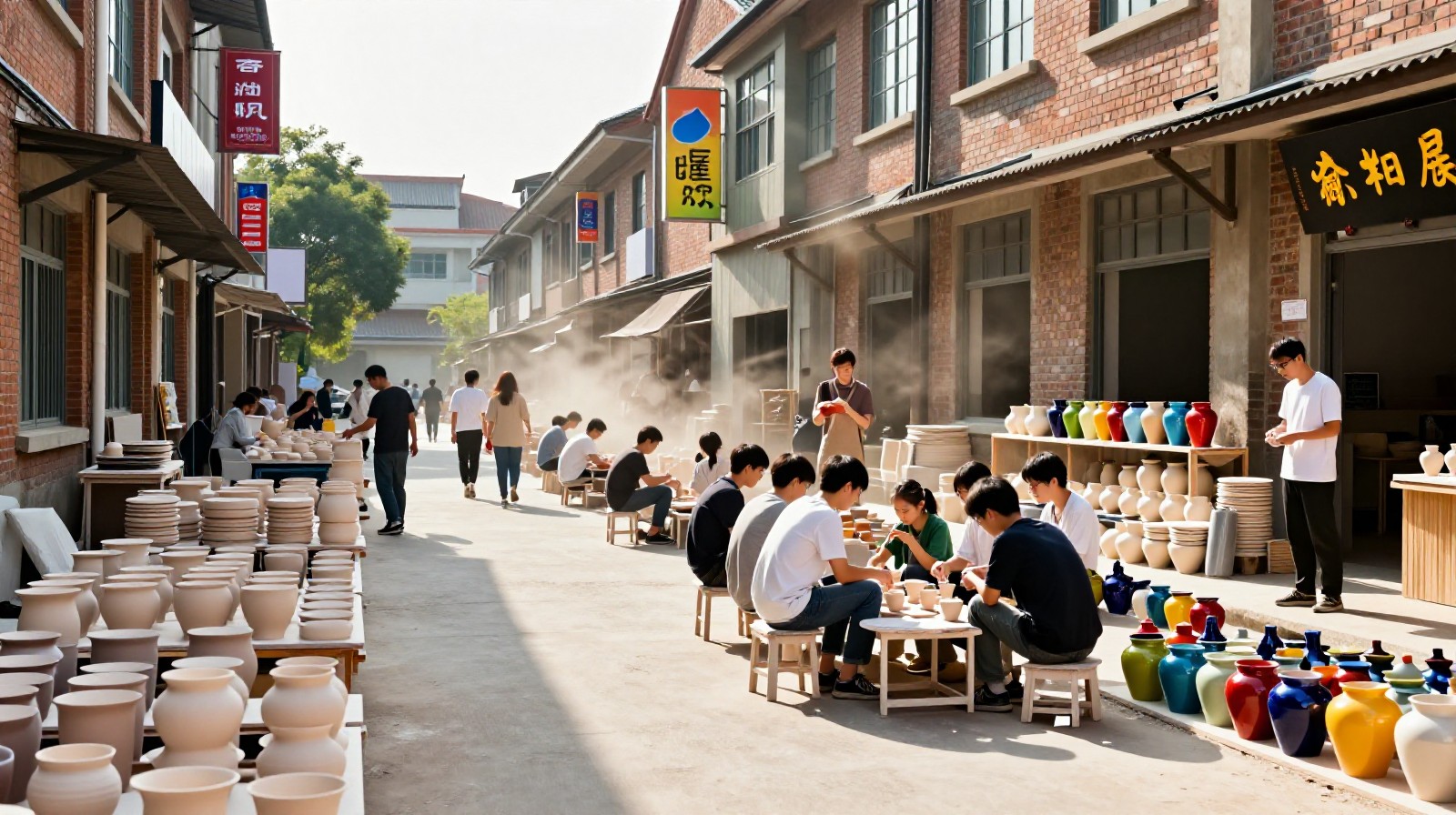
The Smell of Clay and Coffee
It is 9:15 AM on a humid Saturday in Jingdezhen. The air inside Studio No. 4 doesn’t smell like a museum; it smells like wet earth, burnt coal, and strong espresso. Lin Xiao, a 26-year-old ceramicist from Hangzhou, is wedging clay with her feet while sipping cold brew. Across the room, Sarah, a former graphic designer from Berlin, is carefully glazing a mug that looks suspiciously like a futuristic teapot.
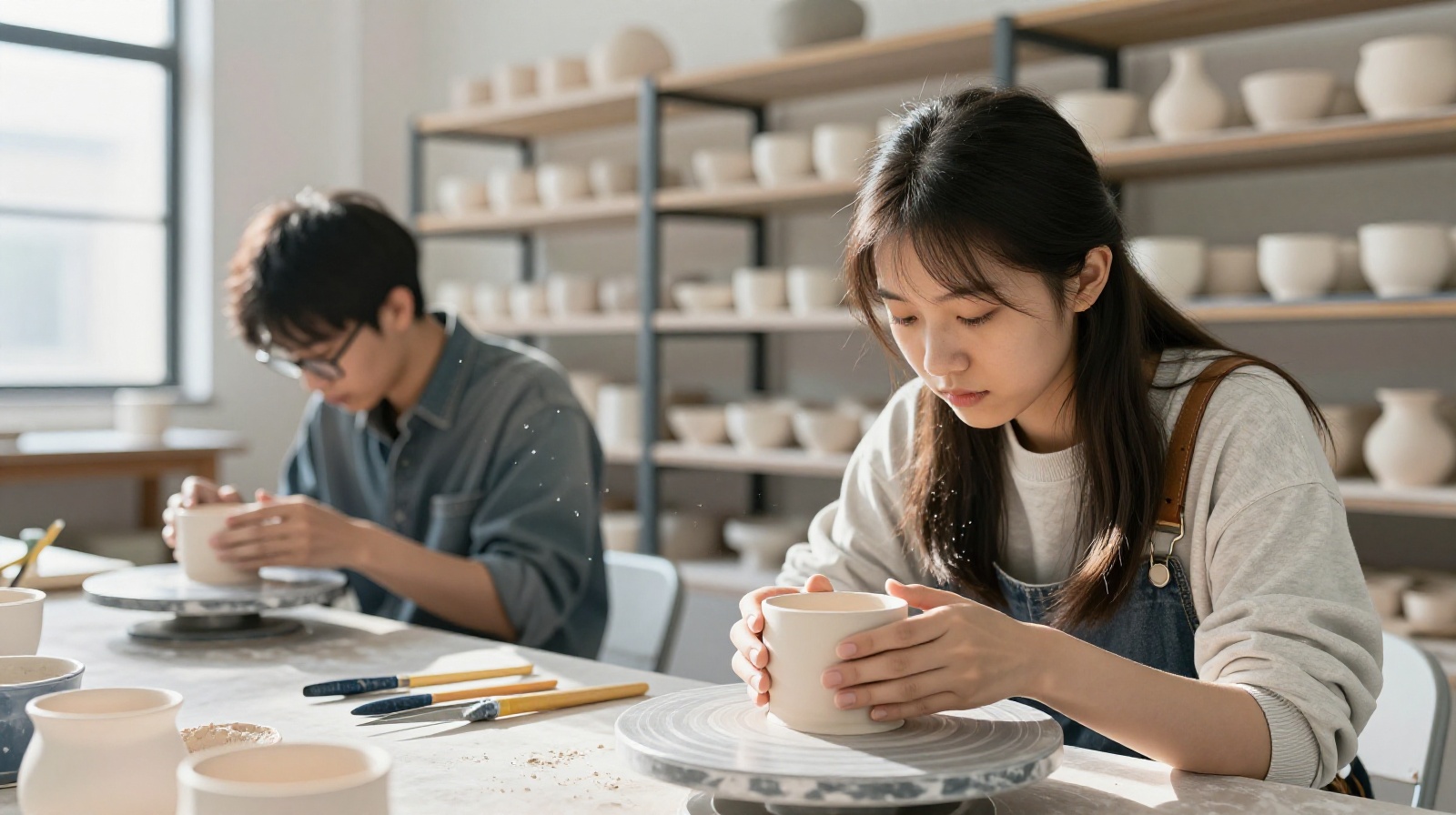
” alt=”Young artists working in a bright ceramic studio mixing wet clay and applying glaze under natural light” />
This is not the Jingdezhen of history books. Once the exclusive domain of imperial kilns producing porcelain for emperors, this city in eastern Jiangxi province has become a magnet for “ceramic nomads.” In the last decade, over 100,000 people have migrated here, drawn by low rent, abundant raw materials, and a community that values making things with their hands. They are not just preserving history; they are rewriting it.
Bridging Two Worlds in One Kiln
The transformation is visible in the way these studios operate. Lin Xiao’s studio doesn’t just churn out traditional blue-and-white vases. She collaborates with Sarah to create functional art for modern homes—mugs that fit car cup holders, plates designed for microwave heating, and abstract sculptures that double as desk organizers.
Their process is a blend of old and new. Lin handles the wheel-throwing using techniques perfected over 1,000 years ago, while Sarah uses digital modeling to test proportions before the clay ever hits the wheel. “The kiln doesn’t care about your nationality,” Lin says, wiping dust from her forehead. “It only cares if you understand how the temperature affects the glaze.”
This cross-cultural dialogue is happening in hundreds of similar spaces scattered across the city’s old factory district. Where heavy machinery once roared, now there is the rhythmic hum of potter’s wheels and the clatter of drying racks.
The Weekend Market: Real Money for Handmade Goods
By Sunday morning, the energy shifts from quiet concentration to chaotic commerce at the Taohuazhai weekend market. It spans several city blocks, filled with stalls draped in colorful fabrics. Here, you won’t find mass-produced souvenirs.
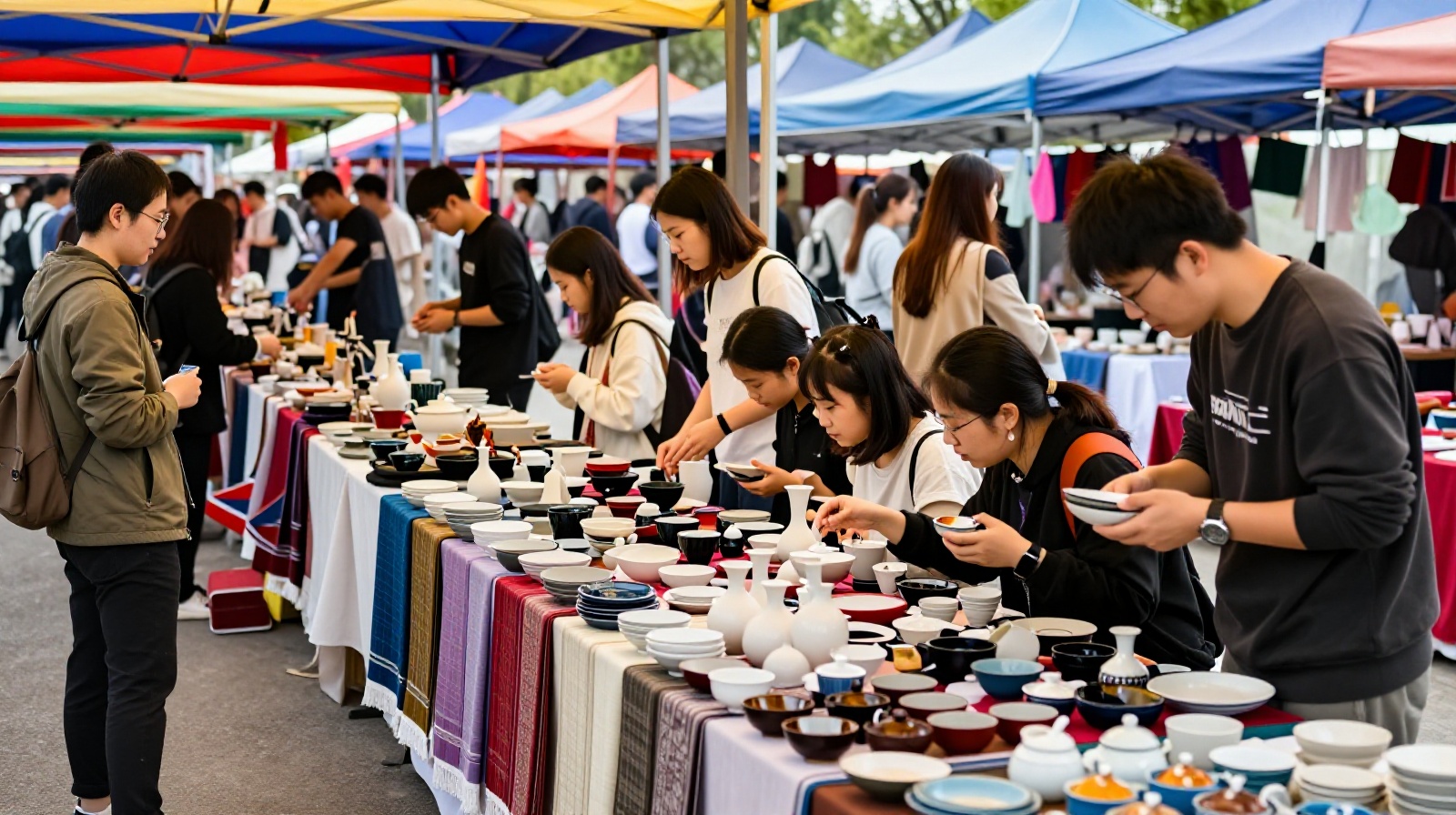
” alt=”Bustling outdoor weekend market in Jingdezhen with vendors selling handmade ceramics to young customers browsing tables” />
Instead, it is a direct-to-consumer hub for independent makers. A 19-year-old student from a nearby village displays delicate tea sets on folded newspaper. An expat family sells minimalist vases hand-painted with local folklore scenes. Prices are transparent: a small bowl costs $5; a custom dinner set might be $40.
“I used to work in a factory making plastic toys,” says Chen, a 32-year-old father of two who now runs a stall selling handmade bowls. “The pay was okay, but I had no soul in my job. Here, if the clay cracks, it’s my fault. If it glows, it’s mine.”
Beyond the Aesthetic: The Realities of Production
While the scene is undeniably romantic, the reality involves grit and uncertainty. Not every artist succeeds. Many rent small rooms for months, struggling to find a market niche. The “hipster” label sometimes overshadows the serious business aspects of scaling production.
However, the industry is evolving beyond art pieces. Local factories are now adapting ancient recipes for modern appliances. A new wave of startups is using Jingdezhen’s clay expertise to manufacture high-end cookware and smart home sensors with ceramic casings. The city is no longer just a backdrop for artists; it is a functional industrial base.
A New Definition of Home
Walking through the streets of Jingdezhen today, you see young people who don’t fit the typical urban mold. They might be working 12-hour days in dusty workshops but spending their evenings at coffee shops discussing design trends or hiking nearby mountains.
The city’s revival isn’t just about making pretty objects. It is a testament to how traditional industries can adapt when empowered by a new generation. For these young artisans, the clay is not just a material; it is a medium for expressing a life that balances history with modernity.