

A Carpet of Blood on the Shore
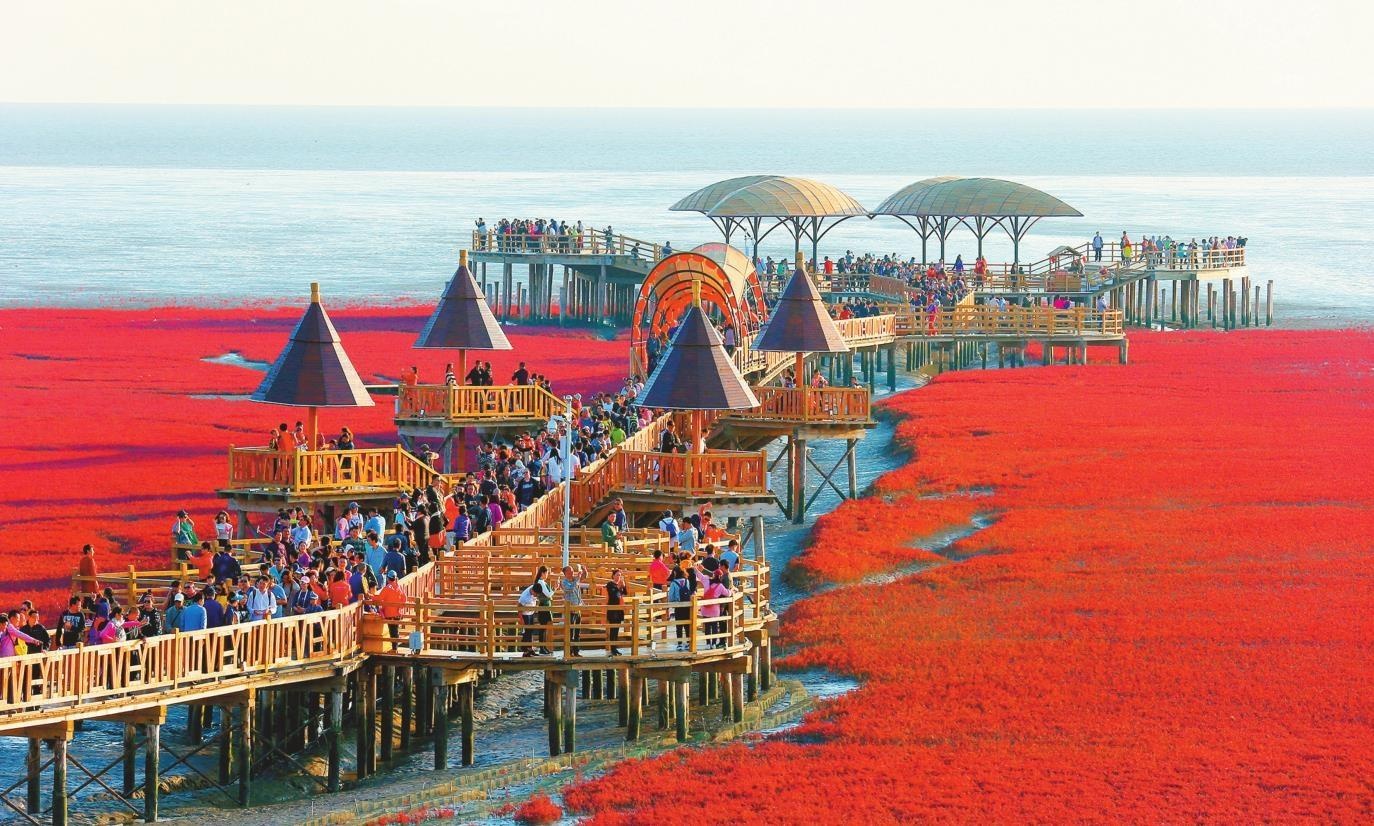
Imagine walking along a coastline where the sand isn’t black or gold, but a deep, vibrant crimson. This isn’t a scene from a fantasy novel or a manipulated Instagram photo. It is real, and it happens every single autumn in Panjin, Liaoning Province, China.
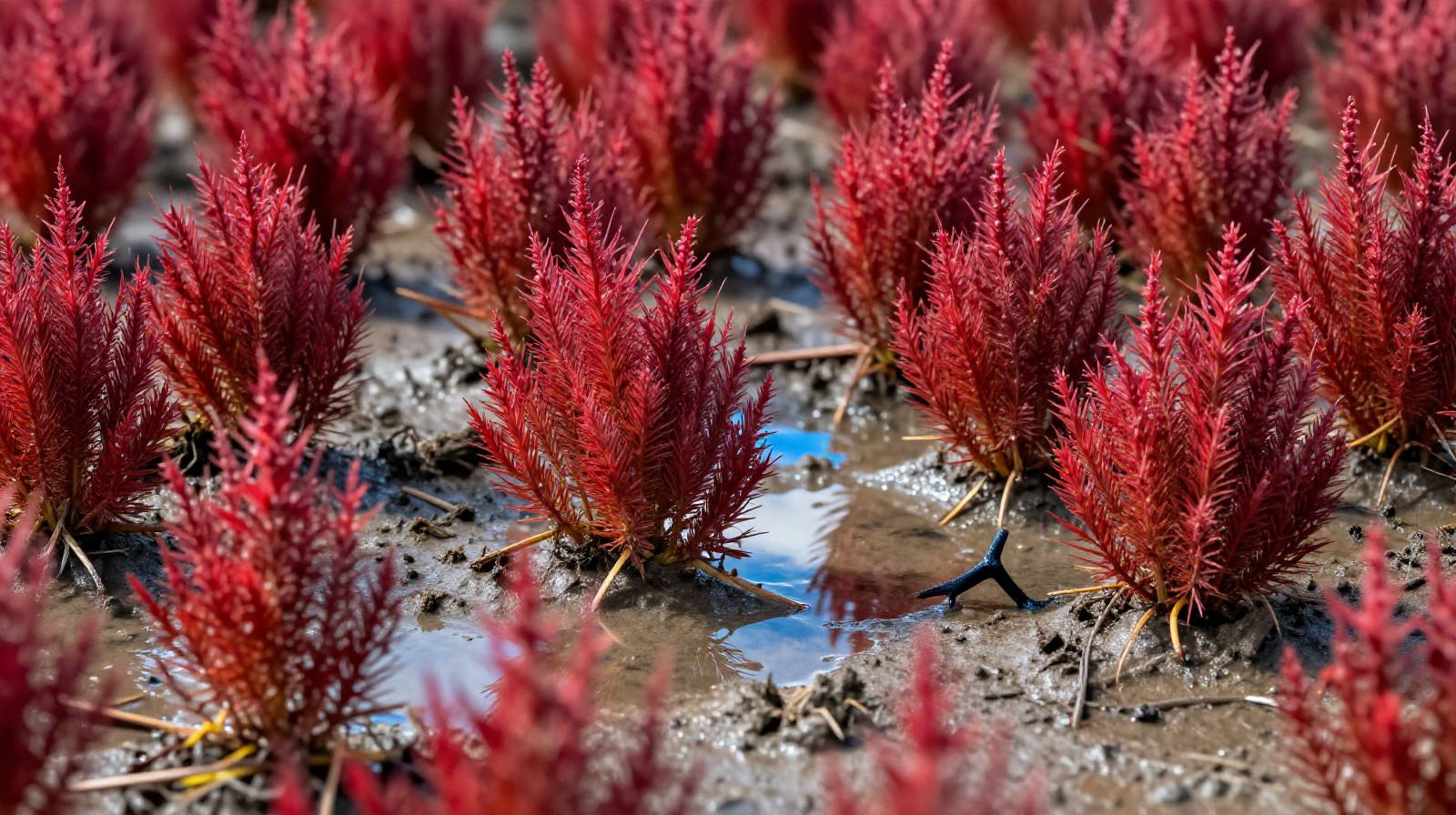
For centuries, people assumed this color came from something mysterious or dangerous. In reality, it’s nature’s most efficient camouflage game played by a humble plant called Suaeda salsa, or saltweed. As the summer heat fades and autumn chill sets in, these tiny grasses change from green to red. When millions of them grow together on the tidal flats of the Bohai Sea, they create a sea of fire that stretches for miles.
How Nature Paints the Coast
The science behind this phenomenon is as fascinating as the view itself. The red beach exists because of the unique soil composition in the Liaohe River Delta—a mix of alkaline clay and constant tidal flooding. Suaeda salsa thrives here, absorbing salt from the water and storing it. As the plant matures and temperatures drop, its chlorophyll breaks down, revealing anthocyanins—the same red pigments found in autumn leaves or cranberries.
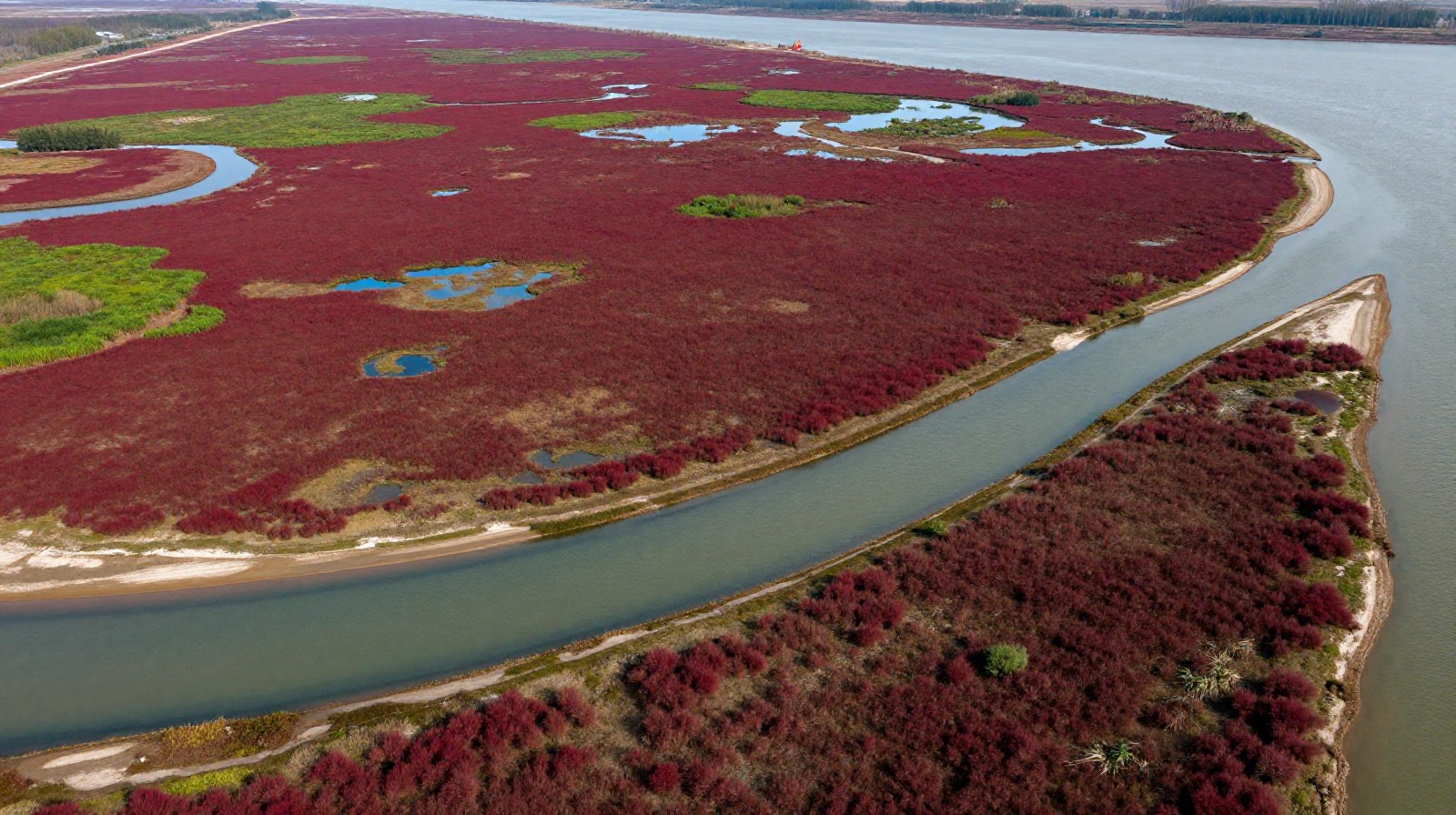
This isn’t just a pretty trick of light; it’s a critical ecosystem function. The dense mats of red grass stabilize the soft mud, preventing soil erosion from powerful tides. More importantly, this coastal wetland is a vital stopover for migratory birds flying thousands of kilometers between Siberia and Australia.
Where Birds Find Sanctuary
To understand the true value of Panjin’s red beach, you have to look past the tourists taking selfies. For the birds, this place is a gas station and a five-star hotel rolled into one.
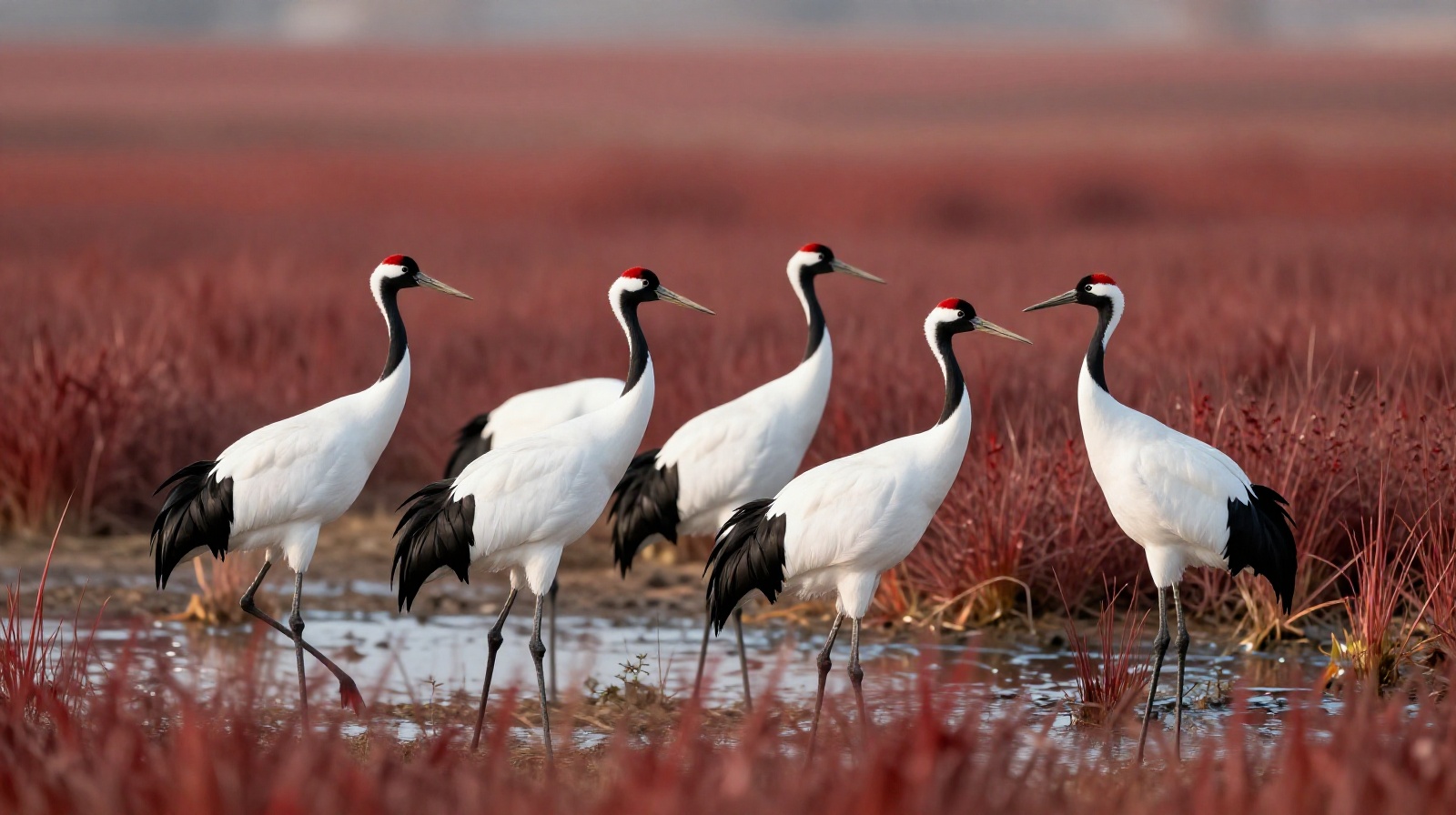
Every autumn, hundreds of thousands of cranes, geese, and egrets descend upon the Liaohe Delta Nature Reserve. The red grass provides both shelter from predators and a rich source of food in the form of seeds and small crustaceans living in the mud. It is one of the few remaining safe havens for the endangered Red-crowned Crane, whose population has bounced back significantly thanks to strict protection laws.
From Wild Mudflats to Green Economy
In the past, these tidal flats were considered useless wastelands, often ignored or even threatened by industrial expansion. But today, Panjin represents a different model of development: turning a natural wonder into a sustainable engine for the local economy.
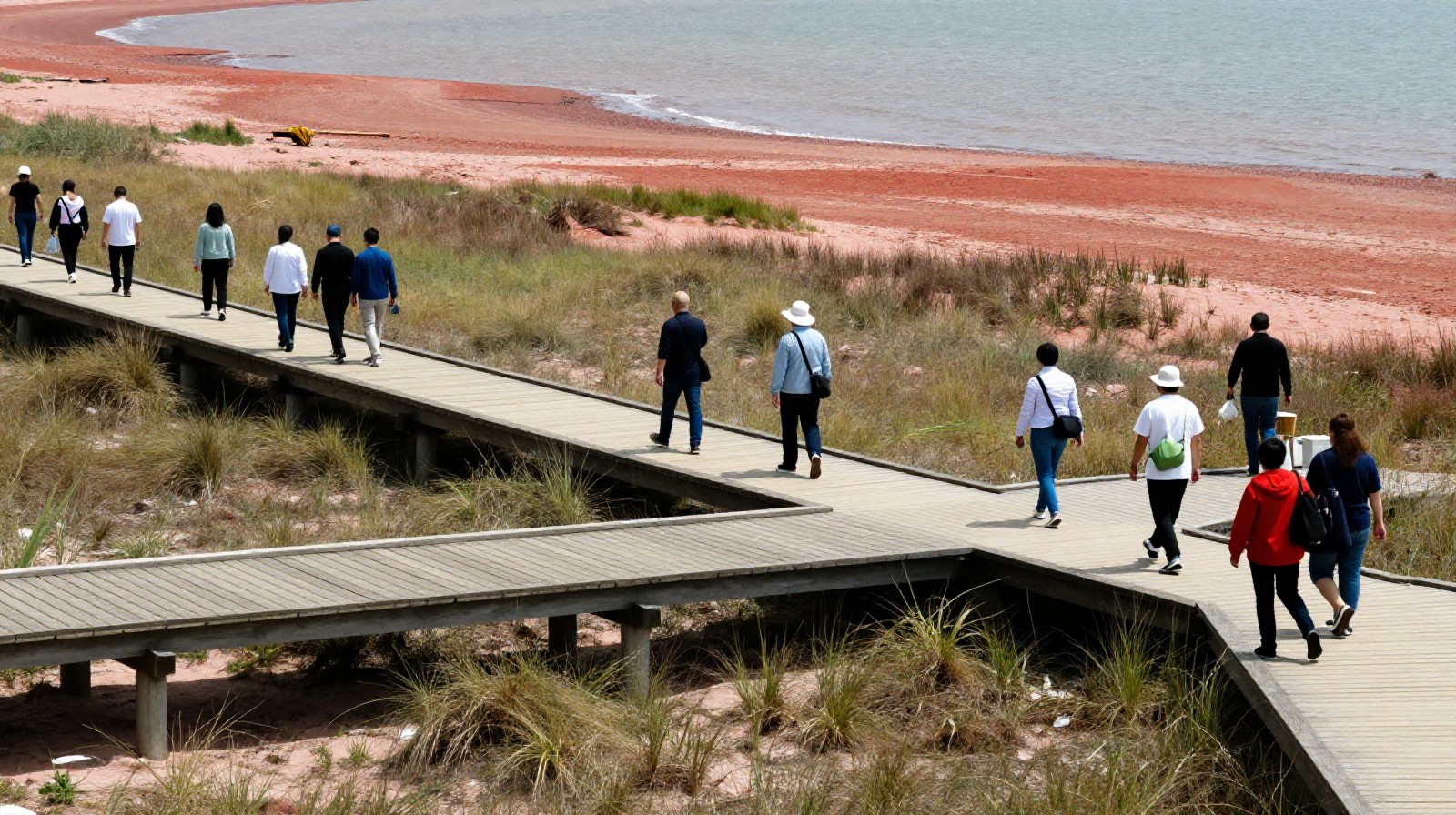
Local authorities have carefully zoned the area. A network of wooden boardwalks allows visitors to walk above the fragile ecosystem without trampling the grass or disturbing the birds. Tourism has boomed, with hotels and restaurants built nearby catering to domestic travelers eager to see this “miracle.” Yet, strict rules ensure that no construction touches the core habitat.
Planning Your Own Red Beach Trip
If you are looking for a destination that defies your expectations of what a coastline should look like, Panjin is the place. The best time to visit is mid-September to early October, when the red color hits its peak intensity before the grass turns brown in late autumn.
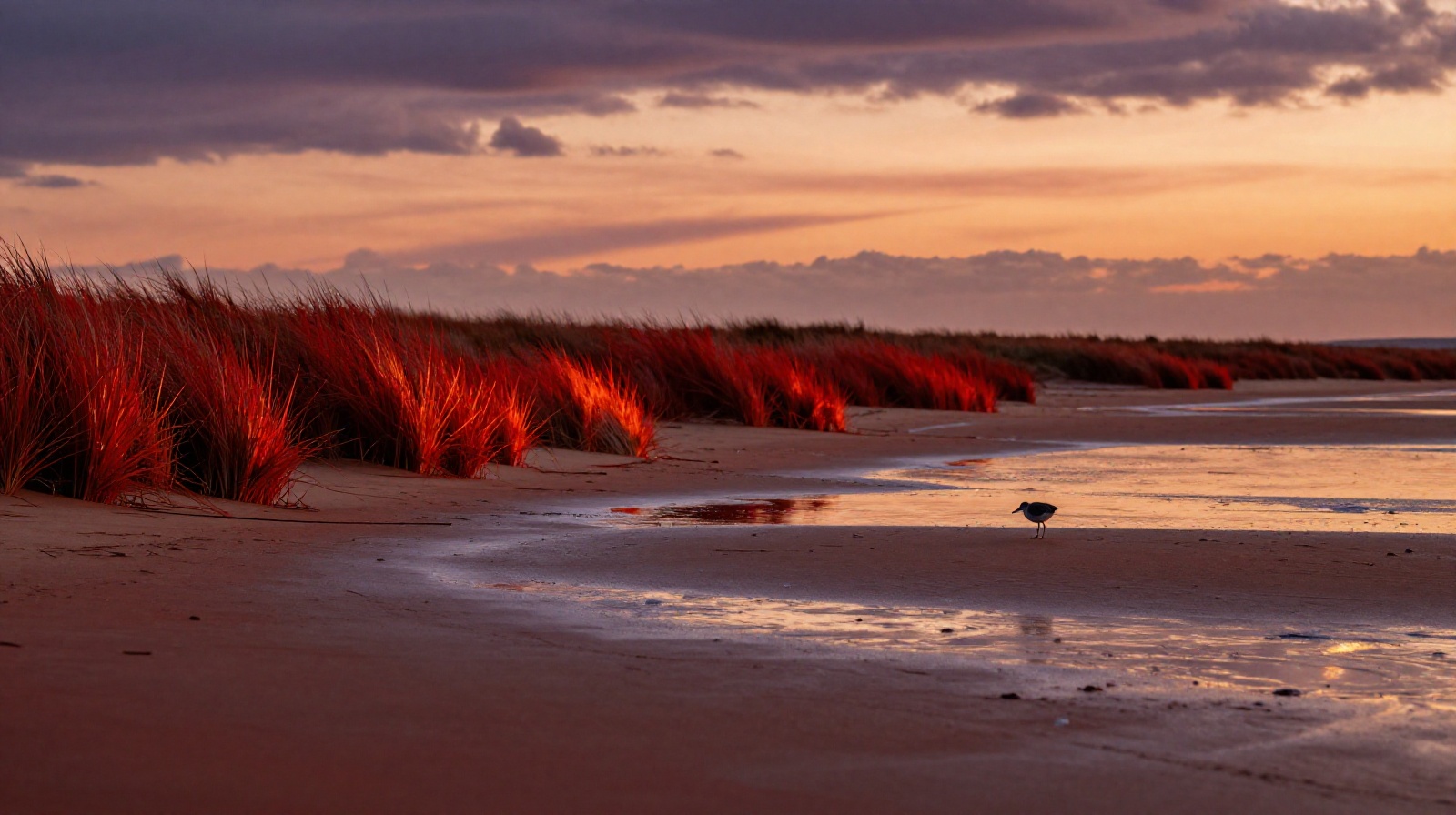
To avoid the crush of tour groups, arrive early in the morning or head to the less crowded sections of the Liaohe River Delta. After soaking up the surreal red landscape, you can explore the nearby wetlands’ observation towers for birdwatching or visit the local markets to taste fresh crabs and seafood harvested from the same waters that feed these birds.
A Lesson in Harmony
The red beach of Panjin teaches us that nature’s most spectacular shows often happen quietly, without human intervention. It is a reminder that when we respect ecological limits, the land can reward us with beauty that feels almost unreal. Standing on those wooden planks, watching the sun set over a sea of red grass and black sand, you realize this isn’t just a tourist spot—it’s a living proof of how humanity and nature can coexist.