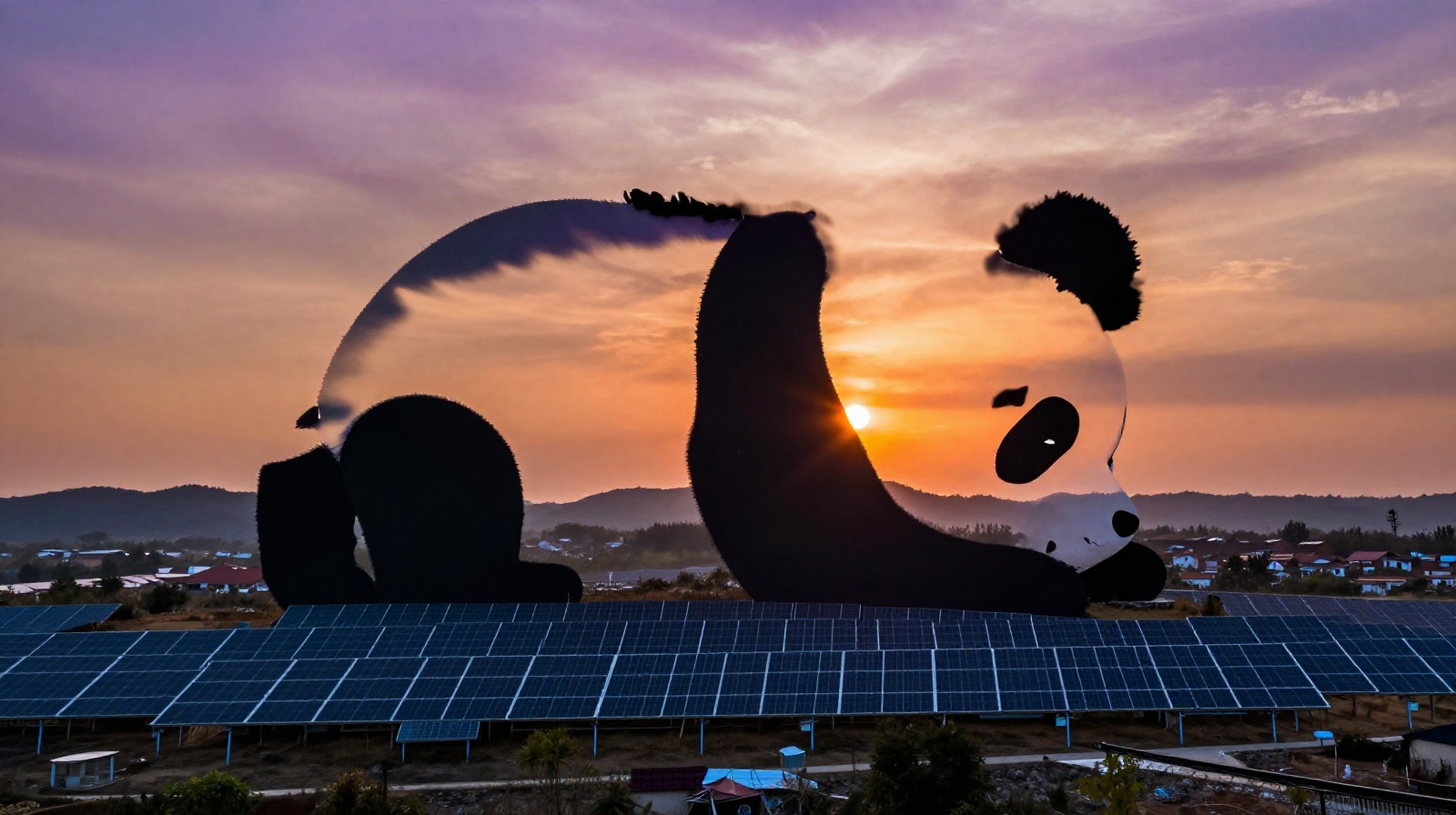
The Hook: A Giant Panda in the Desert?
Imagine driving through the dry, wind-swept plains of Yanchi County in Ningxia. The landscape is flat, dusty, and dominated by brown earth. Then, out of nowhere, a black-and-white giant appears on the horizon. It isn’t moving. It’s not an animal.
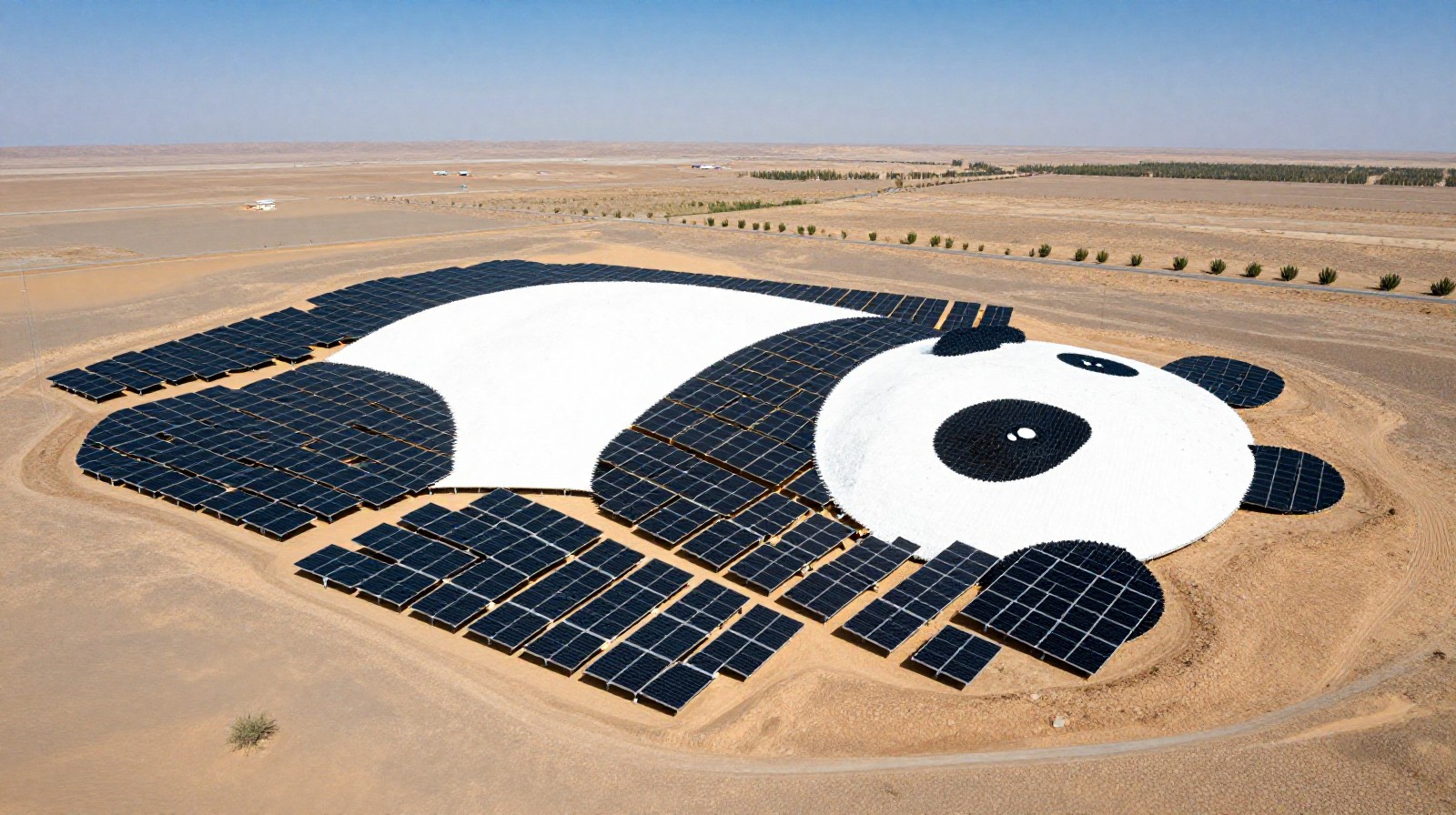
It is a solar farm shaped exactly like a panda bear, stretching across hundreds of acres. When you zoom in with a drone or stand at the edge of the field, you see thousands of photovoltaic panels arranged to form the panda’s head, ears, and body. The contrast is striking: the sleek, dark blue cells against the pale desert sand. For international visitors, it feels like stepping into a sci-fi movie set. But for locals, it’s just Tuesday.
Beyond the Gimmick: How It Actually Works
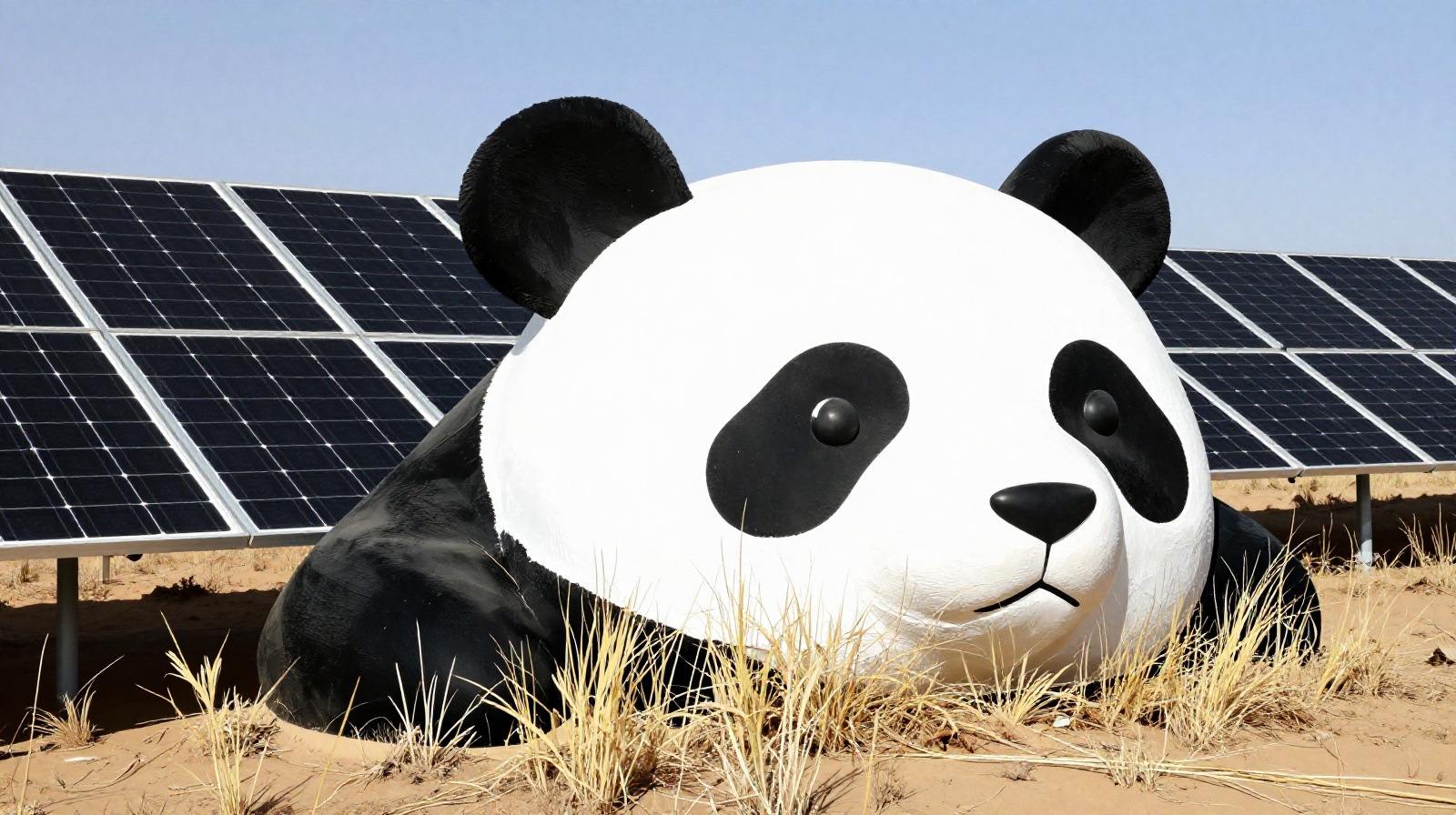
While the panda shape is undeniably eye-catching—a clever marketing move that puts China on the global map—it serves a serious engineering purpose. The facility, known as the Panda Solar Farm, covers an area of about 800 mu (roughly 53 hectares). It is not just one giant panel; it is two rows of high-efficiency solar modules arranged to create the silhouette.
The technology behind it relies on standard photovoltaic cells, but the layout maximizes land use in a region that receives intense sunlight. The panda’s “body” faces south to capture maximum sun exposure throughout the day, while the surrounding desert remains unused for agriculture. This design allows the farm to generate roughly 30 million kilowatt-hours of electricity annually. That is enough power to supply thousands of households.
Real-World Impact on Local Life
Before this project arrived, Yanchi was a typical coal-mining town. The economy relied on digging up black rocks from the ground. Today, the air smells less of sulfur and dust, though the history remains visible in the old mine shafts nearby.
The solar farm changes daily life for residents. The electricity generated here doesn’t just go to distant cities; a significant portion is directed to local villages within the Ningxia grid. Families who used to struggle with unstable power supplies now have reliable light and heating. More importantly, the transition has created new jobs.
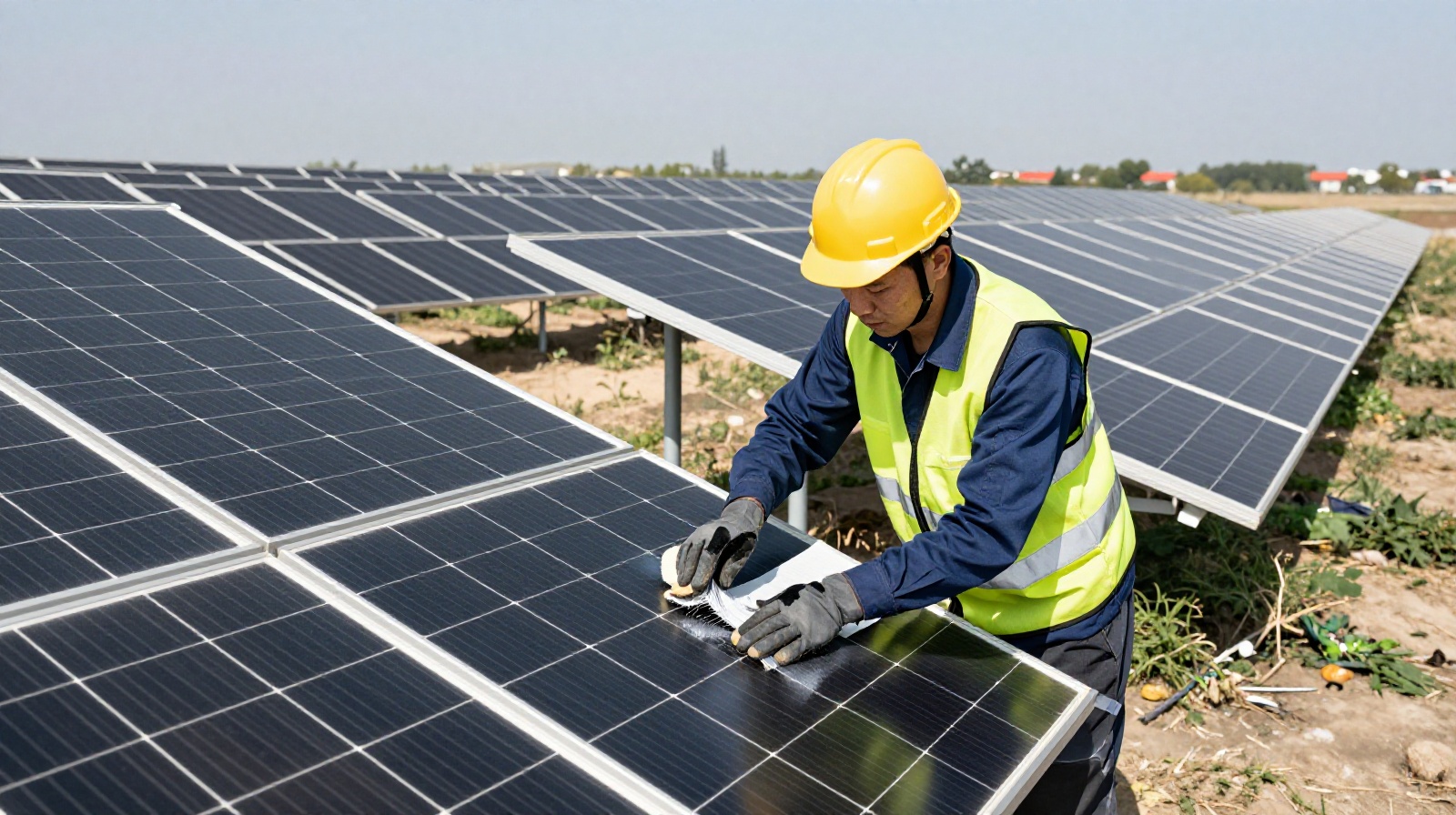
Local workers are no longer just miners; they are solar technicians. They clean the panels, monitor the data systems, and maintain the inverters. A young man named Wang, who used to work in a coal mine but now checks the panda’s output, tells me, “The sun pays better than the coal. The work is cleaner, safer, and we have more hours.” He points to the rows of panels as they gleam under the midday sun. “We are watching our town change from gray to green,” he says.
The Human Element: A New Chapter for Yanchi
Walking through the solar farm, you see a mix of high-tech equipment and rural simplicity. Solar tractors move slowly between the rows, their operators wearing bright safety vests. The hum of electricity is almost silent, but the impact is loud.
This shift represents a broader story in China’s energy sector. For decades, rapid industrialization came with heavy pollution. Now, there is a conscious push to balance growth with sustainability. In Yanchi, this isn’t just policy on paper; it is the dust settling on solar panels and the income growing in local bank accounts.
Why This Matters Globally
The Panda Solar Farm is more than a viral photo opportunity for social media. It is a tangible example of how green technology can be integrated into remote areas without destroying the landscape. It shows that China’s renewable energy push is not limited to massive urban solar walls or futuristic floating farms.
It reaches the places where ordinary people live and work. For the world, it signals a shift in manufacturing and infrastructure: building clean energy systems that are efficient, scalable, and visually integrated into local culture. The panda shape makes the technology approachable, turning a complex industrial project into a symbol of hope for a cleaner future.