

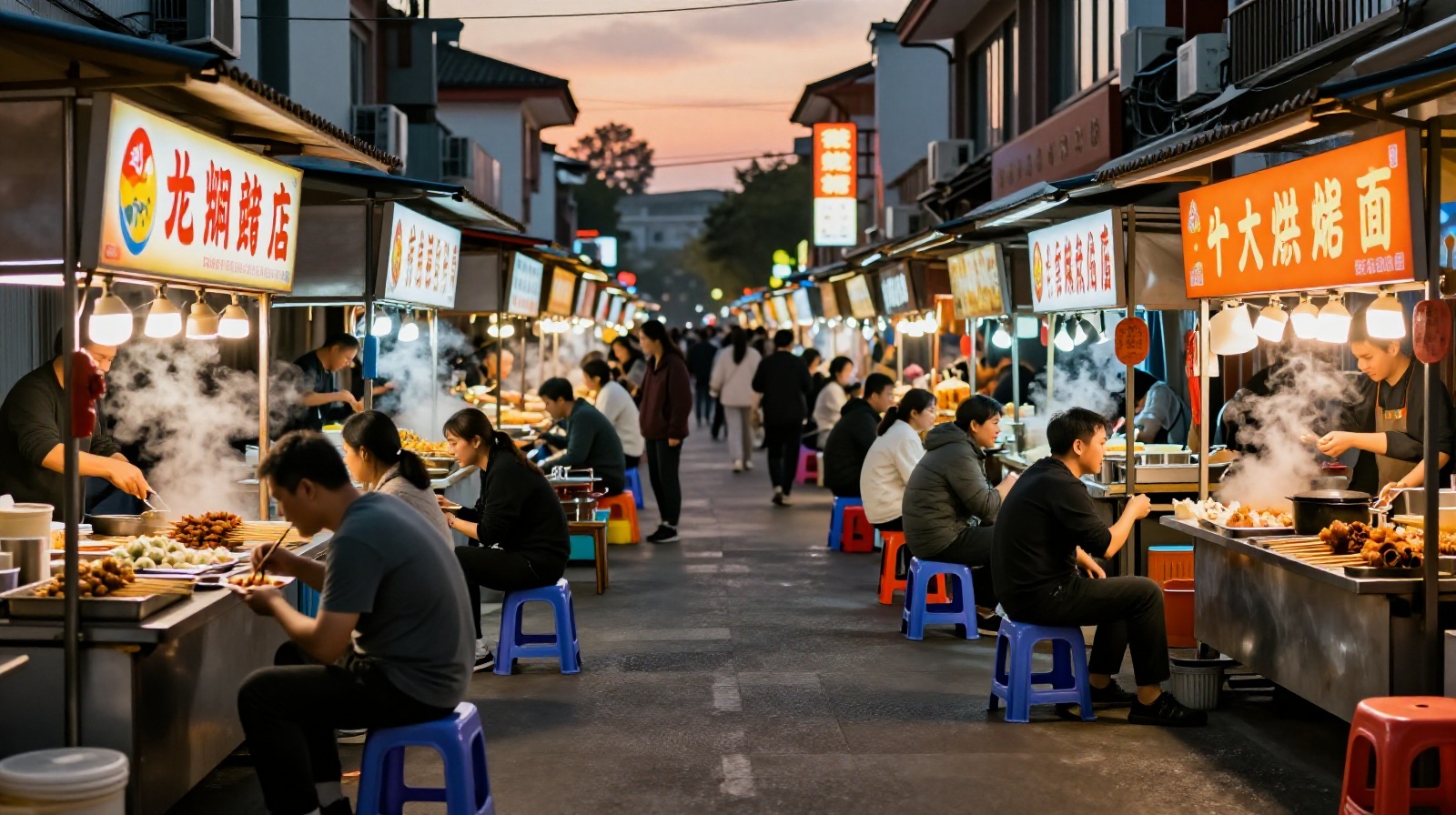
The Menu is the Map
Imagine a country where you can drive for four hours and your breakfast changes from spicy bean noodles to sweet rice cakes. That’s China. For travelers, the most honest way to measure this vast nation isn’t by checking off landmarks on a map, but by mapping its flavors.
Culture here is often written in characters, but it is felt first through taste. In Beijing, you might find yourself huddled over a table of steaming hotpot with locals who treat the food as a social glue. In Chengdu, the air itself tastes like chili oil and numbing peppercorns. Traveling across China is less about sightseeing and more about a sensory journey that reveals how history, geography, and climate shape daily life.
Why Food Changes Every Few Hundred Miles
To a Western visitor, Chinese food often feels like one giant cuisine. In reality, it’s a patchwork of distinct culinary identities. This isn’t just about different chefs; it’s about the land itself.
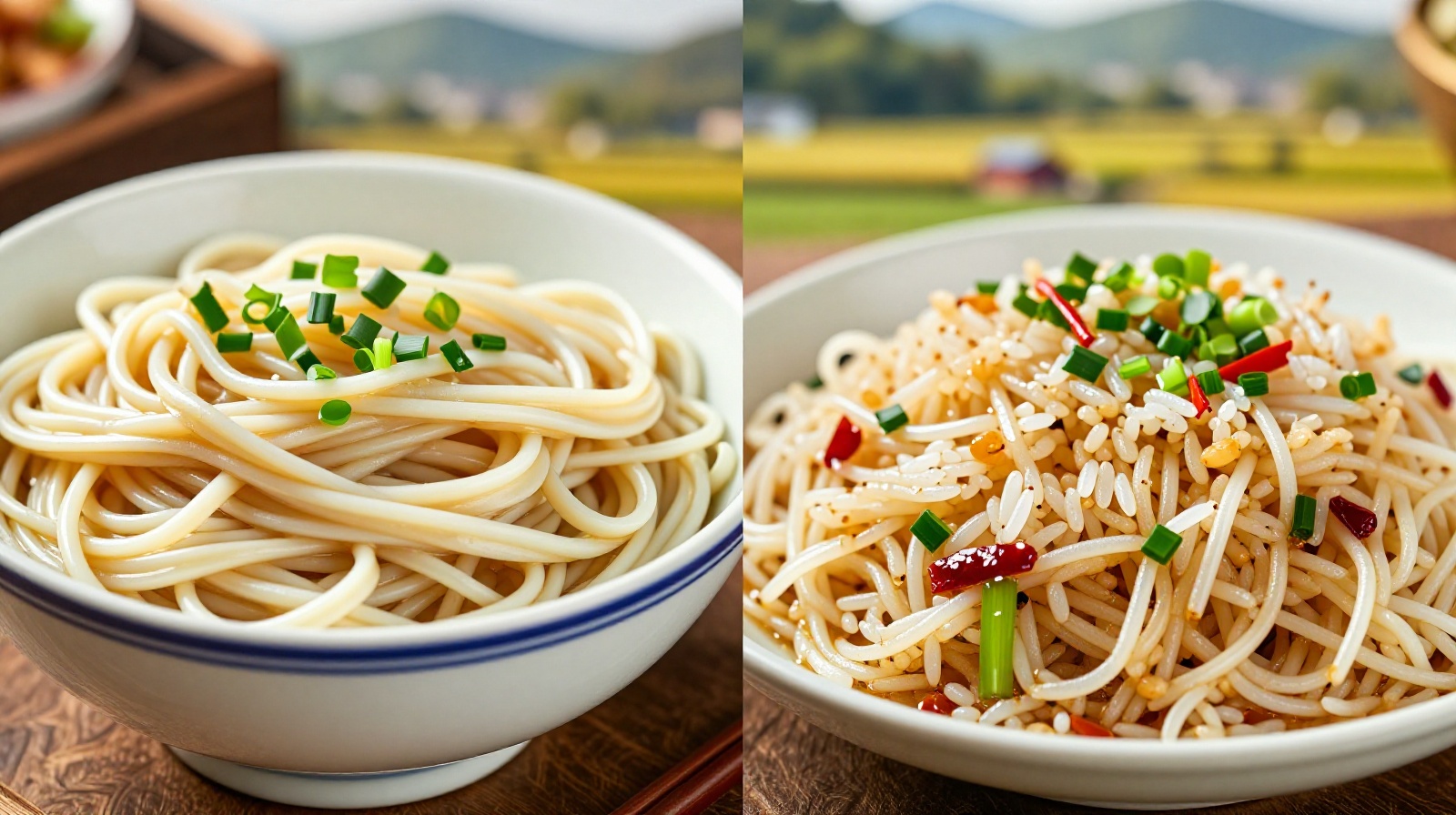
Climates vary wildly. The north is cold and dry, favoring wheat-based foods like noodles and steamed buns (mantou). The south is humid and warm, perfect for growing rice, which becomes the staple of every meal. This geographic divide explains why a bowl of noodles in Beijing feels completely different from a plate of rice in Guangzhou.
But it goes deeper. Take Sichuan province in the southwest. Historically, this region was damp and foggy. Locals discovered that heavy spices—chilies and peppercorns—helped dry out the body’s internal moisture. Today, even though modern homes have air conditioning, the love for spicy food remains a cultural badge of identity.
The Night Market: Where Real Life Happens
Don’t go to fancy restaurants if you want to understand the pulse of China. Go where the locals eat after work: the street stalls and night markets.
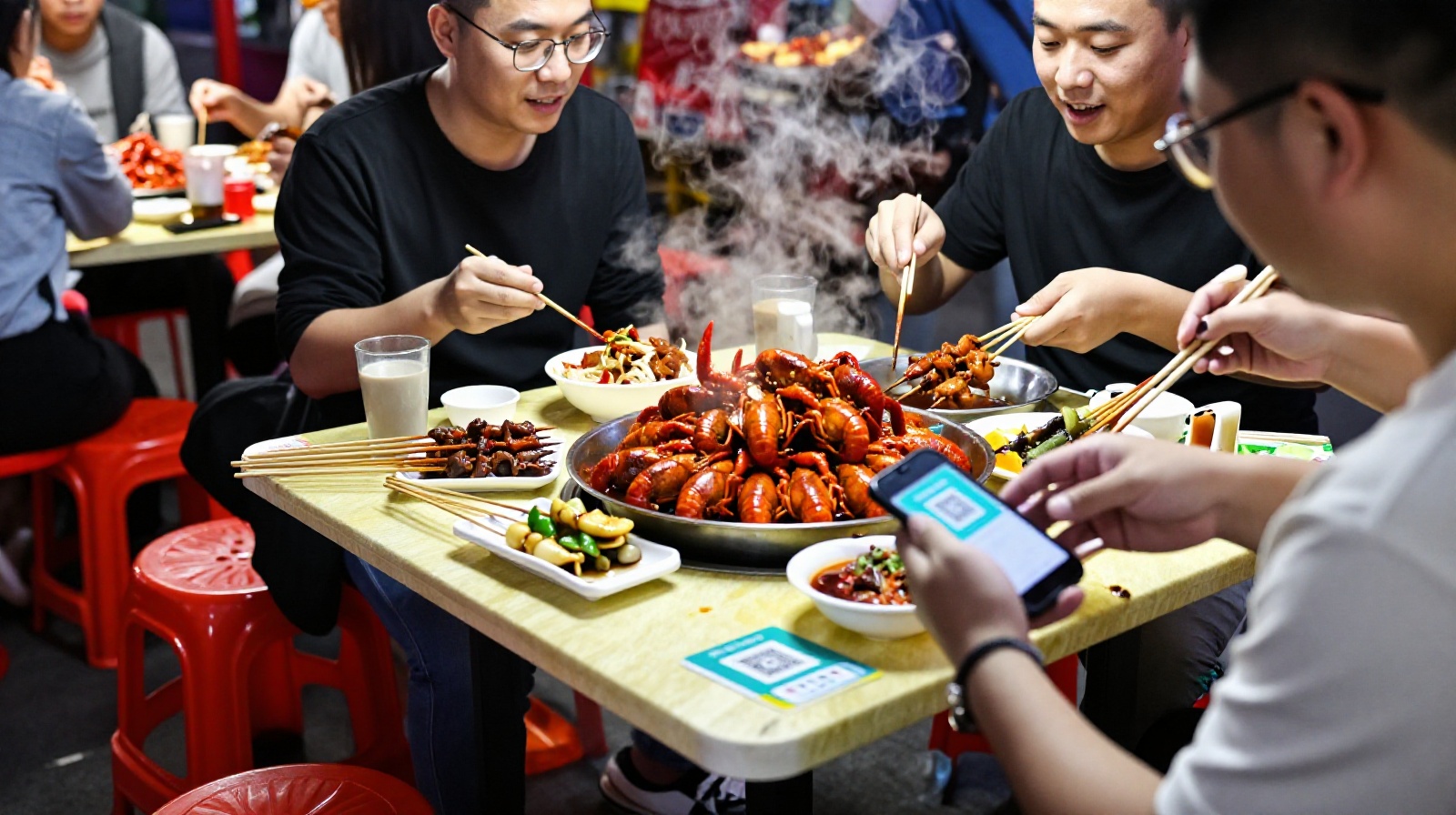
In cities like Xi’an or Changsha, the evening air buzzes with the sizzle of woks and the clatter of plastic stools. Here, dining is a communal activity that transcends status. You might sit shoulder-to-shoulder with college students, factory workers, and office managers, all sharing skewers of lamb (yangrou chuan) or spicy crayfish.
This is also where China’s digital revolution meets daily life. While you eat, your neighbor is likely scanning a QR code on the table to pay for their meal instantly via WeChat or Alipay. Cash is rarely used in these urban settings. It’s a seamless blend of ancient culinary traditions and hyper-modern convenience.
Dim Sum: A Lesson in Time
If you head south to Guangdong, prepare for a different rhythm. The morning tradition here is ‘Yum Cha’ or drinking tea with dim sum. Unlike the fast-paced lunch breaks elsewhere, this is a slow, social ritual that can last hours.
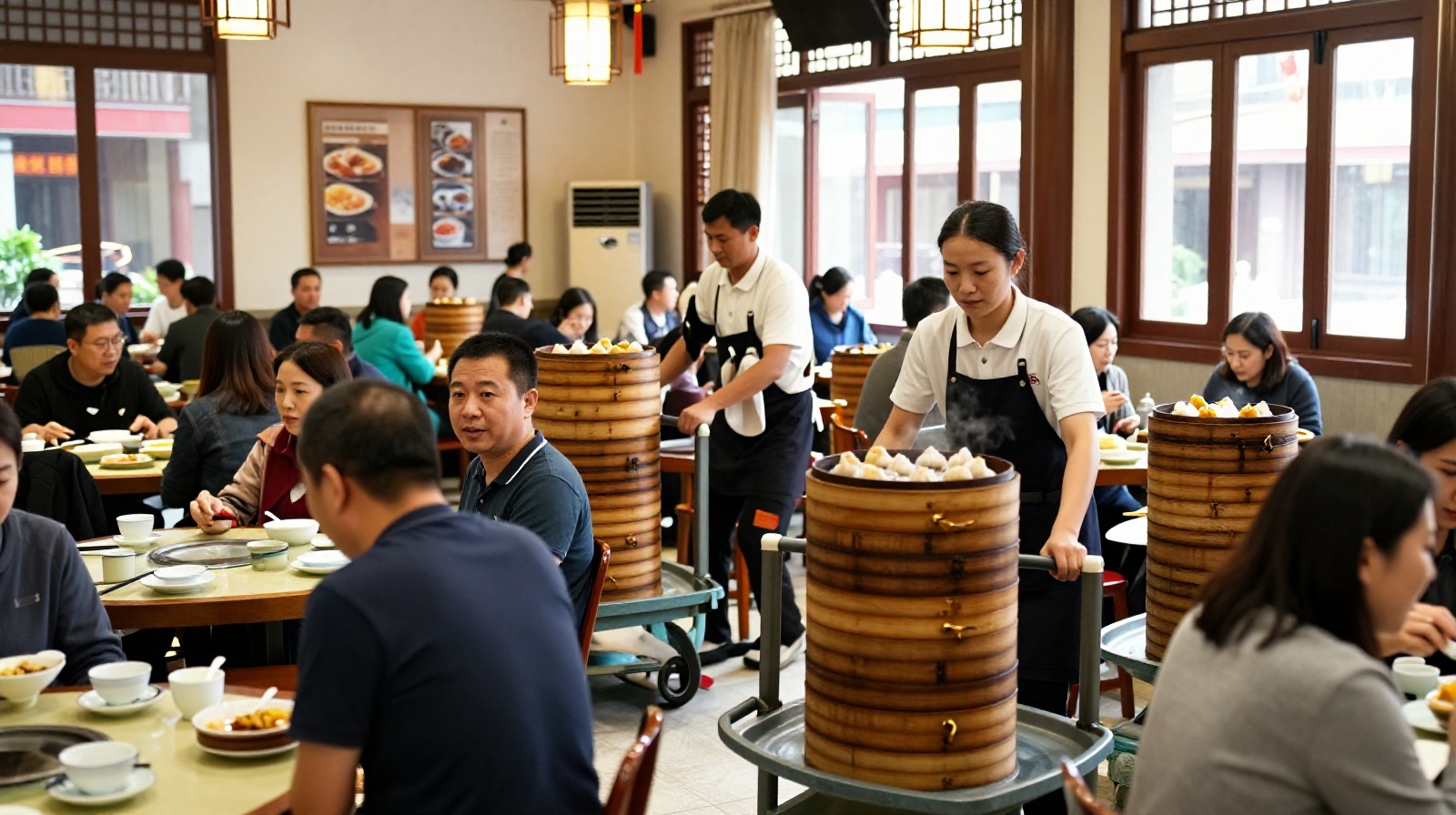
Pushing carts filled with bamboo steamers through crowded teahouses is iconic. You point at what you want, and the server nods, sliding small portions of shrimp dumplings (har gow) or pork buns onto your plate. It’s a language of gestures that needs no translation.
This practice highlights a key aspect of Chinese culture: the value of time spent with family and friends. In a rapidly modernizing society, dim sum remains a sanctuary where people slow down to connect.
Spice Tolerance and Regional Pride
One of the biggest surprises for travelers is how much regional pride is tied to food. A traveler from Hunan might insist their chili soup is spicier than Sichuan’s, leading to friendly debates in airports across the country.
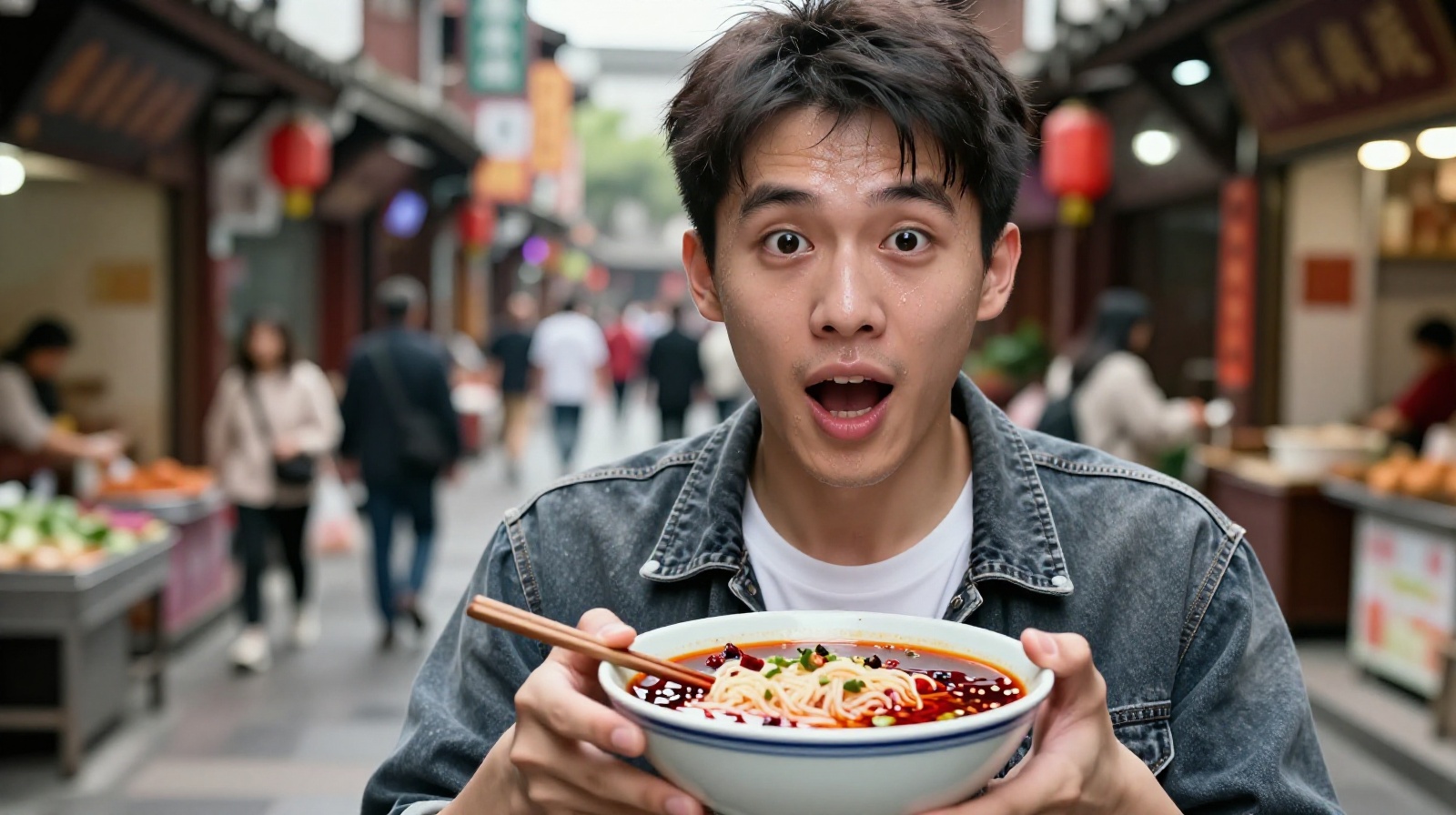
This isn’t just about heat; it’s about history and survival. In provinces like Jiangxi and Guizhou, spicy food was once a way to preserve vegetables and add flavor to simple diets. Today, it’s a source of immense joy and identity. Tourists often underestimate their own spice tolerance until they take one bite of ‘Mala’ (numbing-spicy) food.
Eating Your Way Through the Future
China is not just preserving its past; it’s reinventing how we eat. In major cities, you’ll find high-tech kitchens where robots serve noodles, and apps that deliver hot meals in 30 minutes to your door.
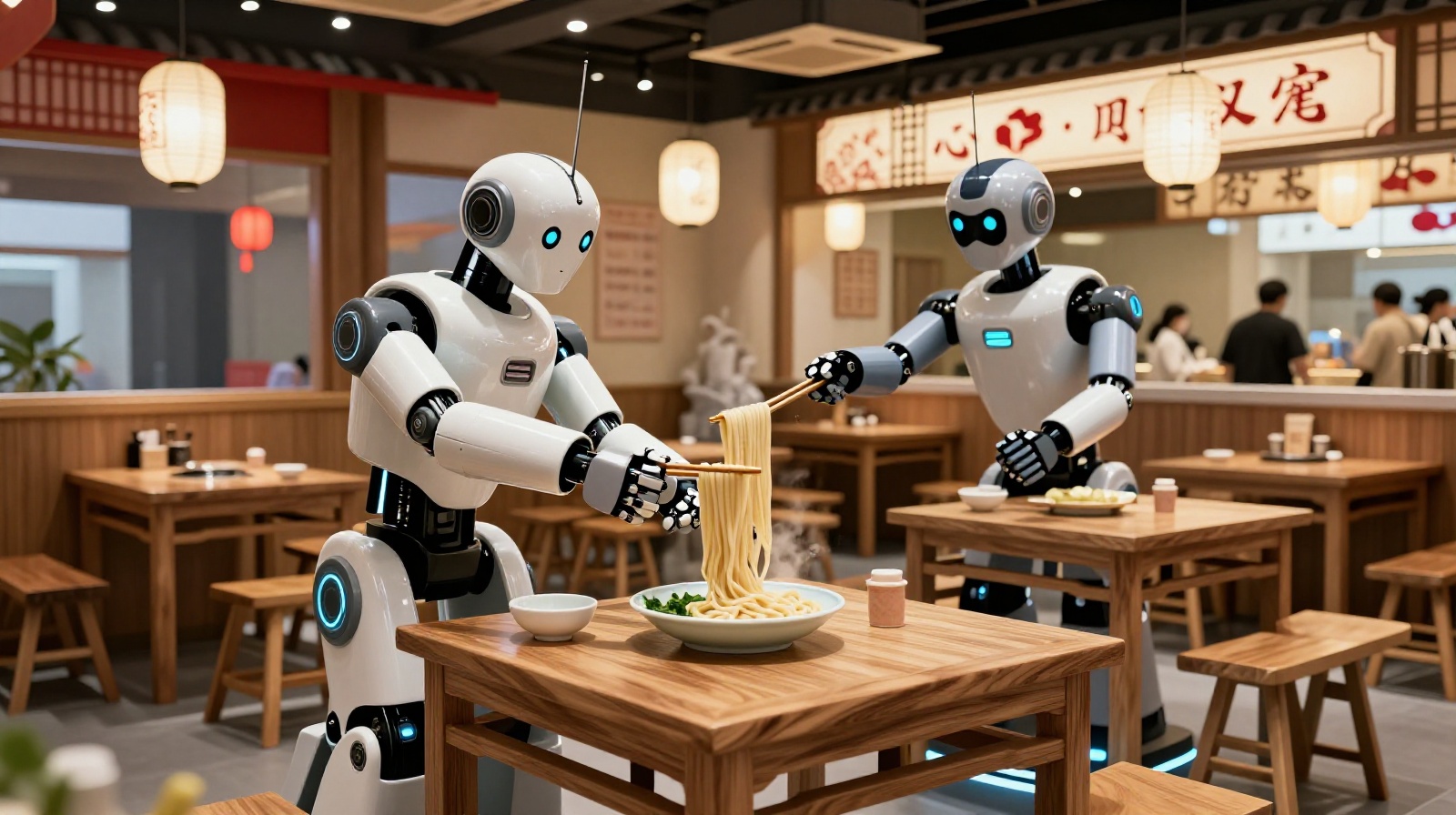
Yet, the soul of Chinese dining remains unchanged. It is about sharing, loud conversation, and the warmth of a communal pot. Whether you are eating instant noodles in a dormitory or banquet dishes in a five-star hotel, the underlying principle is hospitality.
So, pack your appetite. The best way to understand China’s vast 9.6 million square kilometers is to let your taste buds lead the way. Every bite tells a story of climate, history, and the people who call this place home.