

The Sound of Oars in a Quiet Morning
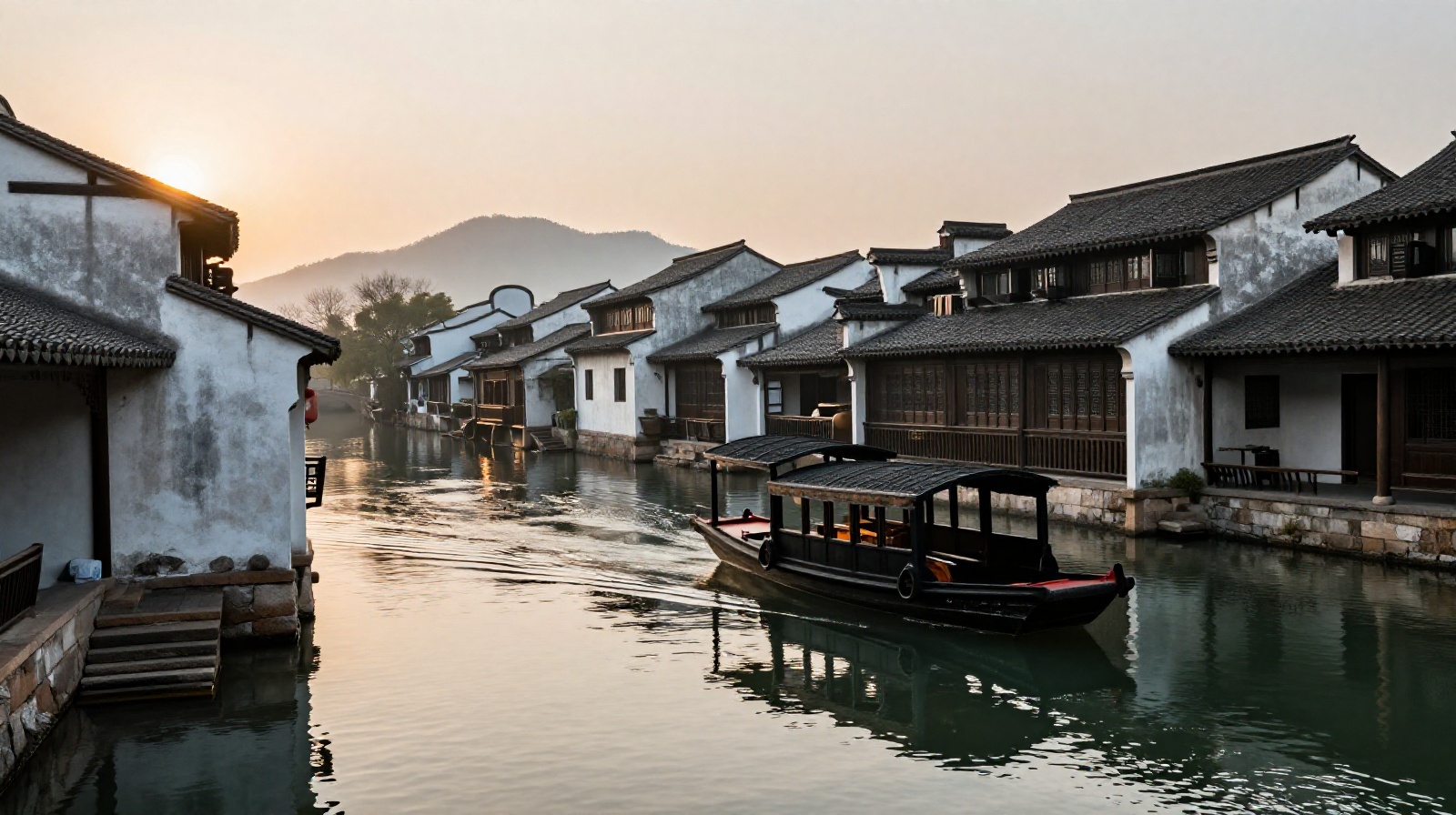
It is 7:00 AM. The air in the water town of Tongli is still cool and smells faintly of wet stone and morning rice porridge. While Shanghai, just an hour away by high-speed rail, has already woken up to the roar of traffic, here, the only sound is the rhythmic lap-lap of wooden oars cutting through glassy water.
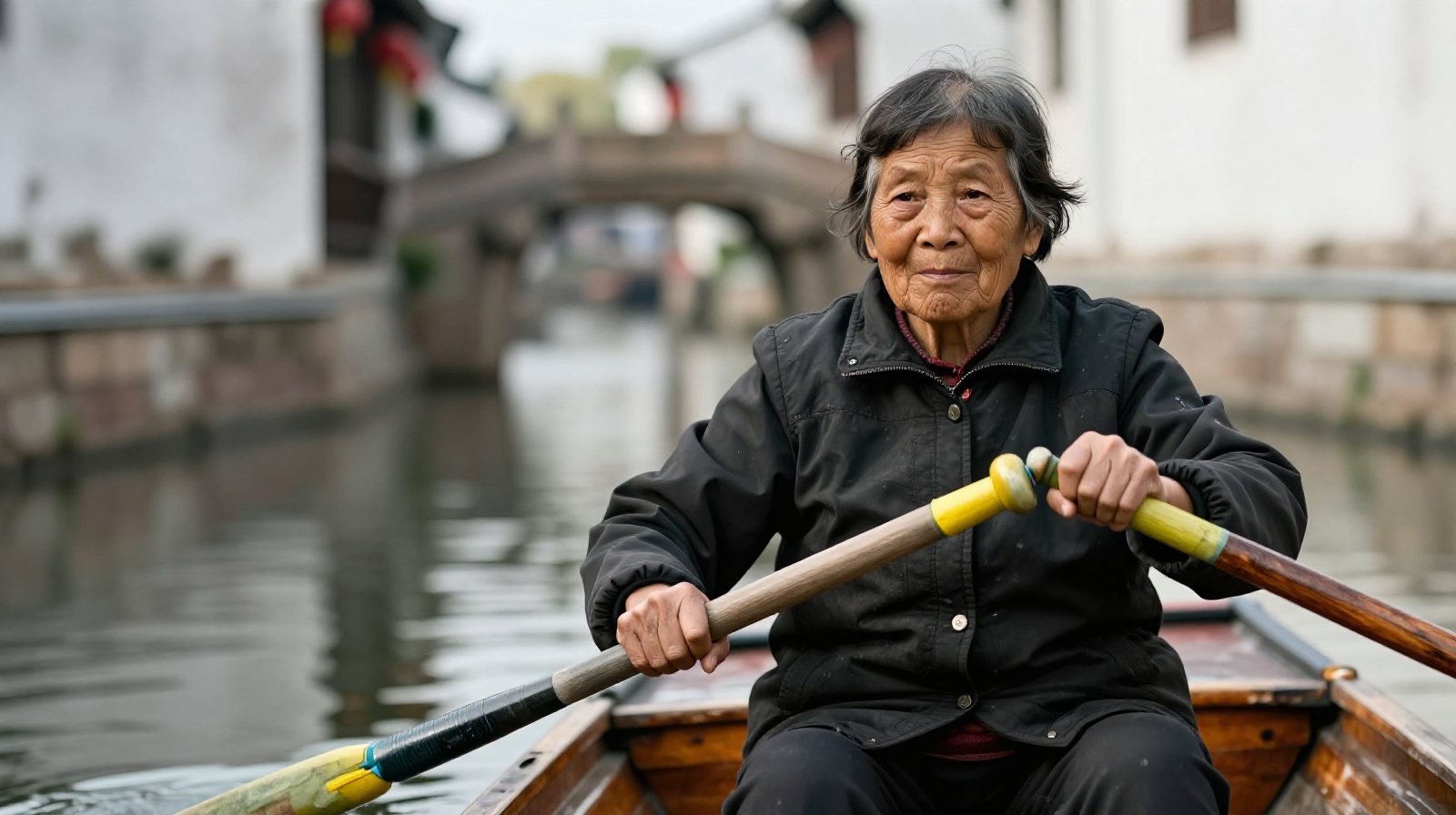
I am sitting in a black-hulled boat (known locally as a wupeng chuan), guided by Wu Fang, a woman in her fifties who has rowed these canals for thirty years. Her hands move with a practiced ease, the oars dipping into the water without splashing. “People come fast,” she says, glancing back at us. “They take photos and leave before breakfast. But you… you are staying.”
This is the hidden rhythm of Suzhou. It is not about the grand museums or the high-tech zones that dominate headlines. It is about the slow, deliberate pace of life along the waterways where houses lean over the canal, their stone steps worn smooth by generations of washing clothes and stepping out for fish.
Ancient Stone and Living History
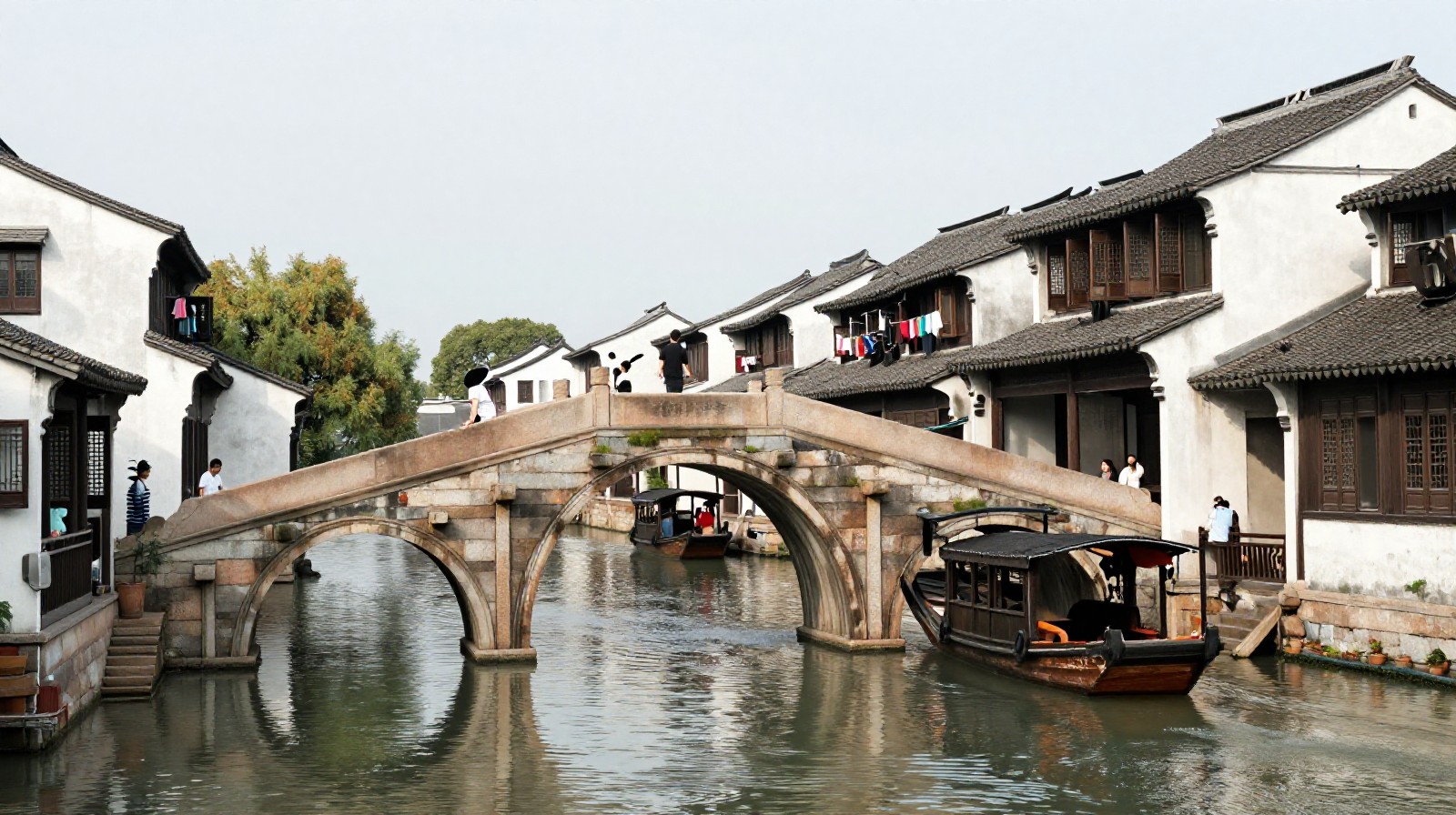
Wu Fang steers us toward a cluster of white-walled, black-tiled houses. These are not museum pieces; people still live here. On the ground floor, an elderly woman hangs laundry over the water’s edge. Upstairs, colorful flags from a small local shop flutter in the breeze.
Unlike the rigid grid of modern cities, this town grew organically along the water. The architecture follows the flow: narrow alleys connect courtyards, and bridges arch high to let boats pass beneath. In Zhouzhuang, another nearby water town, a 900-year-old bridge known as the Double Bridge stands as a testament to this balance. It looks like it has been here since the Ming Dynasty, and in many ways, it has.
The contrast with the rest of China’s economic boom is stark. While factories hum in industrial parks miles away, here, life revolves around the tide of the canal and the changing seasons. The boats are no longer just for transport; they are part of a daily ritual that connects families to their food, their work, and each other.
The Philosophy of Stone and Water in Gardens
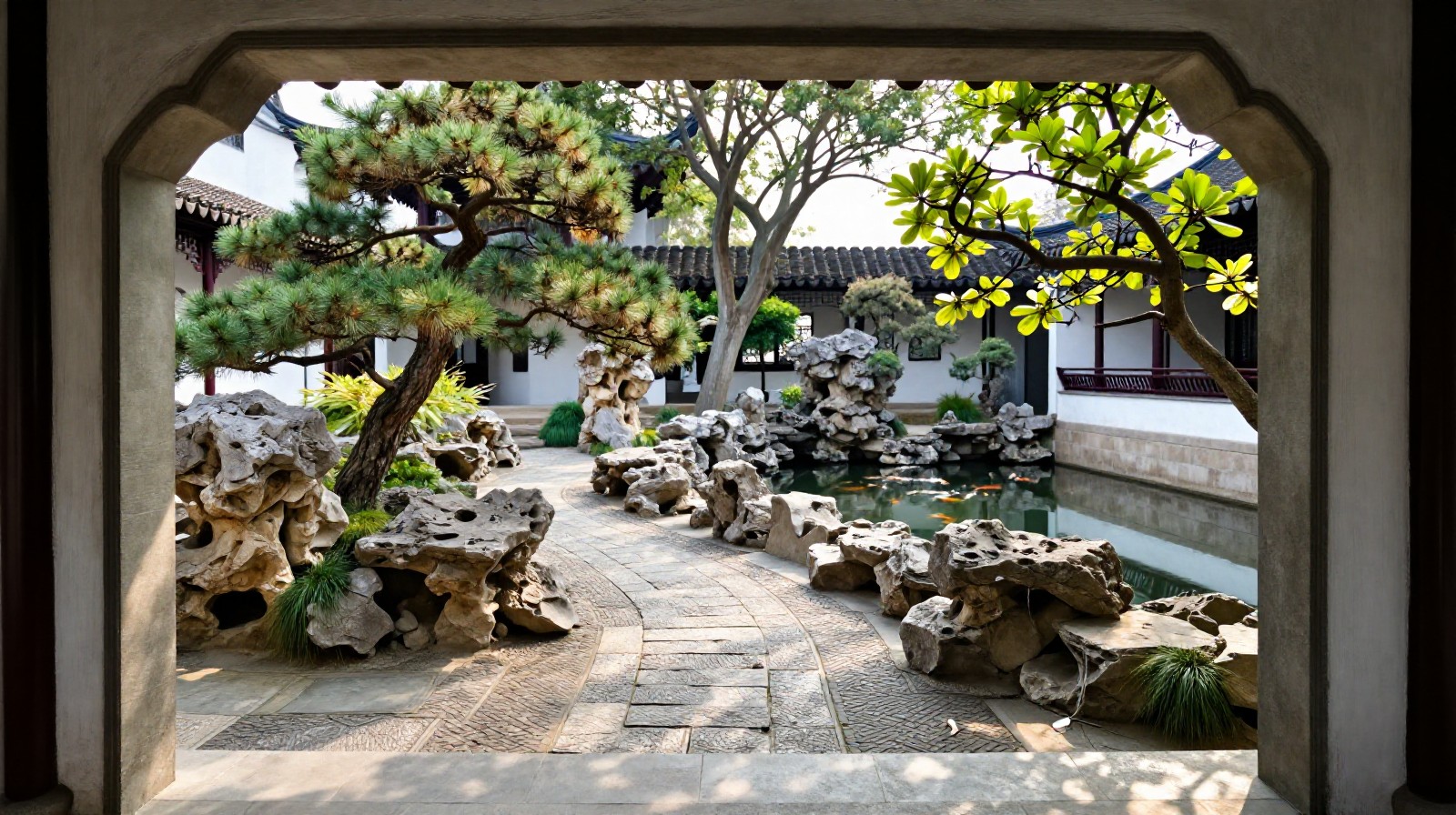
After drifting through the canals, we arrive at one of Suzhou’s private gardens. This is not just a park; it is a three-dimensional poem carved from stone, water, and pine.
In China, traditional literati culture valued “getting away from the world” to cultivate the mind. These gardens were designed by scholars and artists as physical manifestations of their inner worlds. Every rock is placed intentionally, every window acts as a frame for a specific view of the landscape outside.
Walking through the Humble Administrator’s Garden (Zhuozheng Yuan), I notice how the path twists and turns. You never see the end of the garden from one spot. This design forces you to slow down, to look closer at the moss on a stone or the reflection of a pavilion in a pond.
“If you walk too fast,” says Chen Wei, a gardener who has maintained this site for twenty years, “you miss the story.” He points out a small gap between two rocks where sunlight hits just right. “That is where the spirit lives.”
Guardians of the Past in a Changing World
The beauty of Suzhou lies not just in its scenery, but in the people who tend to it. The water town faces a modern challenge: tourism.
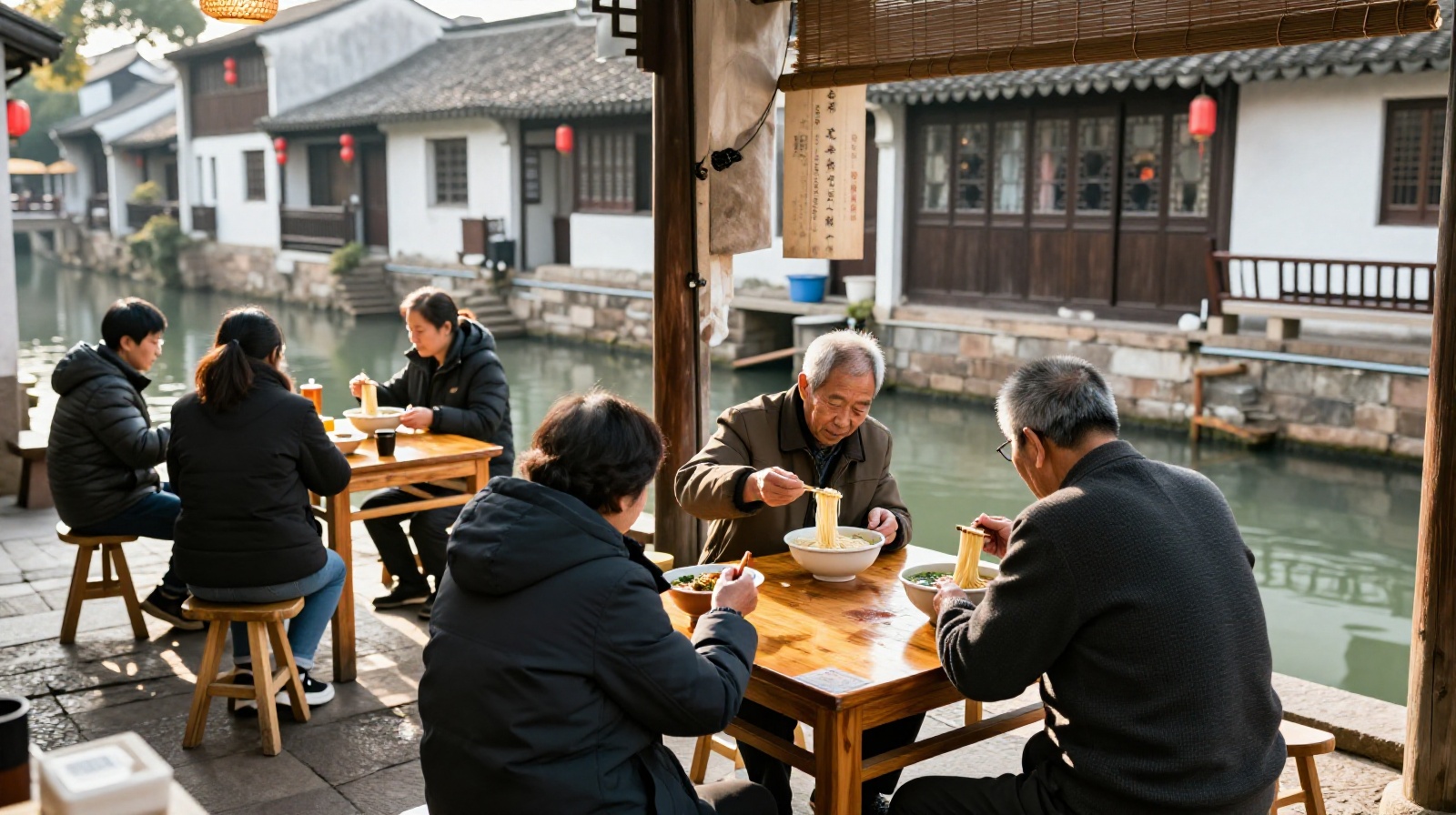
In some places, ancient streets have been turned into commercial strips filled with souvenir shops and loud music. But here, there is an effort to keep the balance. Wu Fang tells me that her family has lived on this canal for generations. They run a small noodle shop in their courtyard, serving fresh food to tourists while keeping their home life intact.
“We don’t want this to be a stage,” she says. “We want it to be a home.”
The government and local communities are increasingly aware of the risk of “hollowing out”—where locals move out because rents get too high, leaving only shops behind. In Suzhou, there is a growing movement to support original residents, ensuring that the water towns remain living communities rather than open-air museums.
Finding Stillness in a Fast World
As the afternoon light turns golden, the boats begin to return. The journey back is quieter now, the sun reflecting off the water like scattered gold dust. This is what Suzhou offers that modern skyscrapers cannot: a sense of stillness.
In a world obsessed with speed and efficiency, Suzhou reminds us that there is value in slowing down. It is not about ignoring progress; it is about carrying the wisdom of the past into the future. The canals flow on, unchanged for centuries, reminding everyone who visits that life does not always have to be rushed.
To truly understand China today, you must look beyond the headlines. You must take a slow boat, listen to the oars, and let the rhythm of the water guide you.