

Why a Character You Can’t Type Exists
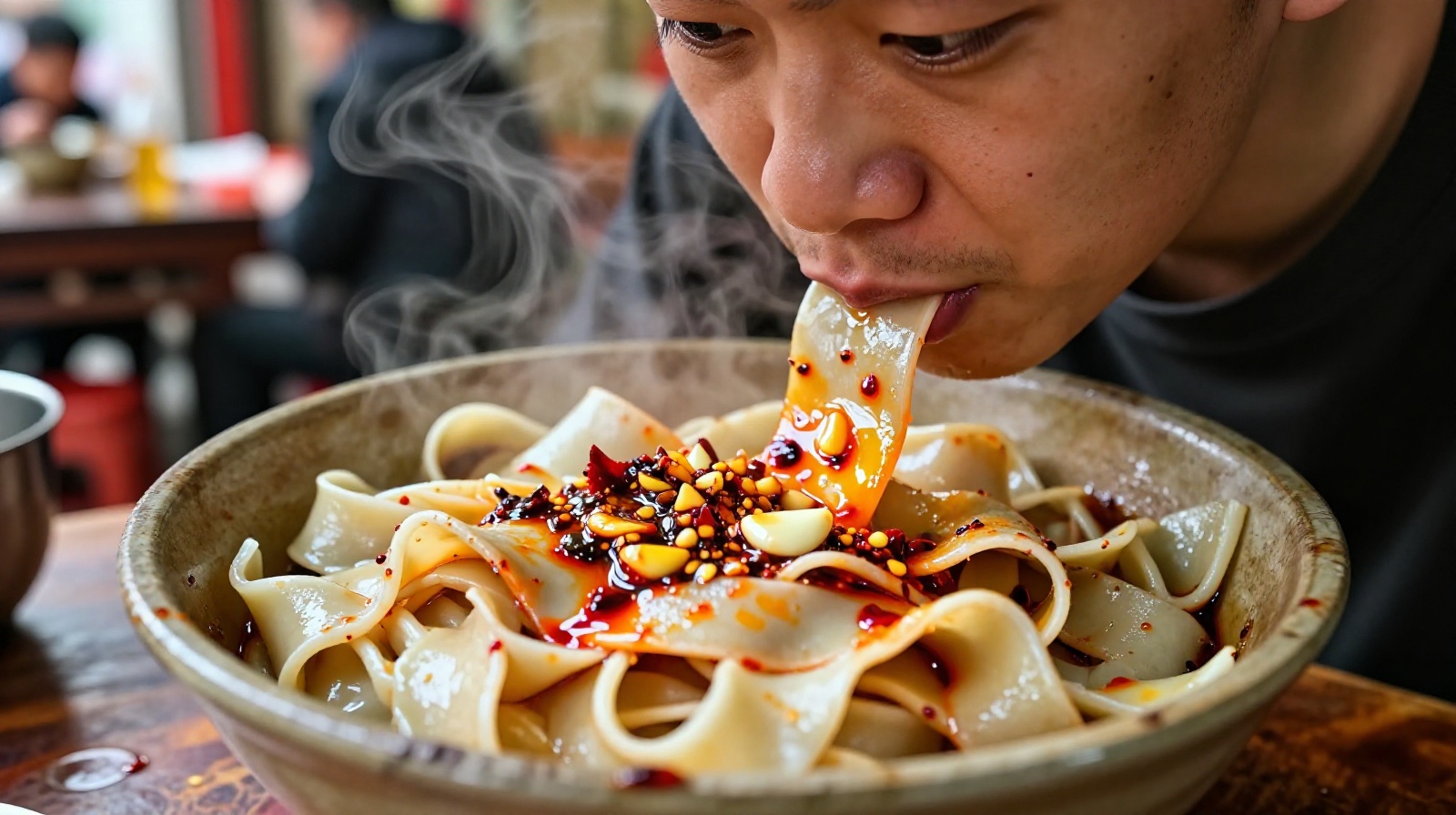
If you’ve ever tried to order food in Xi’an and stumbled upon a menu with a character that looks like a chaotic collage of strokes, don’t panic. You’re looking at ‘Biang’. It’s not a typo, and it’s not a secret code. It’s a 58-stroke monster designed specifically for this noodle dish.
Locals say there are as many ways to write Biang as there are people in Shaanxi. The most famous rhyme goes: ‘A wide door on top, a knife in the middle, and two horses running side by side.’ It’s a linguistic puzzle that even Chinese kids struggle with. But here’s the twist: you don’t need to know how to write it to eat it. You just need an empty stomach.
The Noodle That Defies Physics
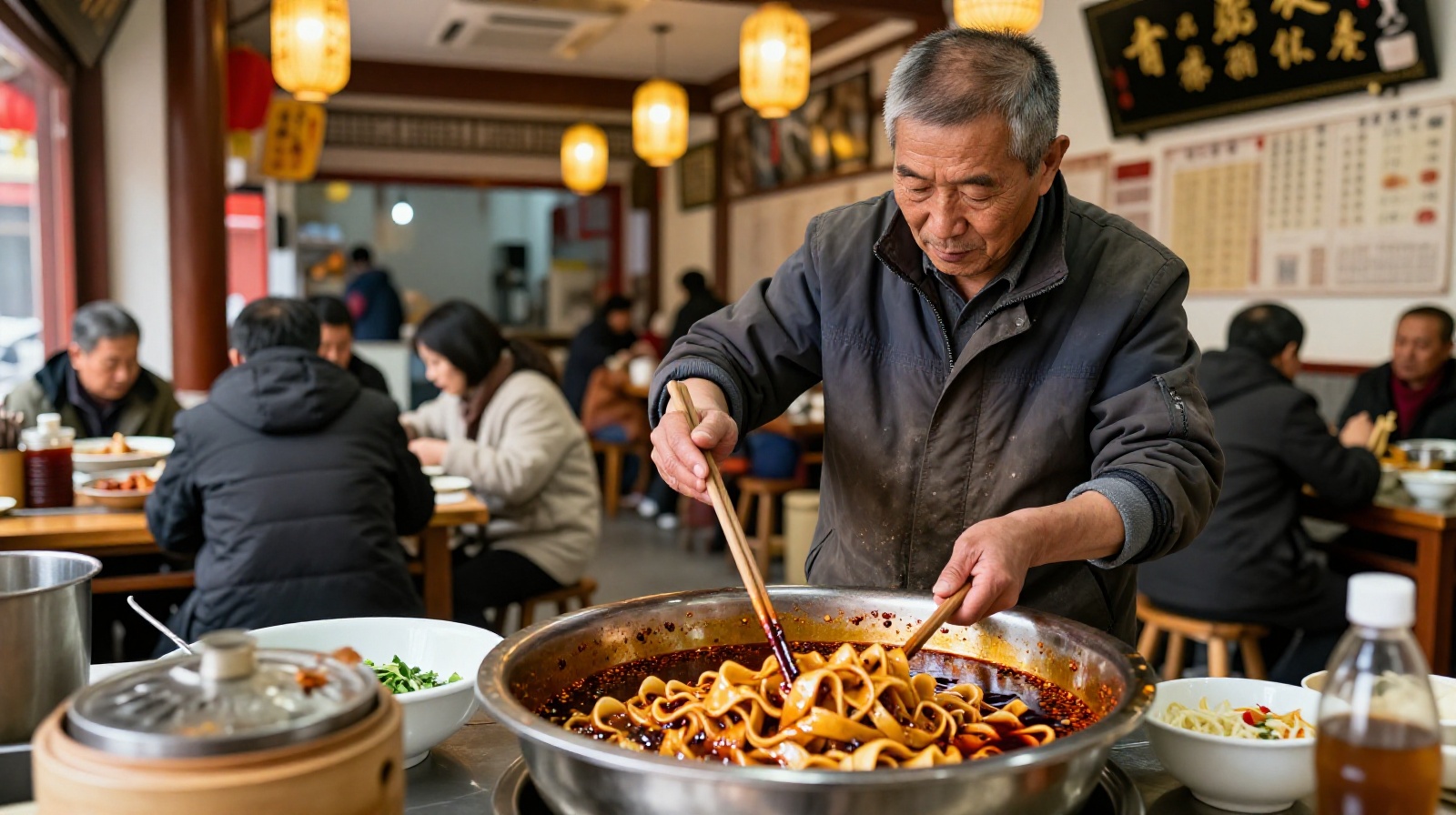
When the bowl arrives, your first instinct might be ‘how will I cut this?’ The noodles are wide as a belt and thick enough to hold their shape against any sauce. They aren’t soft or delicate; they are chewy, elastic, and incredibly satisfying.
This is where the local experience diverges from the tourist guide. Visitors often wonder why people make such a loud slurping noise. In Western dining culture, silence at the table is polite. In Shaanxi, the louder the slurp, the more you’re enjoying the food. It helps pull air into the noodles, cooling them down slightly and amplifying the garlic aroma.
How to Eat Like a Local (Not a Tourist)
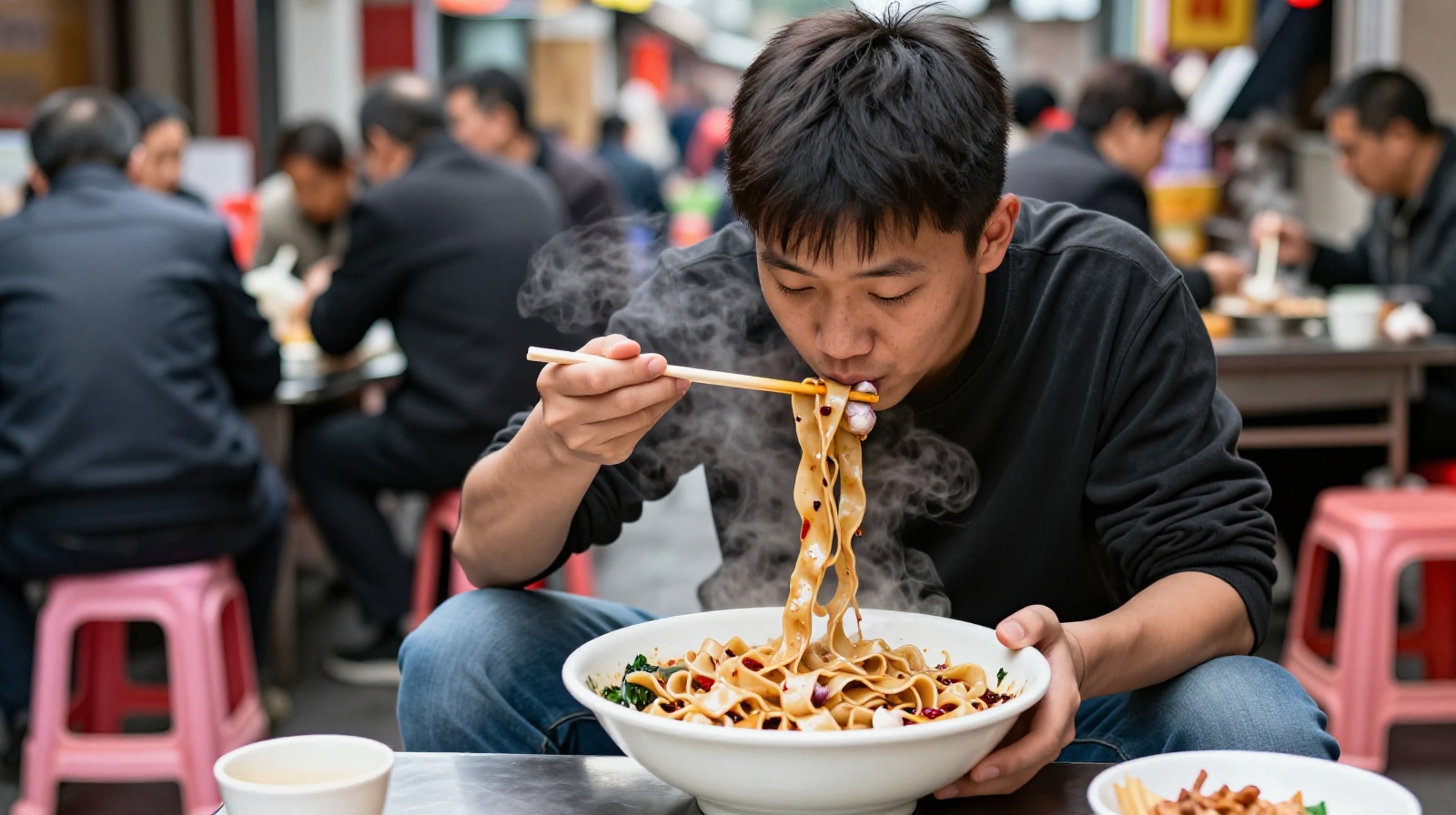
To eat Biangbiang noodles like a true Shaanxi native, skip the air-conditioned malls. Head to old neighborhoods where the floor might be slightly sticky and the chairs are plastic stools.
Here’s the ritual: First, mix the vinegar and chili oil into the noodles before taking your first bite. Then, grab a whole clove of raw garlic. Yes, raw. Locals believe it cuts through the grease and adds a spicy kick that cooked garlic can’t match. Finally, take a massive mouthful, slurp loudly, and feel the texture bounce against your teeth.
If you’re still wearing your jacket, remove it. In these small eateries, it’s hot work to eat this much food this fast. You’ll likely end up sweating profusely, but that’s part of the satisfaction.
Avoiding the ‘Tourist Trap’
Not all Biangbiang noodles are created equal. Some places in famous tourist areas serve thin, limp versions with too much oil and not enough chew. To find the real deal, look for lines of locals waiting outside. If you see a group of older men in vests arguing about politics over a bowl of soup, that’s the spot.
The price is usually shockingly low—around 15 to 20 RMB ($2-$3 USD). You can eat until you’re stuffed without breaking the bank. The key is to ignore the fancy signage and follow the smell of roasted garlic and fermented chili oil drifting from open windows.