

A Needle, A Thread, and a Digital Screen
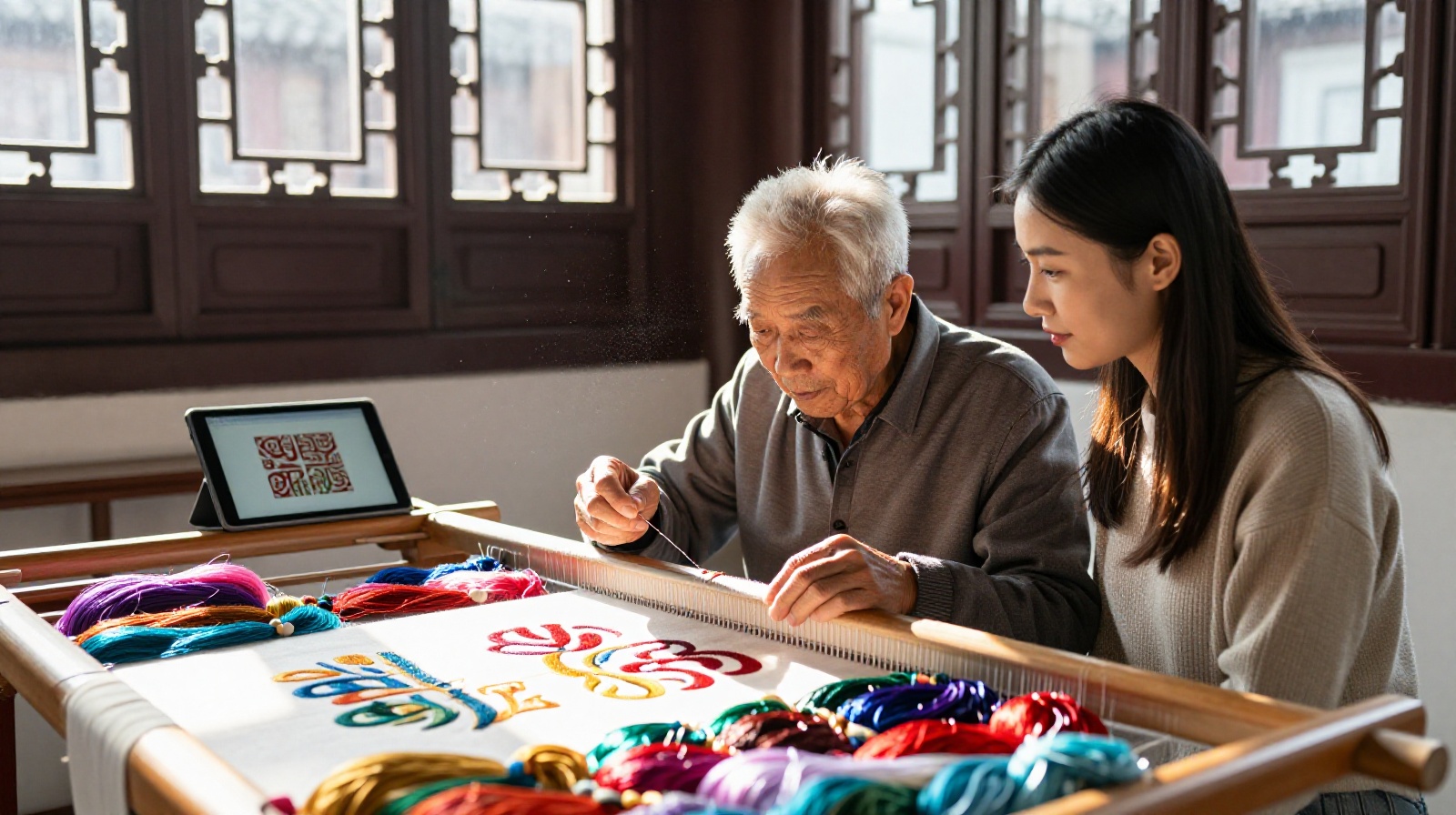
Inside a small workshop in Suzhou, the air is thick with the scent of silk. At one end of the room sits Master Chen, seventy years old, his eyes squinting as he guides a needle through layers of translucent fabric. Across from him, Li Wei, twenty-four and wearing noise-canceling headphones around her neck, types on a tablet. She isn’t designing a new app or analyzing stock trends; she is digitizing an ancient pattern to help Master Chen plan the stitches for his next masterpiece.
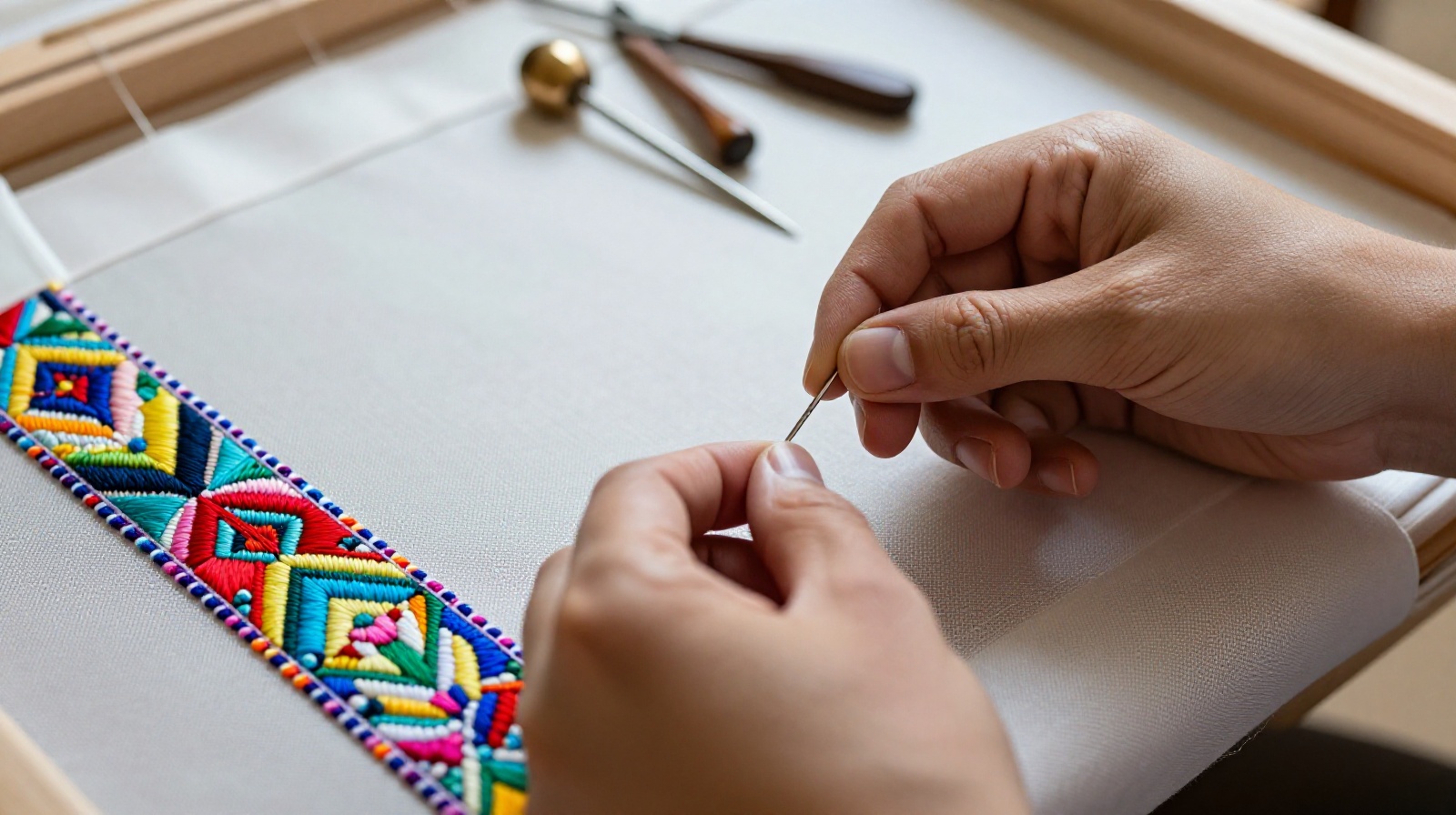
This scene captures a quiet revolution happening in China: the fusion of deep tradition with modern tools. The technique they are working on is called “Dual-Sided Different Color” embroidery, a skill that was thought lost over a century ago. It involves stitching two completely different images and colors on opposite sides of the same piece of silk, without a single stray thread visible on either side.
Beyond the Museum: A Craft That Breathes
For many international observers, Chinese culture often feels locked behind glass cases in museums. But in Suzhou, the capital of embroidery, this art form is alive and earning a living. The “Dual-Sided” technique was once so difficult that it disappeared for decades after the mid-20th century. Today, however, it has returned, not just as a historical curiosity, but as a premium product.
Li Wei explains how modern demand has shifted. “We don’t just make wall hangings anymore,” she says. “Designers in Shanghai and New York want this for luxury scarves, high-end fashion accessories, and even digital art NFTs that simulate the texture of silk.” The economic reality is simple: there is a global market willing to pay thousands of dollars for a hand-stitched piece that defies physics.
Unlike mass-produced prints, each item is unique. A single scarf might show a red phoenix on one side and a green dragon on the other. To achieve this, the artisan must calculate the path of every thread from both sides simultaneously, often working in near-total darkness to ensure no light reveals the knots.
The Human Story: Why Choose Hard Work?
It is easy to ask why young people like Li Wei would choose a career requiring years of training for what can seem like slow pay. In an era where tech startups promise overnight riches, stitching silk thread by thread seems backward.
Yet, the answer lies in a growing sense of cultural confidence among Chinese youth. For many, mastering this craft is not just about making money; it’s about identity. “My grandmother used to say that if you can control the needle, you can control your fate,” Li Wei shares during her lunch break. The discipline required to master Dual-Sided embroidery—counting thousands of tiny stitches and maintaining focus for hours—is seen as a form of mental training in a chaotic world.
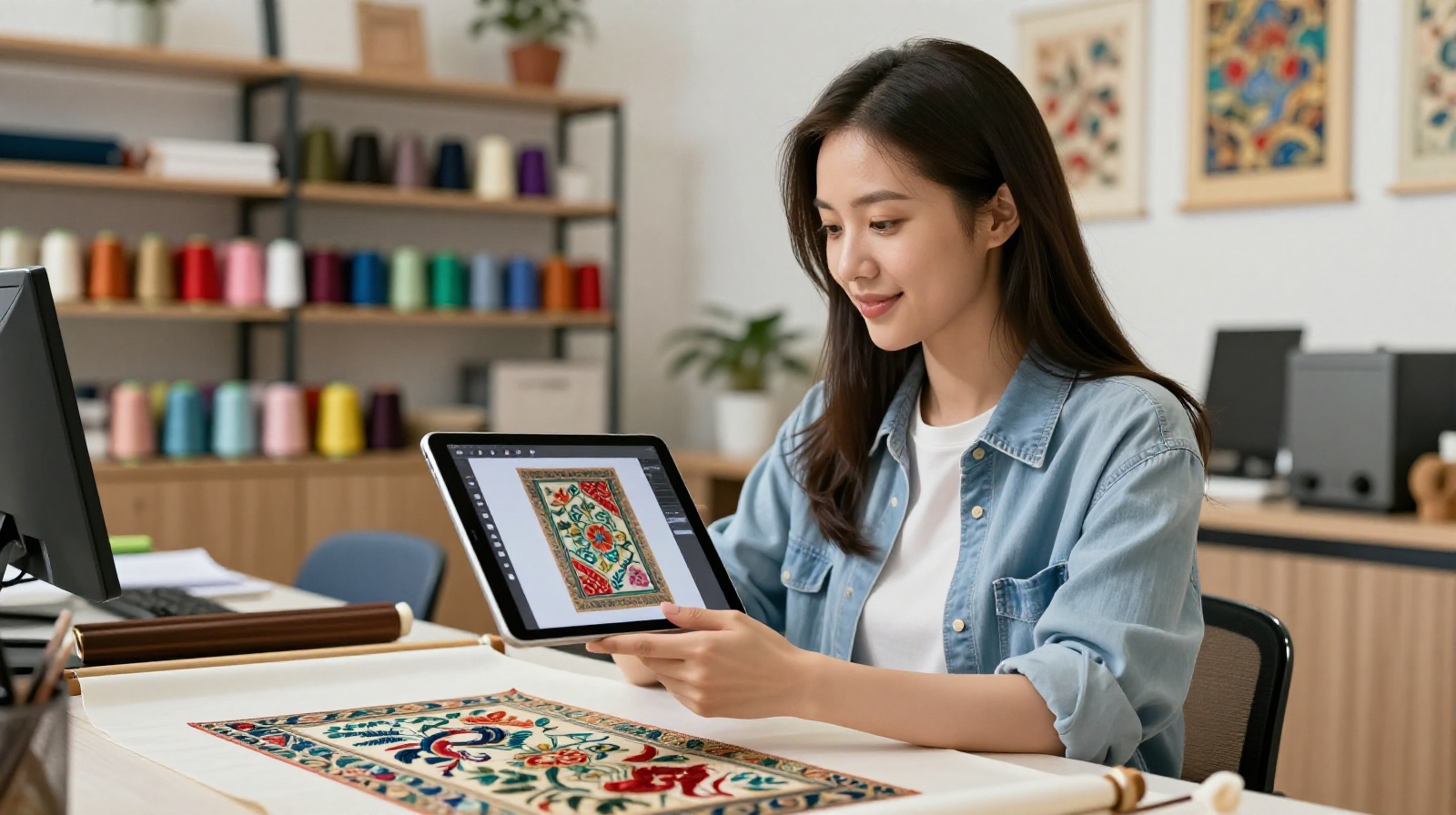
They are not rejecting modernity; they are redefining it. In their eyes, the speed of digital life makes the slowness of handcrafting even more valuable. This is a new generation finding pride in skills that cannot be automated by robots or AI.
A Window to Real China
This workshop scene offers a glimpse into the broader rhythm of contemporary China. It shows a society that does not simply discard its past to chase technology, but weaves them together like threads in this very fabric. The stability of the community allows these artisans to focus on their work for decades without fear of sudden disruption.
When you see Li Wei and Master Chen working side by side, you are seeing a country that values both innovation and heritage. The “Dual-Sided” technique is more than a visual trick; it is a metaphor for China itself—complex, layered, and capable of holding two different realities in perfect harmony.