

From Concrete to Living Soil
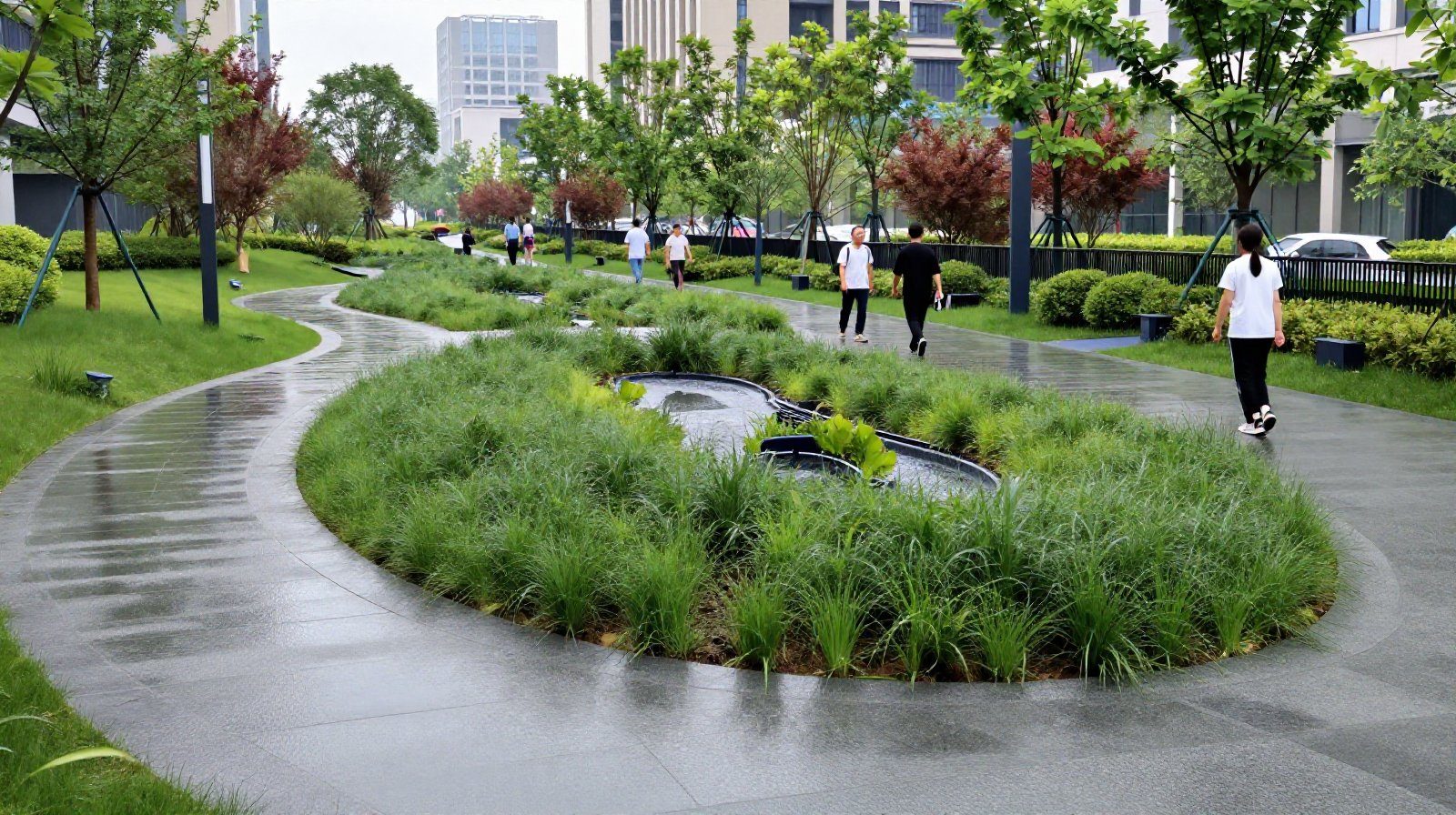
Last summer, heavy rains dumped on Wuhan. For decades, the city’s response was simple: pump water out as fast as possible into underground pipes. But in the new Hanyang district, something different happened. Instead of rushing water away, it soaked into the ground. Parks acted like giant sponges, holding the excess until the storm passed.
This isn’t just about avoiding floods. It is a fundamental shift in how Chinese cities are being rebuilt. The concept is called the “Sponge City.” Instead of fighting nature with concrete walls and massive pipes, engineers are designing urban landscapes that mimic natural ecosystems—absorbing rain, filtering pollution, and slowly releasing water back into the air or soil.
For international observers used to seeing China’s rapid industrialization as a story of endless expansion and hard surfaces, this shift offers a fresh perspective. It is not just about infrastructure; it is about changing the relationship between the city and the sky.
The Six Moves: How a Sponge Works
Traditional urban planning focuses on “fast drainage.” The goal is to get water off the streets immediately. This often overwhelms downstream systems, causing rivers to burst their banks later in the city or countryside.
Sponge City logic flips this script with six key actions:
- Infiltration (渗): Letting rain soak into permeable ground instead of running off concrete.
- Retention (滞): Slowing down the flow using vegetation and depressions.
- Storage (蓄): Collecting excess water in underground tanks or dry ponds for later use.
- Purification (净): Using soil and plants to filter out pollutants before water enters rivers.
- Utilization (用): Reclaiming stored rainwater for irrigation, cleaning streets, or filling fountains.
- Discharge (排): Only releasing water slowly when it is safe to do so.
This approach turns a problem—too much rain—into a resource. In cities like Shenzhen and Beijing, where droughts often follow floods, keeping that water locally makes perfect sense.
Real-World Case Studies
China has identified over 30 pilot cities to test these ideas. Let’s look at Wuhan again. Once known as a “city of lakes” that frequently flooded, it is now undergoing massive transformation in its Hanyang New District.
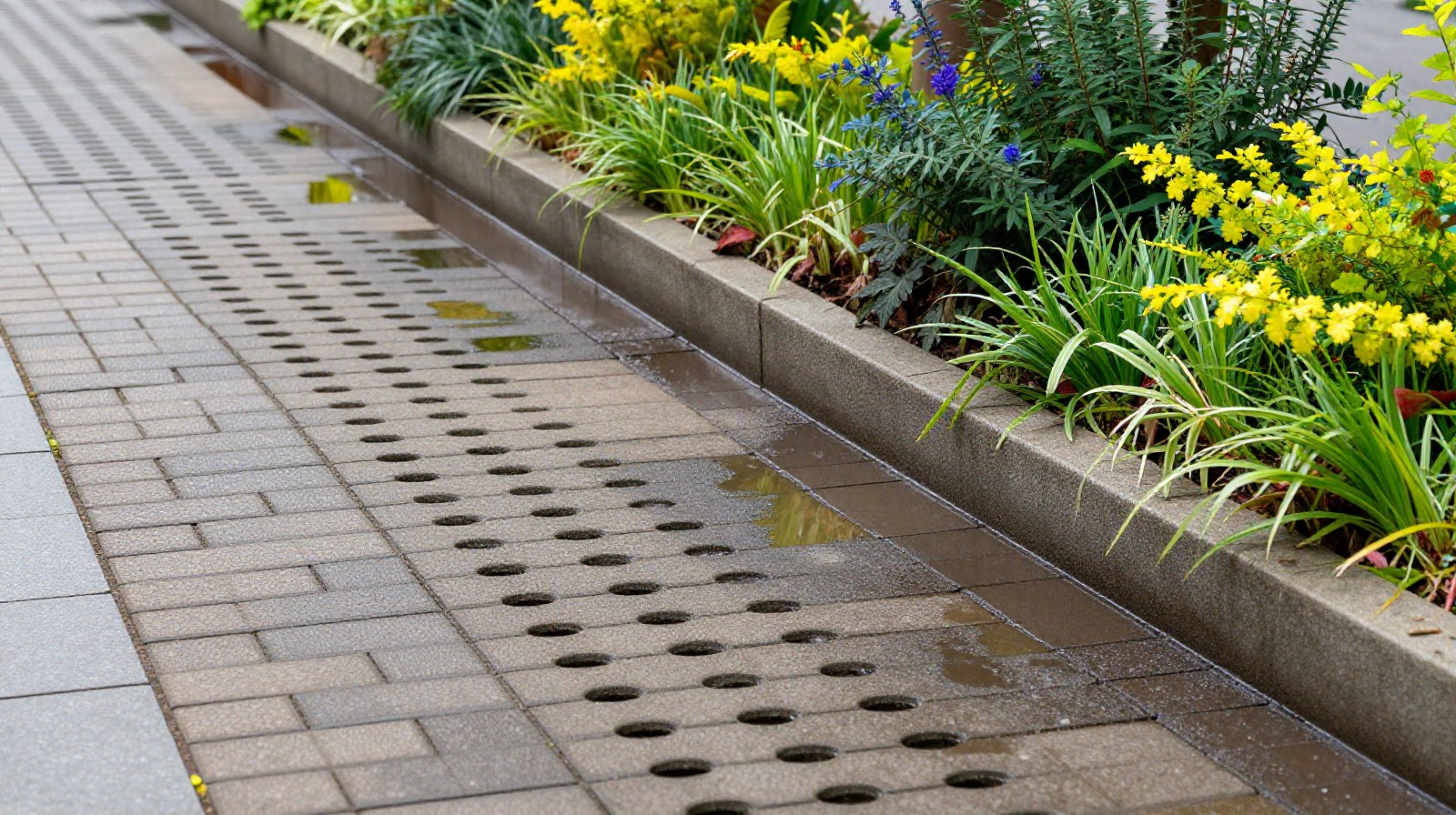
Here, traditional asphalt roads have been replaced with permeable pavement. Rain gardens—small, depressed areas planted with native grasses and flowers—line the streets. During a heavy storm, these gardens catch runoff that would otherwise rush into sewers. Data from pilot projects suggests that in well-designed sponge zones, surface flooding can be reduced by 70% or more compared to traditional concrete districts.
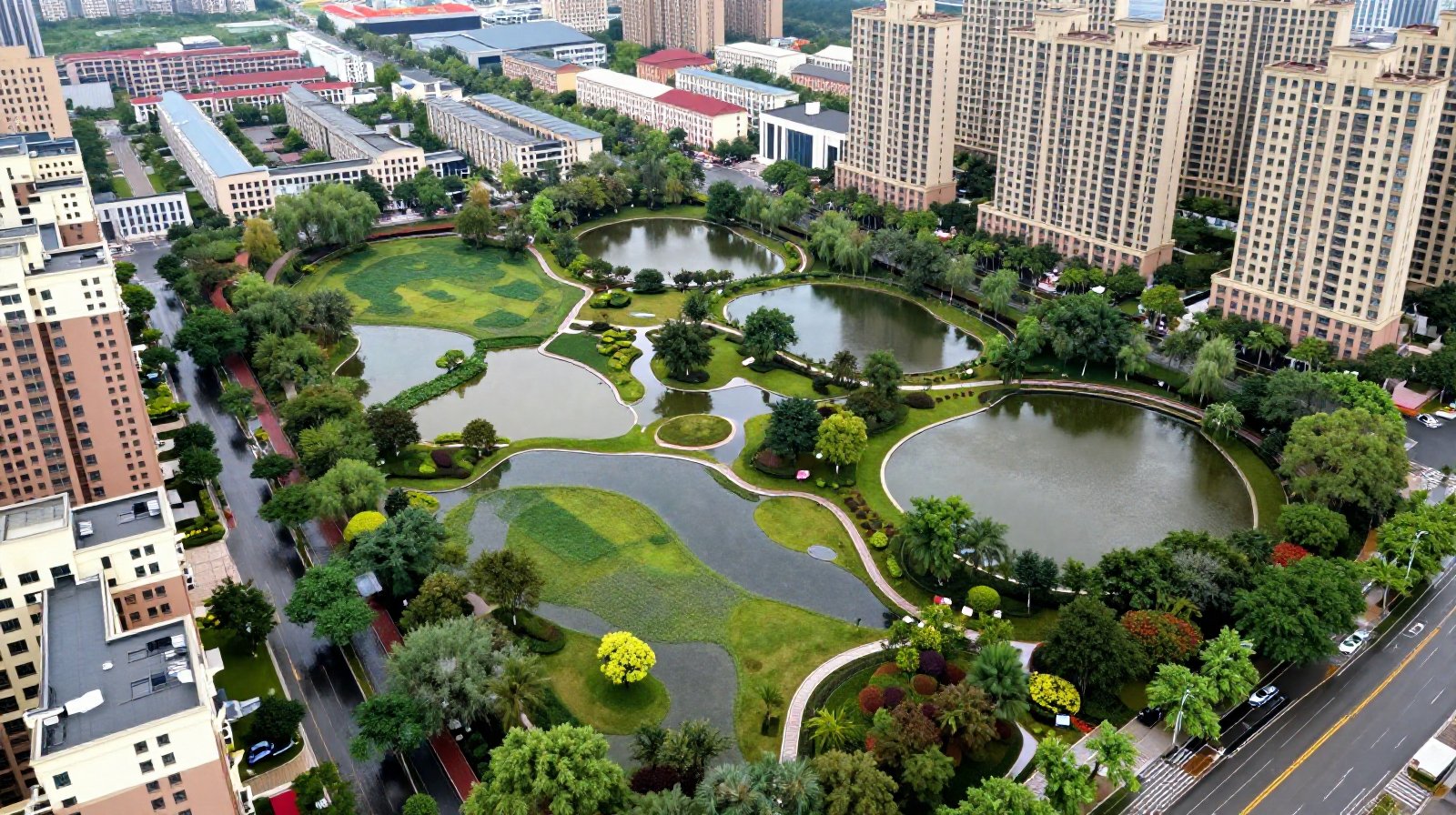
Another example is Yancheng in Jiangsu province. By restoring wetlands and creating green corridors along the canal system, the city has turned a flood-prone area into a resilient buffer zone that absorbs water while providing public recreation space.
The Tech Behind the Green
It sounds poetic, but the technology is precise. You will see specific materials and designs in action:
- Permeable Pavement: Special bricks or concrete with gaps that let water pass through to a gravel base below.
- Rain Gardens: Landscaped depressions that collect roof runoff from nearby buildings.
- Sunken Green Spaces: Parks built slightly lower than the surrounding streets, so they become temporary lakes only when it rains heavily.
In a typical Chinese neighborhood today, you might walk past a school where the playground doubles as a retention basin. Or see a community center with a roof designed to channel rain into underground cisterns for flushing toilets and watering plants.
Challenges on the Ground
It is not all smooth sailing. Implementing Sponge Cities faces real hurdles. The biggest challenge is cost. While traditional drainage has been cheap and familiar, sponge systems require complex engineering and high-quality materials. Retrofitting old neighborhoods—where pipes are buried under decades of concrete—is incredibly difficult.
Maintenance is another issue. A rain garden needs care; if the plants die or the soil clogs, it stops working. There is also the need for unified standards. As more cities adopt this model, ensuring that local designs work together across different regions remains a work in progress.
The Future of Resilience
Despite these challenges, the direction is clear. China views Sponge Cities not just as flood control, but as a core component of “resilient cities.” As climate change brings more extreme weather, the ability to adapt locally becomes critical.
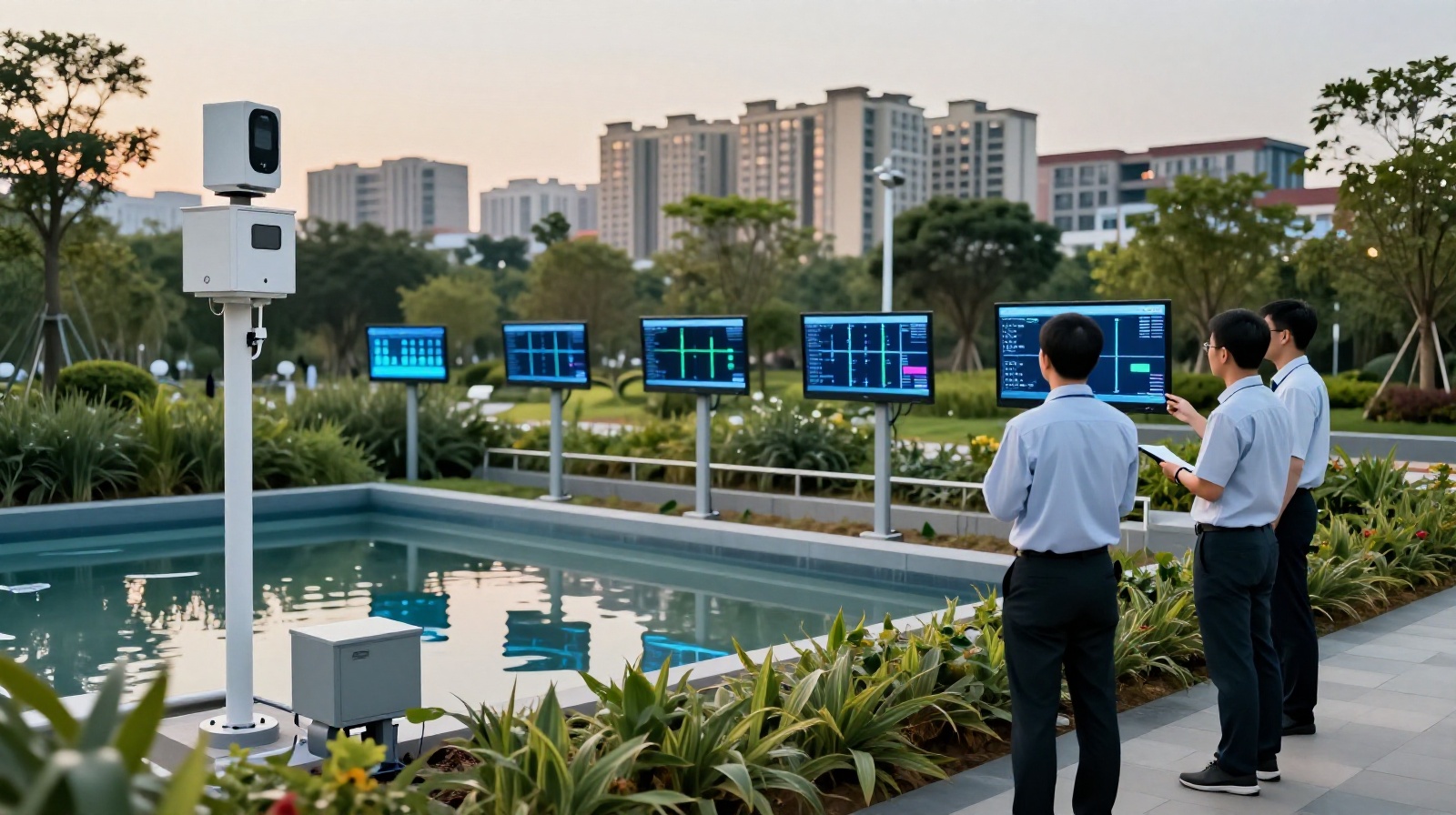
Future developments are looking toward smart technology. Sensors embedded in the ground can monitor water levels and soil moisture in real-time, automatically adjusting valves or diverting flow when necessary. This is where ecology meets digital intelligence.
A New Urban Vision
The Sponge City concept represents a quiet revolution in urban planning. It moves away from the aggressive conquest of nature toward a partnership with it. For ordinary citizens, this means drier streets during storms, cleaner air from better vegetation, and more green spaces to enjoy.
For the world watching, China’s experiment offers a valuable lesson: building resilience does not require fighting floods with harder concrete. Sometimes, the solution is softer, greener, and deeply rooted in nature.