


Beyond the Bribe: A Lunch with Mr. Li
If you ask a Western journalist what ‘guanxi’ means, they might say ‘bribery’. But sit down with Li Wei, a 34-year-old project manager in Chengdu, and the story changes. Last week, his mother needed an urgent specialist appointment at a public hospital. The waiting list was months long. Instead of handing over cash to a doctor—a move that would get him fired or arrested—Li called his former university classmate who now works as a nurse there.
They met for hotpot and tea. ‘I can’t guarantee the time,’ Li said, but ‘if you could just let us know when a slot opens up, we’d be grateful.’ The next day, a text message arrived: ‘Come at 2 PM tomorrow; I’ll put you on the list.’ No money changed hands. No legal line was crossed. This is not bribery. It is guanxi, or ‘relationships’.

The Historical Root: Why Trust Matters More Than Rules
To understand this, we must look back at China’s agrarian past. For thousands of years, before modern courts and police forces existed, people relied on personal networks for survival. If you got sick in a village far from the capital, who would you call? Your uncle? Your neighbor? The local elder?
Confucianism codified this into ‘renqing’ (human feelings). In this system, trust isn’t generated by a contract signed on paper; it’s built over years of shared meals, favors returned, and mutual obligation. When you help someone today without asking for immediate payment, you are depositing ‘social credit’ into a relationship bank. Later, when you need something, that balance can be withdrawn.
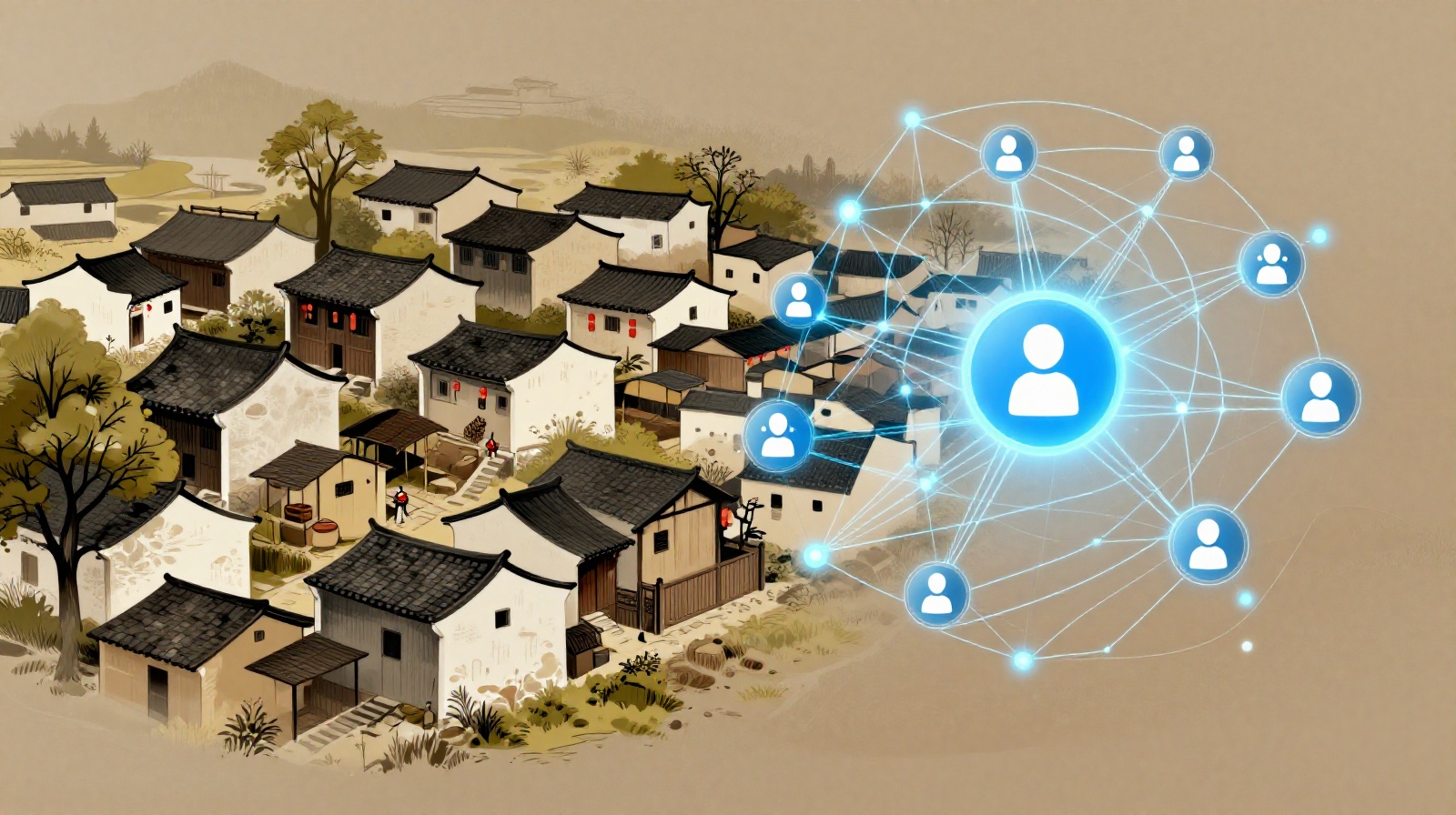
How the Network Actually Works
Think of guanxi as an offline version of LinkedIn, but with much higher stakes and emotional depth. It operates on a simple logic: reciprocity.
- The Core: You help someone in your network today.
- The Expectation: You don’t ask for immediate cash; you expect they will help you, or someone in their circle, when the time comes.
- The Safety Net: In a society where bureaucracy can be slow and rigid, these networks act as a lubricant. They bypass red tape not by breaking laws, but by accelerating processes through trusted channels.
This is why you see people in China asking ‘Do you know anyone?’ before trying to solve a problem legally for the first time. It’s not always about skipping the line; sometimes it’s about knowing which line has moved faster that day due to internal coordination.

The Modern Shift: From Favors to Digital Professionalism
Is ‘guanxi’ dying with modernization? Not at all. It is evolving. In the past, a relationship might have meant a nephew getting a job because his uncle was the factory director. Today, that kind of favoritism is increasingly risky due to strict anti-corruption campaigns.
Instead, guanxi has shifted toward professional networking and digital coordination. WeChat groups are now the new town squares. A parent in Shanghai might share a link to a rare medical paper in a ‘School Admission’ group chat, helping another family navigate the complex application process for their child’s kindergarten.
The rules have changed: it is less about personal privilege and more about information asymmetry. In a country of 1.4 billion people, knowing where to find the right information is often the most valuable resource you can own. ‘Guanxi’ is simply the trust that ensures the information you receive is accurate and timely.

Why This Matters to Outsiders
If you are from Europe or North America, where systems rely on universal rules and anonymity, ‘guanxi’ can seem frustratingly opaque. You might wonder why things can’t just be done through a standard form.
The answer lies in scale and history. When a system serves billions of people with varying levels of trust in institutions, personal connections become a necessary buffer. It is not that the law is ignored; it’s that human networks fill the gaps where bureaucracy moves too slowly to meet immediate needs.
Understanding ‘guanxi’ doesn’t mean accepting corruption. It means recognizing that for many Chinese people, building and maintaining relationships is as essential as managing finances or career paths. It is a social technology designed to navigate complexity, not just to break rules.