
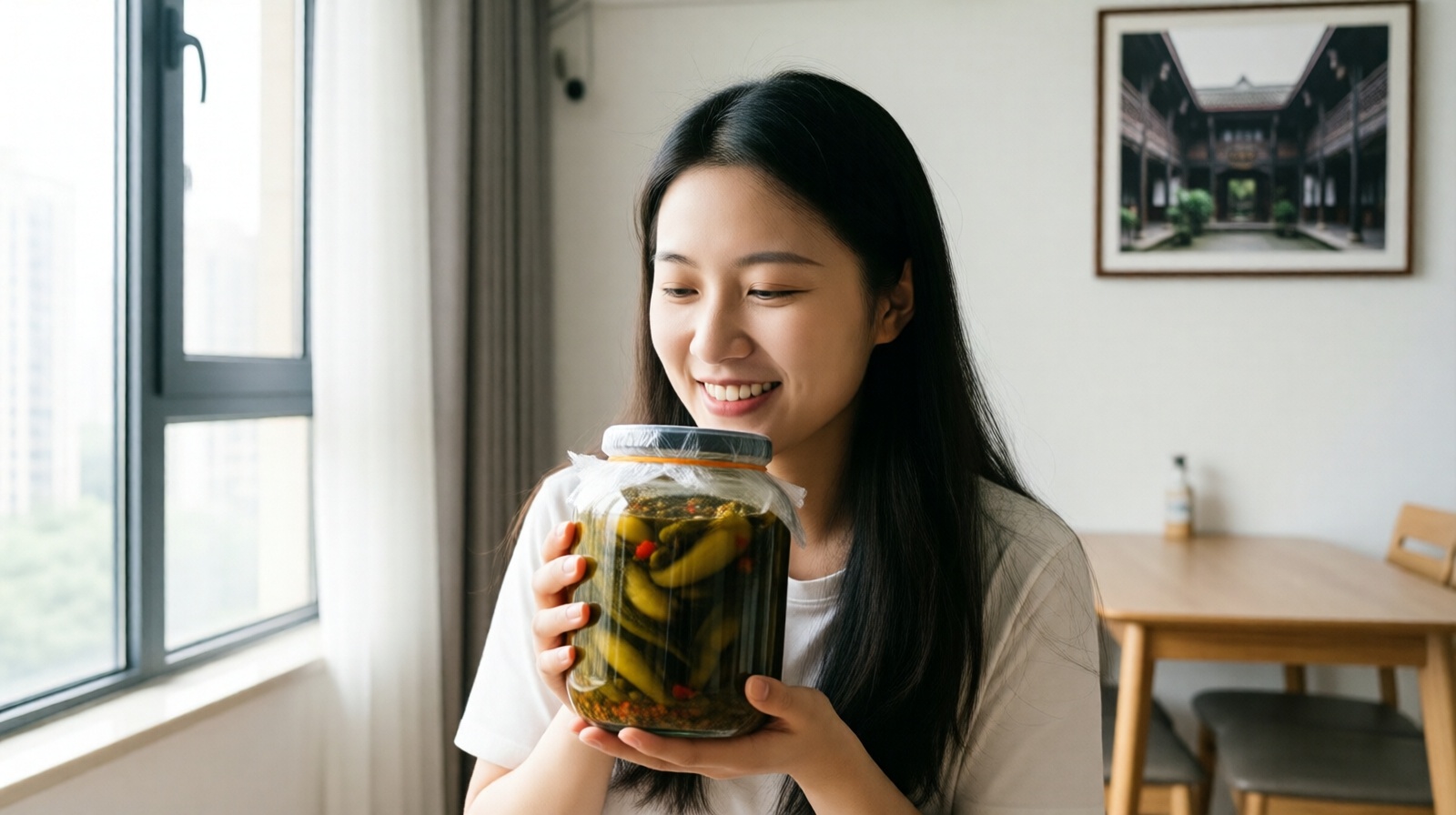

The Taste of Home in a Clay Jar
In a small apartment in Shenzhen, 28-year-old Chen Ying carefully unwraps a parcel from her hometown in Sichuan. Inside is a clay jar, sealed with plastic wrap and rubber bands. She lifts the lid, and the pungent, sour aroma of fermented vegetables fills the room. For a moment, the smell of her mother’s kitchen—garlic, chili, star anise, ginger—transports her back to the courtyard in Deyang where she helped as a child, pushing vegetables into brine and listening to her mother’s instructions.
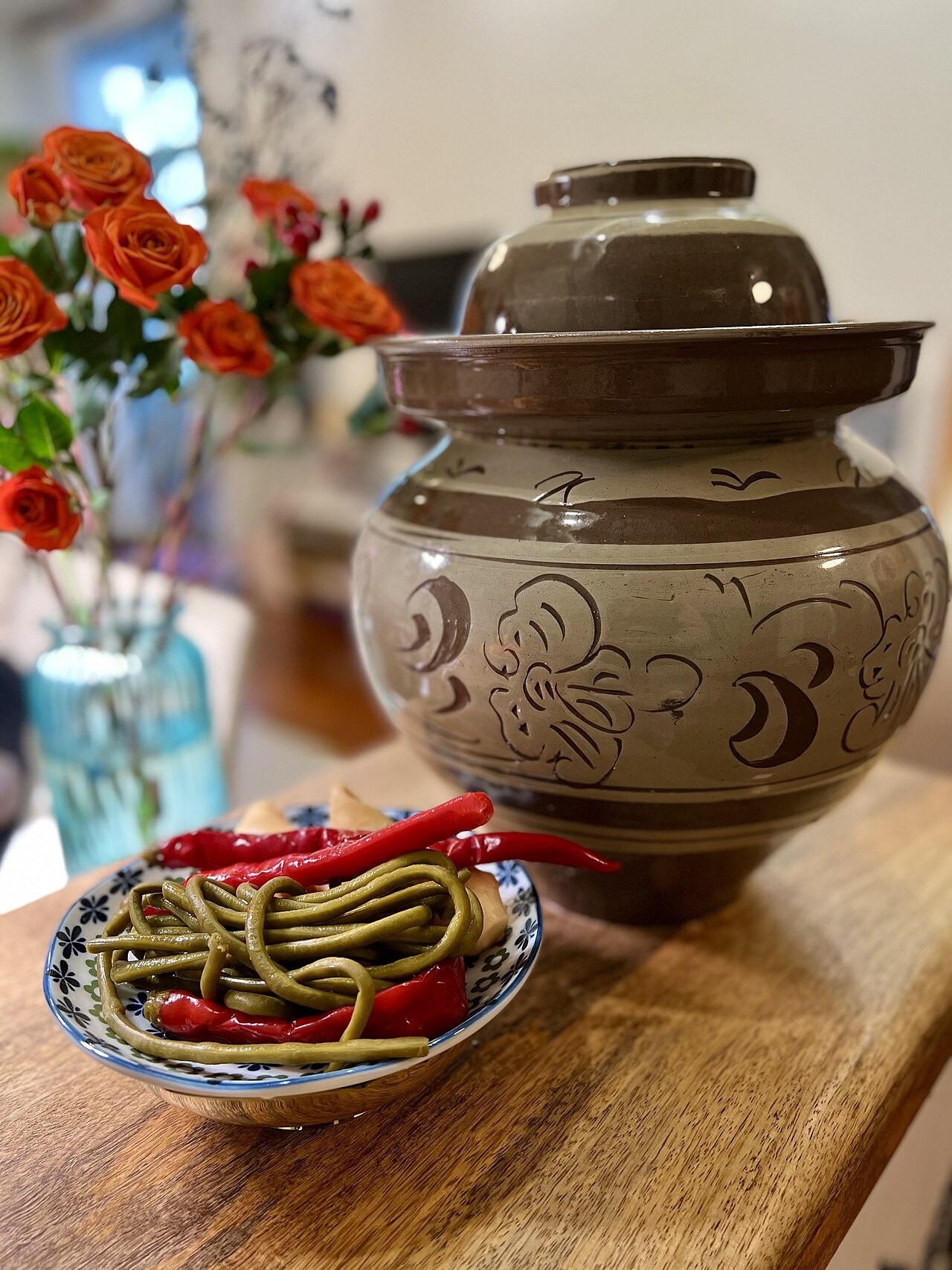
Chen Ying is among millions of Sichuanese migrants across China and abroad who keep their connection to home alive through a single, humble object: the paocai tan (pickle jar). More than just a container for fermented cabbage, radish, and chilies, the clay jar is a repository of memory, a culinary anchor in a rapidly changing world.
A Mother’s Recipe, A Daughter’s Lifeline
For Chen, the ritual begins every few months. Her mother, Li Mei, prepares a new batch of pickles using a brine that has been continuously replenished for over a decade—a “mother brine” passed down through invisible tradition. Li Mei carefully selects vegetables from the local market: long beans, napa cabbage, carrots, and Sichuan peppercorns. She washes, salts, and packs them into a new clay jar, then adds the aged brine as a starter. The jar is shipped via courier, traveling 1,500 kilometers to Shenzhen in two days.
“When I open the package, I don’t just smell pickles. I smell my mother’s hands, the courtyard, the sound of the market,” Chen says, wiping her eyes. She shares the pickles with friends from other provinces, who have learned to appreciate the sour-spicy punch. “This is not just food. It’s a letter from home.”
From Sichuan Kitchens to Global Tables
This story is not unique. In Beijing, Shanghai, New York, and London, Sichuan expats are finding new ways to keep their pickle tradition alive. Xiong Wei, a 32-year-old software engineer in Berlin, orders Sichuan pickling brine online from specialty stores in Chengdu. He ferments local German cabbage in his Berlin kitchen, blending cultures one jar at a time. “I miss the crisp, sour taste of Sichuan pickles with white rice. Here I can’t find the same, but I can create it,” he says.
WeChat groups dedicated to “Sichuan pickle exchange” have thousands of members. They share tips on maintaining brine, sourcing ingredients, and shipping tips. Some expats have even started small businesses, selling homemade pickles to homesick Sichuanese communities abroad. The paocai economy—from brine starters to custom clay pots—has grown into a niche but passionate market. On Taobao, one specialty shop sells over 10,000 jars of Sichuan pickling brine per month, many shipped to overseas addresses.
More Than Food: A Cultural Anchor
Anthropologist Dr. Liu Qing, who studies food migration, notes that Sichuan pickles represent a unique form of “edible nostalgia.” “Unlike other preserved foods that can be factory-produced, the flavor of paocai depends on the local water, air, and the specific bacterial community in each family’s kitchen. That’s why no two jars taste the same. When you eat a pickle made by your mother, you are literally tasting a place that no longer exists exactly as you left it.”
The emotional value is immense. In a time of high mobility, the pickle jar becomes a tangible link to origin. For many younger Sichuanese who have left the province for study or work, learning to make their own pickles is a rite of passage. They call their mothers for advice, send photos of their first successful batches into family WeChat groups, and feel a sense of pride when the fermentation turns out right.
Building Community, One Jar at a Time
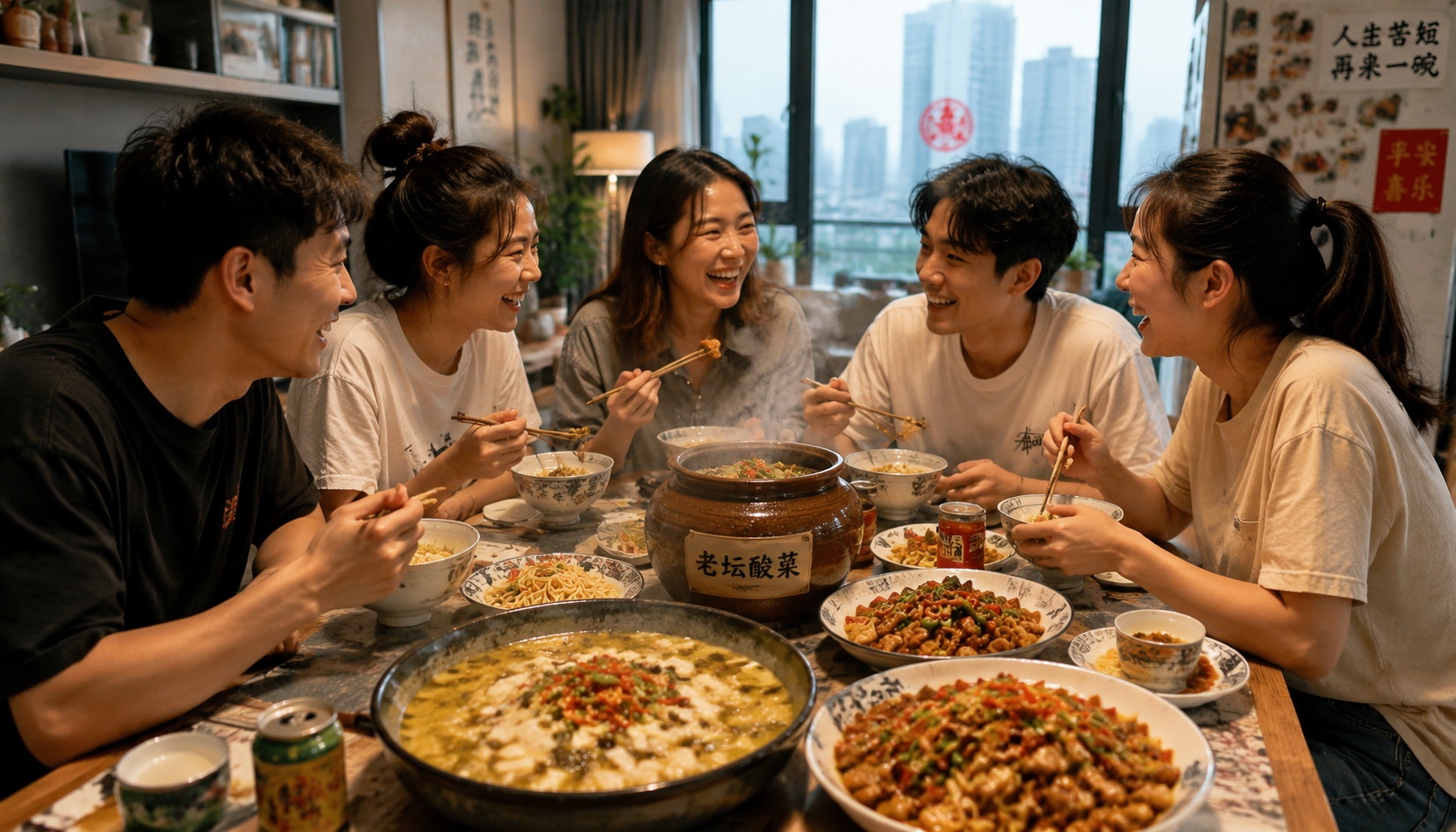
Back in Shenzhen, Chen Ying has started a monthly “pickle potluck” with other Sichuan expats. Everyone brings a dish made with the pickles they’ve received or made. There’s pickled fish, stir-fried intestines with pickled chilies, and cold noodles tossed with pickled radish. The gatherings are noisy, humid, and full of laughter—an impromptu Chengdu alley transplanted into a modern city.
“In Sichuan, we say ‘A hundred pickles, a hundred flavors.’ For me, each jar is a piece of home that I can carry,” Chen says, holding up her latest delivery. “As long as I have this taste, I am never truly far away.”
Start the discussion at forum.chinacomes.com