
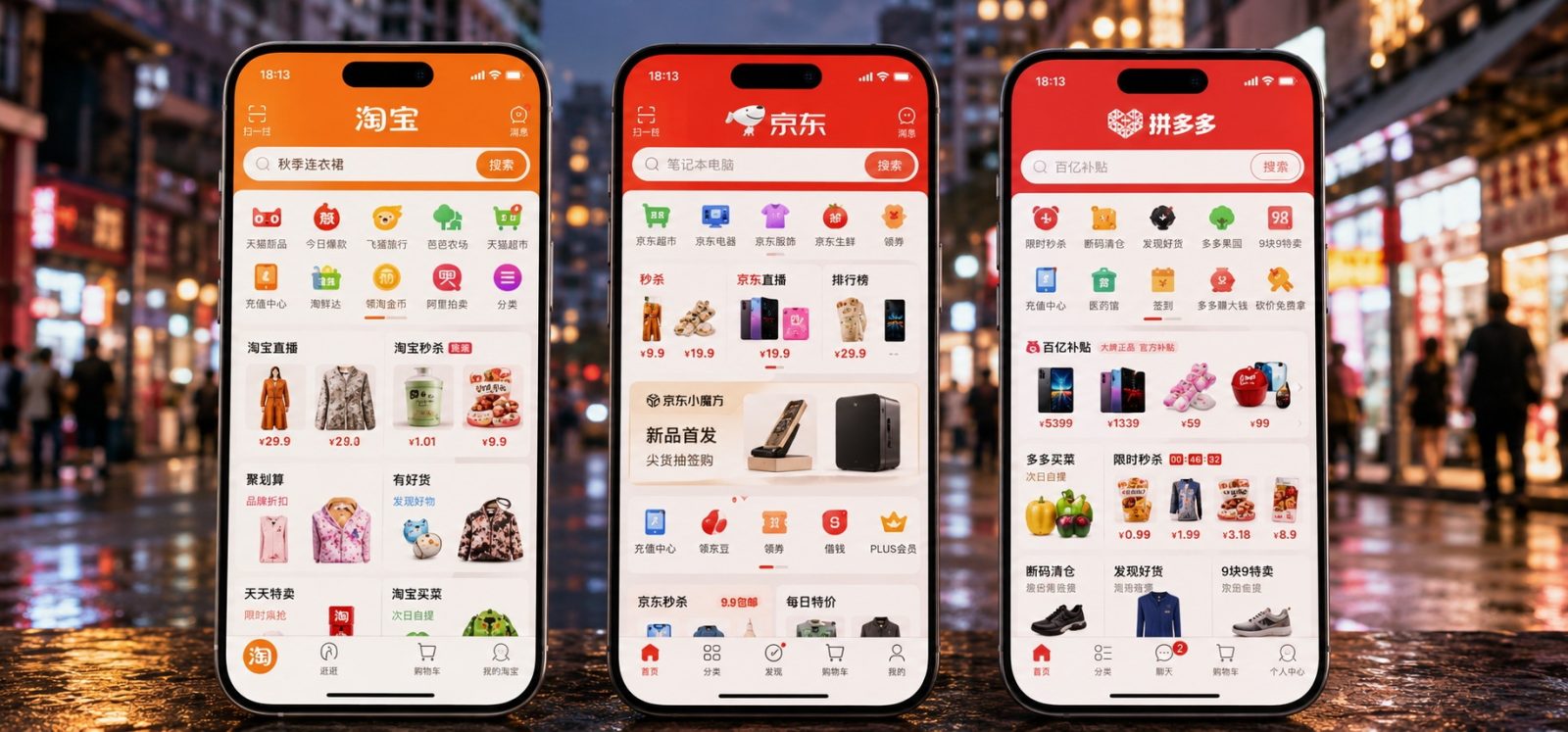

Where Do You Shop? A Tale of Three Apps
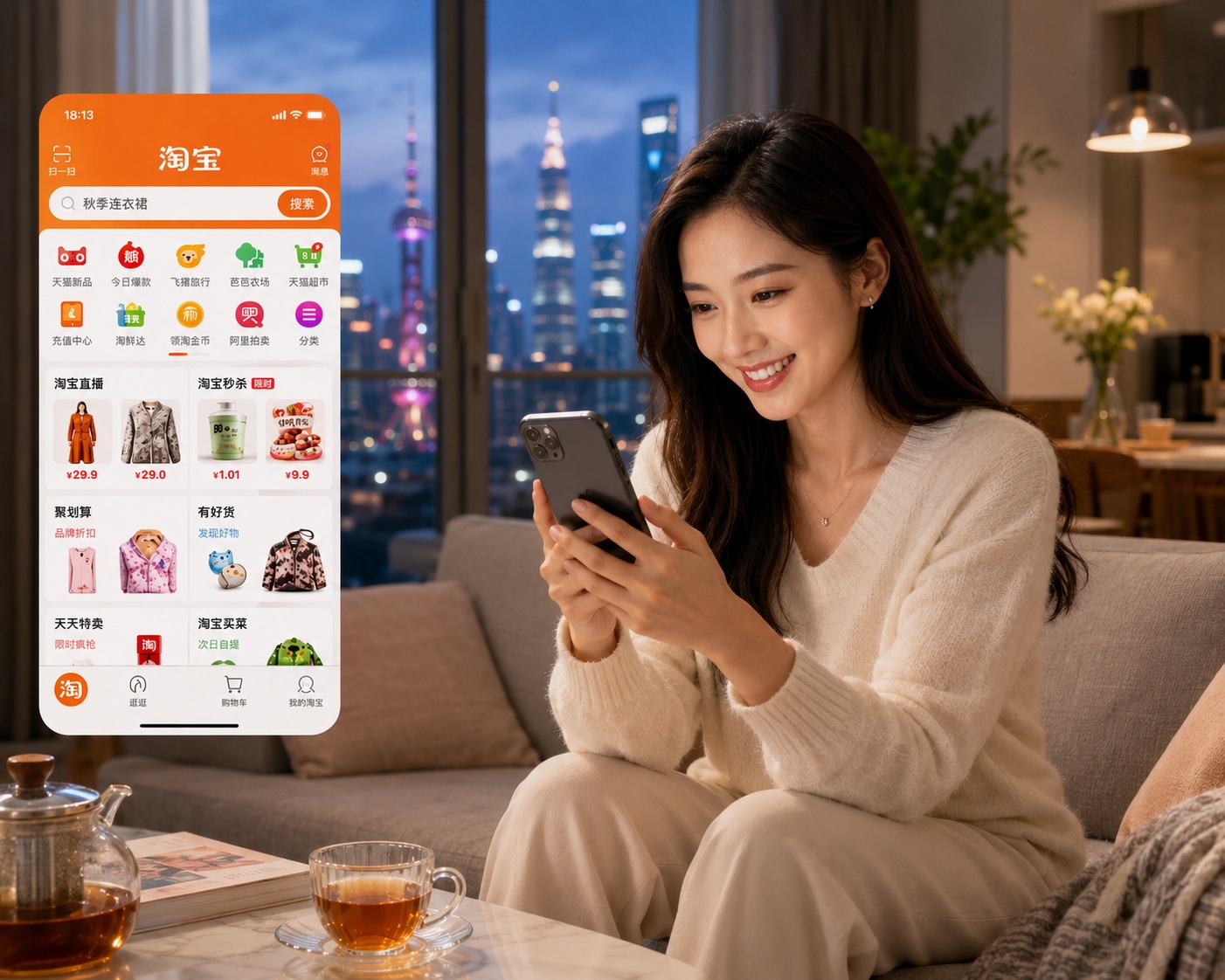
It’s a Saturday evening in Shanghai. Li Wei, a 28-year-old graphic designer, opens her phone to browse. She taps the orange icon—Taobao—to look for a unique dress for an upcoming party. Meanwhile, her father in a small town in Henan province is on Pinduoduo, buying a bulk pack of walnuts. And her brother, a tech enthusiast in Beijing, just clicked “buy now” on JD for a new laptop, expecting delivery by tomorrow morning. These three scenes, happening simultaneously, illustrate the distinct roles China’s top three e-commerce platforms play in daily life.
The Numbers: Size and Reach
By early 2026, the data tells a clear story. Taobao (including Tmall) remains the largest by annual active users—over 1 billion. JD follows with over 700 million, and Pinduoduo with over 900 million. But monthly active users (MAU) reveal engagement nuances: Taobao’s MAU hit 983 million in 2025, while JD’s was 610 million and Pinduoduo’s 708 million. In terms of gross merchandise volume (GMV), Taobao-Tmall leads with an estimated 6.7–7.3 trillion yuan in 2025, while JD and Pinduoduo each surpassed 4.5 trillion yuan (Pinduoduo’s figure includes Temu). Market share estimates vary; for instance, during the 2025 Double 11 shopping festival, JD captured about 25% of sales, while Taobao-Tmall’s share was around 31% (by GMV).
Who Shops Where? User Profiles
Each platform attracts a distinct crowd. Taobao (with Tmall) has the broadest appeal, especially among younger generations. In 2025, it boasted 155 million monthly active users from Generation Z (born after 2000)—far more than its rivals. Its premium membership program, 88VIP, crossed 50 million members, indicating a base of high-spending, loyal shoppers.
JD’s user base skews young and quality-conscious: 48.5% of its users are from the post-90s and post-00s generations. Interestingly, JD has also expanded aggressively into lower-tier cities, with 58% of its users now coming from third-tier cities and below.
Pinduoduo’s users are driven by value. While it has a massive user base, its strength lies in price-sensitive consumers, including many in rural and small-town China. Its social bargain model and “team purchase” mechanics encourage sharing and group buying.
What They Sell: Category Strengths
Each platform has built a fortress in specific categories. Taobao-Tmall is the ultimate department store, dominating in apparel, beauty, home furnishings, and sports/outdoor goods. In 2025, over 150,000 new merchants joined Tmall, and 276 new brands achieved annual sales exceeding 100 million yuan.
JD remains the king of electronics and home appliances. During the 2025 Double 11, JD accounted for 54.1% of all 3C (computer, communication, consumer electronics) sales. Its general merchandise (daily necessities) has been growing steadily, posting double-digit growth for five consecutive quarters and now representing over 40% of its total product revenue.
Pinduoduo excels in agricultural products and unbranded goods (white-label items) from manufacturing zones. It directly connects to over 1,000 agricultural production areas, making it a major channel for fresh produce. Its “billion-dollar subsidy” program has also attracted many branded goods, but the core remains affordability.
Delivery and Service: Different Speeds, Different Costs
Logistics is a key differentiator. Taobao relies on Cainiao Network, an integrated platform that coordinates multiple delivery companies. This model offers flexibility but less control over speed. JD, in contrast, owns JD Logistics, which in 2025 surpassed 200 billion yuan in annual revenue for the first time. Its self-run warehouses enable same-day or next-day delivery across most of China. JD recently extended free shipping to remote areas in five western provinces, a move that boosted user satisfaction.
Pinduoduo prioritizes cost efficiency in shipping. Its after-sales service is famous for “instant refunds”—users often get money back before returning items. However, the company has also adjusted its “refund-only” policy (which doesn’t require returning the item) to give merchants more say, though fast processing remains a hallmark.
After-Sales Policies: The “Refund-Only” Evolution
The “refund-only” policy, pioneered by Pinduoduo, once forced sellers to refund without requiring returns for low-value items. By 2025, the policy had evolved across platforms. Taobao stopped proactively intervening in refund-only disputes, letting buyers and sellers negotiate. JD’s new rules require that for delivered orders, a refund must accompany a return (i.e., no refund-only). Pinduoduo has given merchants more negotiation power but still offers “rapid refund” for eligible cases. This shift reflects a balancing act between consumer protection and merchant fairness.
Final Thoughts: Three Distinct Personalities
Think of Taobao-Tmall as a sprawling mega-mall where you can find almost anything and enjoy the thrill of discovery. JD is a reliable electronics store with express delivery and strong after-sales support. Pinduoduo is a farmer’s market and factory outlet combined, where bargains and group deals reign. Each platform knows its niche and plays to its strengths. For consumers, the choice comes down to what matters most: variety, speed, or price.
Start the discussion at forum.chinacomes.com