

It Started with a Wave
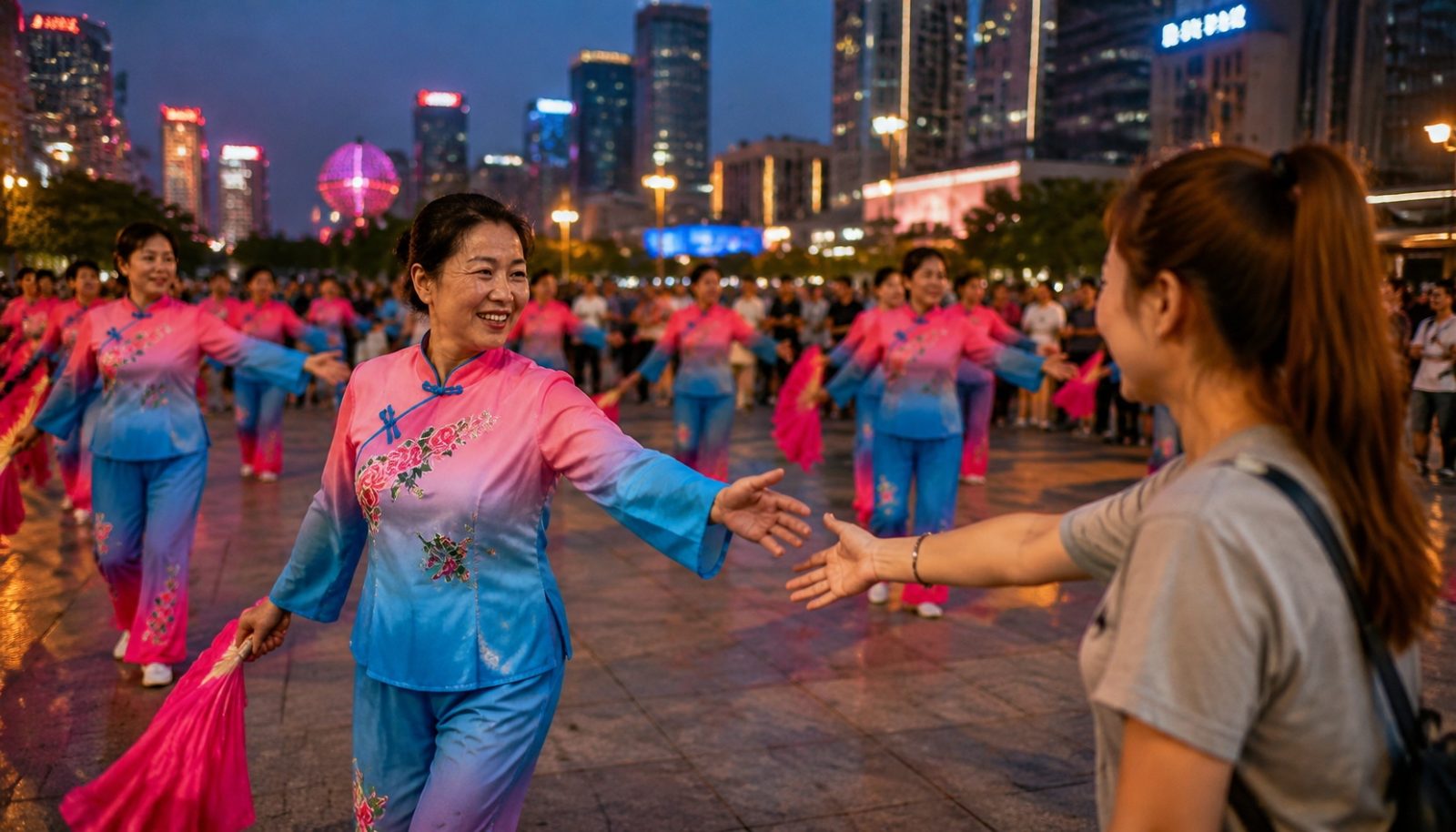
The sun had just set behind the high-rises, casting a warm orange glow over the concrete plaza outside my apartment building. I was walking my dog when a woman in her sixties, wearing a bright pink tracksuit and waving a red fan, called out to me: “Young lady, come dance with us!” She laughed, her face crinkled with warmth. Before I could refuse, she had already clasped my wrist and pulled me into a line of about thirty women, all standing in tidy rows, waiting for the music to start.
That evening was my first real taste of guangchangwu—square dancing—the phenomenon that has become a symbol of Chinese public life. And what I saw was not the noisy, chaotic stereotype you might have heard about. Instead, it was a lesson in community socializing.
The Dance Floor as Living Room
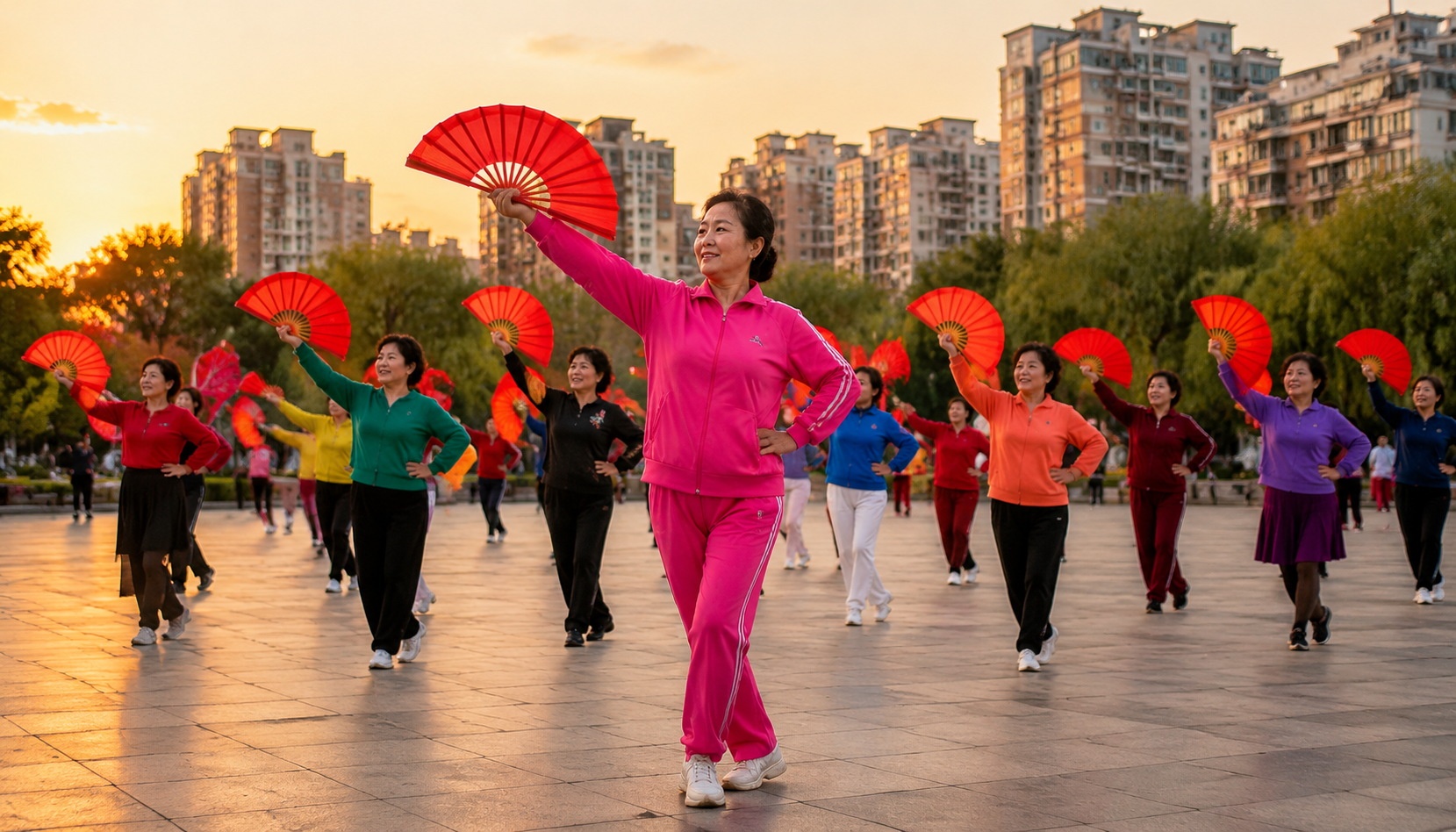
The music kicked in—a upbeat, folksy remix of a Mongolian tune. The women moved in perfect synchrony, arms rising like waves, feet shuffling in quick steps. I fumbled along, clumsy and out of rhythm, but no one minded. The woman who had grabbed me—let’s call her Auntie Li—kept smiling at me in the reflection of the storefront windows we faced. “Don’t worry, you’ll get it,” she shouted over the beat. “This dance is new—we learned it only last week from a video on Douyin.”
I learned that Auntie Li, 64, used to work in a textile factory. Now she lives with her son’s family and spends her evenings here. “My daughter-in-law is nice, but we don’t have much to talk about,” she told me during a water break. “Here, I have my sisters. We chat about everything—grandkids, health, the rising price of pork. And we dance. It keeps me young.”
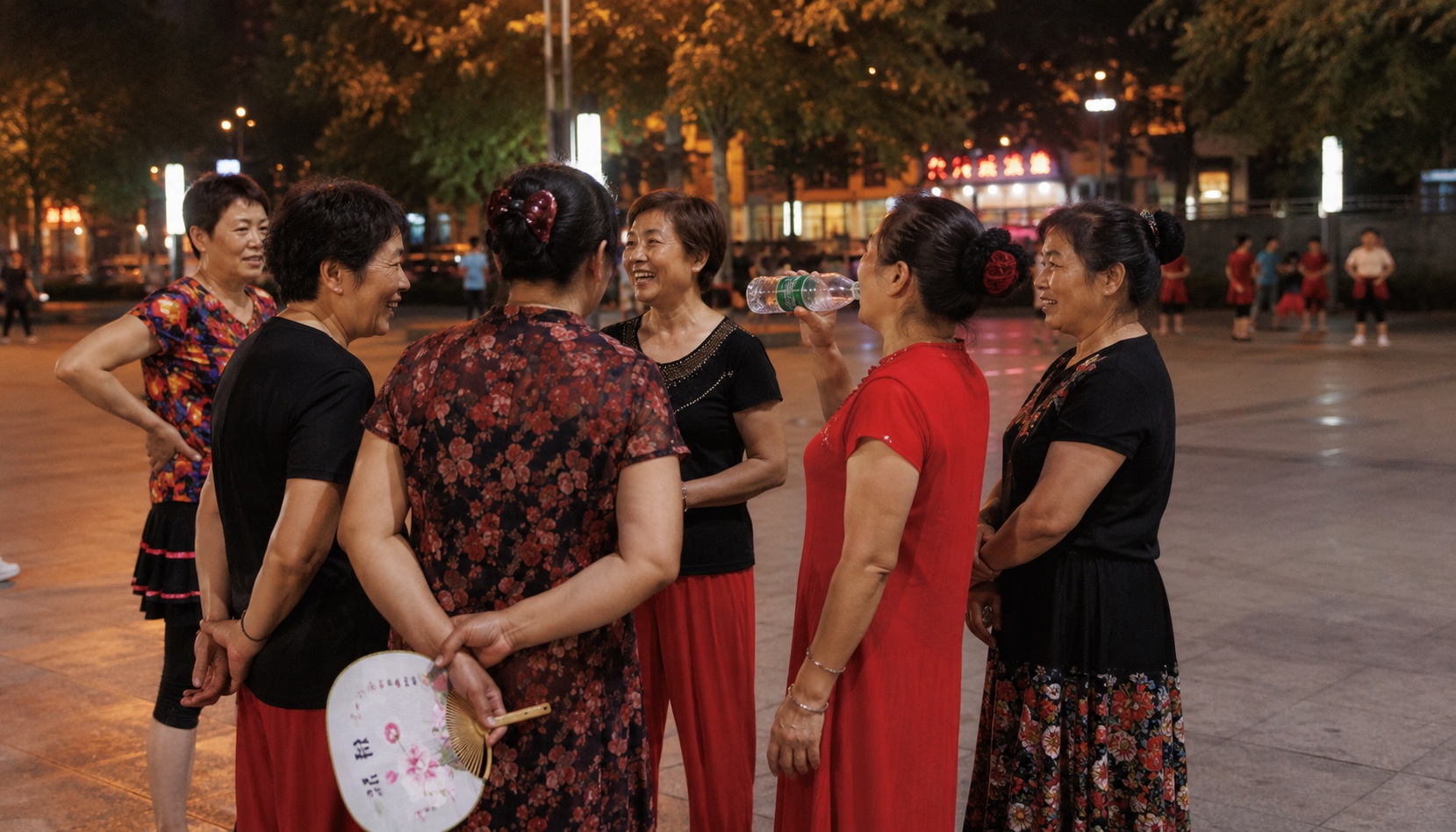
Around us, groups of women clustered in circles, some fanning themselves, others checking phones, but all exchanging news. A woman in a floral blouse bragged about her grandson’s exam scores; another complained about her husband’s snoring. Laughter erupted often. This was not just exercise—it was a living room, a community bulletin board, a support network.
An Organic Social Network
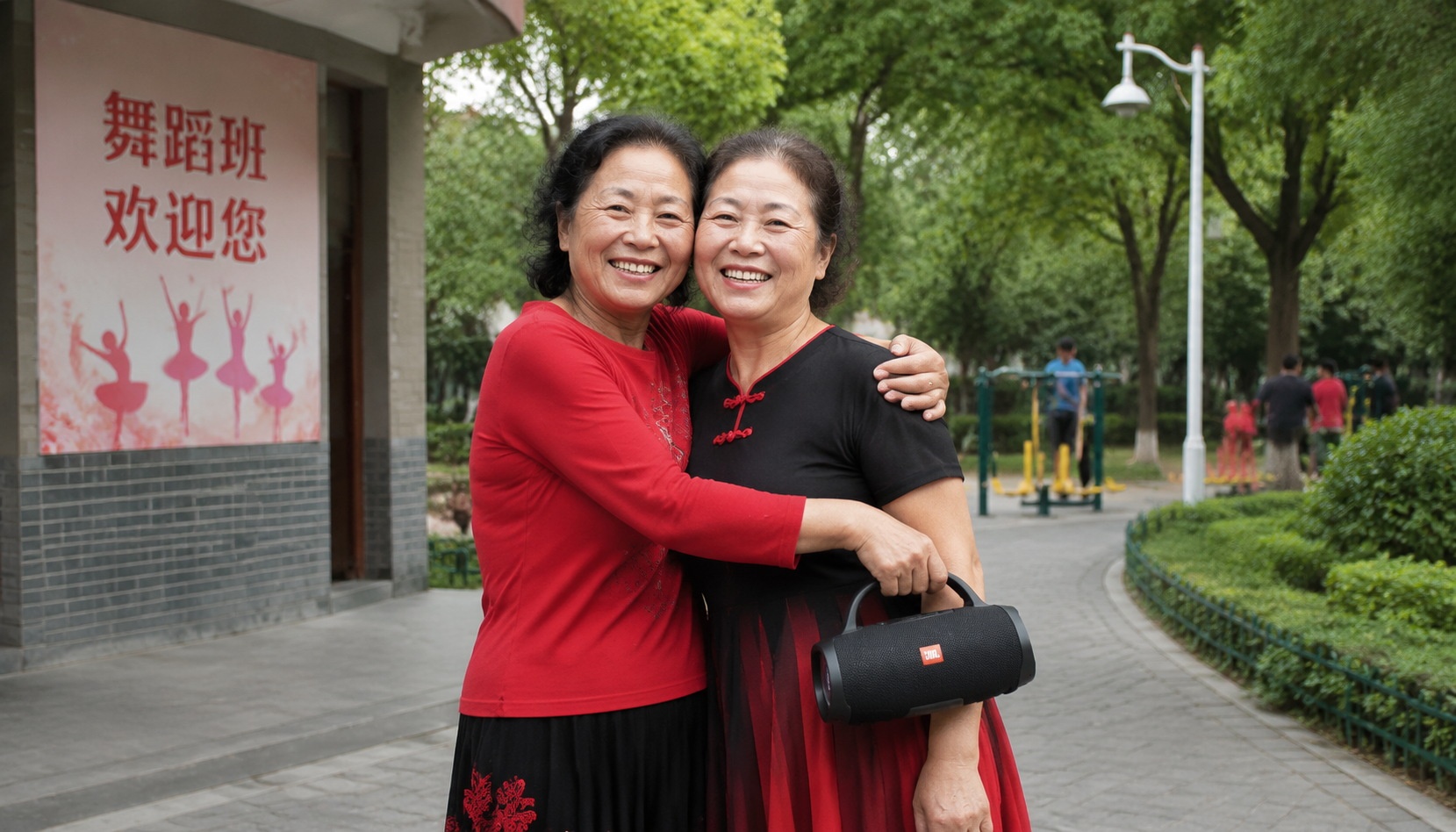
Square dancing in China is often misunderstood abroad. Foreign media sometimes portray it as a nuisance—loud music disturbing the peace. And yes, there have been conflicts. But what I saw was a self-organizing social system. Each group has a leader (usually the one with the loudest voice and the best memory for routines). They collect small fees—maybe one yuan per month—to maintain a portable speaker or buy matching costumes. The dances are taught by members who have learned from online videos, then passed on by word of mouth.
There is no official registration, no appointment needed. You just show up. “If you miss a few days, someone will call to ask if you’re sick,” said Auntie Chen, 58, a retired accountant. “We look out for each other.” She told me that last winter, when her husband was hospitalized, four dance sisters took turns bringing her homemade soup. “They didn’t even ask. They just came.”
In a country where urbanization has uprooted many from their hometowns, square dancing offers a new kind of kinship. It’s a place where a retired factory worker, a former schoolteacher, and a cleaning lady can stand shoulder to shoulder, moving to the same rhythm, sharing the same laughter.
Beyond the Stereotype
Not every square dance group is the same. Some prefer slow ballroom steps, others go for high-energy Zumba. Some are all women; a few have men. I saw one group in a nearby park dancing to a remixed version of “Edelweiss” with graceful, flowing movements. The leader, a retired doctor, told me they perform at local nursing homes during holidays. “It’s not about showing off,” she said. “It’s about staying connected.”
What struck me most was the absence of any commercial agenda. No membership cards, no branded workout gear (though some wear matching T-shirts they bought themselves). This is grassroots community building at its purest: people coming together because they want to, because it makes them feel less alone.
Auntie Li walked me back to my building gate after the dancing ended. “Tomorrow we start a new dance,” she said. “You should come again.” I didn’t dance the second night—but I did stand and watch for an hour, soaking in the rhythm of a community that needs no app, no algorithm, just a patch of concrete and a willingness to move together.
Start the discussion at forum.chinacomes.com