

Introduction
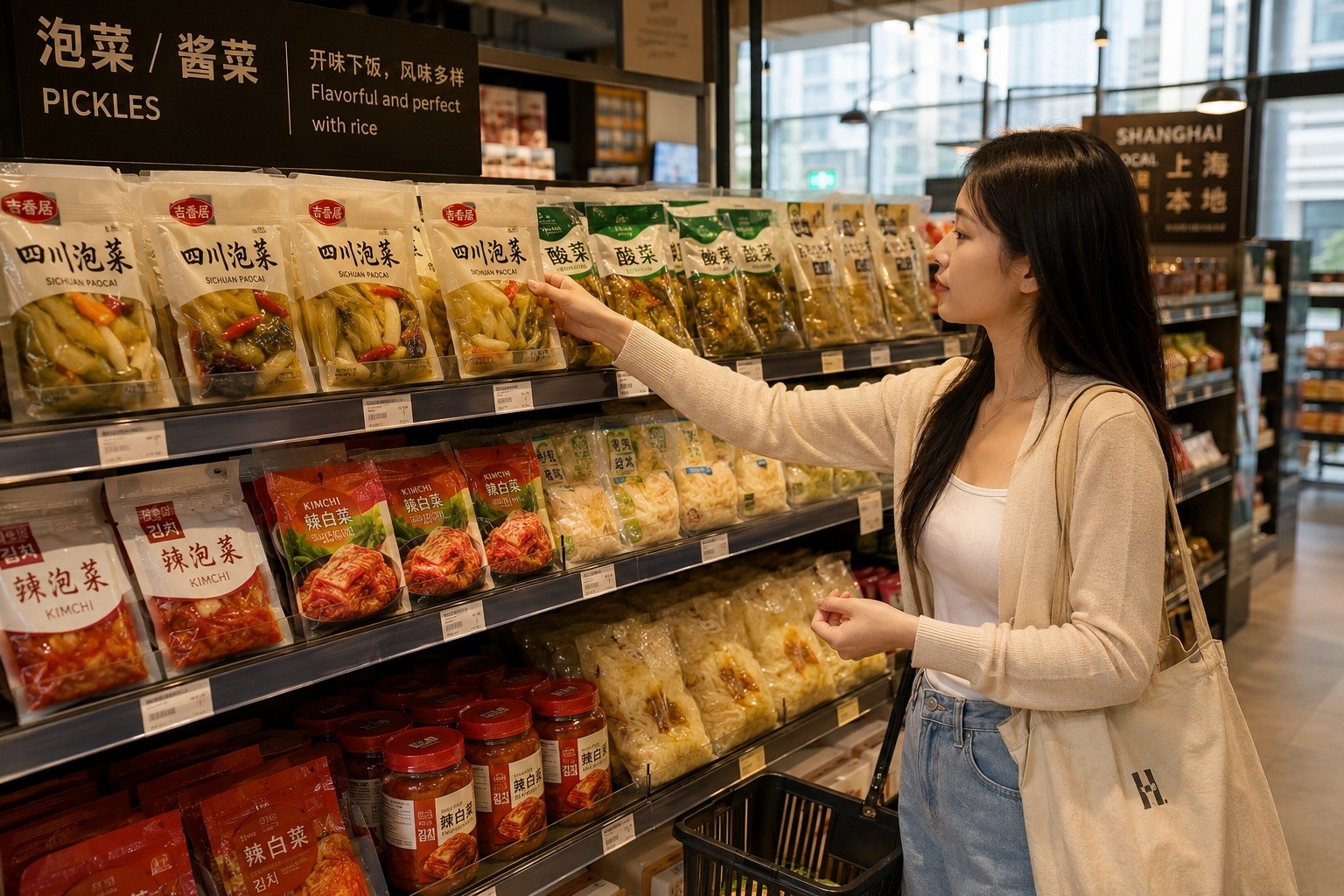
On a recent Saturday afternoon in Shanghai, 28-year-old marketing manager Li Wei tossed a vacuum-sealed bag of Sichuan pickled radish into her shopping cart at a city-center supermarket. Next to it sat jars of kimchi from Korea and sauerkraut from Germany. But the pickles she grabbed had a story: a small-batch brand from her hometown in Sichuan, now sold in 200 stores across Shanghai. “They taste like my grandmother’s,” she said. “And they don’t have all the artificial stuff.”
The Quiet Comeback of a Traditional Staple
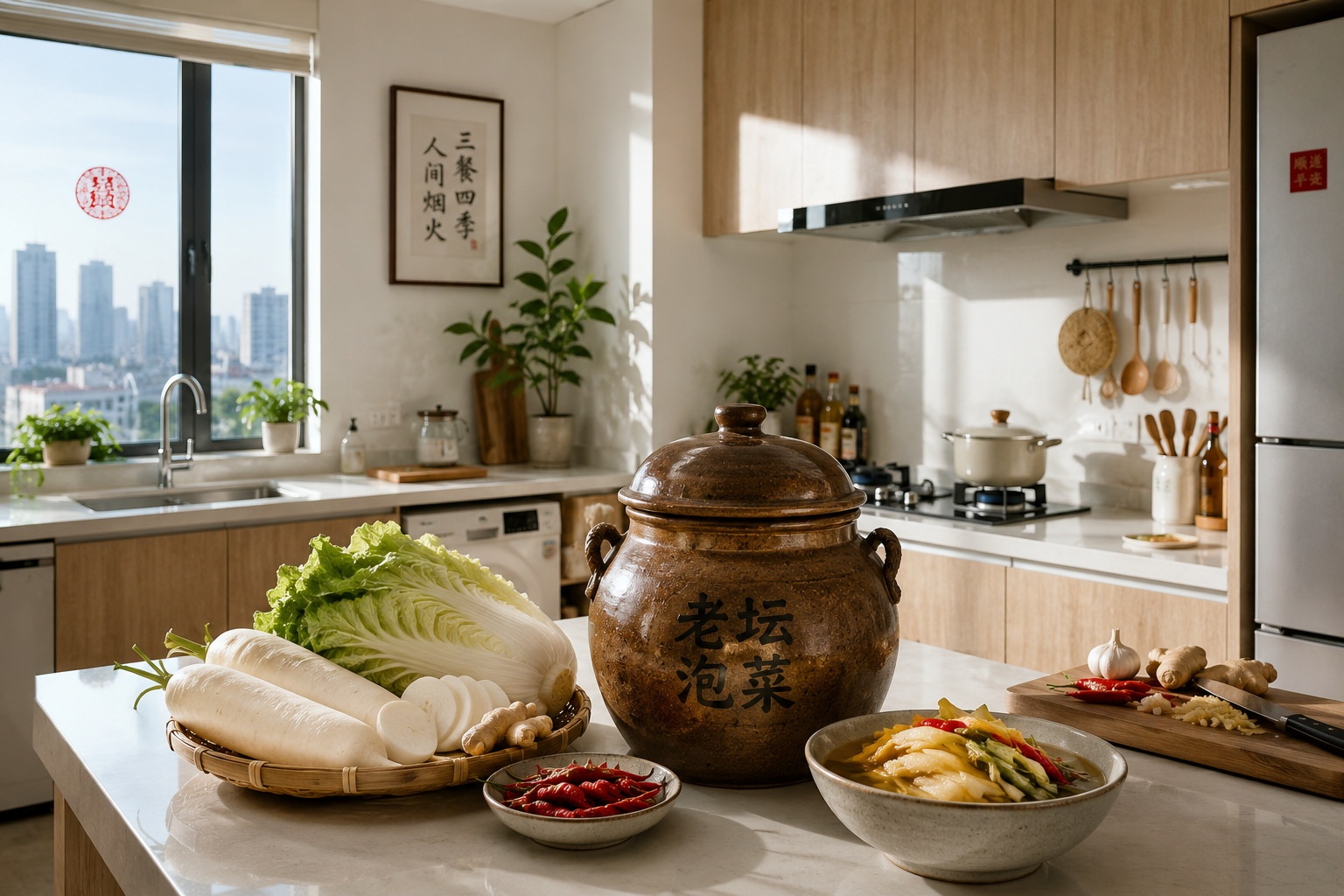
Sichuan pickles—paocai—have been part of Chinese cuisine for centuries. Traditionally, every rural household in Sichuan kept a clay jar of brine, adding vegetables as they came into season. But as millions moved to cities, the jar often stayed behind. For years, factory-made pickles dominated the market, prioritizing shelf life over flavor. Yet in the past five years, a shift has become visible. According to a 2023 China Fermented Food Industry Report, the domestic pickled vegetable market reached ¥83.2 billion (about $11.5 billion), with premium and “artisanal” segments growing at 15% annually—three times faster than conventional products.
Part of the revival is driven by health consciousness. A 2022 survey by the China National Food Industry Association found that 62% of urban consumers under 35 now read ingredient labels carefully, and 47% actively seek products with no artificial preservatives. Traditional Sichuan pickles, naturally fermented with salt and spices, fit this demand perfectly. Unlike mass-market versions that rely on vinegar and chemical additives, authentic paocai relies on lacto-fermentation, producing probiotics and a complex flavor profile.
From Home Kitchen to Boutique Brand
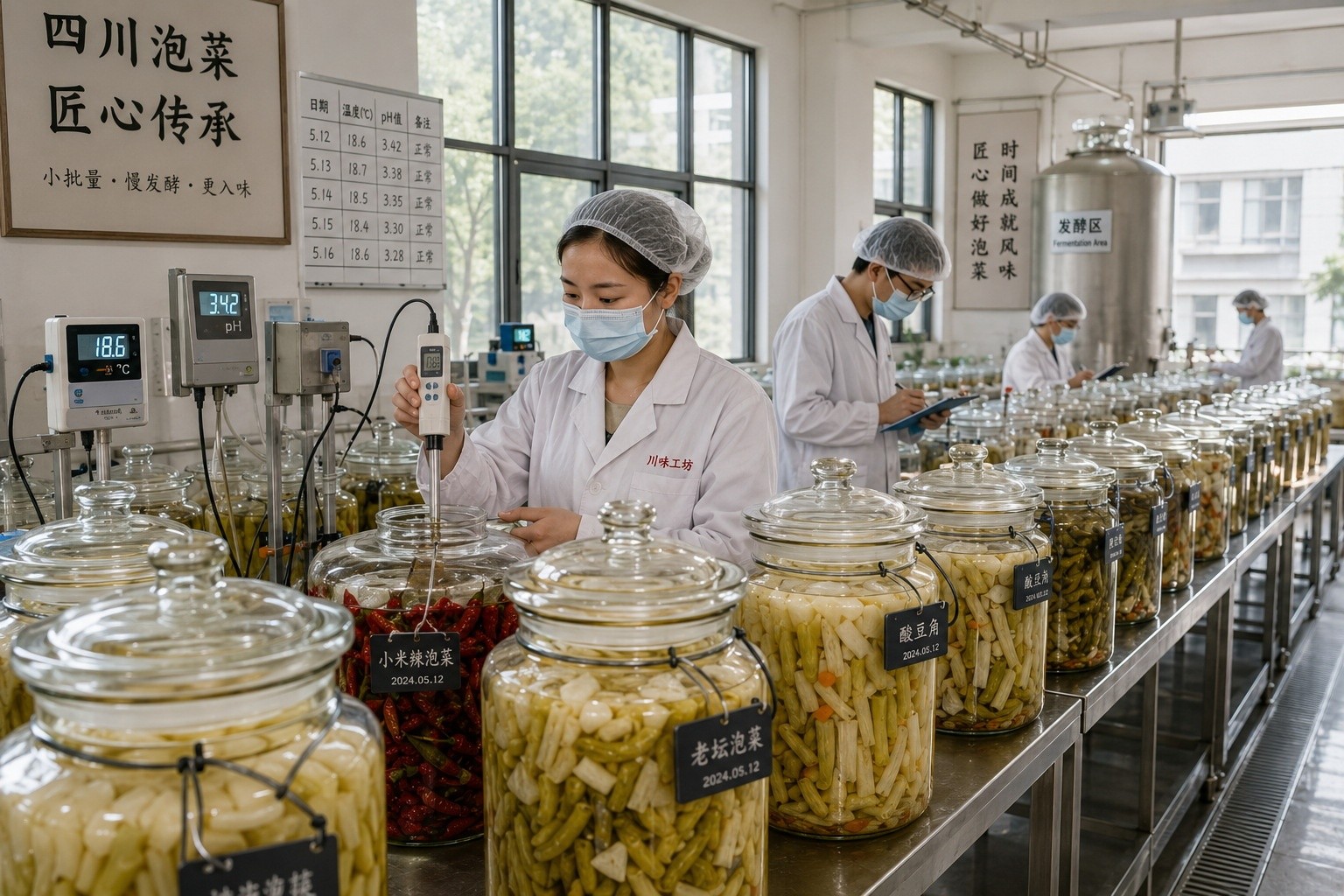
The rebirth is not just about buying old-style pickles; it’s about reinvention. In Chengdu, a new wave of startups is turning grandmother’s recipes into scalable businesses. Take “Pickle Mama” (Pao Cai Ma Ma), founded by former tech engineer Zhang Wei in 2019. Zhang spent six months living in rural Sichuan, learning traditional techniques from village elders, then adapting them for modern production. His brand now offers 12 varieties and sells through online channels like JD.com and Tmall, alongside offline partnerships with 200+ fresh-food supermarkets in tier-1 cities. The key, he says, is control: “We monitor pH, salt concentration, and temperature precisely, while keeping the traditional flavor.”
Another sign of evolution is the “pickle bar” trend. In Beijing’s trendy Sanlitun district, a restaurant called “Sour & Spicy Lab” offers a DIY pickling experience, where diners choose their vegetables from a trolley and watch the chef brine them tableside. The owner, Chef Liu, told me that 70% of his customers are under 30. “They want the story behind the food, and they want to be part of it,” he said.
Data Behind the Trend
Numbers back up the anecdotal evidence. E-commerce data from Alibaba’s Tmall platform shows that sales of “traditional Sichuan pickles” (tagged as such) grew 40% year-on-year in 2023, outpacing the overall pickle category. Meanwhile, searches for “homemade paocai” on Douyin (TikTok’s Chinese version) reached 1.2 billion views in 2023, with thousands of user-generated videos featuring urbanites proudly showing off their fermentation jars.
A 2023 report by the China Cuisine Association also found that 38% of fine-dining restaurants in top-tier cities now include at least one house-made pickle dish on their menu, up from 12% in 2018. Pickles are no longer just a side dish; they star in cocktails (pickle juice margaritas), appetizers, and even desserts (pickle-flavored ice cream has appeared in Shanghai pop-ups).
Challenges and Authenticity
Yet the revival is not without tensions. Traditionalists worry that commercial production strips away the soul of paocai. Ms. Chen, a 70-year-old pickle maker from a village near Leshan, told me: “Our brine is alive—it breathes with the family. You cannot replicate that in a factory.” Indeed, industrial versions often use high-temperature sterilization, which kills the probiotics that define live fermentation. To bridge the gap, some brands offer “live” pickles in refrigerated sections, with a short shelf life but preserved bacterial activity.
Another challenge is regulation. In 2023, China’s food safety authorities introduced stricter guidelines for fermented foods, requiring standardized pH and salt levels to prevent contamination. While this improves safety, it also raises costs for small producers. Some have failed to survive the compliance burden.
A New Chapter for an Ancient Food
Despite these hurdles, the trajectory is clear: Sichuan pickles are not dying—they are adapting. The interplay of nostalgia, health, and entrepreneurship has created a market where a traditional jar of brine can coexist with a high-tech fermentation lab. For urban Chinese like Li Wei, picking up a bag of pickles from the supermarket is more than a purchase; it’s a connection to home, to history, and to a flavor that refuses to fade.
As Chef Liu put it: “Good pickles don’t need to be saved. They just need to be understood.”
Start the discussion at forum.chinacomes.com