

The Night I Found a Second Home
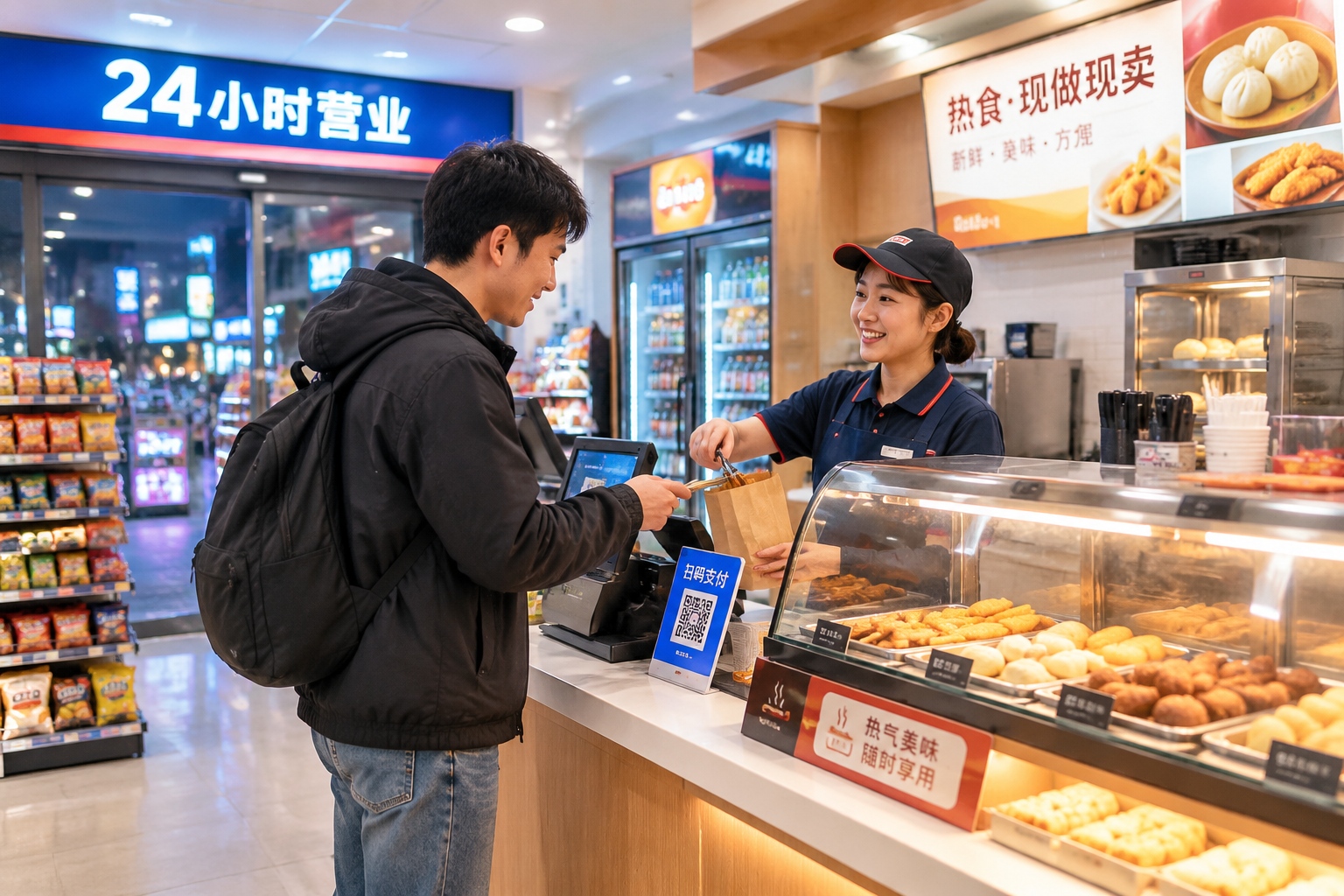
It was 11:30 PM, and the street outside had gone quiet. I walked into the FamilyMart near my apartment in Shanghai, drawn by the warm glow. Inside, a young man in a hoodie was slowly eating a bowl of oden, chopsticks hovering over the broth. A mother in slippers grabbed a carton of milk for her baby. At the counter, someone was printing a document using the store’s self-service machine.

This is not a special night. It’s a typical scene in any Chinese city. The 24-hour convenience store has become the de facto infrastructure for millions who live, work, or wander after dark. It’s not just a place to buy snacks—it’s a living room, a canteen, a safe harbor, and a public utility rolled into one.
What Makes Chinese Convenience Stores Different?
If you’ve been to a 7-Eleven in Tokyo or a CU in Seoul, you’ll recognize the layout: tidy shelves, hot food counter, drinks fridge. But Chinese convenience stores have evolved their own personality. They are everywhere—within a five-minute walk from almost any residential block in major cities. Many are open 24/7, and they offer services you might not expect: bill payment (water, electricity, gas), package collection, train ticket pickup, even tax filing in some stores.
For night owls, the hot food counter is the main attraction. Guandongzhu (oden), steamed buns, hot dogs, fried rice cakes, and an array of wrapped sandwiches and rice balls. A student told me, “When I study late at the library, I know I can get a warm meal here until dawn.” The food is cheap—a full meal can cost less than $3—and it tastes like home (or at least like a very decent factory kitchen).
The Night Workers’ Sanctuary
After midnight, the store’s clientele shifts. Taxi drivers take a break with a cup of instant noodles. Security guards grab a rice ball before their next patrol. Delivery riders stop to charge their phones at the public power bank station. The store becomes a silent hub for the city’s nocturnal economy.
I once chatted with a security guard named Mr. Chen who works at a nearby office building. He comes to the 7-Eleven around 2 AM every day. “My family lives in another province,” he said. “The store makes me feel less alone. The staff recognize me; they know my usual order—green tea and a pork bun.”
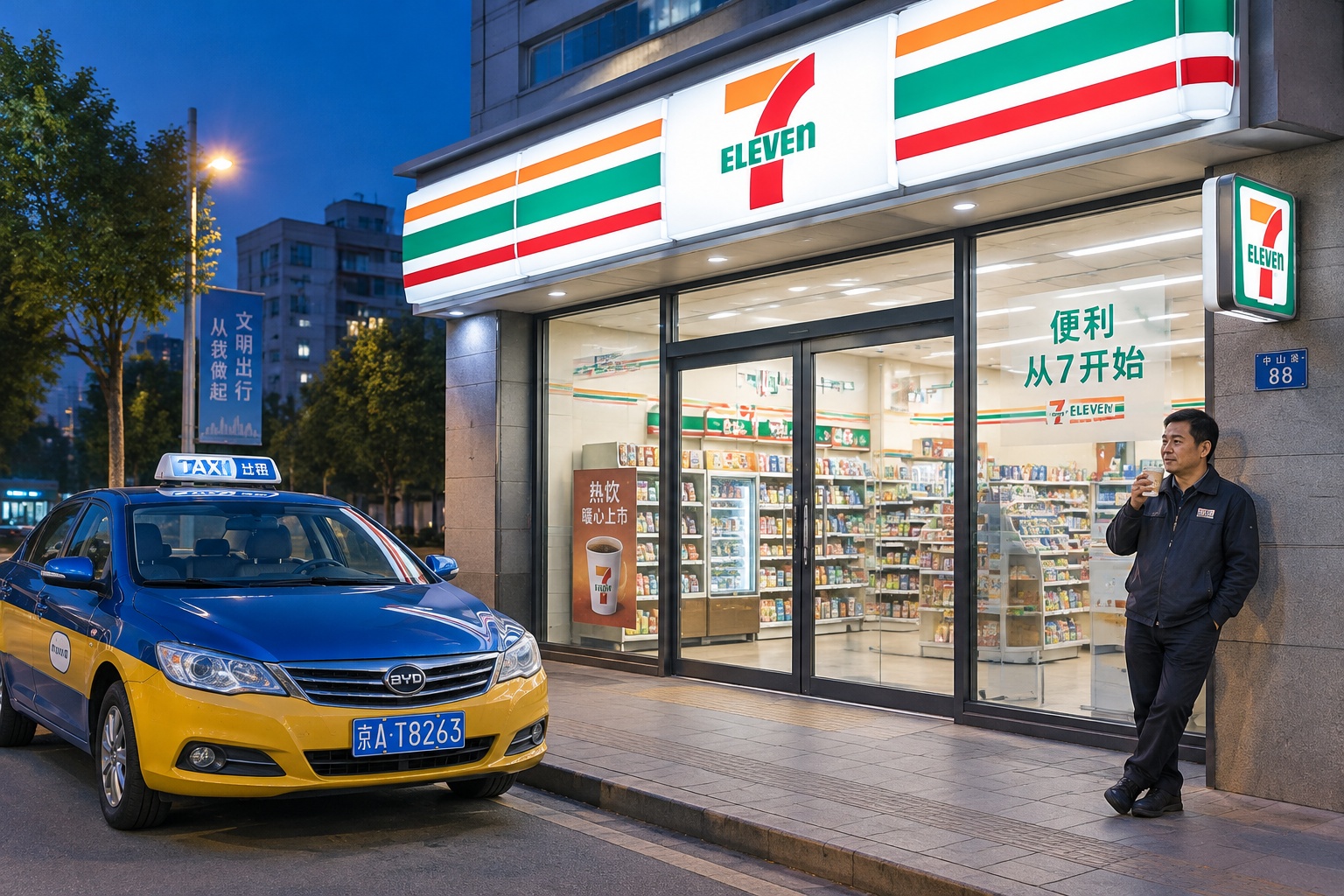
This sense of familiarity is crucial. In a country where many people have moved to cities for work, convenience stores offer a small but consistent comfort. They are open when everything else is closed, and they never judge you for buying beer at 3 AM.
Why Did They Thrive in China?
The rise of 24-hour convenience stores in China is tied to urban density, long working hours, and a culture that values immediacy. Unlike in the US, where convenience stores often stay open only until 11 PM and are car-centric, Chinese stores are embedded in pedestrian-friendly neighborhoods. The real estate model helps: stores are small (50-150 square meters), so rent is manageable even in prime locations. Chains like FamilyMart, Lawson, and 7-Eleven compete fiercely, keeping prices low and innovation high.
Technology also played a role. Many stores now have self-checkout, mobile payment is ubiquitous, and you can even order delivery through apps. The store is both a physical and digital node in the city’s network.
More Than Retail
To understand the value of these stores, consider what happens when they are not there. In newer suburbs or older neighborhoods without them, residents feel a real gap. Late-night cravings go unfulfilled. Urgent needs—a phone charger, a pack of painkillers—become errands that require a taxi. The convenience store is a quiet insurance policy for the unpredictable moments of city life.
A friend of mine once forgot to pay her electricity bill on a Sunday evening. The power company’s online system was down. She walked to the Lawson across the street, handed cash to the clerk, and the bill was paid in two minutes. “I felt such relief,” she said. “This tiny shop saved my night.”
The Warm Glow in the Dark
Today, there are over 250,000 convenience stores in China, and the number grows every year. They are not glamorous. But they are essential. For the young professional finishing a late shift, the elderly insomniac taking a walk, the student fueled by caffeine and ambition, the 24-hour convenience store is a quiet promise: you are not alone, and you can always find something to eat.
On my way home lately, I’ve started to notice the lights of these stores—small beacons along the dim streets. They don’t shout for attention. They just stay on, night after night, waiting for whoever needs them.
Start the discussion at forum.chinacomes.com