

First Bite, First Lesson
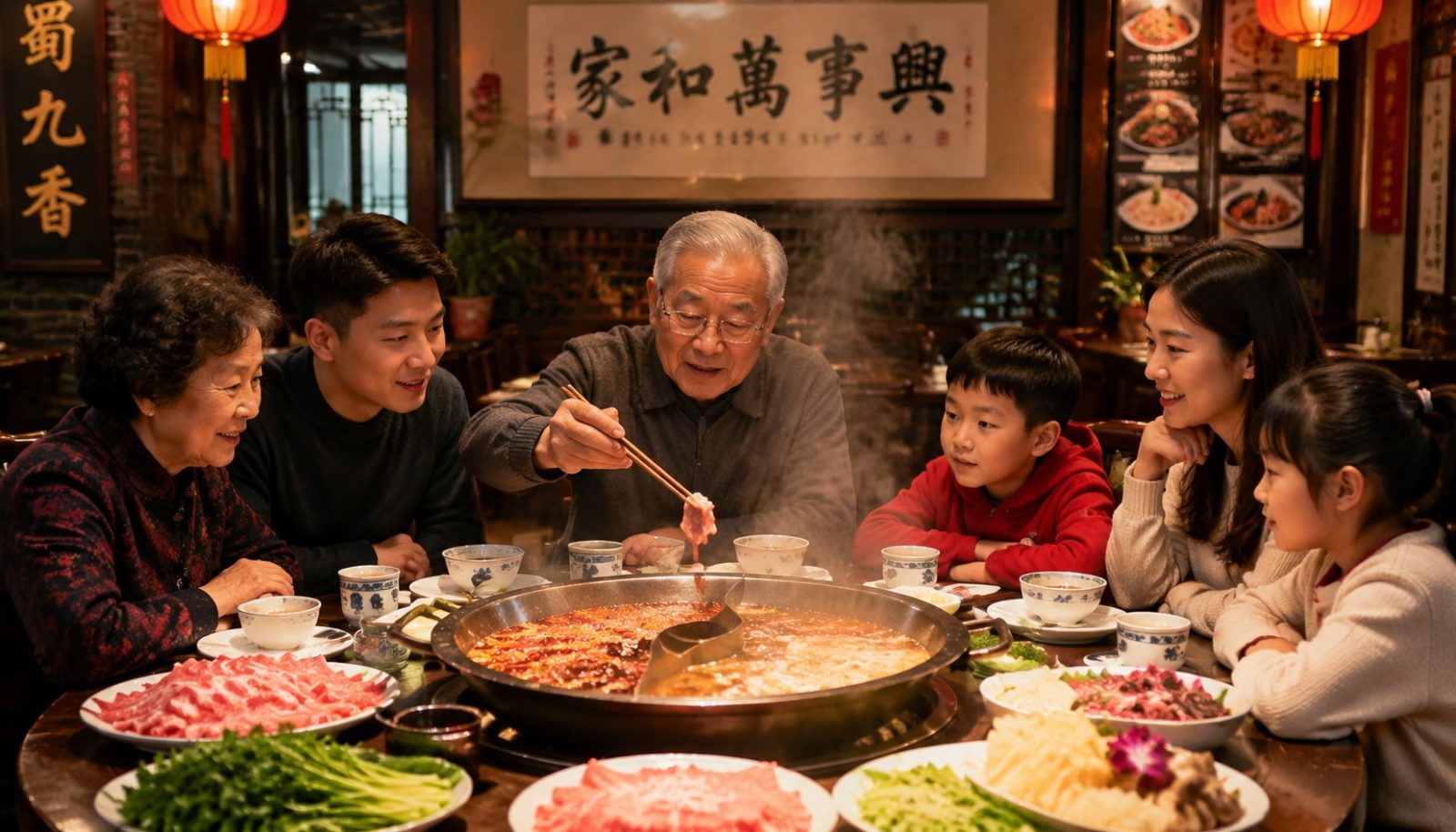
My name is Soo-jin, a 22-year-old from Seoul. When I first arrived in Beijing for my exchange program, I thought I knew China. After all, Korea and China share Confucian roots, right? But nothing prepared me for the moment I sat down with my new Chinese friends at a hotpot restaurant. The steaming pot of bubbling broth sat in the center, surrounded by plates of raw meat, vegetables, and tofu. My stomach growled. I reached for my chopsticks, ready to grab a slice of beef—then suddenly, everyone stopped talking. My friend Li Wei gently touched my arm and whispered, “Wait. Let’s let Grandpa start first.”
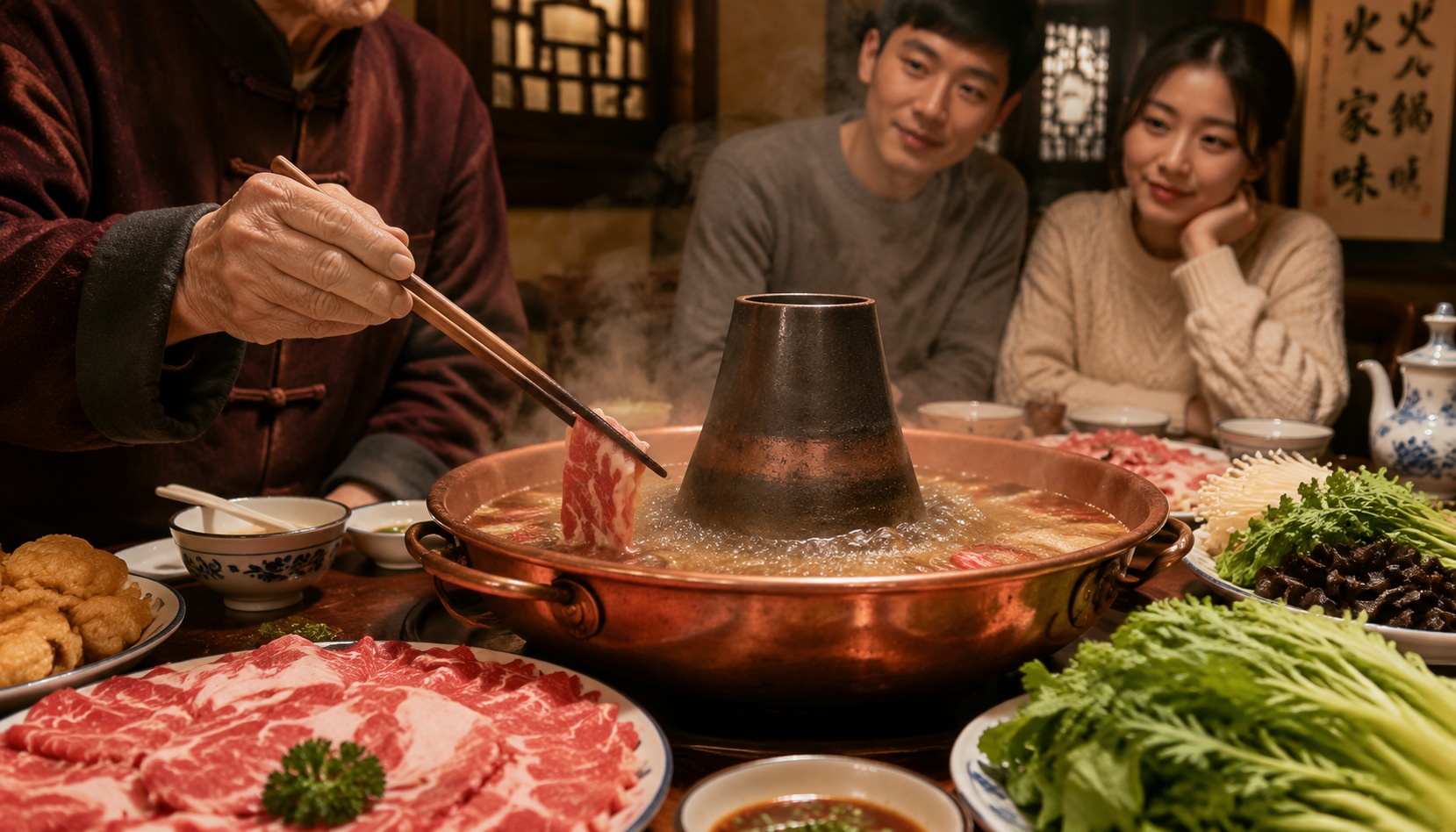
I froze. Grandpa? The eldest man at the table, Mr. Zhang, was sipping tea, seemingly in no hurry. All eyes were on him. He smiled, picked up his chopsticks, slowly dipped a slice of mutton into the boiling soup, and said, “Let’s eat.” Only then did the rest of the table begin. I was confused—and a little embarrassed.
Why Does the Order Matter?
In Korea, we also respect elders. We bow, use honorifics, and let them sit first. But at the dining table, we usually start eating together after the eldest says, “Let’s eat well.” There’s no explicit rule that the eldest must take the first bite before anyone else can move. In China, I noticed the rule is stricter: no one touches the food until the eldest has taken a bite. It’s not about hunger; it’s about hierarchy and respect.
My friend Chen explained it later: “In Chinese culture, the eldest represents the family’s roots. By letting him eat first, we show gratitude for his age, wisdom, and contributions. It’s like saying, ‘You are the pillar of this family; we honor you.’” This is rooted in Confucianism, which heavily emphasizes filial piety (孝, xiào) and social order based on age and seniority.
A Window into Chinese Family Values
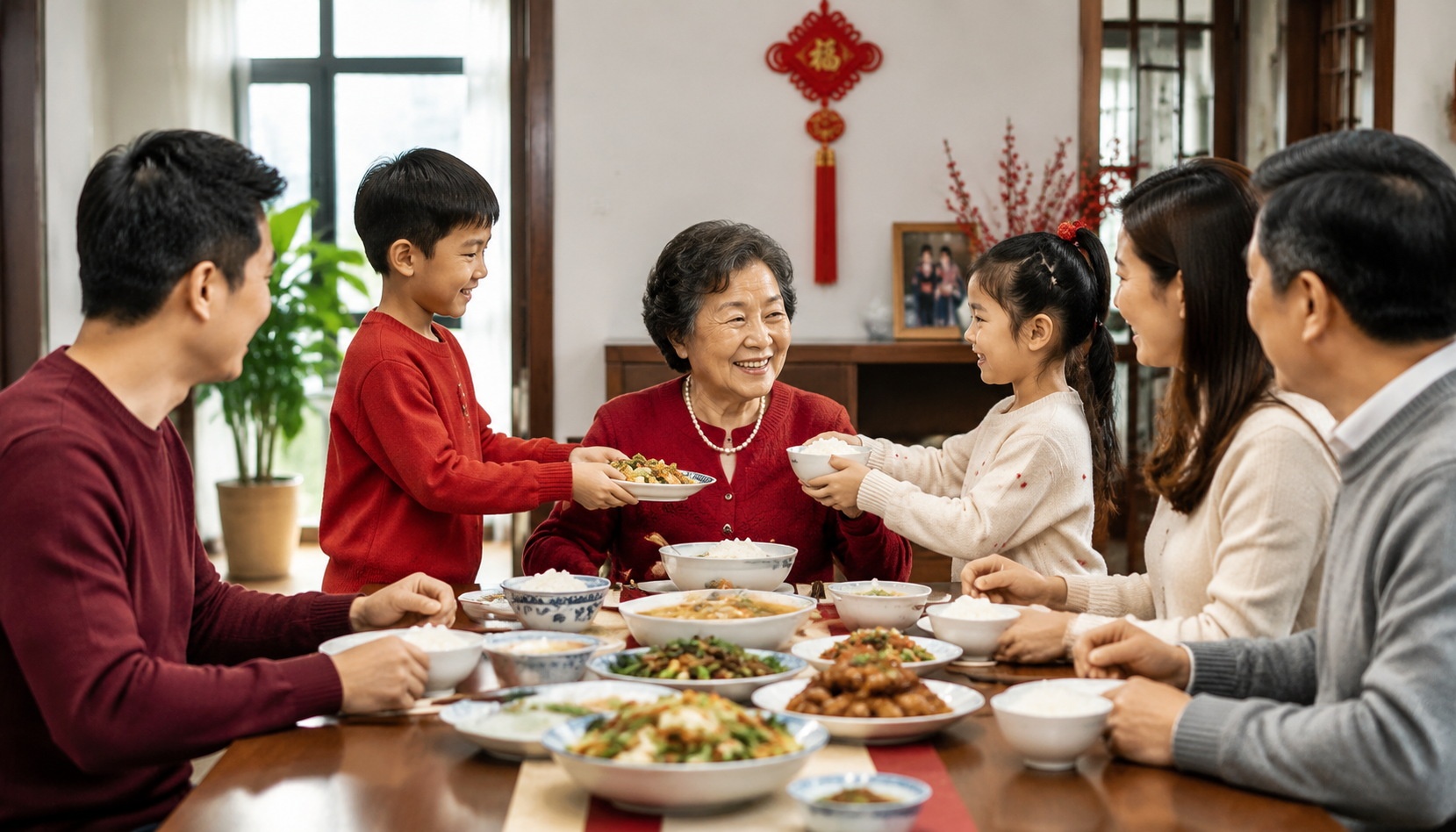
As I spent more time with my Chinese friends, I realized this rule wasn’t just for formal dinners. Even in casual meals at home, the youngest often serve tea or fill rice bowls for the elders before filling their own. During the Lunar New Year, younger family members kneel and bow to the oldest generation before receiving red envelopes (红包, hóngbāo). The dining table becomes a stage where these values are performed daily.
In my own Korean culture, we have similar traditions. We wait for the eldest to start eating (식사 시작), but it’s more of a collective signal rather than a strict waiting game. In China, the waiting period can be awkward for a foreigner. One time, I arrived late to a family dinner and everyone was sitting still, hands in laps, waiting for the grandmother to arrive. She came 15 minutes later, and only then did dishes begin to be uncovered. I learned that patience is part of respect.
Comparing East Asian Dining Etiquette
In Japan, they say “Itadakimasu” before eating to thank all beings involved in the meal. In Korea, “Jal meokkessumnida” is a polite phrase before starting. In China, the act of the eldest taking the first bite is like a living “Itadakimasu”—a physical symbol of gratitude and hierarchy. While all three cultures value respect for elders, China puts the most emphasis on the specific order of eating. This might be because China’s Confucian tradition has been less interrupted by modern social changes compared to Korea and Japan, where rapid industrialization in the 20th century somewhat diluted some rituals.
However, I also noticed that in younger, more urban Chinese circles, the rule is looser. My classmates sometimes say, “Don’t wait for me, just eat!” but when parents or grandparents are present, the old rule snaps back. It’s a flexible tradition that adapts to context.
From Confusion to Appreciation
After a year in Beijing, I no longer reach for food first. I’ve learned to watch for the eldest’s cue. This small change has taught me a larger lesson: cultural differences are not barriers but bridges to understanding. The simple act of waiting for an elder to eat first is a daily reminder of the importance of family, history, and humility. It’s not about who is hungry; it’s about who we honor.
Now, when I return to Seoul for vacation and my grandmother picks up her spoon, I find myself waiting. She looks at me, puzzled. “Soo-jin, why aren’t you eating?” I smile. “I’m waiting for you, Grandma. Please, eat first.” She doesn’t understand why, but she likes it.
Start the discussion at forum.chinacomes.com