

The Great Migration Begins
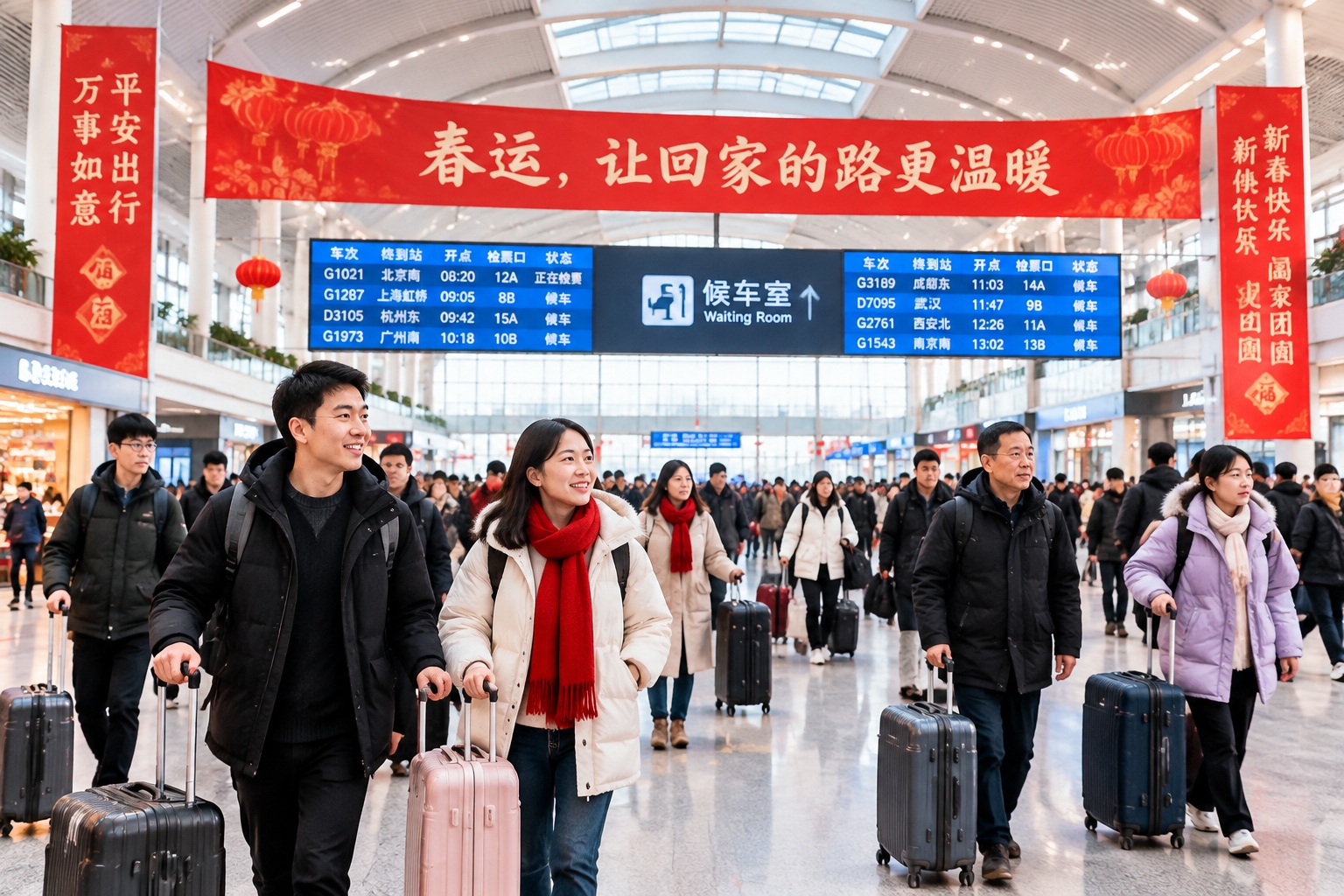
It’s late January in Guangzhou. Li Wei, a 24-year-old factory worker, scrolls through his phone at 6 a.m., waiting for the train ticket booking system to open. His fingers tremble as the countdown hits zero. Within seconds, hundreds of thousands of people are trying for the same limited seats. This is Chunyun—the Spring Festival travel rush, often called the largest human migration on Earth.

In 2024, an estimated 9 billion trips were made during the 40-day period around Chinese New Year. That’s more than the entire world population moving at once. But why do people like Li Wei endure such chaos—long queues, crowded trains, and sometimes days of travel—just to be home for a few days?
The Cultural Roots: Family as the Center of Life
In Chinese culture, family is not just an important social unit—it is almost a religion. The concept of tuan yuan (reunion) is sacred. Spring Festival, or Lunar New Year, is the one time when scattered family members are expected to come together. The tradition dates back over 3,000 years, rooted in ancestor worship and agricultural cycles. Today, despite rapid modernization, the pull remains irresistible.
For Li Wei, home means his parents, his grandmother, and the small village in Hunan where he grew up. “I can miss a promotion,” he says, “but I can’t miss the New Year’s Eve dinner. It would break my mother’s heart.” This sentiment is shared by millions. A 2023 survey found that 87% of Chinese people consider family reunion the most important aspect of Spring Festival.
Economic Migration: Leaving Home to Build a Better Future
China’s economic boom has created a massive rural-to-urban migration. Over 290 million migrant workers live in cities far from their hometowns. They work in factories, construction sites, and service jobs, sending money back home but living apart from their families. Spring Festival becomes the only chance to reconnect, not just emotionally but also with their roots.
Li Wei left his village at 18 to work in a Guangdong electronics plant. He returns home only once a year. “During the year, I’m just a number on the assembly line,” he says. “But at home, I’m a son, a grandson, a neighbor. I remember who I am.” For many, the journey home is a pilgrimage to reclaim identity.
One Man’s Journey: 36 Hours to a Hug
Let’s follow Li Wei on his trip. He managed to snag a hard-seat ticket on a high-speed train—a 6-hour ride, but the real challenge is getting to the station. He leaves his dormitory at 4 a.m., rides a shared bike to the metro, and joins a river of people flowing into Guangzhou South Railway Station. The station is a sea of red luggage and tired faces. Children cry; vendors sell instant noodles.
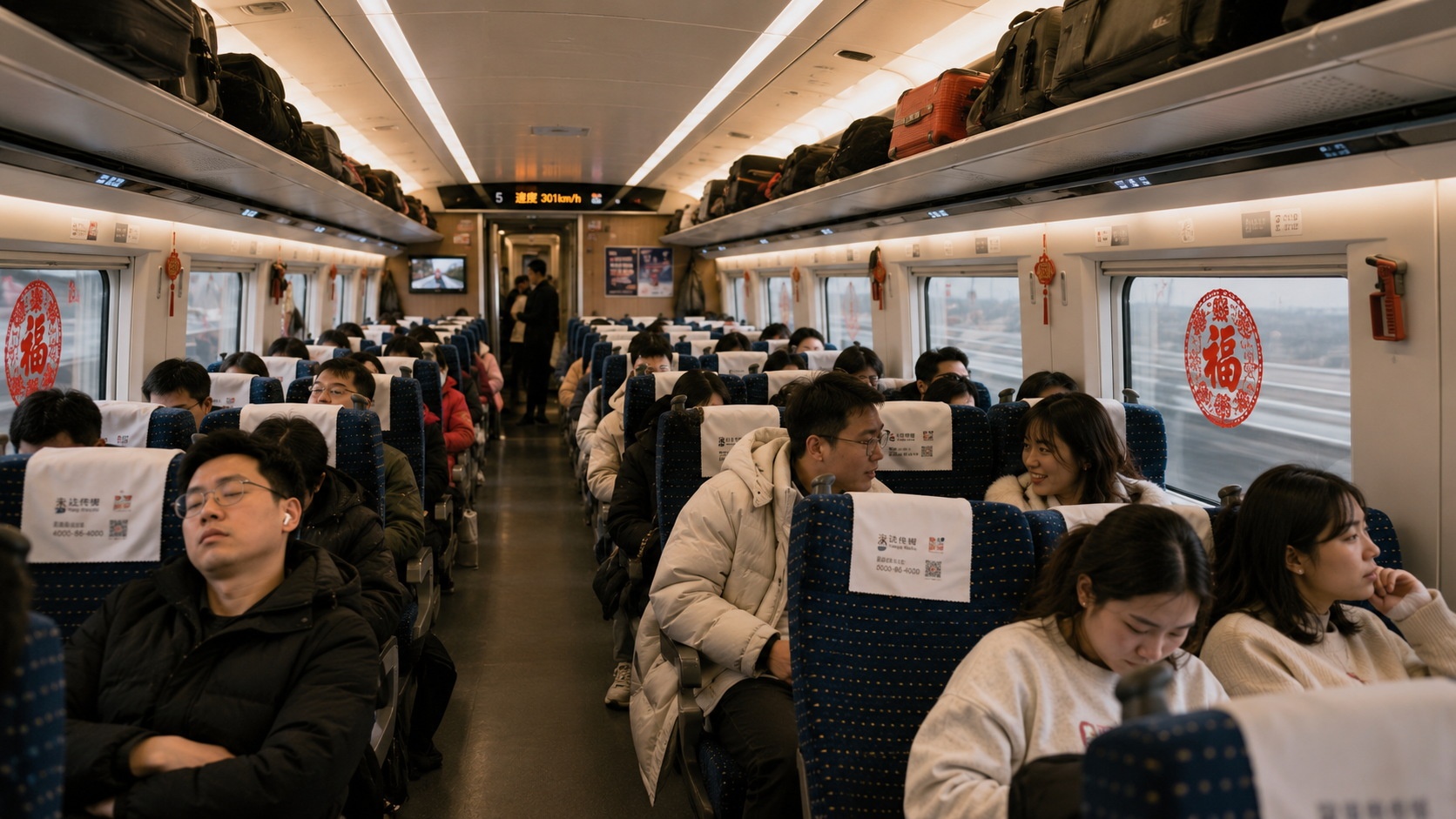
On the train, Li Wei shares a row with three other passengers. They chat, share snacks, and nap on each other’s shoulders. “Everyone is in a good mood because we’re all going home,” he says. After the train, he takes a two-hour bus to the county, then a motorbike taxi for an hour on muddy roads. Total time: 36 hours door to door.
Technology Makes It Possible—But Not Easy
China’s digital infrastructure has transformed Chunyun. Li Wei booked his ticket using a mobile app with a “ticket-snatching” feature. Facial recognition at stations speeds up entry. Real-time navigation apps help avoid traffic jams. High-speed rail now covers 42,000 kilometers—the world’s largest network—cutting travel times dramatically. Ten years ago, his trip would have taken 20 hours by slow train; now it’s 6.
Yet the demand always exceeds supply. The government uses a real-time ticketing system that handles up to 1,500 transactions per second during peak. Algorithms allocate tickets in batches to balance load. Even so, many people fail to get tickets and resort to hitchhiking, renting cars, or even riding motorcycles for hundreds of kilometers. The famous “motorbike army” from Guangdong to Guangxi has declined but still exists.
The Emotional Payoff: Why Digital Connection Isn’t Enough
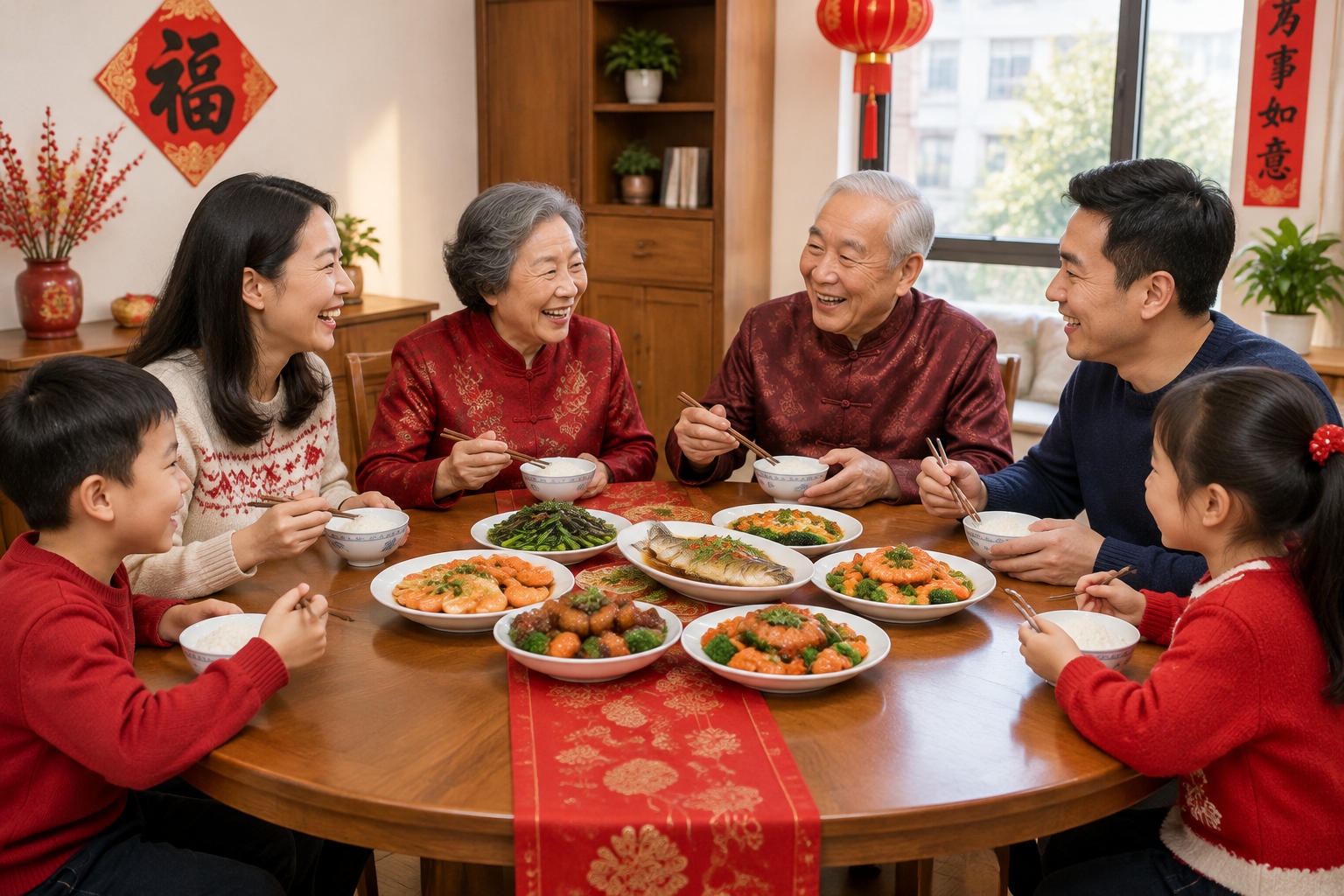
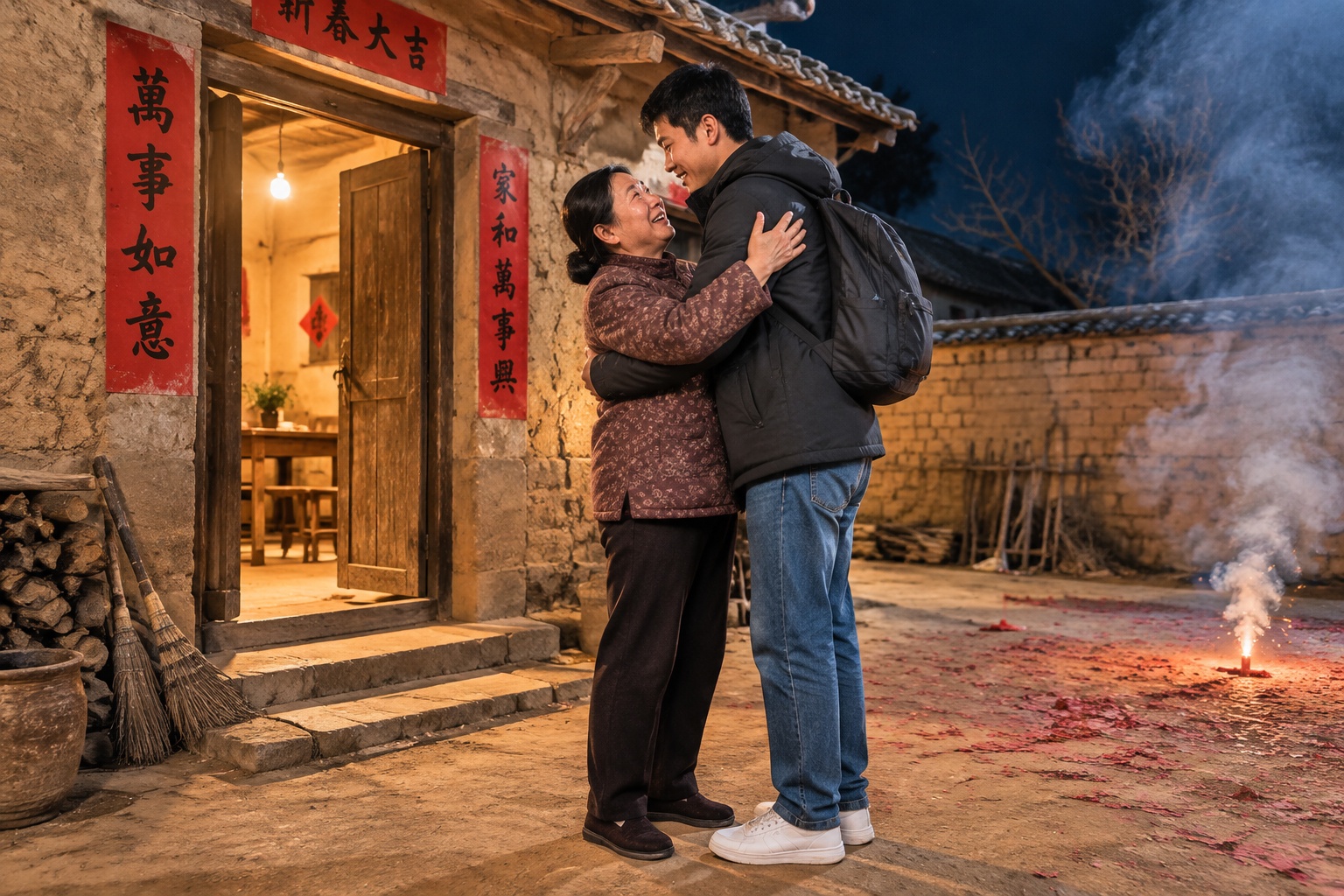
Li Wei arrives at his village late at night. His mother is waiting at the gate with a bowl of hot soup. His father lights firecrackers. The whole family stays up for a midnight snack. The next morning, the kitchen becomes a hive of activity: dumpling-making, fish steaming, and sticky rice cake frying. The New Year’s Eve dinner is a feast of 12 dishes, each with symbolic meaning.
“Video calls are fine,” Li Wei says, “but they can’t replace the smell of my mother’s cooking, the warmth of holding my grandmother’s hand, or the laughter when my uncle tells jokes. You need to be here to feel the year’s worth of love in one moment.” Neuroscience supports this: physical touch and shared meals release oxytocin and endorphins, strengthening bonds in ways screens cannot.
Conclusion: A Religion of the Heart
Chunyun is a testament to the enduring power of family in Chinese society. It is a logistical miracle, a cultural anchor, and an emotional necessity. For Li Wei and hundreds of millions like him, the journey is not just about reaching a destination—it’s about returning to the source of their identity. The struggle, the cost, the exhaustion are all offerings at the altar of home. And every year, they choose to make that sacrifice, because in China, home is not a place; it’s a religion.
Start the discussion at forum.chinacomes.com