


I Prepared for a Digital Blackout
When I boarded the G-coded high-speed train from Beijing to Shanghai, I packed a paperback. You know, just in case. In my experience, trains + tunnels + speed = no signal. Back in the UK, I can barely stream a YouTube video on the good old ‘fast’ trains without buffering every 30 seconds. So I was ready for a quiet, book-filled ride.
But then something weird happened. The train glided out of Beijing South Station, hit 300 km/h, and I casually opened Twitter. It loaded instantly. Then I tried a 4K video on YouTube. It played without a single hiccup. I actually refreshed the page three times because I didn’t believe it.
Speed Test: Train vs. Home
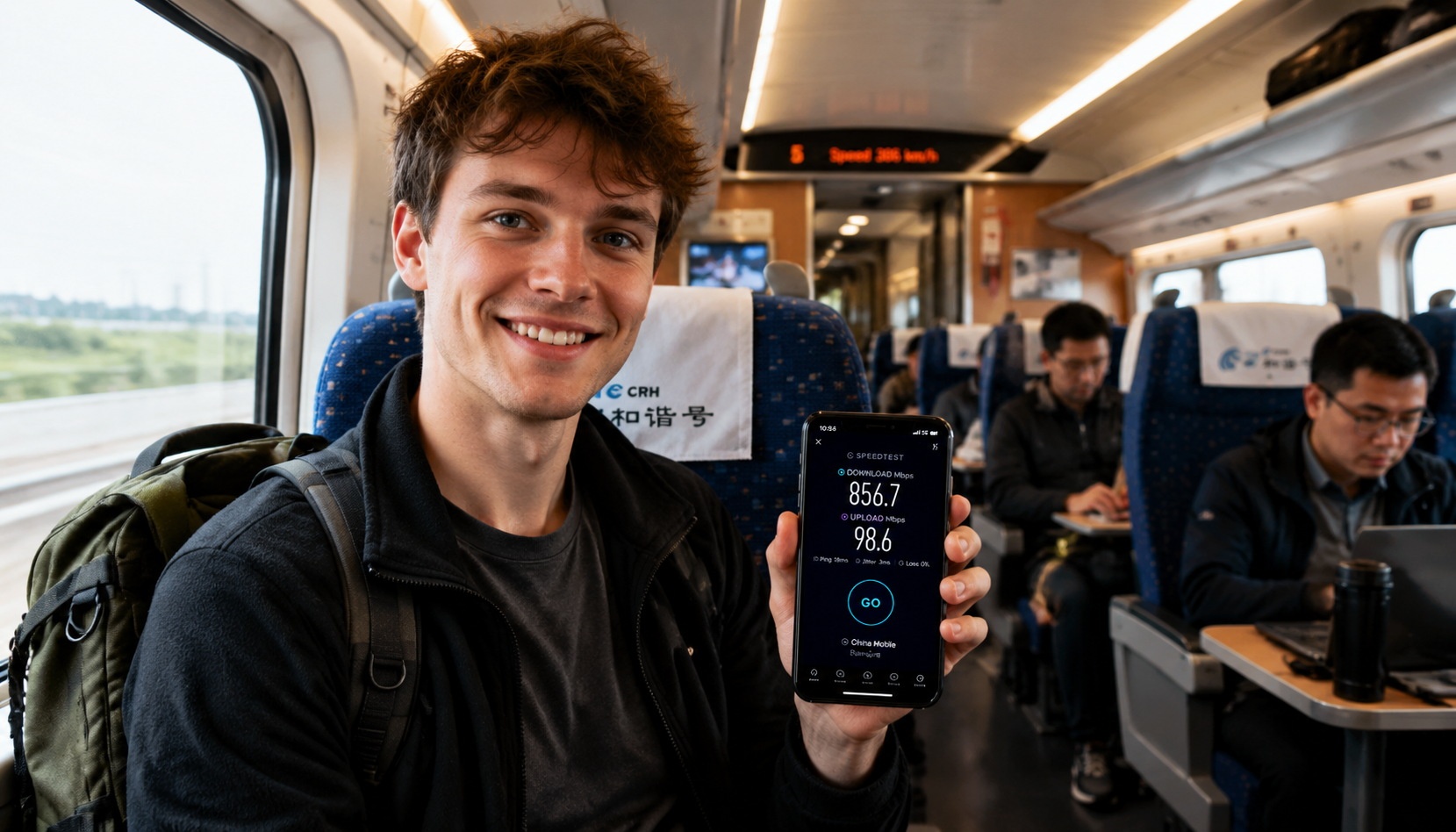
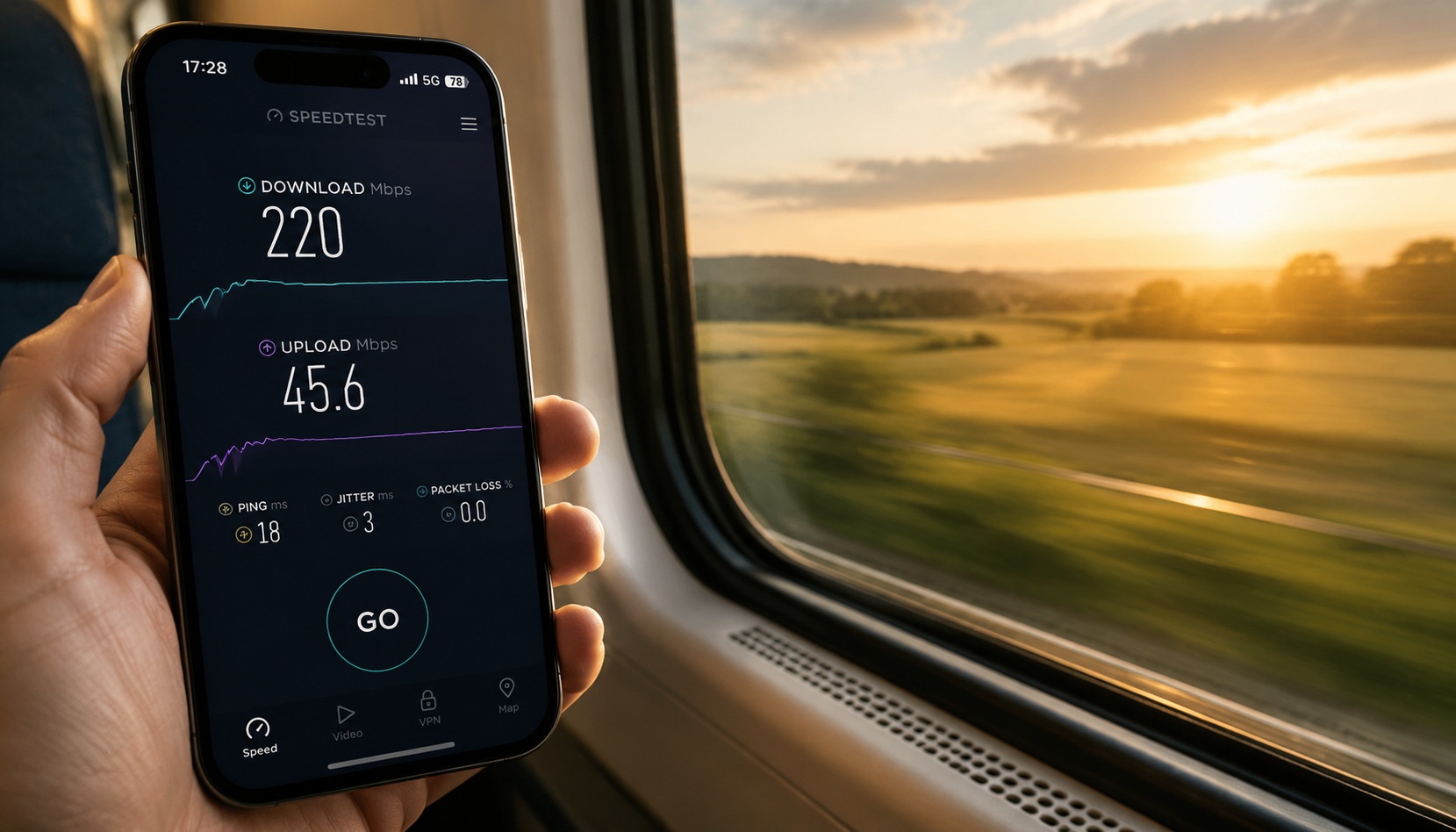
My inner geek took over. I pulled out my phone and ran a speed test. Result: 220 Mbps download, 35 Mbps upload. Latency? 18 ms. For comparison, my fibre broadband at home in London gives me 150 Mbps on a good day. The train was faster.
I texted my friend back in the UK: “I’m on a train going 350 km/h and my internet is better than yours.” He replied: “Are you on Starlink?” No, man. I’m on China’s regular 5G network, powered by trackside base stations every few hundred meters.
The secret? Chinese telecom operators have deployed dedicated 5G equipment along high-speed rail corridors, using massive MIMO antennas and beamforming to keep signals stable even at extreme speeds. The result: no buffering, no dead zones, just solid connectivity from Beijing to Shanghai.
Not Just a Gimmick: How People Actually Use It
This isn’t a marketing stunt. Look around the carriage: young professionals are on video calls, students are streaming lectures, a guy next to me is playing a competitive online game (and winning). I saw a grandma video-calling her grandkids without a single freeze.
China now has over 54,000 km of high-speed rail, and around 70% of that track has continuous 5G coverage, according to a recent report by the Ministry of Industry and Information Technology. That’s not just impressive—it’s practical. For a country where millions of people travel by train every day, reliable internet transforms the journey into productive time.
Of course, not every tunnel or remote stretch is perfect yet. Sometimes the signal dips in extremely long tunnels, but it recovers quickly. The overall experience is light-years ahead of what I’m used to.
Why This Matters Beyond the ‘Wow’ Factor
This isn’t about bragging that “China has better trains.” It’s about what consistent, fast connectivity means for daily life. In China, the line between “on the move” and “online” has almost disappeared. You can work, learn, shop, or just binge-watch dramas from a seat hurtling across the country at 300 km/h.
For a foreigner like me, it’s a reminder that the China I experience on the ground often doesn’t match the China I read about in Western headlines. The infrastructure here works—quietly, effectively, and without fanfare. And sometimes, it makes your home broadband look embarrassingly slow.
So next time you’re on a train and lose signal, just remember: somewhere in China, a guy is downloading a video game at 200 Mbps while passing through a tunnel. And yes, he’s probably British.
Start the discussion at forum.chinacomes.com