
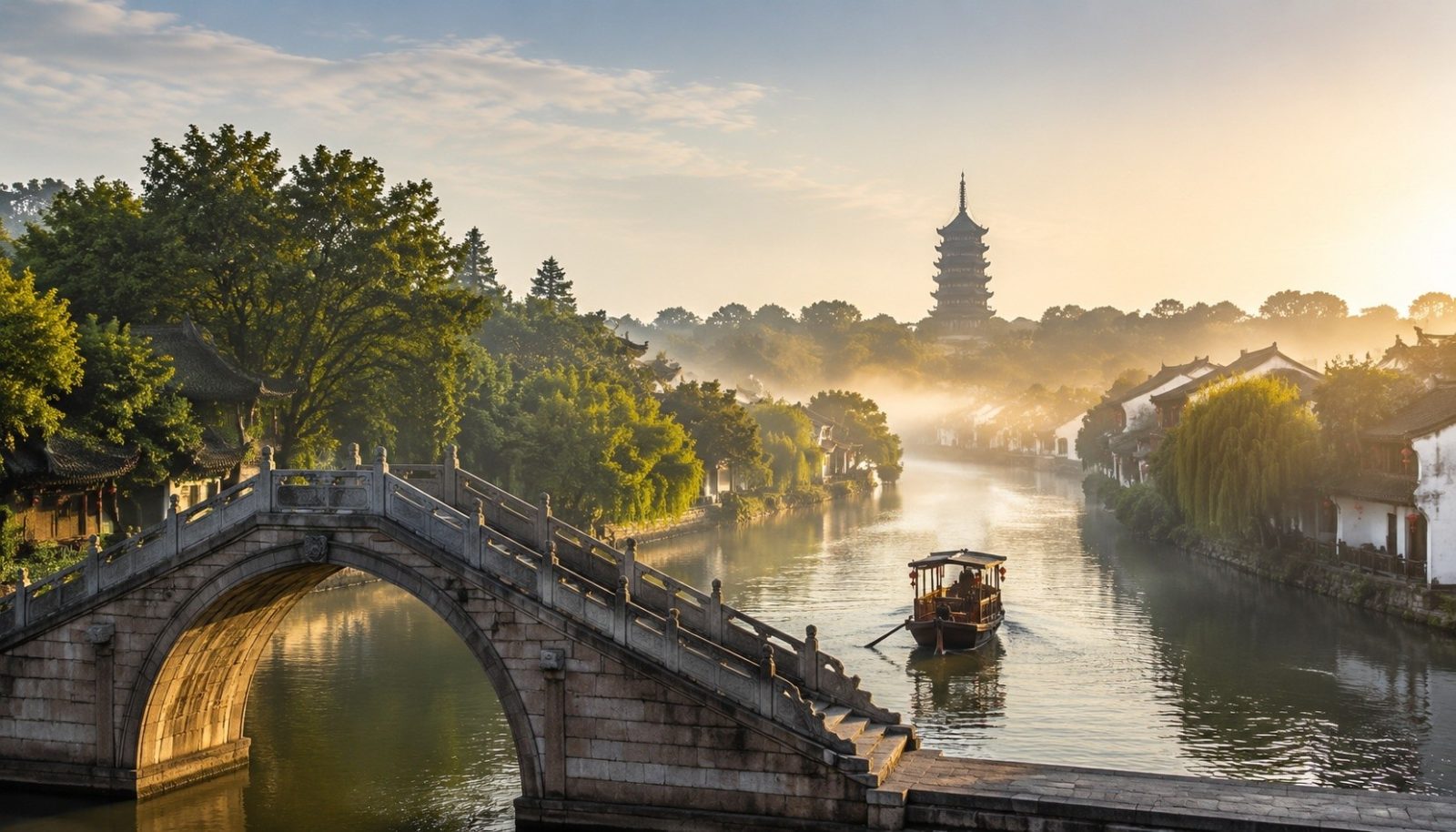

Starting Point: Tongzhou, Beijing – Where History Meets a Weekend Stroll
Misty morning at the Burning Lamp Pagoda in Tongzhou. A middle-aged man in a tracksuit performs slow tai chi on the stone platform by the canal. Behind him, the 13-story pagoda from the Ming Dynasty rises above the trees. On the water, a dragon boat glides past, carrying tourists wrapped in padded jackets against the spring chill. This is the northern terminus of the Grand Canal—a place where imperial grain barges once ended their thousand-mile journey from the rice paddies of the south.
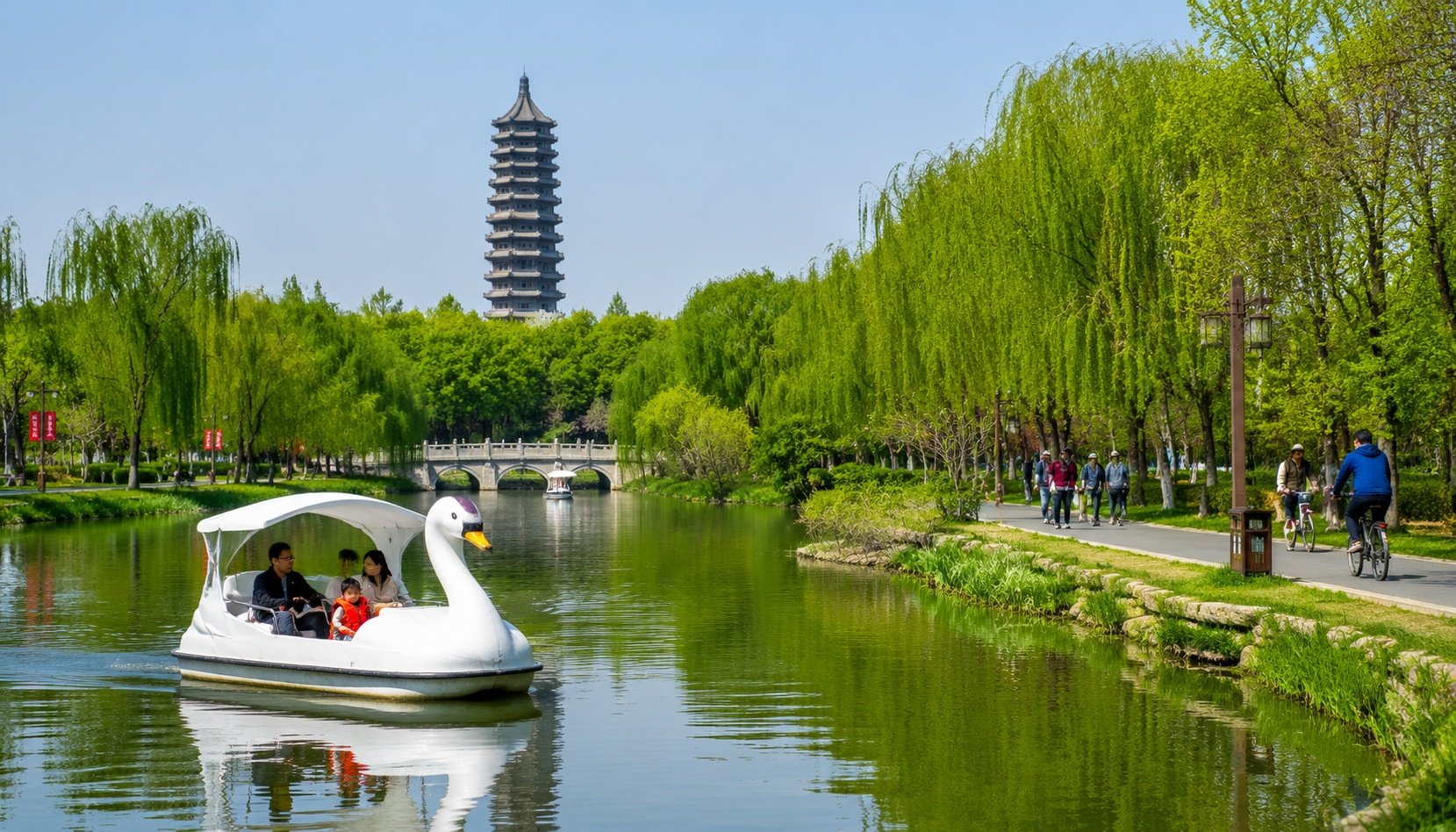
Today, the Tongzhou Canal Forest Park stretches for miles along the water. On weekends, families rent pedal boats shaped like swans, couples cycle the paved paths, and children fly kites on the grass. The canal here is wide and placid, lined with willows. It is hard to imagine that this same waterway once carried taxes and troops, silk and grain, binding the empire together.
Through Tianjin and Hebei: Industrial Ports and Hidden Life
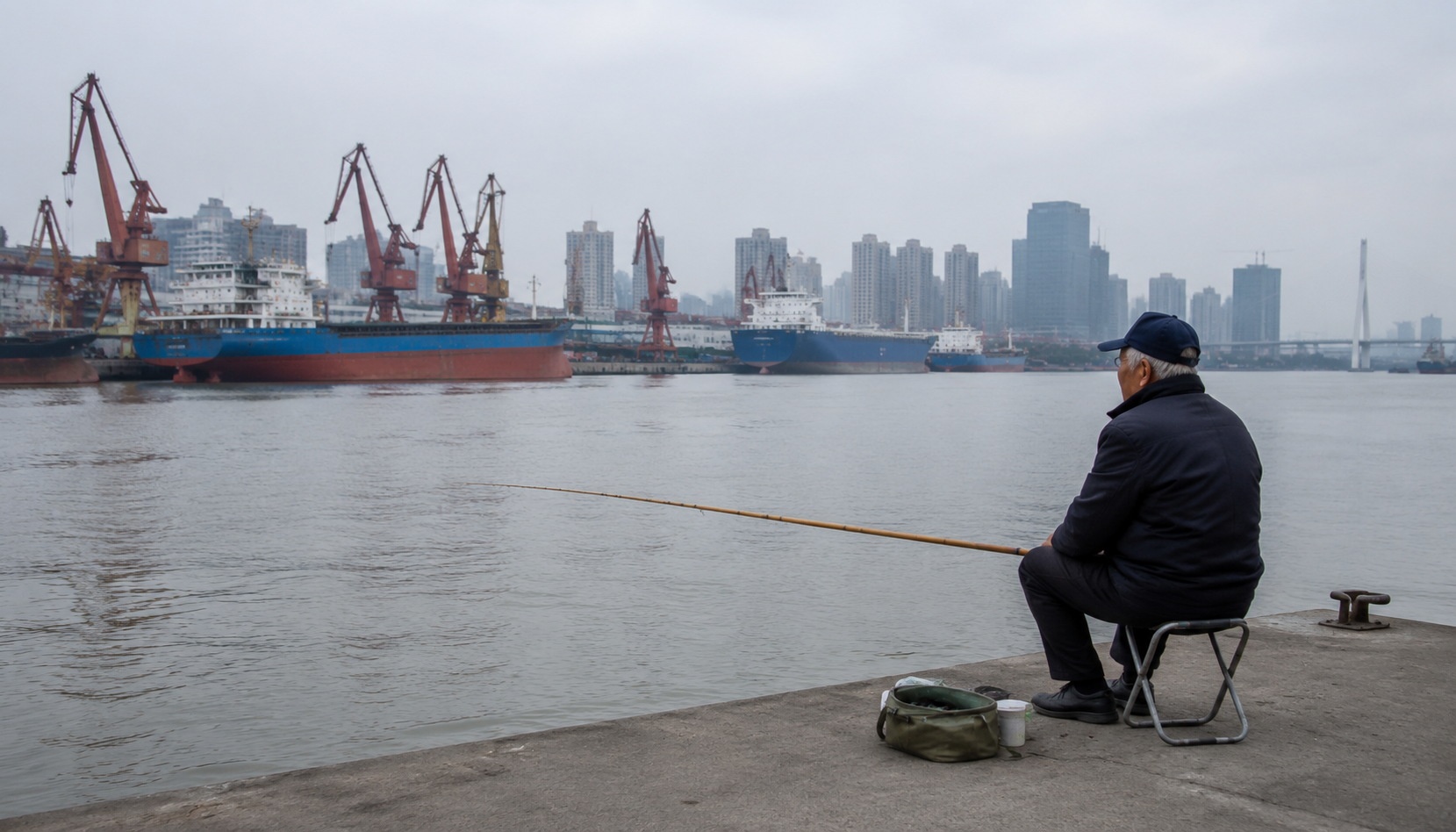
A two-hour train ride south brings you to Tianjin, where the canal meets the Haihe River. The old canal district is a maze of narrow alleys and century-old warehouses converted into art studios and coffee shops. At the Tianjin Port, one of the busiest in the world, cargo ships line up near the canal mouth. But just a kilometer inland, an elderly man sits on a folding stool by the water, fishing with a simple bamboo pole.
Further south in Hebei province, the canal narrows. In the village of Lianzhen, a stone bridge dating back to the Tang Dynasty still spans the water. Local farmers load vegetables onto small flatboats, the same way their great-grandparents did. Modernity seeps in slowly: a woman takes a photo of the bridge with her smartphone, then pedals away on an electric scooter.
Shandong: The Economic Engine – Jining’s Billion-Ton Port
Jining, in Shandong Province, is where the canal regains its commercial roar. Its port handles over a billion tons of cargo annually. Coal from Inner Mongolia, steel from Hebei, grain from the Northeast—all transferred here onto barges that follow the canal south. At dawn, the dock is a symphony of crane beeps, diesel engines, and shouting workers. A young crane operator named Wei takes a break on the deck, sipping tea from a vacuum flask. “My father was a barge captain,” he says. “Now I operate a crane. Same river, different tools.”
North of Jining, the ancient sluice gates of the Nanwang Water System still stand, a masterpiece of Ming engineering. A small museum explains how these gates managed the water level across a huge elevation drop. The engineer in charge 600 years ago, a man named Bai Ying, is still remembered by locals.
Yangzhou and Suzhou: The Cultural Heart of the Canal
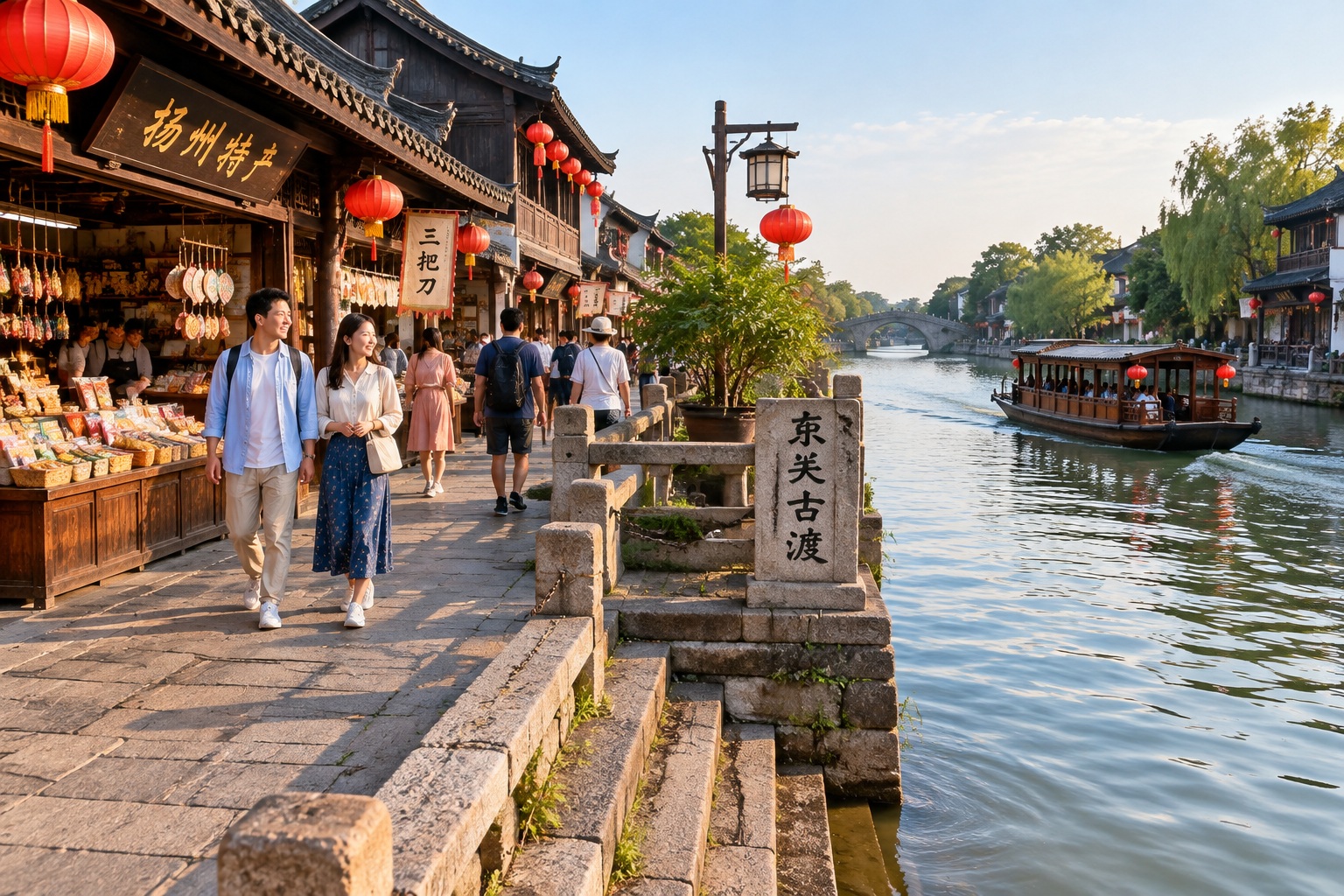
Yangzhou, on the southern edge of Jiangsu, was once the richest city on the canal. The old wharf at Dongguan Street is now a pedestrian promenade lined with shops selling preserved vegetables, silk fans, and sesame cakes. A retired history teacher named Chen leads a small tour group, pointing out the salt merchants’ mansions. “These walls are made of bricks soaked in tung oil to keep out moisture,” he explains. “A single brick cost as much as a farmer’s annual income.”
Further south, Suzhou’s Bao Bridge (Baodai Bridge) stretches 317 meters across the water. Built in the Tang Dynasty, it has 53 arches, each designed to let water pass through smoothly. On a Saturday afternoon, a wedding party stops on the bridge for photos. The bride’s red dress glows against the gray stone and green water.
Just outside Suzhou, the canal passes through water towns like Tongli and Zhouzhuang. Stone bridges arch over narrow canals; women wash vegetables on steps leading down to the water; boats with wooden roofs ferry tourists through a maze of waterways. Life here feels centuries old, yet every boatman has a smartphone, and every shop accepts QR code payments.
End Point: Hangzhou’s Gongchen Bridge
After more than 1,700 kilometers, the Grand Canal ends in Hangzhou, at the Gongchen Bridge. The bridge itself, built in the Qing Dynasty, is a high stone arch that frames a perfect view of the canal fading into the distance. Below, on the waterside pedestrian street, musicians play guzheng (zither), old men play chess, and young couples share an ice cream beside the canal.
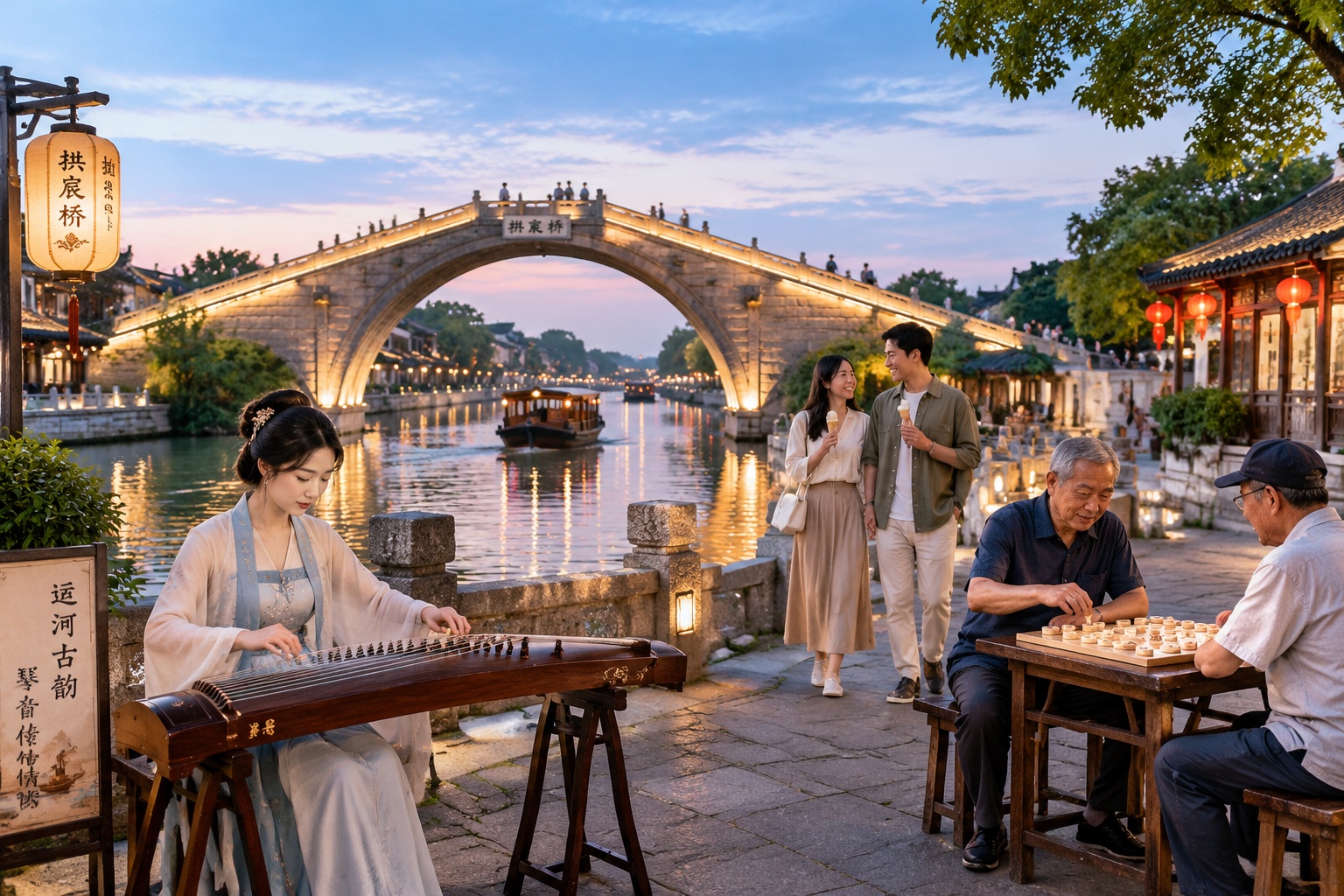
The canal ends, but the water continues – into West Lake, into the Qiantang River, and ultimately into the sea. A 2,500-year journey that once served emperors now serves ordinary people: commuters, tourists, fishermen, artists, dreamers. The Grand Canal is not a museum piece. It is still being lived.
Start the discussion at forum.chinacomes.com