
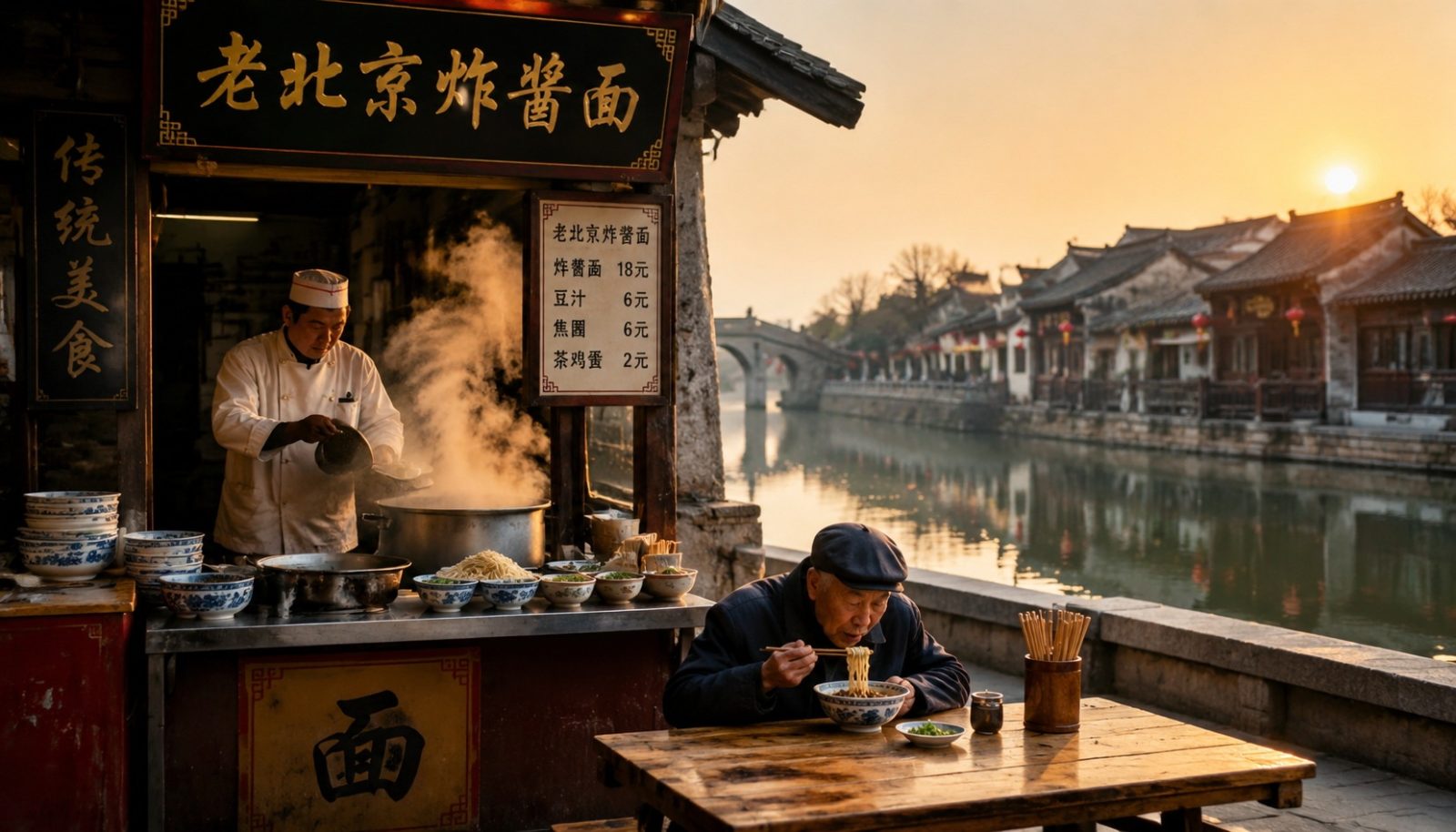

The Noodle That Starts a Journey
On a chilly morning in Beijing, Mr. Li, a retired teacher in his 70s, orders his usual bowl of zhajiangmian at a small shop near the Houhai section of the Grand Canal. The noodles are thick, chewy, and topped with a dark, savory sauce made from fermented soybean paste and minced pork. He tells me his grandfather worked on the canal barges a century ago, and this noodle dish was the only warm meal he could afford in the northern winters. “Every bite is a memory,” Li says, carefully mixing the sauce into the strands. This is where our journey begins—not in a museum, but at a humble noodle stall, where the Grand Canal’s story is still simmering.
From Beijing to Yangzhou: A Canal of Contrasts
The Grand Canal stretches nearly 1,800 kilometers, linking five river systems. As you travel south, the food changes with the landscape. In Tianjin, locals gather at dawn for jianbing guozi, a crispy crepe filled with egg and fried dough, often eaten while walking along the canal banks. Further down in Shandong, the canal cities like Linqing are known for their steamed bread and savory sesame cakes—simple foods that fueled the boatmen who once transported grain and goods.
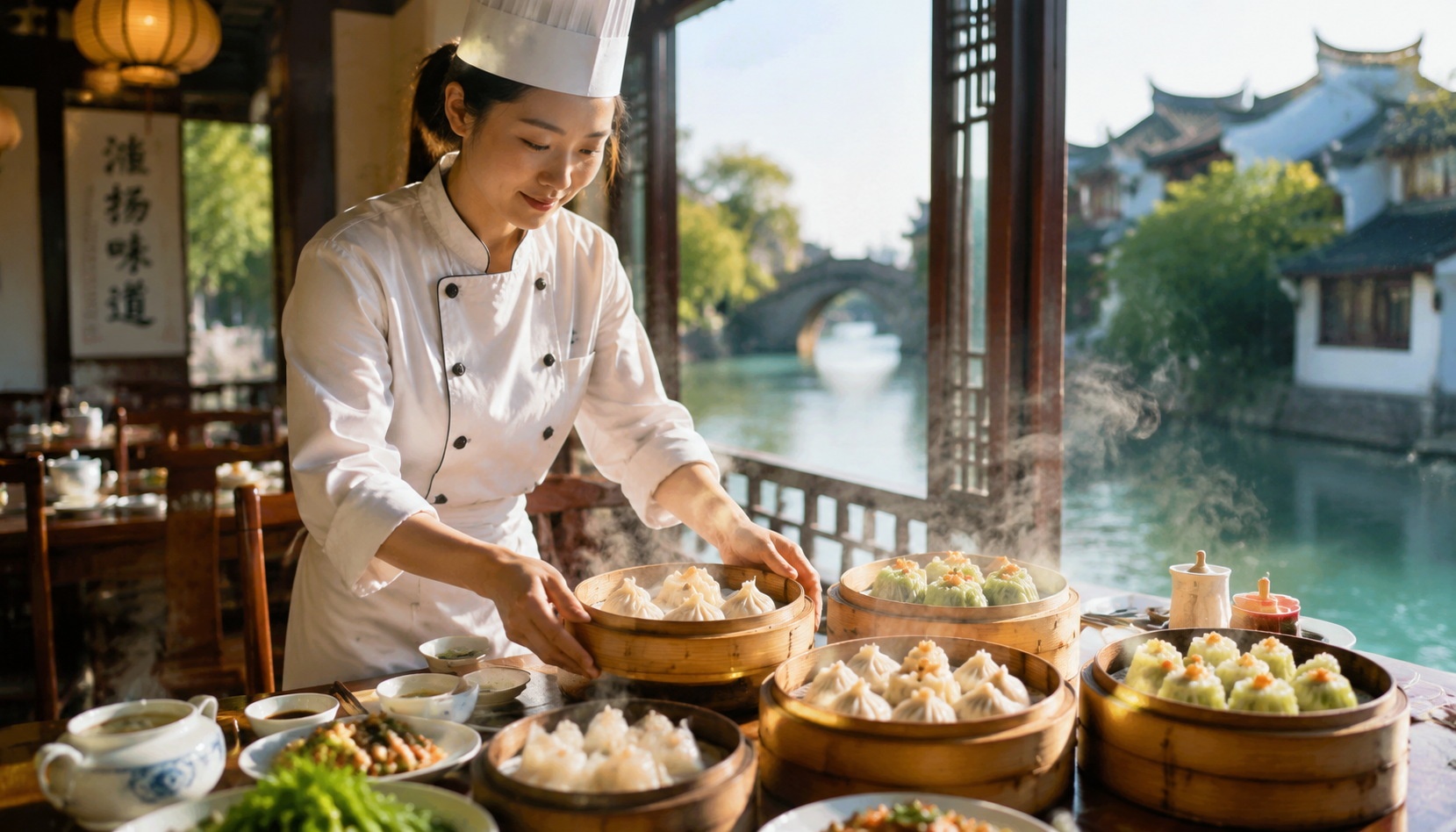
In Yangzhou, a UNESCO-recognized culinary capital, the canal’s influence is unmistakable. Here, the breakfast culture centers around “morning tea” (zao cha): bamboo steamers of delicate dumplings, translucent shrimp wontons, and fluffy steamed buns. I sat with a young chef named Wang, who trained in traditional Huaiyang cuisine. He explained that the canal brought salt merchants and their refined tastes, shaping a cuisine that balances sweetness and saltiness. “The canal is not just history,” Wang said, slicing a thousand-layered pastry with a steady hand. “It’s the reason we eat this way.”
Hangzhou: Green Tea and River Shrimp
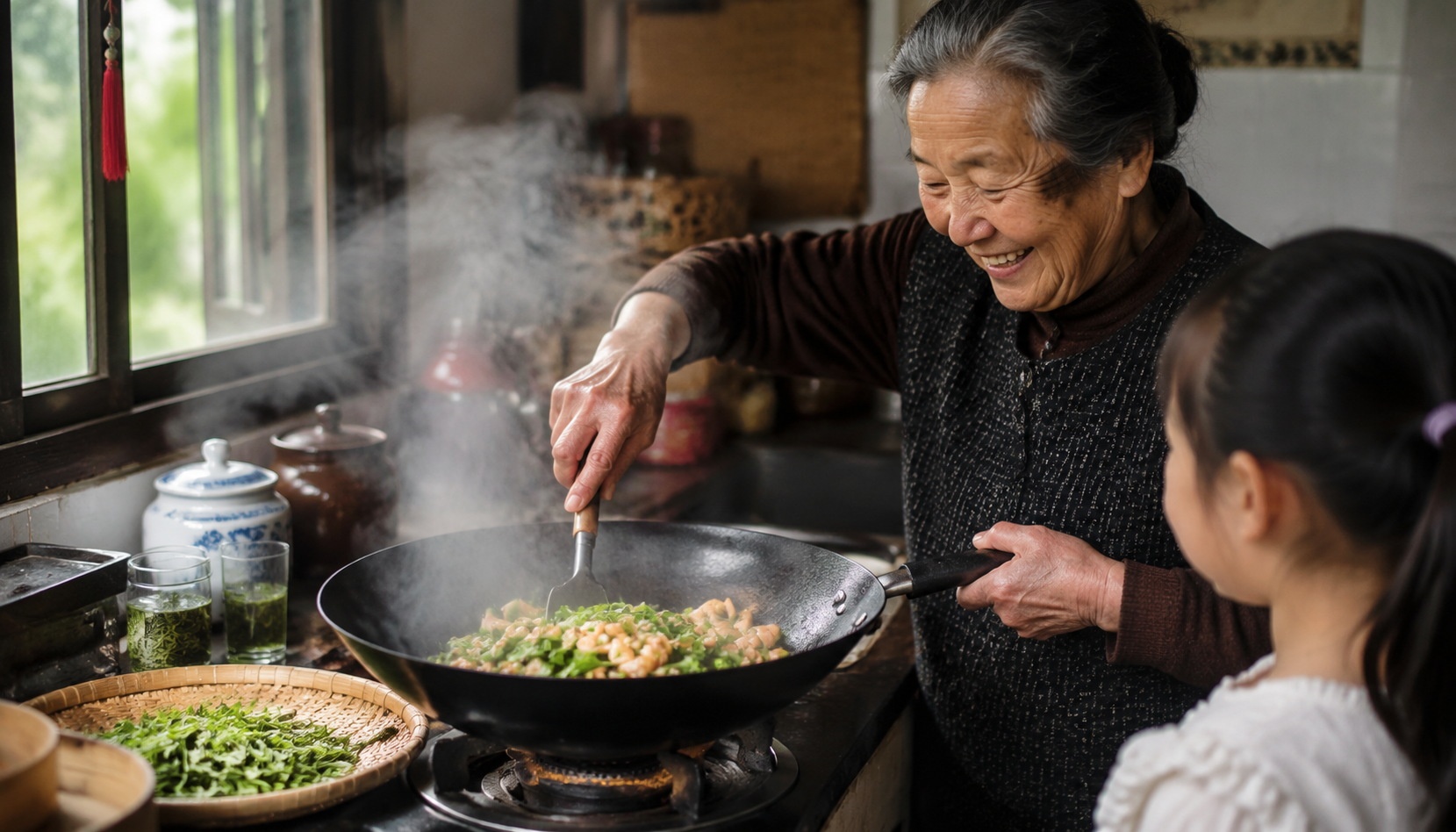
By the time you reach Hangzhou, the southern terminus, the climate is milder and the flavors more delicate. The city’s most iconic dish, Longjing shrimp (xianren chang), pairs fresh river shrimp with the famous Dragon Well tea leaves. The shrimp are pale pink, almost translucent, and the tea leaves add a subtle fragrance. At a restaurant overlooking the West Lake, a grandmother named Zhang told me she learned the recipe from her mother, who worked in a tea house along the canal in the 1940s. “Tourists think it’s fancy,” she laughed, “but to us, it’s just home cooking—a taste of the river.”
The canal also brought ingredients from afar. In Suzhou, you’ll find a love for sweet and sour dishes, a legacy of the Song dynasty court that fled south along the canal. In Wuxi, the ribs are glazed with a dark, caramel-like sauce, perfect with a bowl of rice. Each city adds its own chapter to the canal’s culinary story.
Museums That Keep the Memory Alive
To understand the deep history, visit the China Grand Canal Museum in Yangzhou. Housed in a modern building shaped like a giant water wheel, the museum traces the canal’s 2,500-year evolution. Exhibits include ancient navigation tools, replicas of imperial grain boats, and interactive maps showing how the canal connected the political north with the economic south. The museum’s restaurant even serves historical dishes recreated from ancient texts—like Song dynasty-style fried rice with lotus seeds.
Another gem is the Hangzhou Canal Culture Museum, tucked inside a restored warehouse along the water. Here, you can see porcelain shards unearthed from the canal bed, and listen to recordings of old boatmen’s songs. The museum’s top floor has a tea room where you can sip Longjing while watching cargo barges glide by—a perfect blend of past and present.
A One-Day Trip Through Three Canal Cities
Can you experience the canal’s diversity in a single day? Yes, if you plan smart. Start early in Suzhou, known as the “Venice of the East.” Walk along the Pingjiang Road, a historic street hugging the canal, and try a local breakfast of osmanthus cake and tofu pudding. At 10 a.m., take a high-speed train (just 30 minutes) to Wuxi. Stroll along the canal near the Qingming Bridge, and sample the famous Wuxi spareribs at a family-run eatery. By noon, continue to Yangzhou (another 40 minutes by train). Spend the afternoon at the Slender West Lake, then enjoy a proper Huaiyang dinner—shredded dry tofu, lion’s head meatballs, and steamed fish.
This mini-tour shows how the canal doesn’t just connect geographies—it merges cultures. A single waterway gave birth to many regional kitchens, each with its own soul.
A Living Heritage on Your Plate
The Grand Canal is not a relic. It still carries coal, sand, and containers. Along its banks, people fish, jog, and chat. And every day, millions of Chinese people eat meals that were shaped, directly or indirectly, by this ancient waterway. The next time you taste a bowl of zhajiangmian in Beijing or a sip of Longjing in Hangzhou, think of the 2,500 years of trade, migration, and innovation that brought those flavors to your table. The canal is alive—and it’s delicious.
Start the discussion at forum.chinacomes.com