

From Local Street Food to a Global Sensation
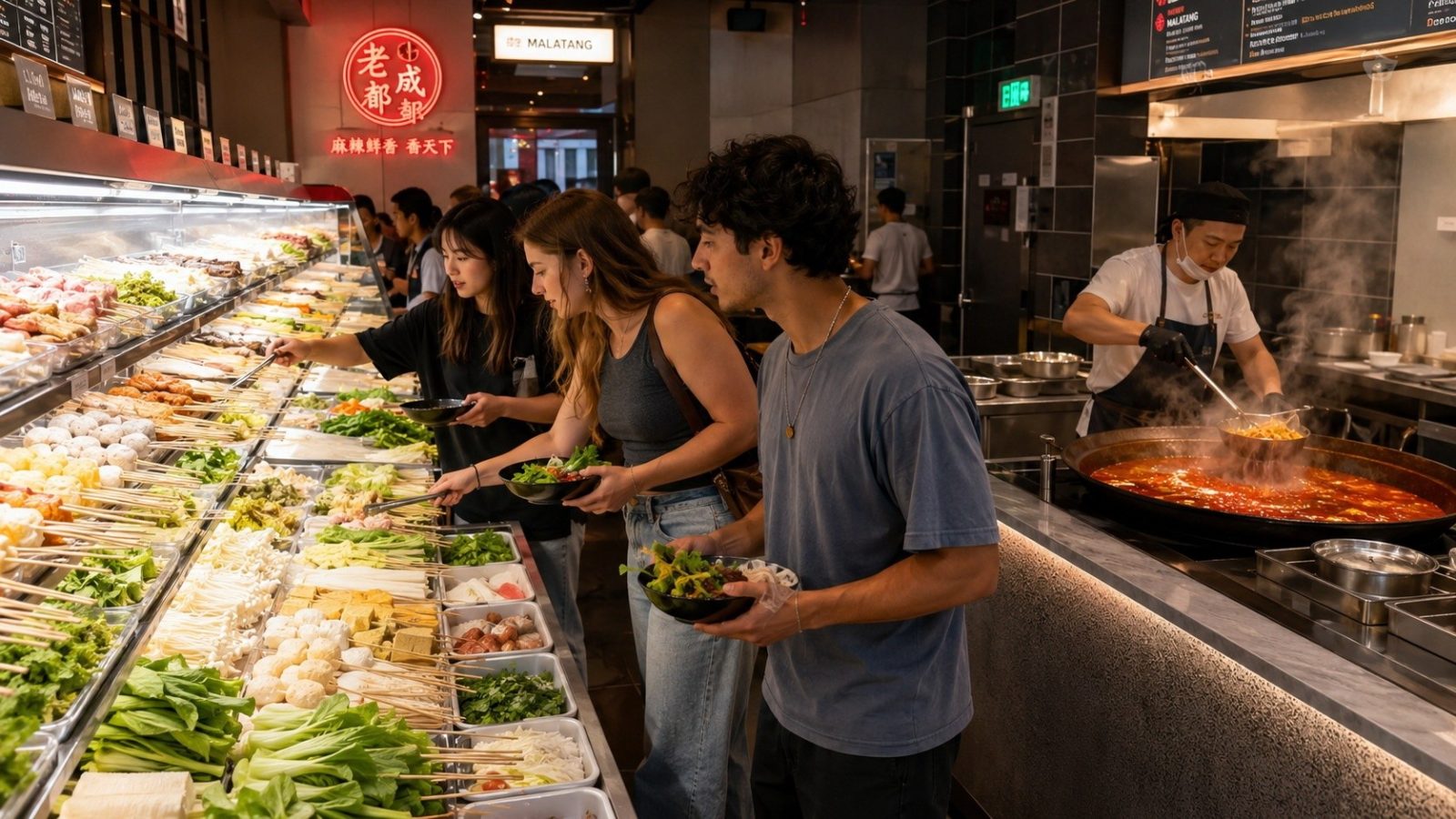
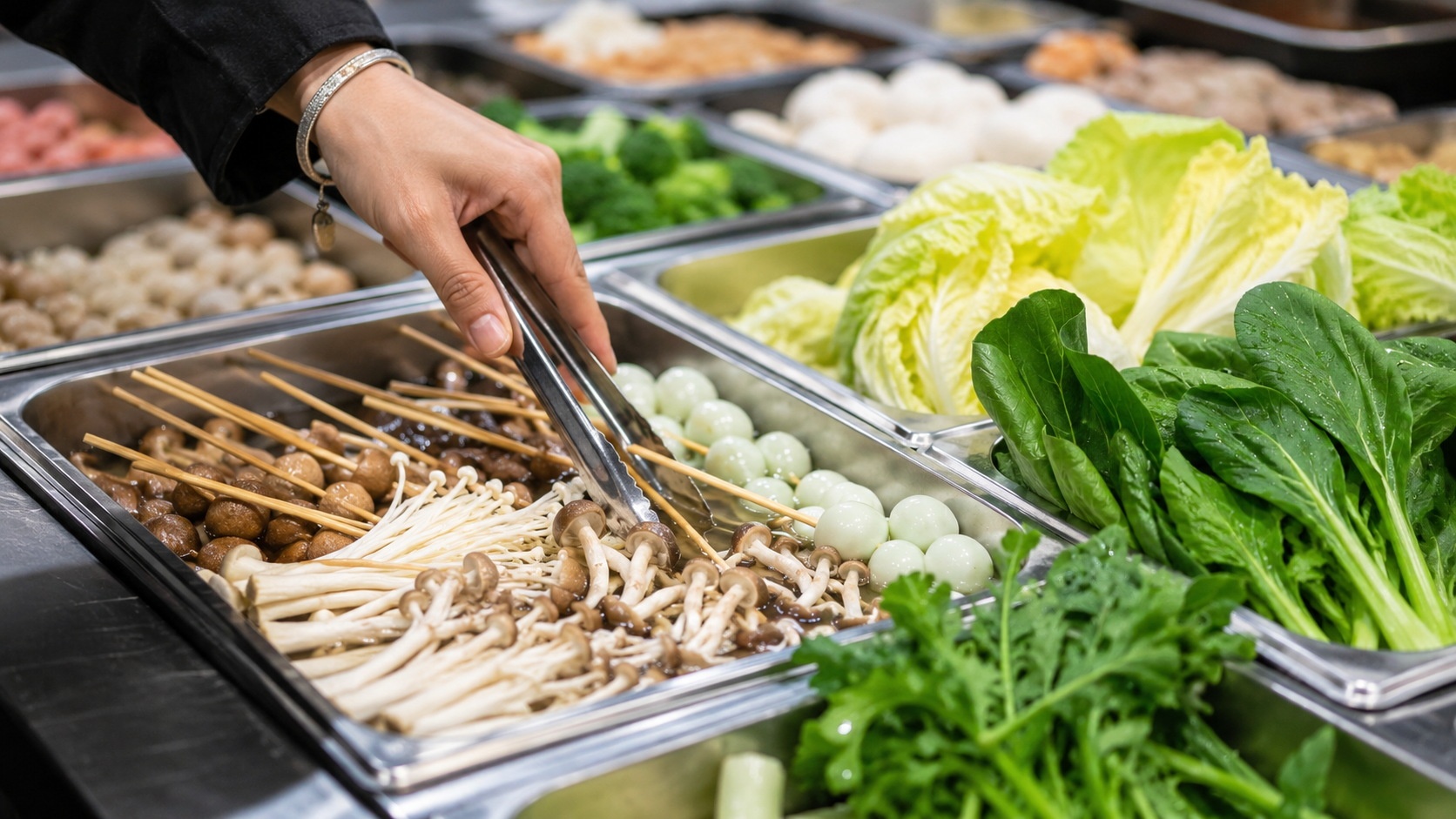
In a cramped, warmly lit shop in London’s Soho or a bustling strip mall in Flushing, Queens, the air is thick with the aroma of Sichuan peppercorns and dried chilies. A young customer approaches the counter, pointing at a metal bin filled with skewered mushrooms, leafy greens, quail eggs, and wide glass noodles. They choose their ingredients, hand them to the clerk, and watch as the cook blanches everything in a boiling pot of red broth. Within three minutes, a steaming bowl is served.
This ritual, known as Malatang (literally “spicy hot pot”), has evolved from its origins in Sichuan province into a minimalist, customizable dining trend that now spans continents. For international observers, it might seem like another wave of Chinese food globalization, similar to the spread of bubble tea or dim sum. But the mechanics behind this expansion are different. Malatang’s global footprint is not built on centuries-old recipes passed down through generations, but on a highly efficient, digitally integrated supply chain that makes consistency and affordability possible anywhere.
The ‘Cloud Kitchen’ Revolution
One of the most striking features of Malatang’s overseas expansion is its business model. Unlike traditional sit-down restaurants that require large dining rooms, waiters, and extensive menus, many Malatang outlets abroad operate as “ghost kitchens” or small-format stalls. This model was first popularized in China, where the delivery infrastructure is so robust that restaurants can thrive without foot traffic.
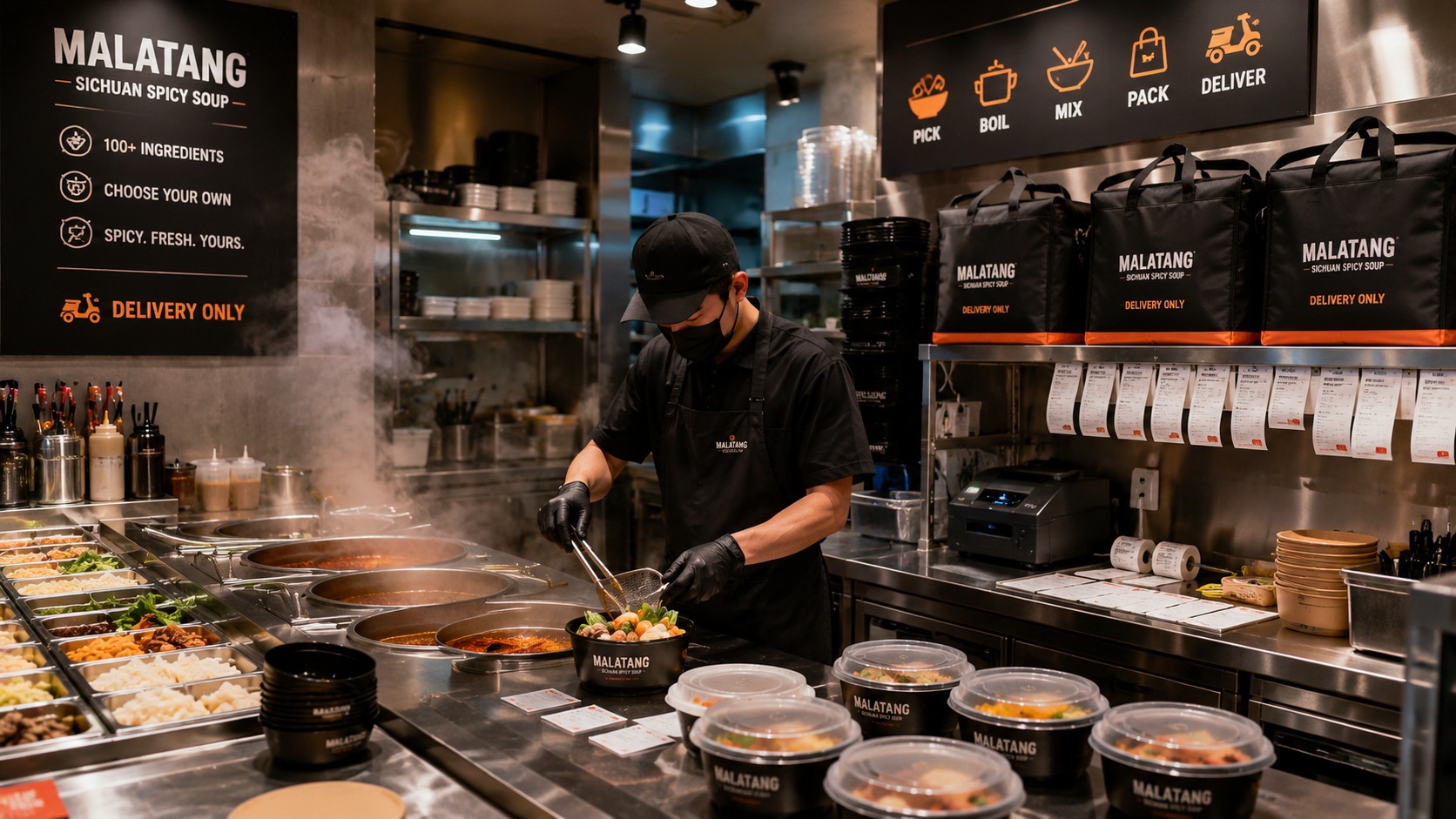
When Chinese entrepreneurs brought this model to cities like London and New York, they adapted it to local realities. In a typical 30-square-meter unit in a European city center, you will find a streamlined workflow: a refrigerated display case, a high-speed boiling station, and a compact packaging area. The efficiency is striking. Because the cooking process is standardized—blanching times are measured in seconds, not minutes—the same quality can be replicated by staff with minimal training.
This shift reflects a broader trend in China’s food service industry: the decoupling of cooking from dining space. For local operators abroad, this means lower rent and lower overhead. For consumers, it means faster service and lower prices. The “ghost kitchen” is not just a cost-cutting measure; it is a testament to how digital logistics in China have trained both suppliers and consumers to value speed and precision over ambiance.
Behind the Scenes: The Invisible Supply Chain
The true magic of Malatang’s global spread lies not in the broth, but in the logistics behind it. In China, a mature supply chain means that even small businesses can access industrial-grade ingredients at affordable prices. This is where cross-border e-commerce platforms and specialized food manufacturers play a pivotal role.
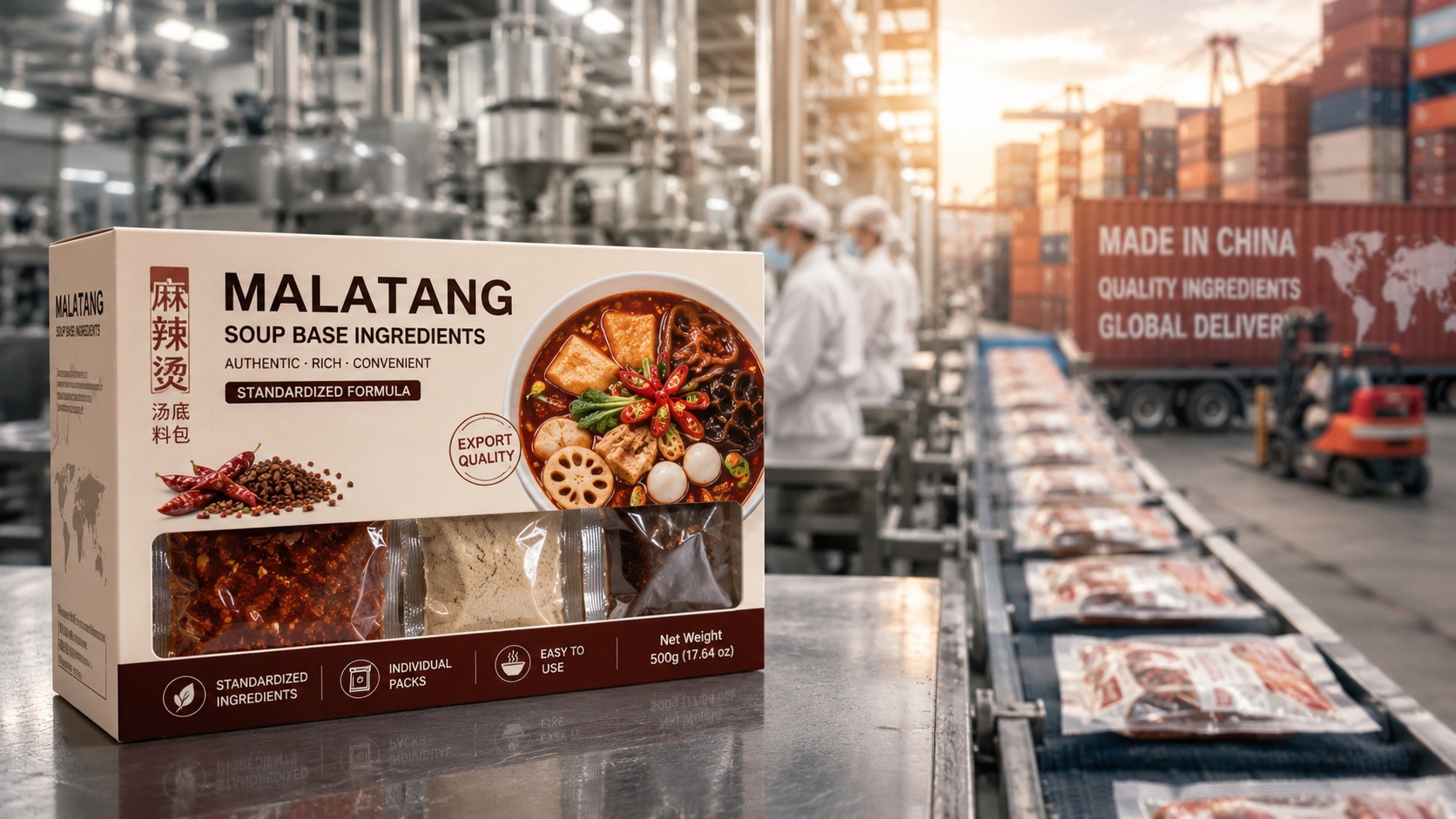
Take the soup base. Authentic Malatang requires a complex blend of spices, oils, and extracts. In the past, replicating this taste abroad was difficult and expensive. Today, Chinese food manufacturers produce standardized, pre-made broth bases that can be shipped globally. These bases are engineered to maintain flavor consistency across thousands of locations, much like how major coffee chains standardize their espresso blends. A small shop in Toronto can order these bases online, often sourcing equipment and packaging from the same digital platforms that connect factories to global buyers.
This infrastructure reduces the barrier to entry for new entrepreneurs. A first-time operator does not need to hire a master chef; they need to follow a recipe card. The complexity of flavor is handled by the supply chain, while the final assembly happens in the shop. This division of labor—designing and manufacturing the core product in China, and assembling it locally—is a hallmark of modern Chinese industrial output. It allows cultural products to scale rapidly without sacrificing authenticity.
Localization vs. Authenticity
Of course, not every bowl served abroad tastes exactly like the ones in Chengdu. Localization is key to survival. In Western markets, menus often offer milder spice levels, vegetarian broth options, and alternative protein choices like chicken or tofu instead of offal. This adaptation does not dilute the brand; it expands its appeal.
What remains constant is the “DIY” experience. For young, multicultural audiences in cities like Berlin, Melbourne, or Los Angeles, Malatang offers more than just food; it offers agency. The act of choosing your own ingredients transforms a meal into a personalized interaction. It resonates with a generation that values customization and transparency in their consumption.
Furthermore, the health-conscious trend has played a role. Unlike deep-fried fast food, Malatang is boiled. Customers can see exactly what goes into their bowl—fresh vegetables, lean meats, and noodles without heavy sauces. This visual transparency builds trust, a crucial factor in an era where consumers are increasingly skeptical of processed foods.
More Than Just Food
Malatang’s journey from a local street snack to a global staple is a microcosm of China’s economic evolution. It showcases how digital economy capabilities, manufacturing precision, and logistical efficiency have become exportable assets. When a customer in Paris enjoys a bowl of Malatang, they are experiencing the result of a complex, invisible network that connects farmers, factories, e-commerce platforms, and local delivery drivers.
This is not just about selling soup; it is about exporting a system. The ability to deliver consistent quality at low cost, supported by robust digital infrastructure, is what makes “Made in China” relevant in the service sector, not just manufacturing. As Malatang continues to spread, it offers a tangible example of how everyday life in China is shaped by technology and efficiency, and how these forces are quietly reshaping global dining habits.