

The Rhythm of the Cleaver
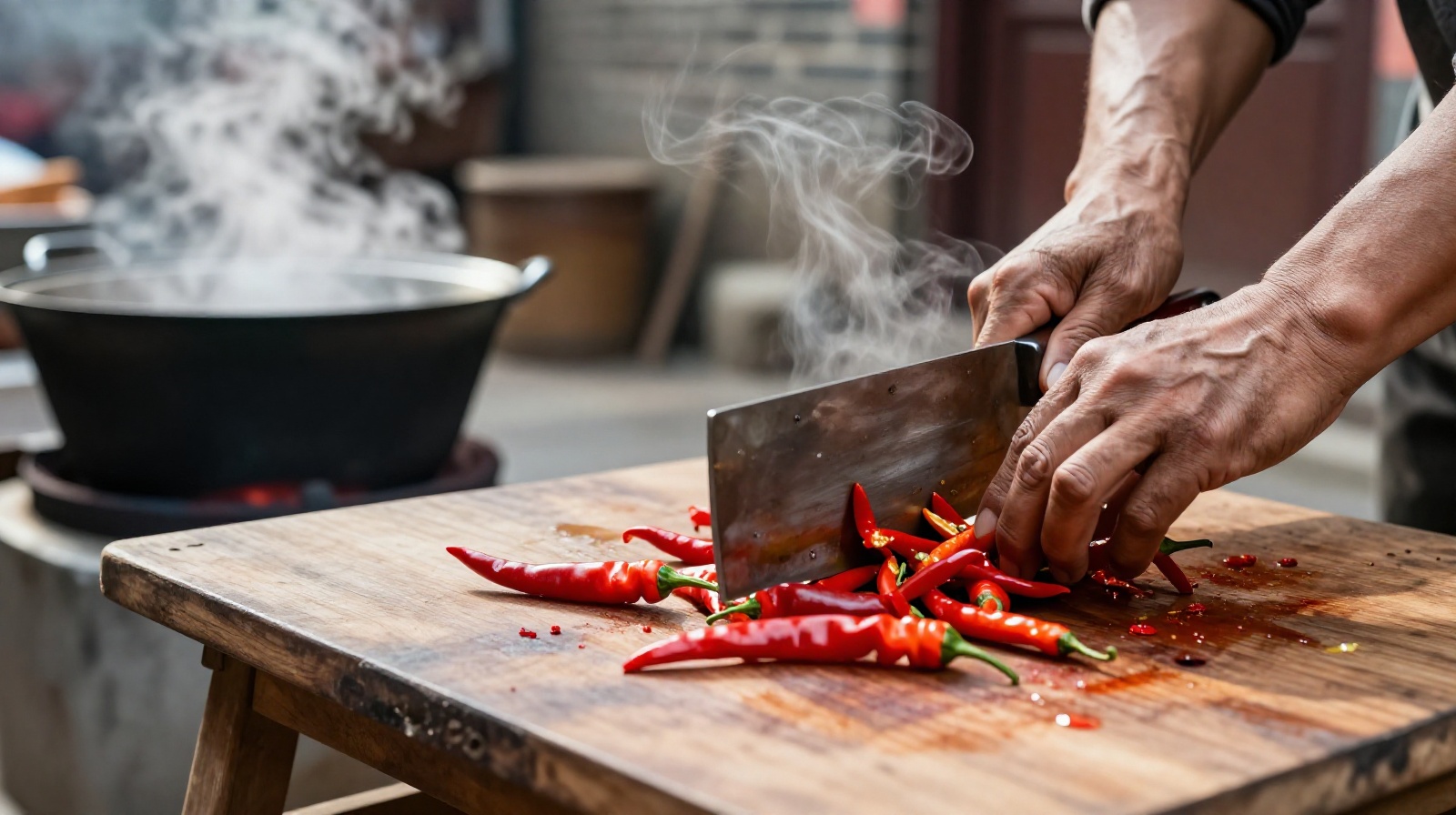
At 4:00 AM, when Changsha is still wrapped in the humid darkness of a river city, the sound begins. It is not the hum of traffic or the buzz of neon signs, but a sharp, rhythmic thud-thud-thud. It echoes off the damp brick walls of an alley in Yuelu District, signaling the start of another day for Li Wei, a master chili cutter.
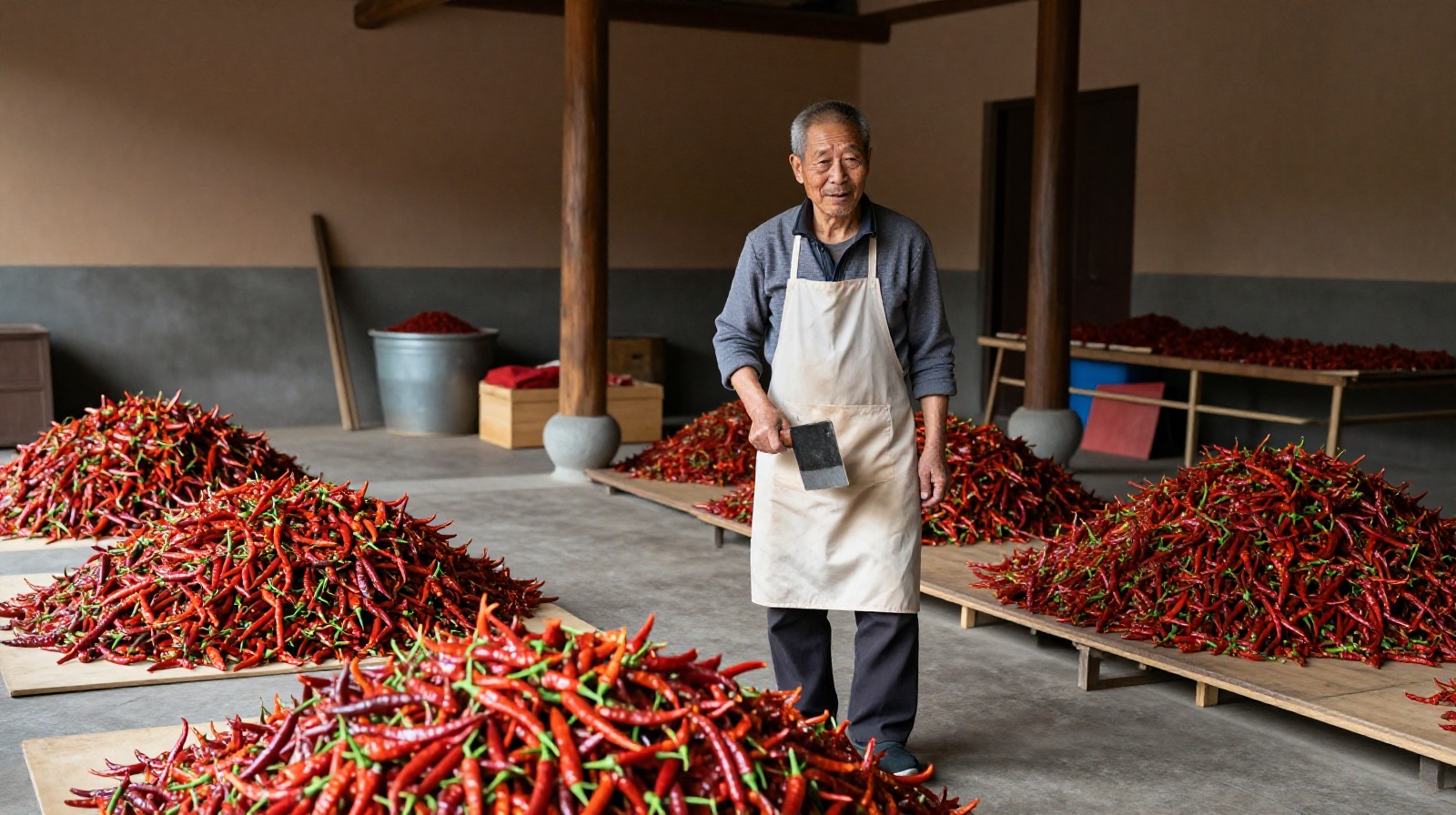
Li’s workspace is a modest, open-air shed. The air here is thick, heavy with the scent of capsaicin that stings the eyes and tickles the nose. For most of us, this smell is an irritant. For Li, it is the perfume of work. In front of him sits a mountain of fresh red chilies—locally known as dajiao—piled high like small red pyramids. By the time he finishes at 2:00 PM, he will have processed roughly 500 pounds (250 kilograms) of them.
Why Hands Matter More Than Machines
You might wonder: in a city famous for its rapid modernization and automation, why does Li still cut peppers by hand? Why not use a machine?
The answer lies in the texture. Industrial chopper blades are fast, but they are blunt instruments. They crush the chili flesh, releasing too much juice too quickly, which can lead to uneven fermentation. Li’s knife, however, is an extension of his arm. He holds the chili at a precise 45-degree angle, slicing it into uniform, tiny pieces without bruising the skin.
“Machines cut the chili, but hands respect it,” Li says, wiping sweat from his forehead with a towel that has seen better days. “The air pockets created by hand-cutting allow the salt to penetrate evenly. That is how you get the aroma. Machines give you heat; hands give you flavor.”
This is the secret behind Changsha’s most famous culinary export: duojiao (chopped chili). Unlike dry chili flakes or smooth purees, authentic duojiao has a distinct crunch. It is the soul of Hunan cuisine (Xiang cai), essential for dishes like Steamed Fish Head with Chopped Chili, a dish so popular it can turn even the bravest tourist’s eyes red within minutes.
Old Taste, New Rules
Li’s shop is located in an old neighborhood that is slowly being gentrified. Across the street, a trendy coffee shop has opened, serving lattes to young professionals. Inside Li’s shed, the world looks very different: earthen jars line the shelves, waiting to be filled with the layered mixture of chilies, salt, and rice wine.
But Li is not a man stuck in the past. He understands that tradition needs market survival. Five years ago, his business was purely local. Now, he has adapted to the digital age. His son, who works in IT in another city, set up a small online store for them.
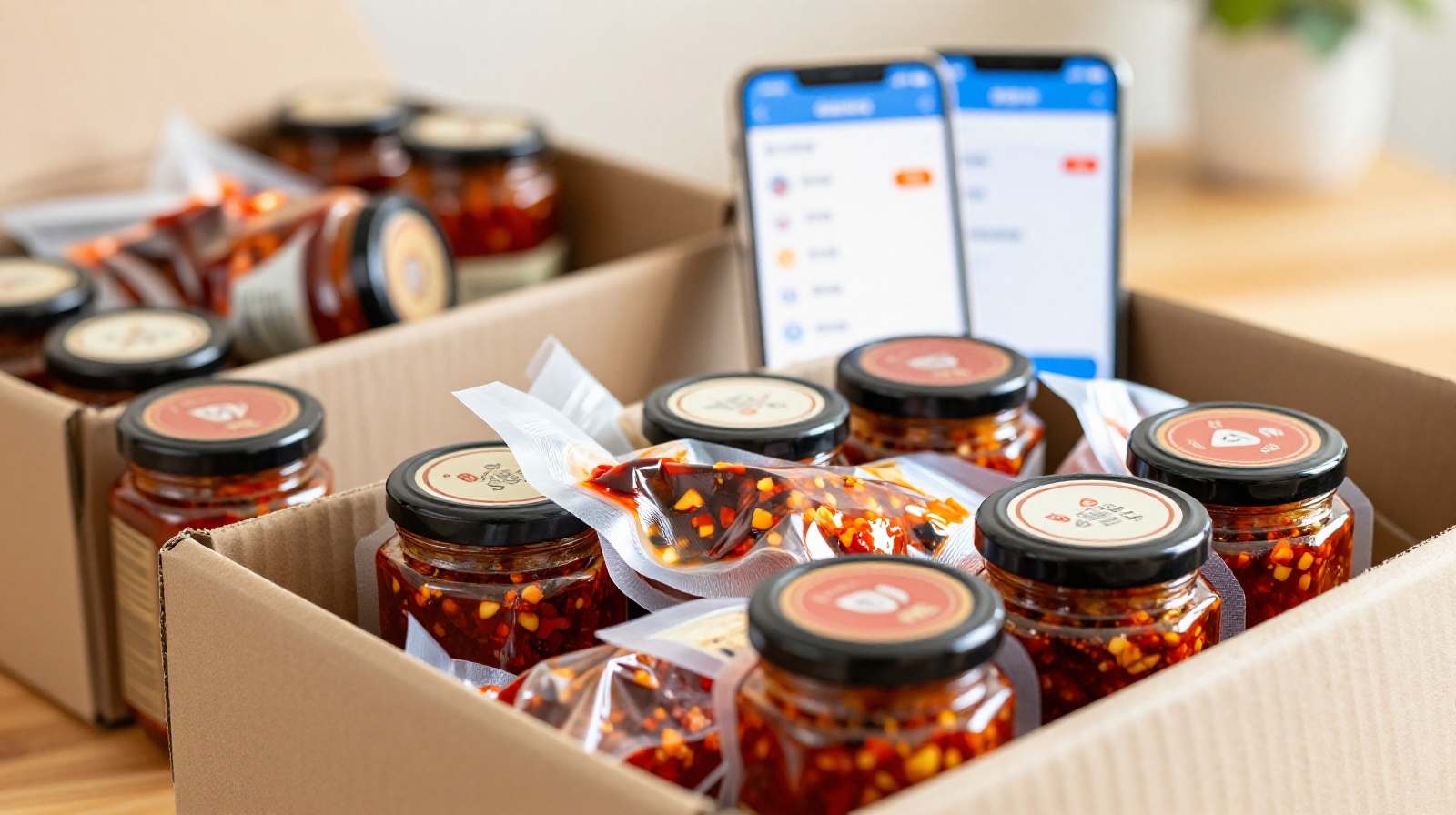
Today, Li’s vacuum-packed jars are shipped to customers in Beijing, Shanghai, and even overseas. A review from a buyer in London reads: “I grew up missing the taste of my grandmother’s cooking. This jar brought me back home.” Another comment from a Gen Z customer in Changsha notes: “Finally, real food, not that watery stuff from the supermarket.”
This duality is common in modern China. Small artisans are using e-commerce platforms like Taobao and Douyin (TikTok) to bypass middlemen and sell directly to consumers. It allows them to maintain higher margins than wholesale markets, while ensuring their product reaches people who value authenticity over the lowest price.
The Dignity of Labor
The work is physically demanding. Li’s hands are often stained yellow-orange from the peppers, with calluses thick enough to feel like leather. The capsaicin burns his skin, and after ten years, his wrists ache when the weather turns cold.
Yet, there is no resentment in his voice. In fact, he speaks with a quiet pride. In a society that often glorifies white-collar office jobs or tech entrepreneurship, manual labor can sometimes be seen as a last resort. But for Li and his peers, this skill is a badge of honor. It is a craft that takes years to master, one that cannot be rushed.
“Young people want to sit in air-conditioned offices,” Li admits. “I don’t blame them. But someone has to cut the peppers. If we stop, the taste disappears.”
This sentiment reflects a broader shift in China’s cultural consciousness. As the country has grown wealthier, there is a renewed appreciation for jiangren jingshen—the spirit of craftsmanship. It is no longer just about survival; it is about identity. People are willing to pay more for food that carries a human story, a tangible connection to the land and the hands that prepared it.
A Bowl of Rice and Connection
At 8:00 PM, after the last jar has been sealed and the alley has quieted down, Li prepares his dinner. It is simple: a bowl of steaming white rice, topped with a spoonful of his own duojiao, stir-fried with some pork belly and garlic.
He takes a bite, closing his eyes to savor the heat and the sourness that has developed during fermentation. It is a taste that has defined this region for centuries. But it is also a taste that is evolving, carried by delivery apps and shipping boxes to a world that is increasingly curious about what lies beyond its own borders.
For Li Wei, the city of Changsha changes every day. Skyscrapers rise where old houses once stood. But in his small shed, the rhythm remains the same: thud-thud-thud. It is the sound of a trade that refuses to be replaced, a reminder that even in an age of algorithms and automation, some things still require the touch of a human hand.