

The Paradox of Elegance
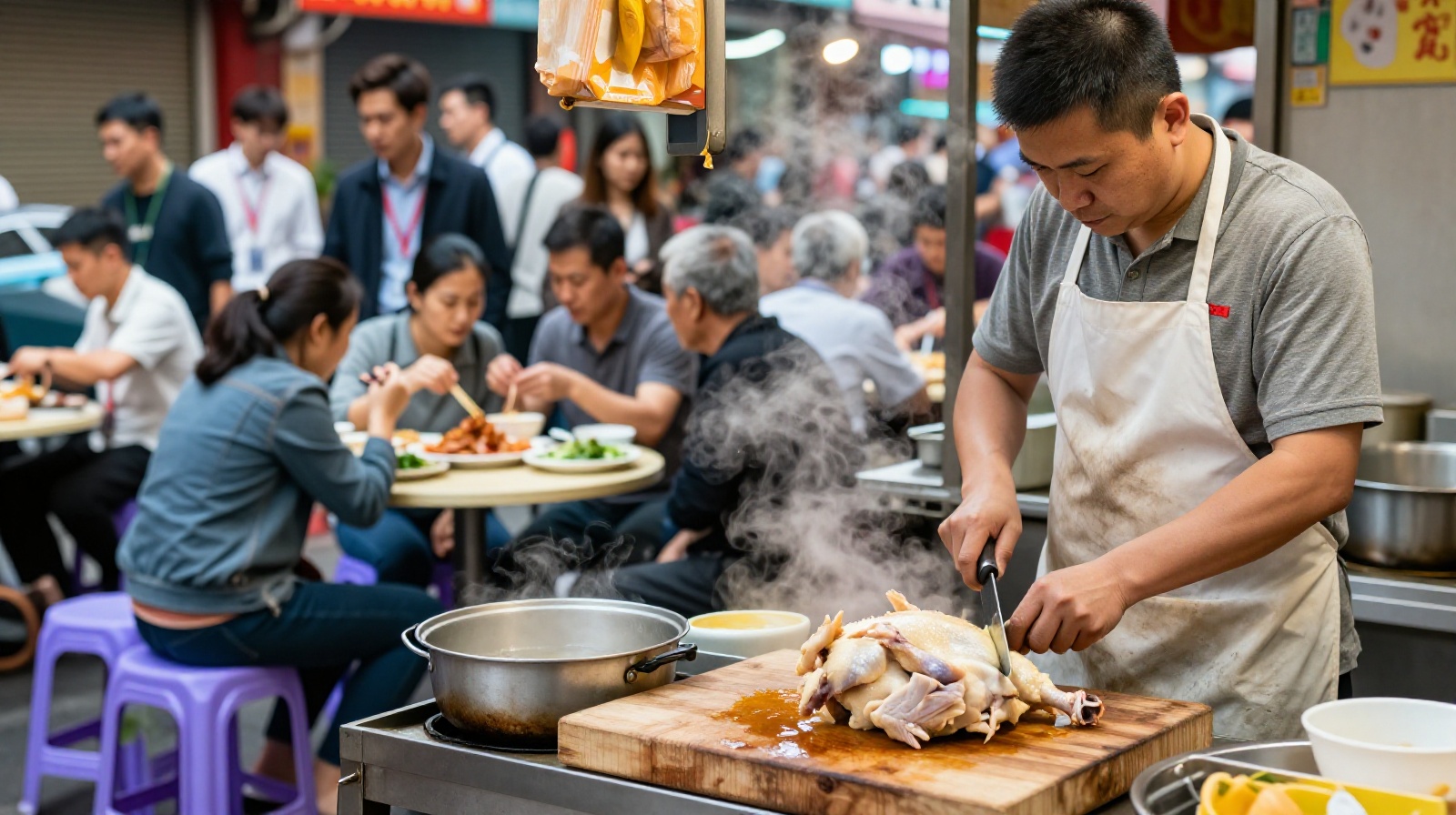
At 11:45 AM, the air in a Guangzhou neighborhood shop is thick with the scent of ginger and scallion oil. Behind the counter, Chef Lin, wearing a stained white apron, pulls a whole chicken from a pot of simmering broth. He doesn’t check a thermometer. He knows the water is ready by the sound of the bubbles—small, hesitant murmurs, not a roar. This is the preparation for Bai Qie Ji (White Cut Chicken), a dish that looks deceptively simple but demands precise timing.
In Cantonese culture, this dish is a paradox. It requires supreme simplicity in ingredients—chicken, salt, ginger, scallion—but complex skill to execute. The skin must be crisp yet tender, the meat juicy but not undercooked. It is often called the “king of Cantonese cuisine” because it strips away heavy sauces to reveal the ingredient’s true character. This mirrors a broader Cantonese pragmatism: value quality over flash, substance over style.
The Worker’s Midday Ritual
Fifteen minutes later, the shop is crowded. But this isn’t a scene of high-end dining. Sitting at small, round plastic tables are garment workers, delivery drivers, and office juniors. They wear uniforms or casual clothes, sweating slightly from the morning heat. They order Bai Qie Ji not as a luxury treat, but as a standard midday meal.
In cities like Guangzhou and Shenzhen, the lines between “high-end” food and daily sustenance are blurring. A whole chicken, once a symbol of wealth during China’s reform era, is now accessible to the urban working class. For a factory worker earning modest wages, buying half a chicken for 30-40 RMB is a rare moment of indulgence. It’s affordable luxury.
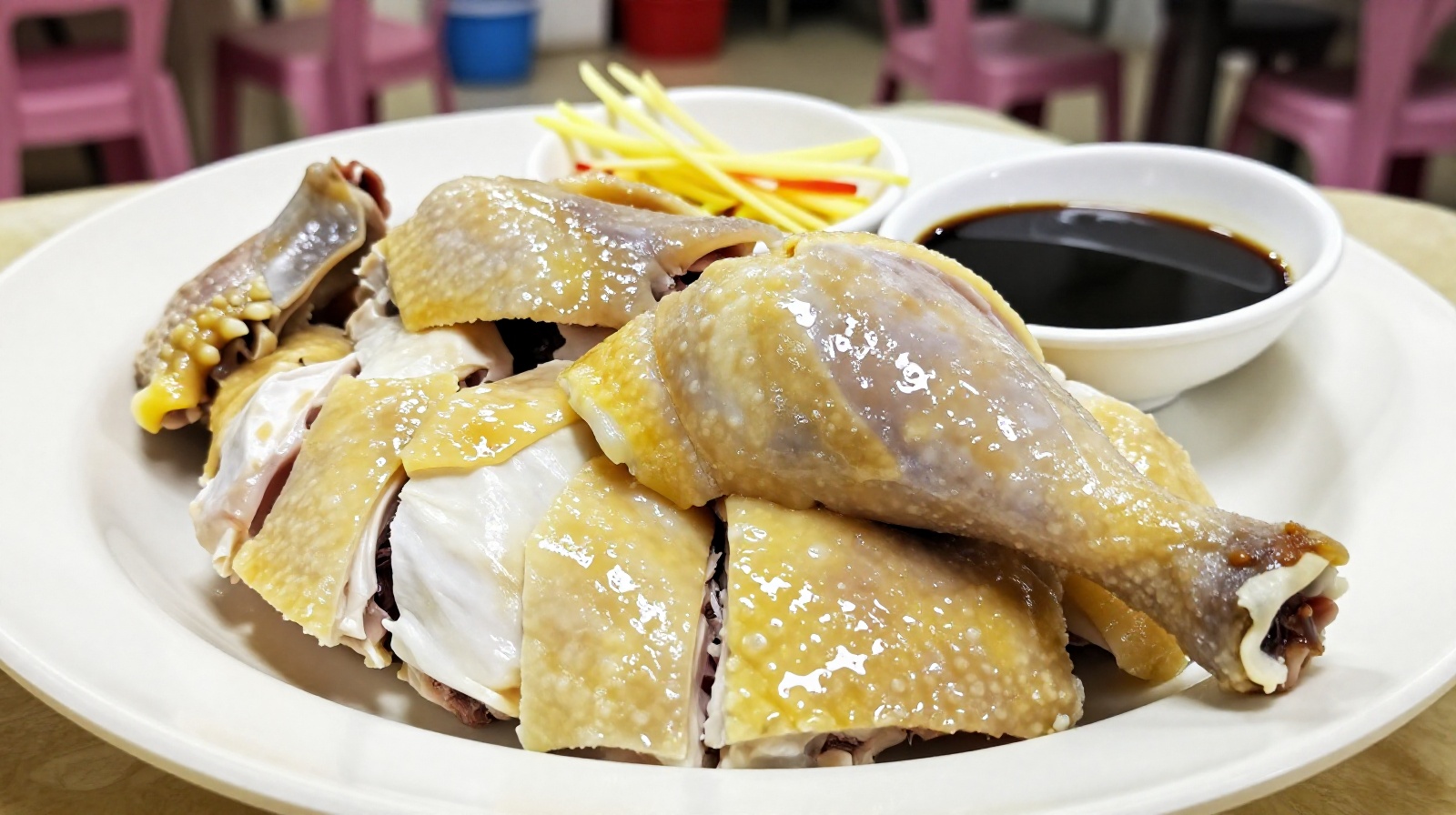
The ritual is specific. The chicken is chopped into pieces, served with a side of ginger-scallion sauce and sometimes a dark soy-based dip. Workers eat quickly but deliberately. The rich flavor provides energy for the afternoon shift. Here, the dish isn’t about status; it’s about comfort. It connects the migrant worker to the local culture, allowing them to taste the “authentic” region they now call home.
The Neighborhood ‘Yan Huo Qi’
As the lunch rush fades, the shop transforms. The noise level drops. Retirees in loose cotton shirts take over the remaining tables. They order the same chicken but add steamed egg or bitter melon soup. This is the yan huo qi—the “smoke and fire” of daily life. It’s the warmth of a community that has watched each other grow old.
The shop owner, Mrs. Chen, knows her regulars by name. She remembers that Uncle Li prefers his skin extra crispy, while Auntie Wang always asks for less salt. These small interactions are the glue of urban life in China. In an era where digital payments and delivery apps dominate, physical neighborhood shops remain vital social hubs.
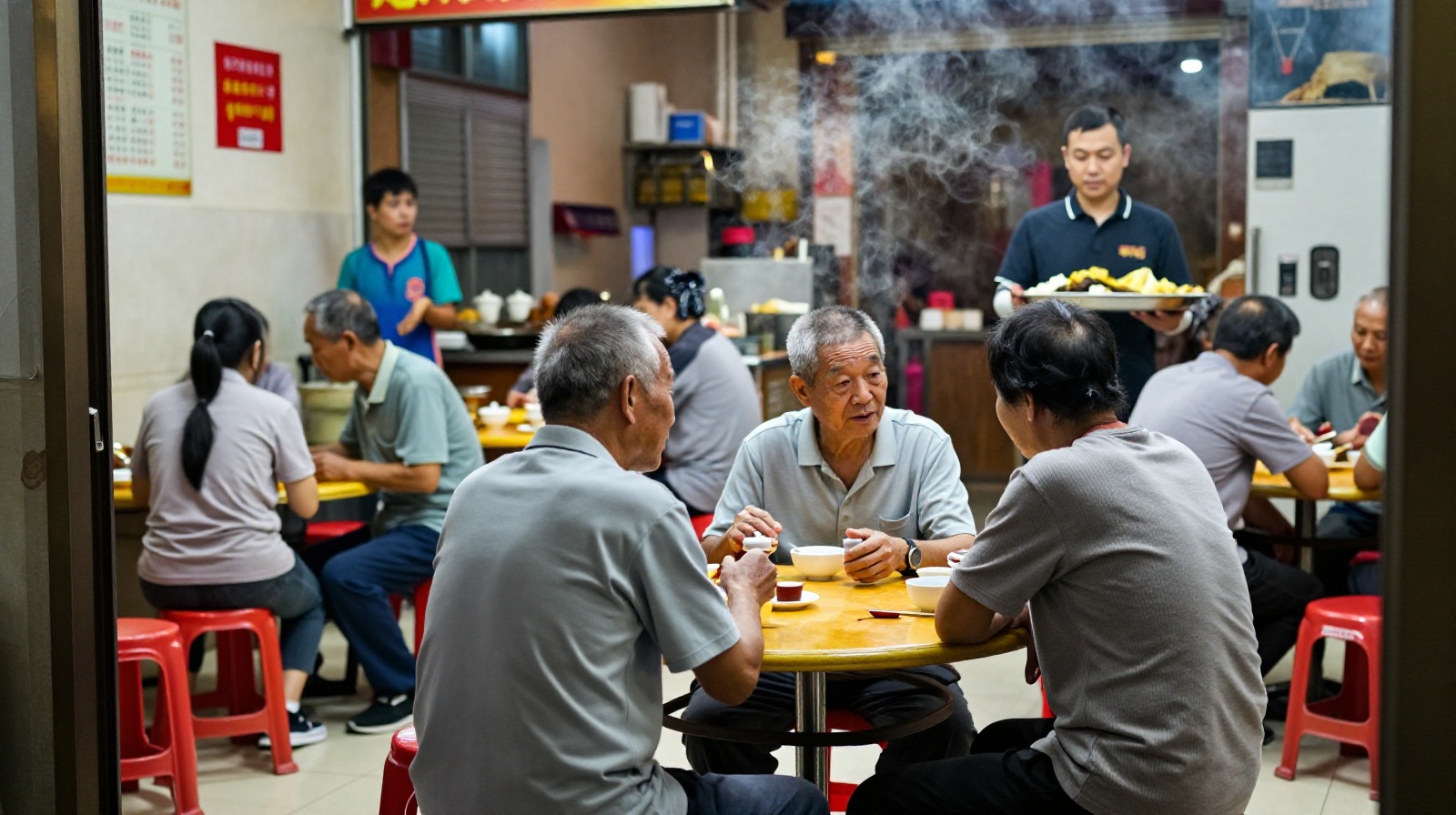
For retirees, these tables are a stage for social observation. They watch the young professionals rush in for quick bites, then linger with their tea. They see the changing faces of the city—new accents, new clothes—but the taste remains constant. The chicken shop becomes a neutral ground where generations intersect. It’s a place where gossip is exchanged, news is shared, and loneliness is mitigated by the presence of others.
From Street Stall to Michelin
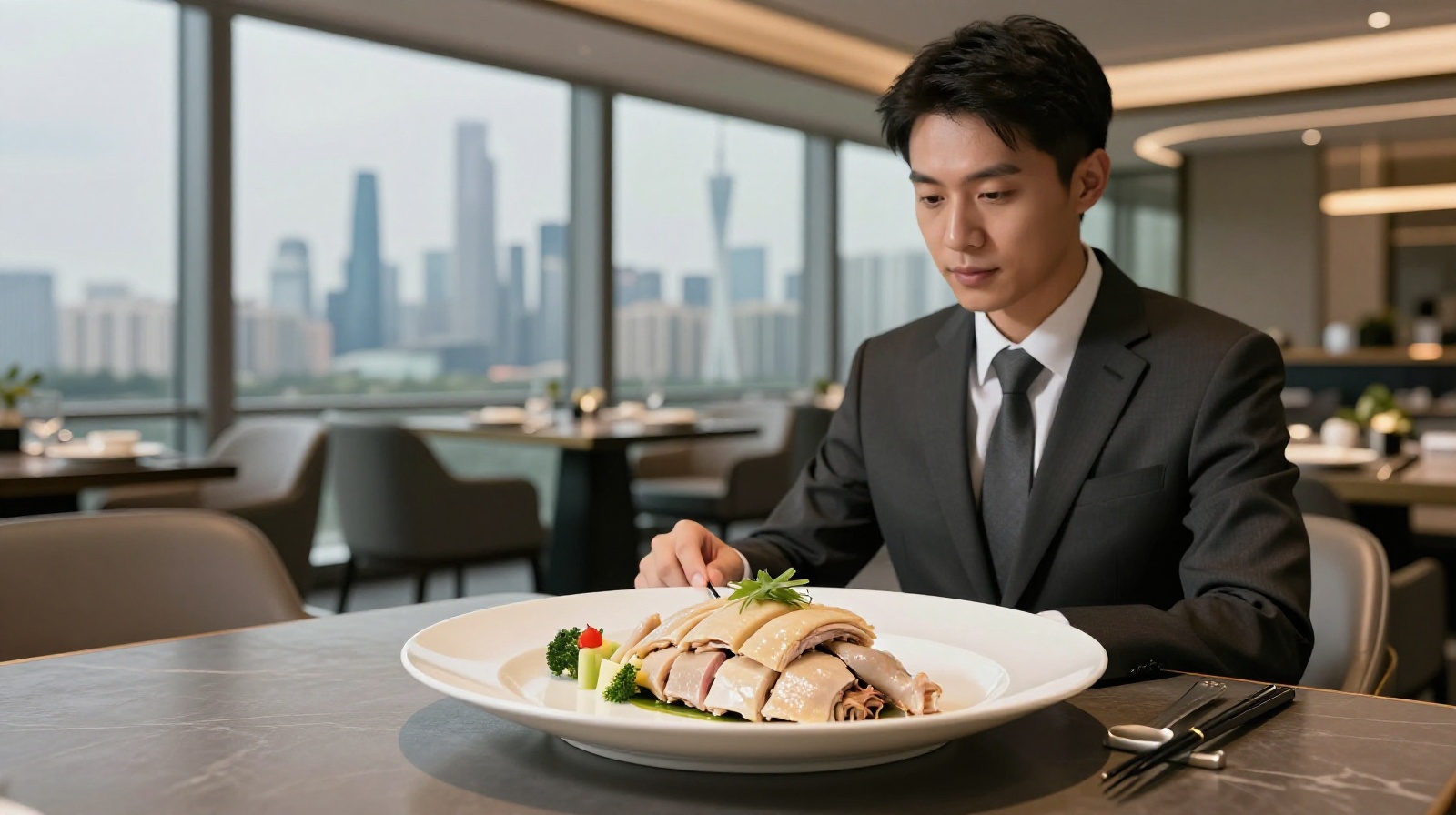
While the neighborhood shop anchors tradition, the same dish has climbed the culinary ladder. Across the Pearl River, in the gleaming towers of Zhujiang New Town, Bai Qie Ji appears on menus of Michelin-starred restaurants.
Here, the presentation is refined. The chicken might be served on slate or ceramic, garnished with edible flowers. The sourcing is highlighted: free-range chickens from specific counties, water filtered through advanced systems. Chefs explain the “three dips and three pulls” technique with academic precision. Yet, the core experience is identical to that of the factory worker down the street.
This duality reflects China’s economic rise. The same culinary tradition can support a $5 meal for a laborer and a $50 meal for an executive. It shows how cultural heritage adapts to modernity without losing its soul. The dish has become a universal language of taste, bridging social classes. Whether you’re a migrant worker or a tech CEO, the appreciation for well-cooked chicken is shared.
A Universal Language of Taste
China’s rapid urbanization has displaced millions, creating a society of migrants. For many, Bai Qie Ji is a taste of home, whether that home is in the Guangdong countryside or a distant province where similar poultry dishes exist. The dish acts as a cultural anchor.
It also highlights social mobility. The ability to enjoy “luxury” food daily is a testament to rising incomes. But more importantly, it shows inclusivity. In Cantonese culture, food is not a barrier; it’s an invitation. To share a meal of Bai Qie Ji is to accept someone into the fold.
In the end, the story of white cut chicken is the story of modern China: complex beneath a simple surface, deeply connected to history, yet firmly rooted in the everyday lives of its people. It’s a reminder that even in a fast-changing world, some things remain constant. The taste of home, chopped and served, connects us all.