
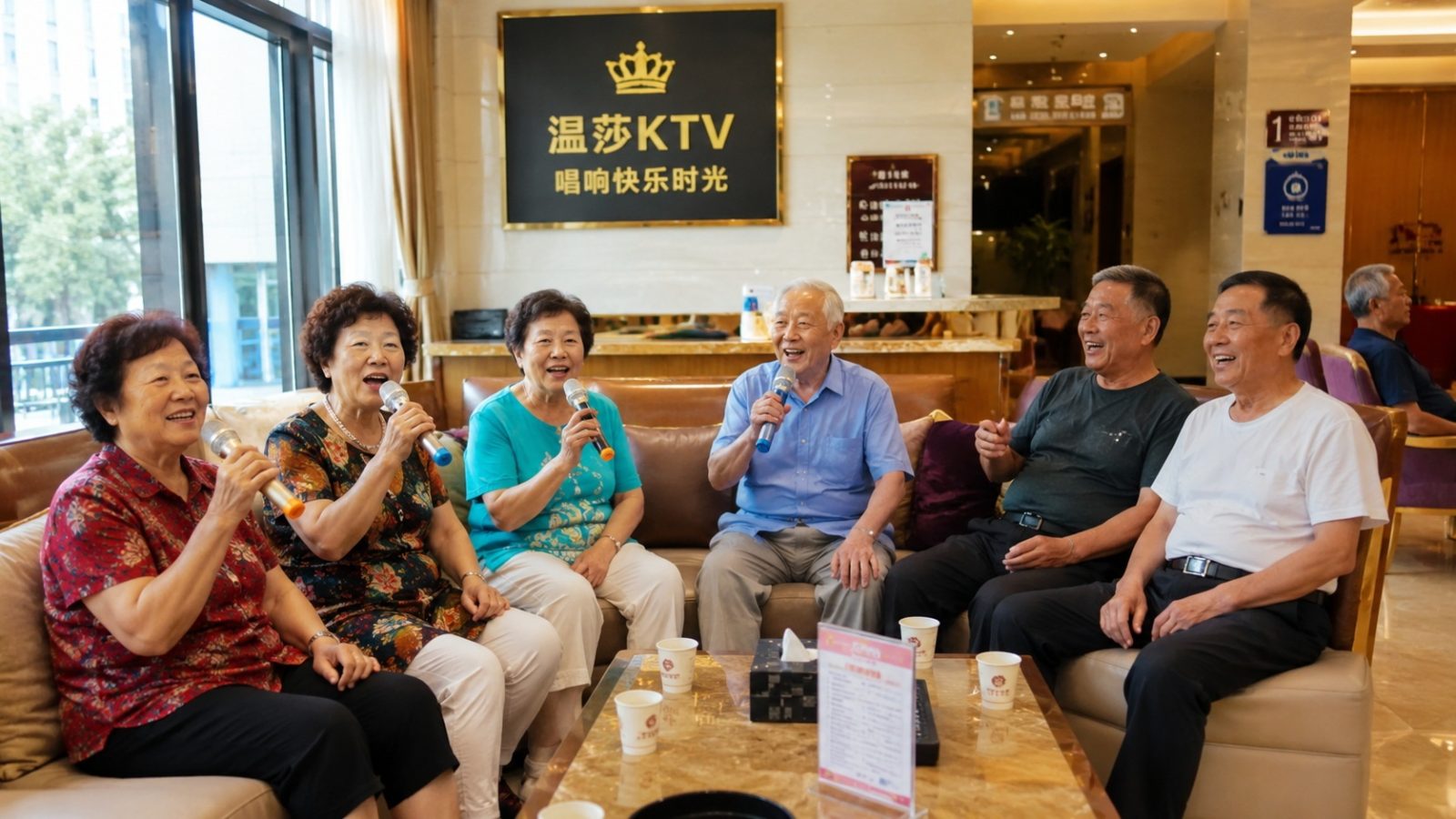

The 10 AM Silence Breaker
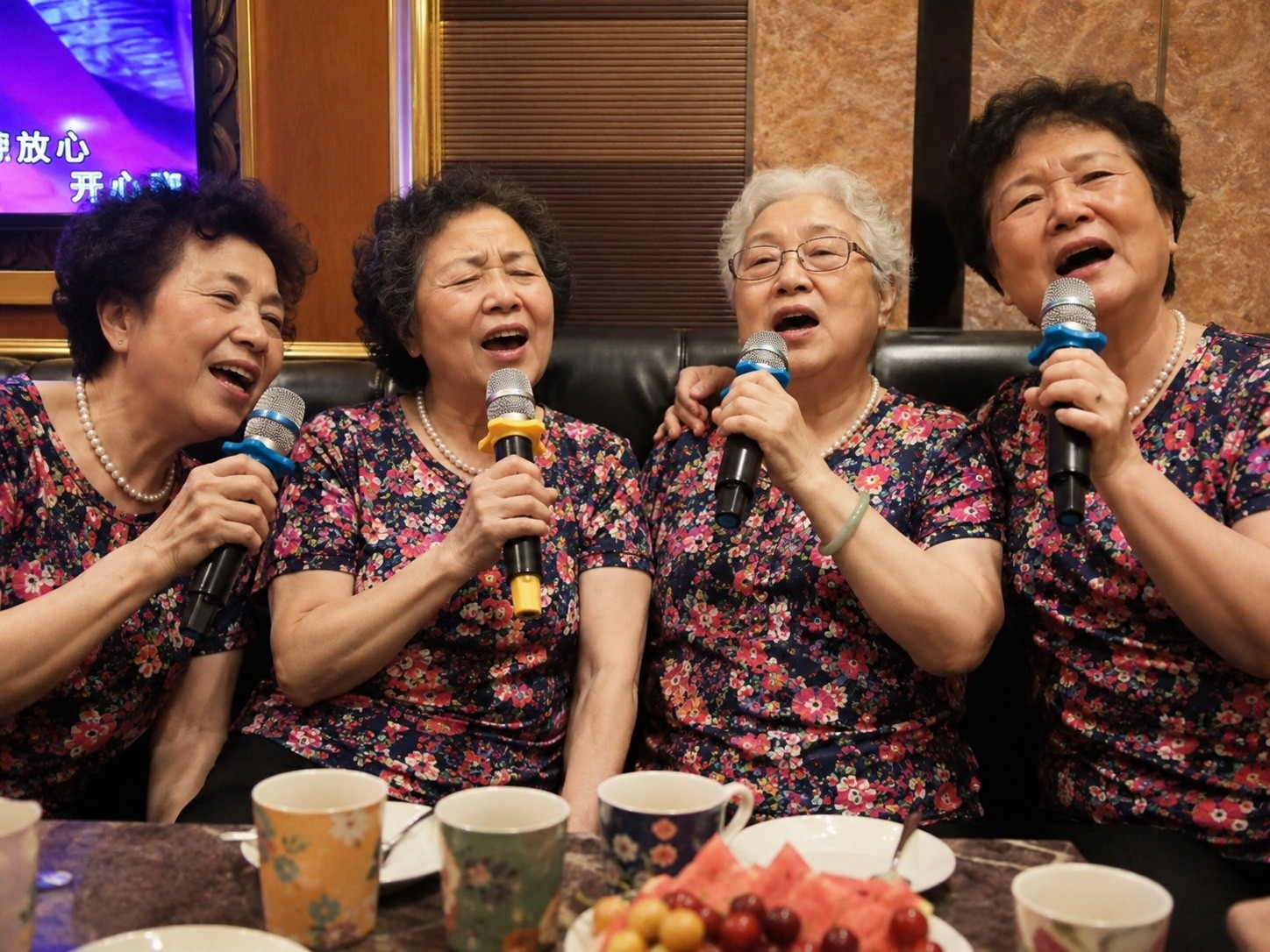
At 10:30 AM on a Tuesday, the neon lights in most Chinese city karaoke bars (KTVs) are still off. The lobby is quiet, save for the mopping sounds from the cleaning staff. But step into Room 302, and you’ll hear a powerful, slightly out-of-tune rendition of “My Country”. Inside sits a group of six women in their 60s, wearing matching floral shirts, holding microphones with professional grip. They aren’t just singing; they are rehearsing for a community competition.
This is the stark contrast of China’s karaoke industry. While nights are packed with young professionals venting stress after work, days are often ghost towns. But lately, these daytime voids have been filled by a surprisingly energetic demographic: China’s retired generation.
Unbeatable Value: The Economics of Daytime Singing
For most Chinese young people, a night out at KTV is a luxury. A standard small room can cost between 100 to 300 RMB ($14-$42) per hour, plus expensive drinks. It’s an occasional treat, usually reserved for birthdays or team-building.
For retirees with fixed pensions and more free time, the daytime KTV is a financial miracle. During off-peak hours (roughly 8 AM to 6 PM), many mid-range KTVs offer “daytime packages” for as low as 20 to 50 RMB ($3-$7) per hour for an entire private room. Some venues even bundle tea and snacks.
“It’s cheaper than buying milk at the supermarket,” says Li Hua, a 68-year-old retiree from Shanghai. “We can sing here for three hours, drink hot tea, and chat, all for the price of two cups of coffee. In my youth, we had no such entertainment. Now, I feel like I’m getting a bargain.”
This pricing strategy is a lifeline for KTV businesses. With occupancy rates dropping significantly during the day, empty rooms mean wasted electricity and rent. By attracting retirees, venues cover their baseline operational costs.
More Than Just Singing: A Social Hub
To outsiders, it might seem strange that seniors would spend hours in a soundproof box. But for many Chinese retirees, KTV has evolved into a multi-functional social space. It is part singing room, part tea house, and part community center.
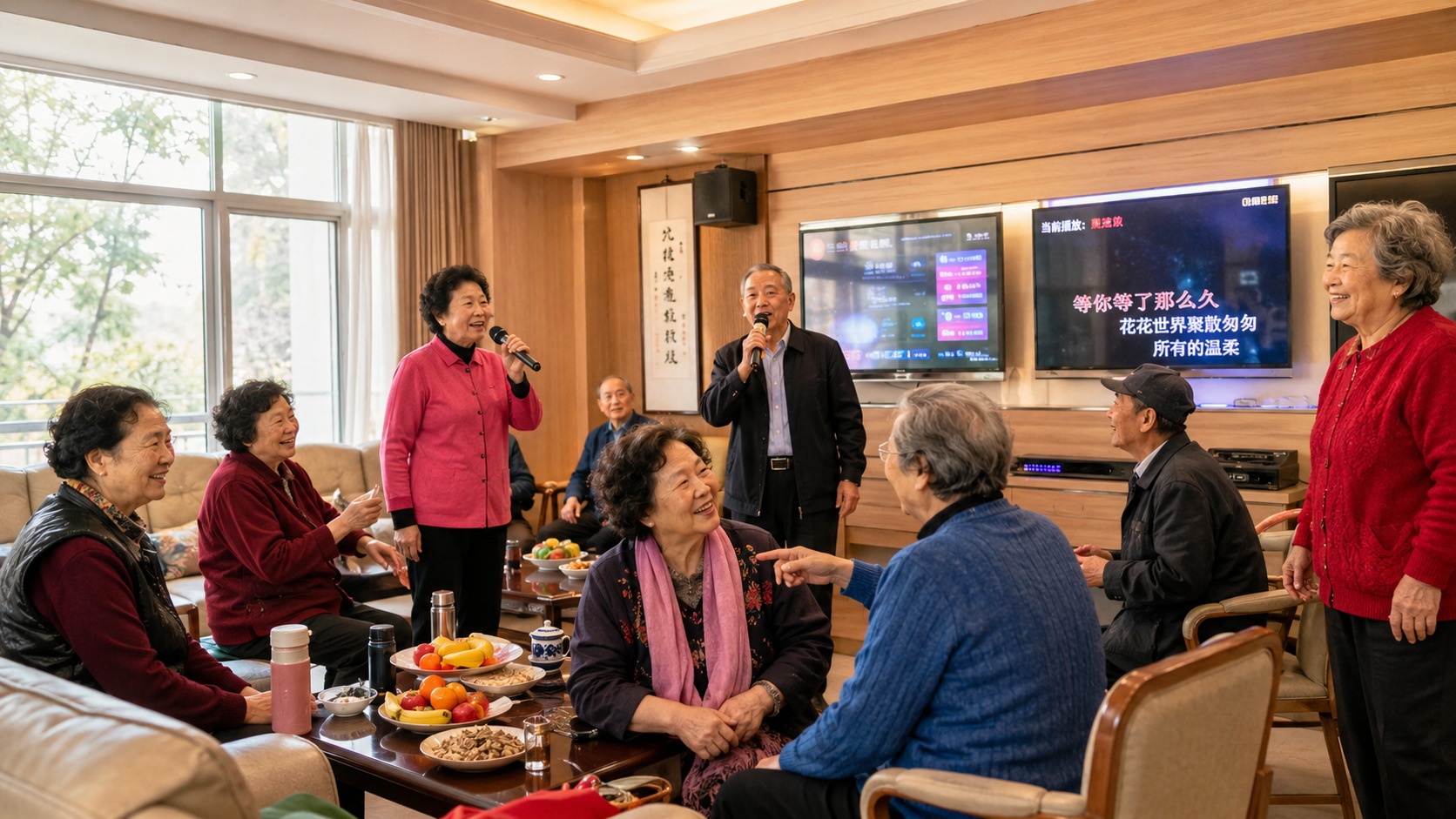
Li Hua and her friends don’t just sing pop songs. They sing traditional operas, folk songs, and revolutionary classics from the 1970s. Between songs, they share homemade snacks, discuss health tips, and coordinate weekend trips to nearby parks. The soundproofing, which young people use to scream away stress, allows retirees to belting out their voices without worrying about disturbing neighbors or family.
This shift reflects a broader change in China’s “silver economy.” As the population ages, retirees are increasingly seeking active, social lifestyles rather than just passive retirement. They have disposable income, time, and a strong desire for connection. KTVs, with their private yet social atmosphere, fit this need perfectly.
A Generational Divide in Entertainment
The takeover of daytime slots highlights a clear generational divide in Chinese consumption habits. Young people prioritize novelty, privacy, and digital integration. They prefer online socializing, escaping to countryside glamping, or visiting trendy cafes that offer Instagram-worthy aesthetics. For them, KTV is often a tool for social bonding in a noisy, crowded environment.
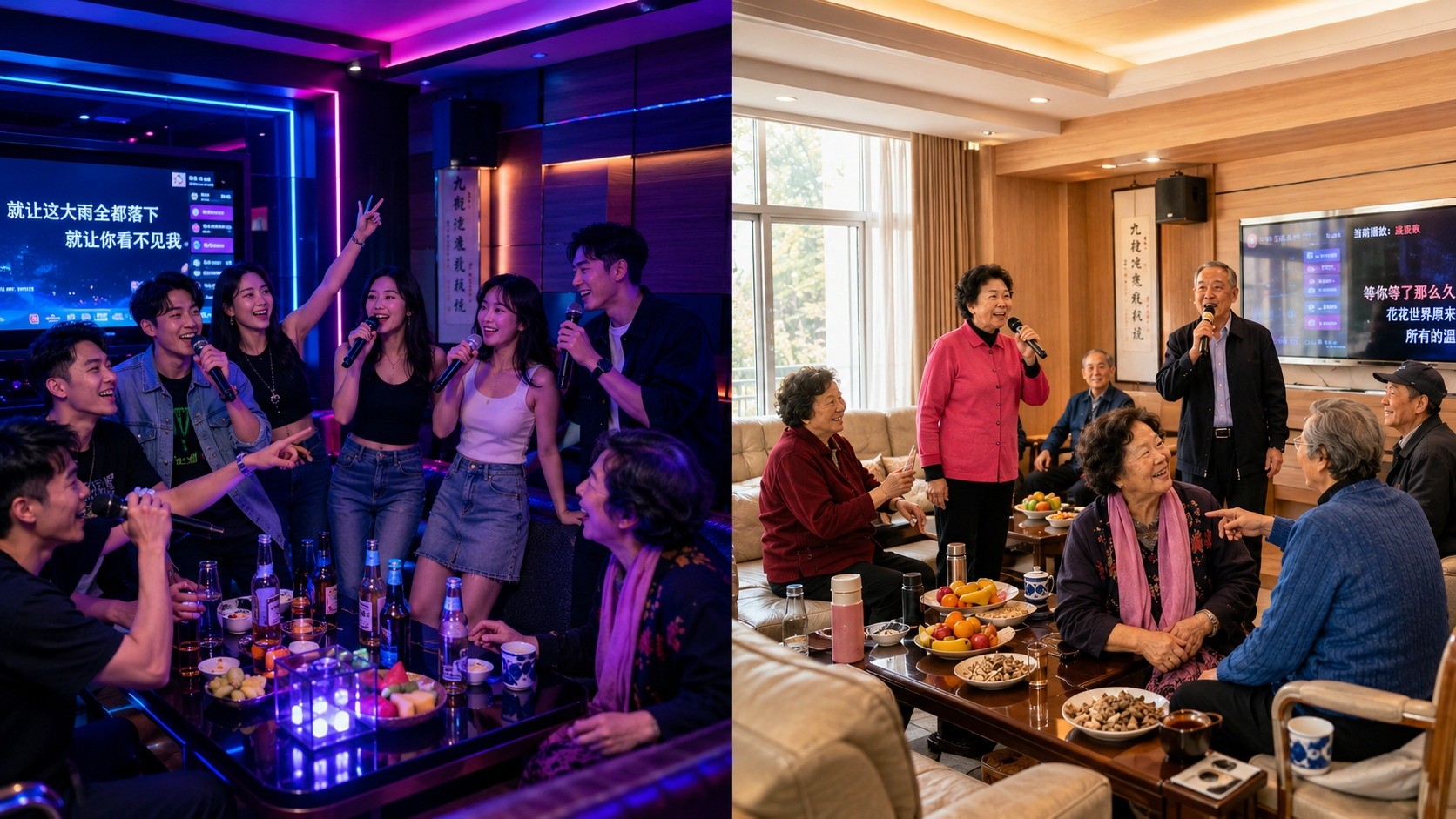
Retirees, on the other hand, prioritize value, comfort, and face-to-face interaction. They appreciate the tangible experience of a private room, the service of staff bringing tea, and the structured activity of singing together. They are less concerned with “trends” and more focused on consistency and community.
This dynamic is not just about economics; it’s about how different generations define leisure. For the youth, leisure is often about escaping the routine. For many retirees, leisure is about reinforcing their social circles and maintaining a sense of purpose.
The Future of Karaoke
KTV chains are adapting to this new reality. Some are introducing “senior-friendly” features: larger fonts on song screens, softer lighting, and menu items with less sugar and salt. Others are partnering with community centers to offer discounted group rates for registered seniors.
While the night shift remains dominated by youth culture, the daytime KTV has become a unique cultural phenomenon in China. It is a testament to the resilience of the entertainment industry and the vibrant, often overlooked, social life of the older generation.
So, the next time you pass a KTV in the morning, don’t assume it’s closed for business. Inside, the show is just beginning, led by the city’s most enthusiastic singers: its grandparents.