
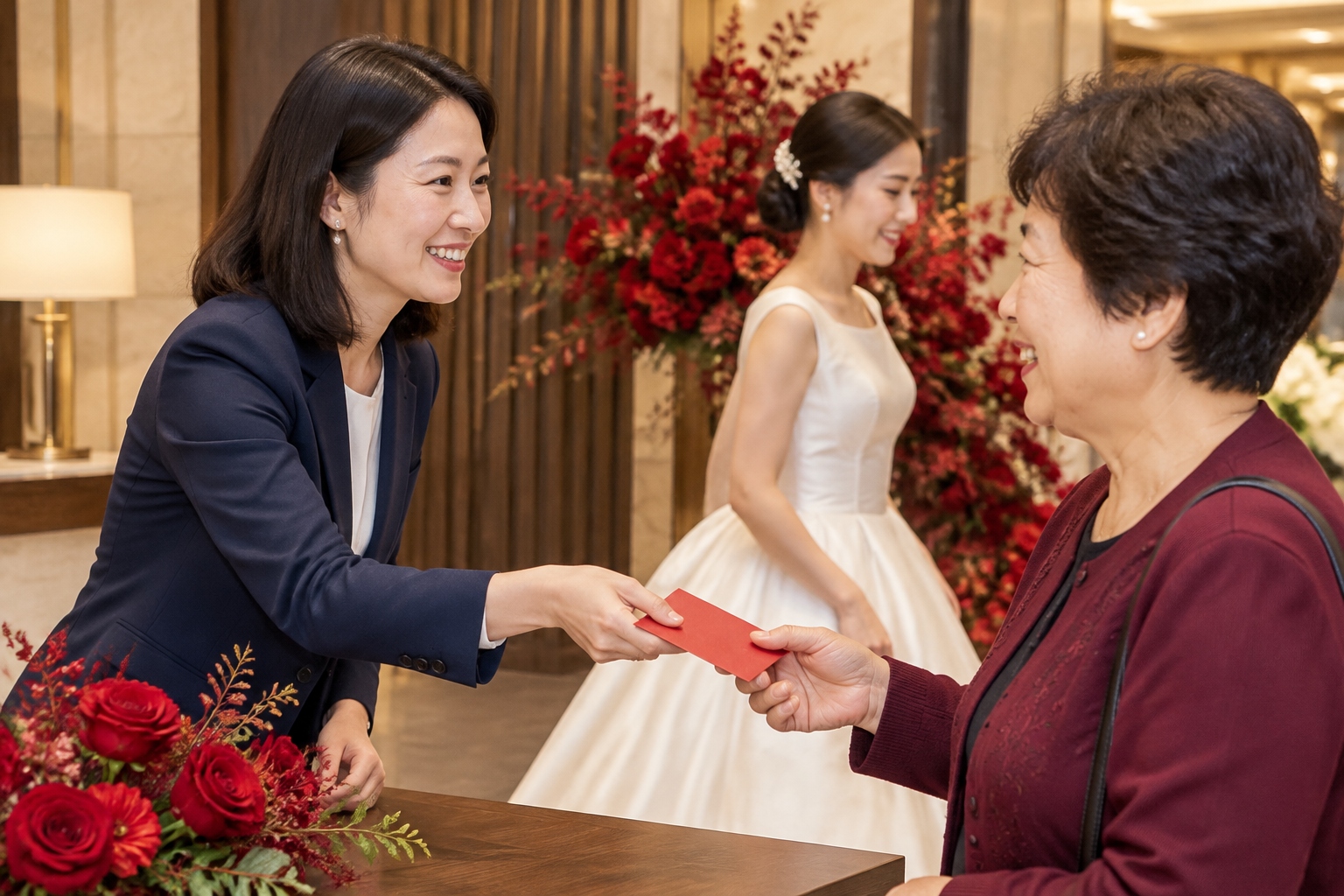

At a hotel wedding in Shanghai, a guest slips a red envelope into the hands of a relative at the reception table. Red flowers frame the entrance. When the bride appears in a white gown, the guests lift their phones to take pictures. Later, she might change into a red dress to make the rounds with her new spouse, thanking guests and raising a glass at each table.
Anyone who has heard that Chinese weddings favor red and that white is associated with mourning might wonder how both colors ended up in the same room. The white gown belongs to a bridal tradition now familiar in China. The red envelope belongs to a custom of giving money with good wishes. Guests know what each means because they know what each object is for. That’s a better way to read color in China than memorizing a list of lucky and unlucky shades.
Why red envelopes and red decorations mean celebration
At a wedding, the envelope is called a hongbao, literally a red packet. It usually holds money for the couple. A guest may write their name on the back, and at some receptions a relative at the welcome table will record who gave what. If you come from a family that gives cash or checks in wedding cards, the gesture will feel familiar. The red wrapper makes the good wishes visible before anyone opens it.
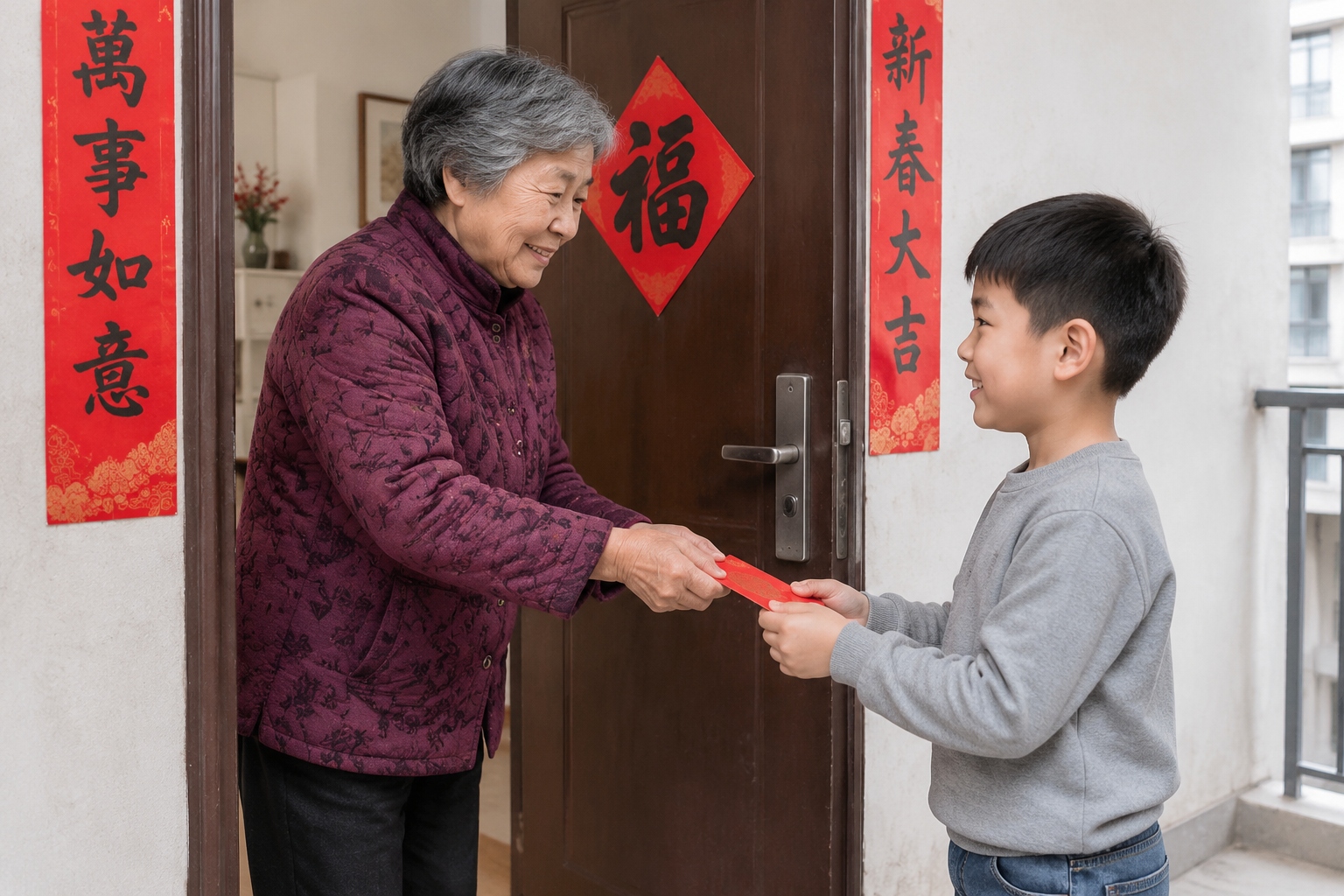
At Spring Festival, the holiday that marks the Lunar New Year in China, red appears on apartment doors in the form of paper couplets, two strips printed with wishes for the year ahead. A red diamond bearing fu, the character for good fortune, may sit between them. Older relatives often give children red packets. Adults also send them through WeChat, where a red packet appears in the chat and the recipient taps it to open it. You can recognize the ritual even when the money moves through a phone.
The same visual language can show up outside a new restaurant. Red ribbons tied to flower stands and a red carpet at the door tell neighbors that the place is opening and someone has come to wish it well. A café a few streets away might stick with cream walls and muted green cups year-round, then put a red paper decoration in the window for the holiday. Red can mark a special day even for people who prefer quieter colors the rest of the year.
White, black, and the role of the occasion
White has a long association with mourning in China. Depending on the family and local customs, mourners may wear white cloth or white bands. At some contemporary memorial services, guests arrive in dark coats or black suits, and white chrysanthemums appear in arrangements near the portrait. A visitor from the United States or Britain may find the dark clothing familiar and be more surprised by the role of white. Practices vary, so follow the family’s lead when attending a funeral.
Which flowers should you bring to a hospital visit?
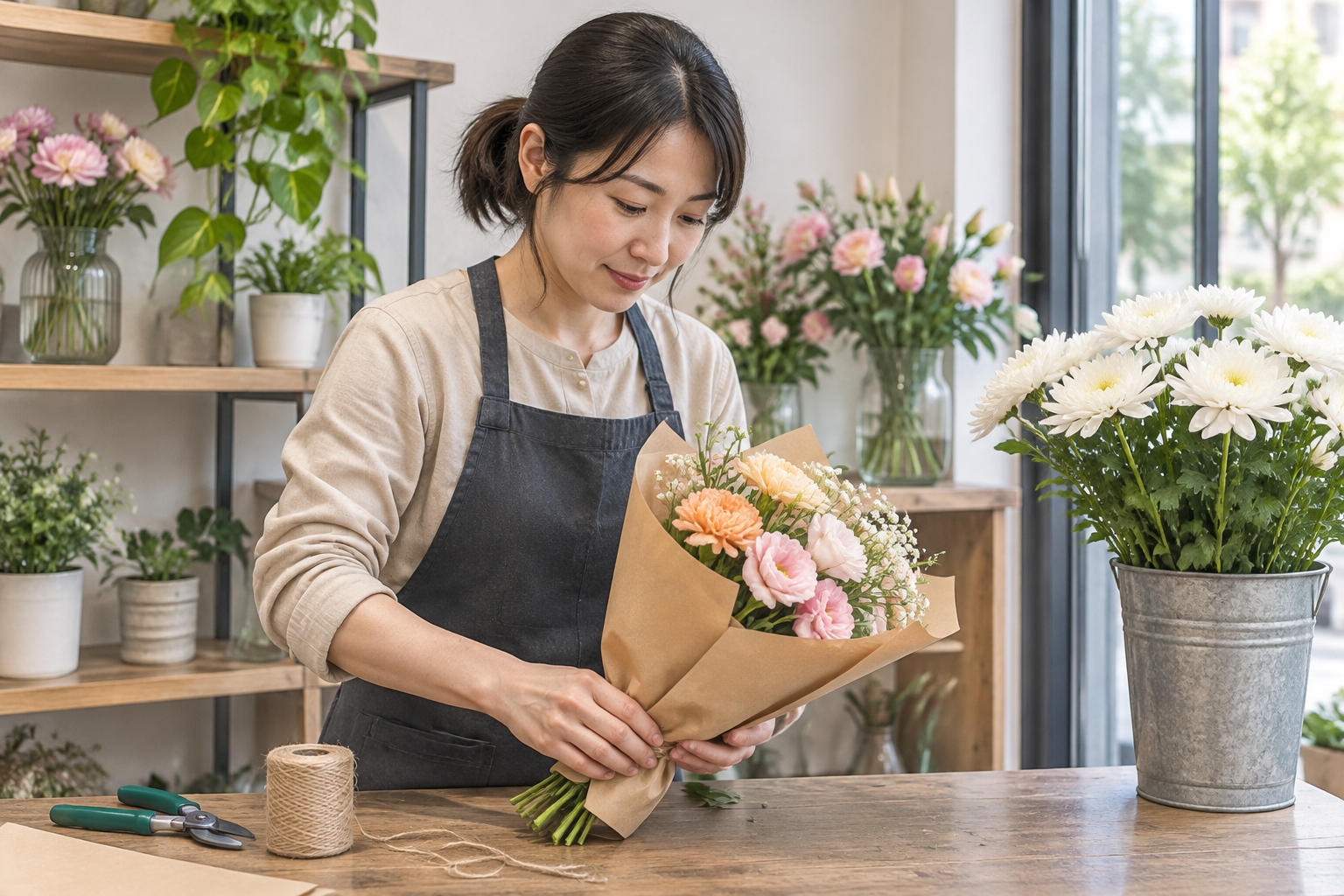
At a neighborhood florist, a tightly arranged bunch of white chrysanthemums and a loose bouquet of peach carnations with a few white flowers can read very differently. The first can recall a memorial arrangement. The second can look like an ordinary gift for a friend. White flowers also turn up at weddings and in cafés. The type of flower, the way it’s arranged, and the reason you’re handing it over all shape how it’s received.
For a hospital visit, check whether the ward allows flowers and ask what the patient would enjoy. If flowers are welcome and you’re unsure what to choose, tell the florist they’re for a hospital visit and ask for a small, lightly scented bouquet in soft pink or peach. For someone who loves white tulips and can receive them, the fact that you remembered their favorite flower may matter more than any general association with white.
Can you wear black or white to a Chinese wedding?
On a weekday subway platform, black coats, white sneakers, and white shirts are ordinary clothes. At a wedding, the cut and styling of an outfit matter alongside its color. A white shirt under a suit is a familiar sight. A floor-length white dress that looks bridal is a riskier choice if the bride plans to wear white, much as it would be at many weddings in North America or Europe.
A black suit may be entirely at home at a hotel banquet. At another wedding, a family may prefer brighter clothes in the group photos or feel that an all-black outfit looks too solemn. A wedding invitation shared in a group chat might include a palette, ask guests to dress formally, or give only a time and address. If you’re choosing between a black jacket you already own and buying something new, a quick message to the couple can settle the question.
Why a green hat is different from a green jacket
A green canvas tote, a sage cardigan, and a green phone case are everyday choices. The awkward association comes from the Mandarin phrase dài lǜ màozi, literally “to wear a green hat.” It commonly means that a man’s partner has been unfaithful to him. Give a man a green cap and someone who knows the phrase may hear a joke you had no intention of making.
People react differently. One man might buy a green cap because he likes the color, while another might skip it because he’s tired of hearing the same joke. Among friends who know one another well, it may be something to laugh about. The same gift can land differently at an office exchange, where a colleague has to open it in front of everyone. If you know he wants that particular cap, you have a good reason to buy it. If you’re picking a color for a surprise, navy is an easy choice.

How to choose colors for a wedding, visit, or gift in China
Start with whatever the host has already told you. For a wedding, read the invitation and any follow-up messages. If a cash gift is customary in that circle, ask a friend who knows the couple whether guests usually bring a paper red envelope or give their gift another way. For a visit, ask about the patient’s preferences and the ward’s rules before ordering flowers. For a birthday or a housewarming, you can often take your cue from the recipient’s own taste.
When the invitation gives you little to go on, ask about the actual thing you plan to bring or wear. “Would a navy suit be fine?” is easier to answer than “What colors are allowed?” At the florist, “I’m visiting a friend in hospital. Could you make up something small in peach or pink?” gives the person behind the counter enough information to help.
The next time you see a white gown under red flowers, look at what the guests do. They hand over the red envelopes at the reception table and turn toward the bride when she walks in. Each color makes sense in the moment it’s used.