
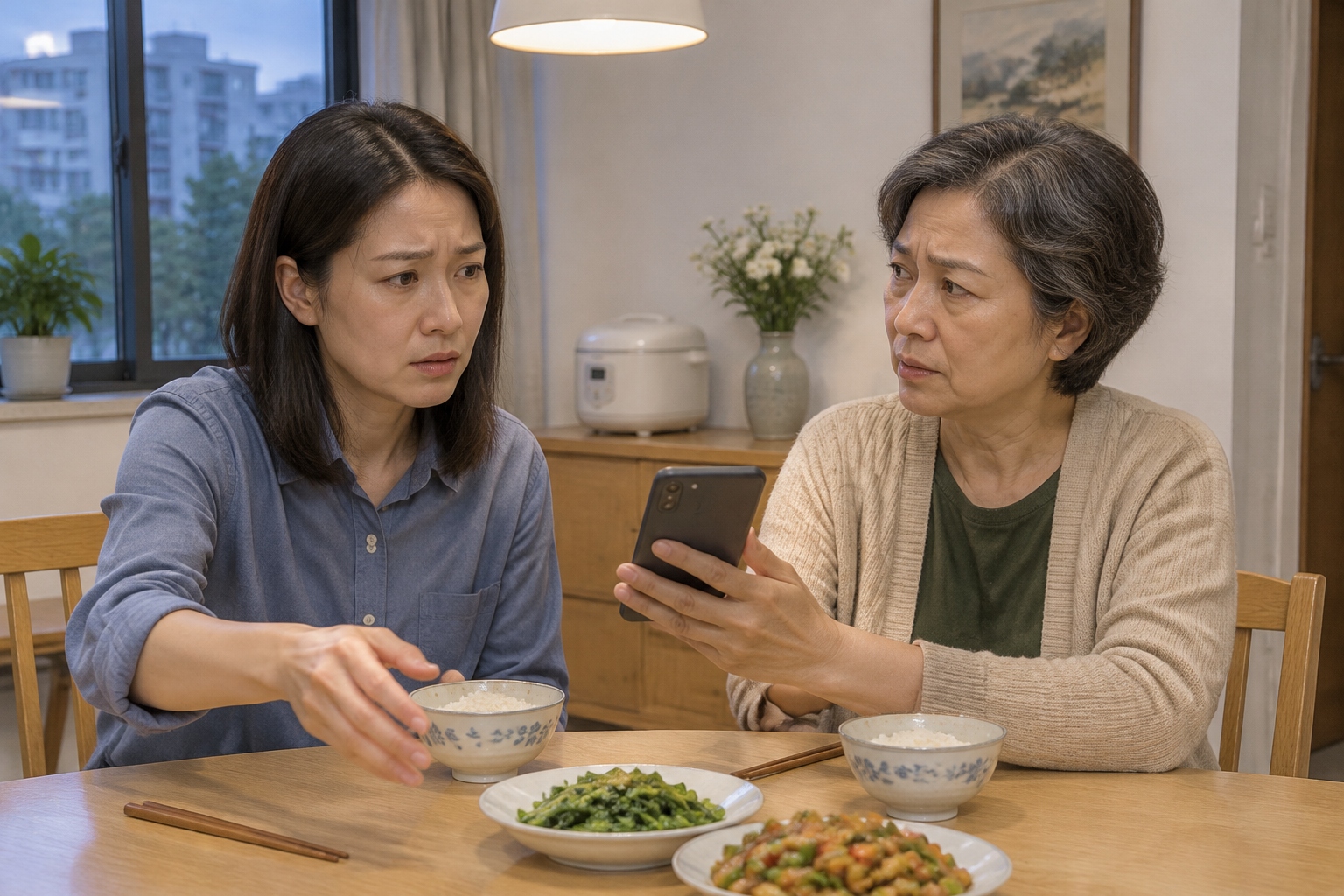

In an illustrative scene set in Chengdu, Lin Yue is clearing the dinner table when her mother turns her phone around. On the screen is a photo of a man a family friend wants her to meet. Lin, who is 32, says she would rather spend her one free afternoon that weekend on her own. Her mother says she has already told the friend yes. When Lin asks her to cancel, her mother puts down the phone. “We’re only asking you to meet him once. How can you be so unfilial?”
What gives the word its force is the moment it comes out. Lin thinks she is saying no to a Saturday appointment. Her mother has made a promise to a friend and sees the introduction as a small step toward making sure her daughter has someone to share her life with. In the space of a few sentences, whether Lin will show up for coffee has become a question about what kind of daughter she is.
The family scenes and dialogue in this article are fictional illustrations. The research discussed below draws on published interviews and fieldwork.
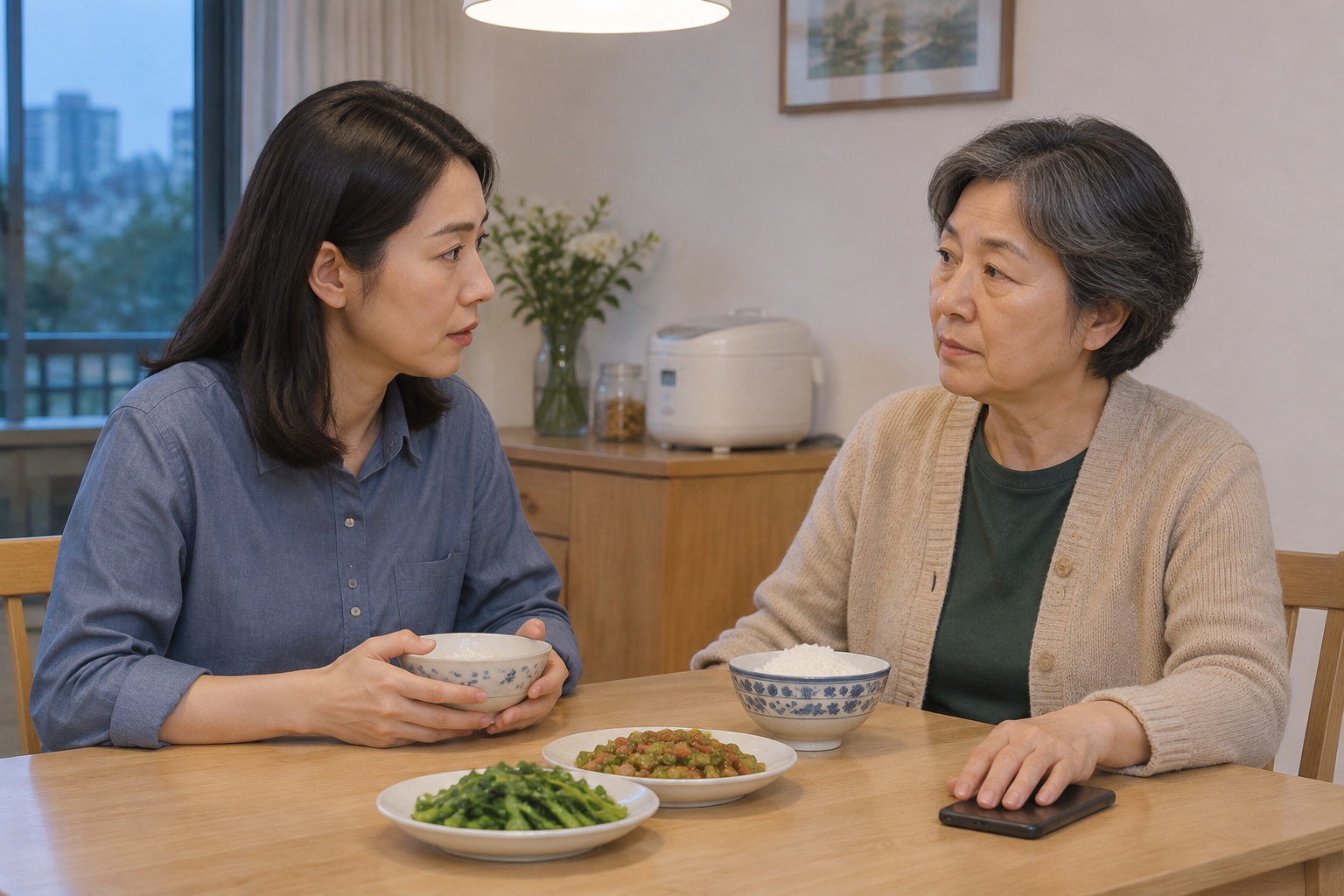
What filial piety means in an ordinary Chinese family
Xiao (孝) is usually translated as “filial piety.” In everyday life, it can mean calling your father after a medical appointment, sending money when your parents need it, or making the trip home for Lunar New Year. A reader in Britain or the United States might recognize the practical question immediately. If your mother has spent years looking after you, what can she reasonably expect when she needs help?
In some Chinese families, xiao also shapes how much say parents expect to have in an adult child’s plans. A parent may count hearing them out, attending a blind date, or taking their hopes for grandchildren seriously as forms of respect. An adult child may count the same visits and phone calls as evidence of devotion while treating the decision to marry or have a child as their own. Both can feel they are taking the relationship seriously. They disagree about what the relationship entitles each person to ask of the other.
Chinese law draws a distinction here. The Law on Protection of the Rights and Interests of Older Persons says family members who live apart from older relatives should visit or keep in touch regularly. Article 1046 of the Civil Code says marriage must be entered into voluntarily by both parties. At the dinner table, however, the pressure often comes from knowing exactly whose feelings you will hurt when you exercise that choice. Civil Code of the People’s Republic of China.
Why marriage and children can feel like family commitments
Anyone who has fielded a grandchild question over a holiday meal will recognize part of the conversation. What may be more striking to an overseas reader is how many jobs parents in China can take on around a marriage. A mother might arrange an introduction through a colleague. Both sets of parents might discuss a contribution toward an apartment. A couple thinking about a baby might ask whose parents could cover the hours between nursery pickup and the end of the workday. When relatives expect to put money or time into a marriage, they can come to see its timing as something they have a stake in.
Anthropologist Vanessa Fong’s Only Hope, published in 2004, followed young people and their families in Dalian during the one-child-policy era. Her fieldwork documents how parents concentrated money and attention on their only child and how young people understood their own futures in relation to those investments. Those families belong to a particular place and period. Their stories help explain how a parent’s offer of help today can carry years of accumulated expectation, even when nobody has explicitly asked for anything in return.
Journalist Leta Hong Fincher’s Leftover Women, first published in 2014, draws on interviews that show how pressure on women to marry can mesh with decisions about housing and property. A family might help finance a home, while questions about whose name goes on the title shape what each spouse owns. That makes a conversation about marrying “in time” more consequential than it sounds. A daughter weighing a match may be thinking about her financial position and the daily work of a future household. Her parents may be thinking about the security they expect marriage to provide.
On the birth of a child, the two generations can also be working with different calendars. A parent nearing retirement may think there are only a few years left when they will be healthy enough to help with a baby. Their adult child may be thinking about a contract that expires next spring, whether they can afford time away from work, or how much childcare a partner will actually take on. The same offer to help can sound like reassurance on one end of the phone and a deadline on the other.
What families can settle when they disagree about marriage
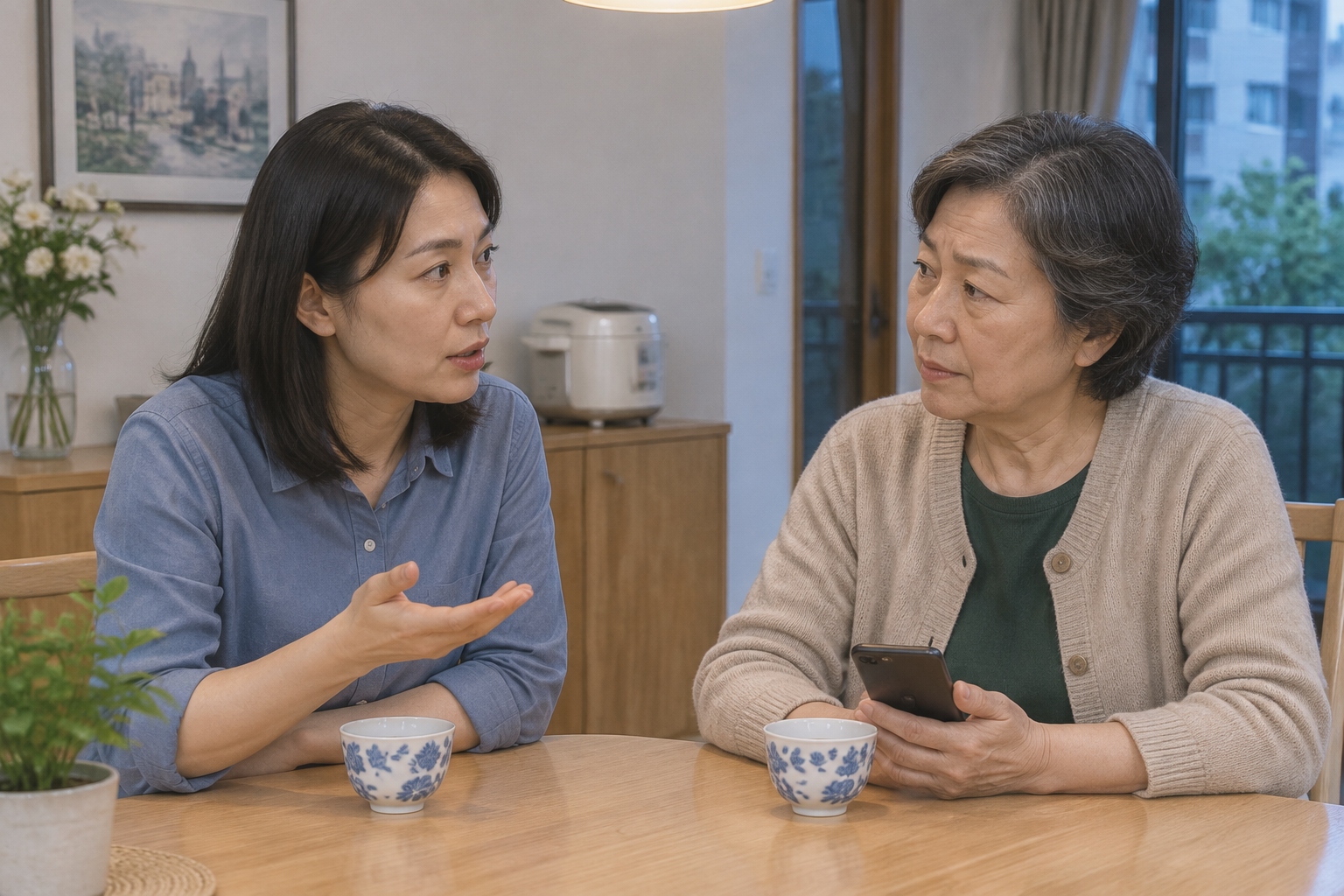
Return to Lin’s fictional family a few weeks later. She tells her mother she is willing to hear about someone her mother thinks she might like, as long as she asks first and leaves any reply to Lin. Her mother says it will be awkward to go back to the family friend. Lin offers to send the message herself. They still disagree about whether she should be looking for a husband, but they can settle who gets to accept an invitation. The next time a photo comes through, her mother asks before passing along Lin’s number.
A discussion about having children can be harder to settle. Imagine another adult daughter and her father talking on the phone on a Sunday. He offers to move closer if she has a baby. He has already checked how long the bus takes from his apartment. She tells him she has decided against having children. She also asks whether he wants her to come along to his hospital appointment on Thursday. He says yes and texts her the registration time. The next Sunday, he brings up the baby again. They have agreed on who will go to the hospital, and each still knows exactly where the other stands.
Filial piety after the argument
In some families, the relationship grows easier when parents see their adult child has people to call in a crisis and a life they want to keep. In others, the same question comes up at successive Lunar New Year dinners. An adult child may shorten a visit to get some breathing room, and a parent may experience the early departure as another hurt. The cost of disagreement depends partly on how much the two generations rely on each other for housing, money, or hands-on care. A person who lives independently can end a tense phone call more easily than someone who has to sit down at the same table the next morning.
For Lin and her mother, progress looks modest. Her mother can still hope for a wedding, and Lin can still come over for dinner. After the dishes are stacked, her mother remembers that she needs help booking an eye exam on her phone. Lin pulls up a chair. They go through the available appointments together, and her mother picks the time herself.