

A Saturday blind date, and the message before it
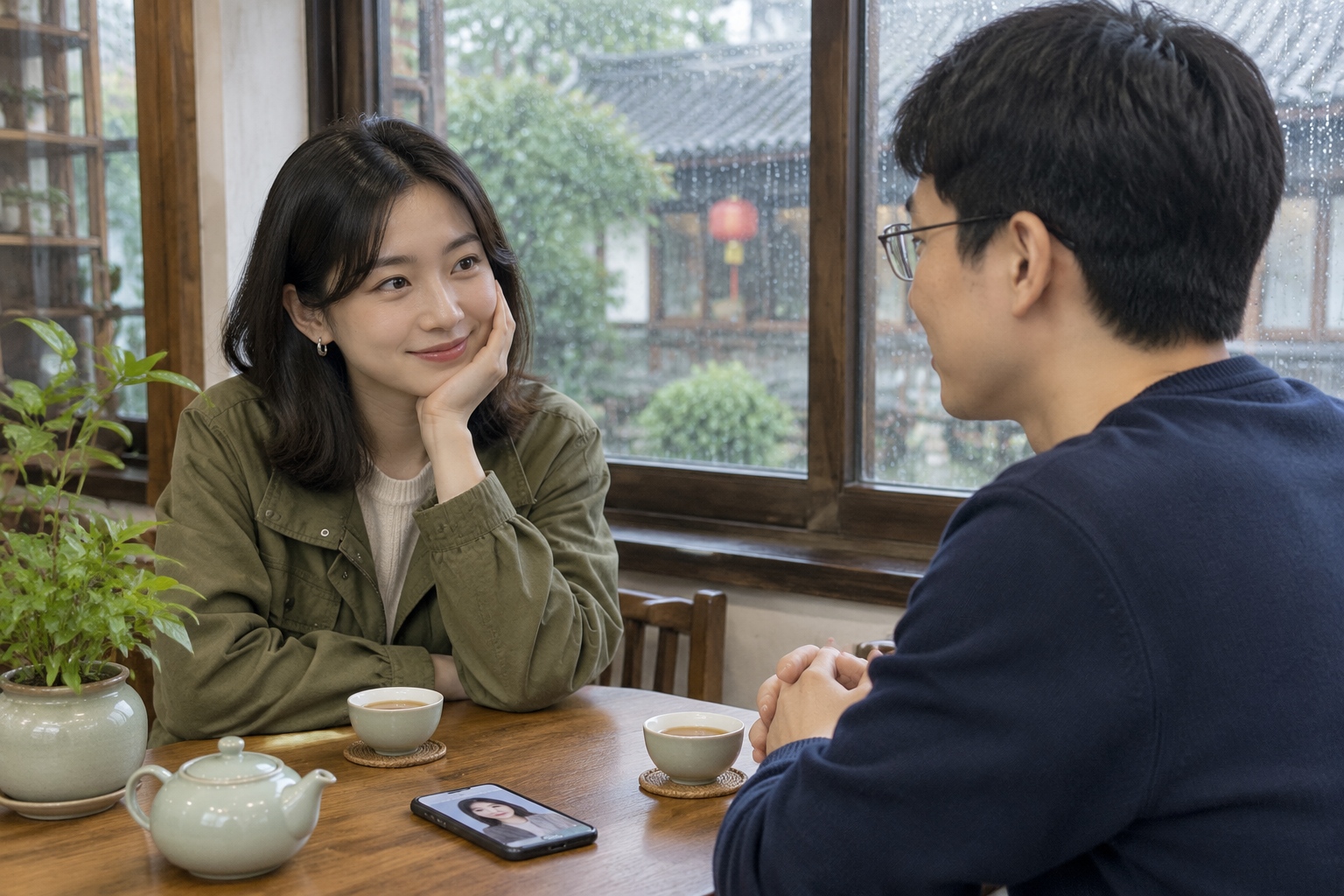
On a rainy Saturday in Shanghai, Lin Wei, 29, sat in a tea house in Putuo district across from a 31-year-old software engineer she had never met. They had 90 minutes. They talked about work, commutes, and tea that was too sweet. Neither mentioned the WeChat message that had set up the meeting: a photo, a birth year, a job title, and a line from her mother — “This one looks reliable. Meet him once.”
Lin is a product manager. She lives alone, pays her own rent, and has dated men she chose herself. Still, she agreed to the tea. “I was curious,” she said. “And I knew that if I ignored it, my mother would ask again next week.”
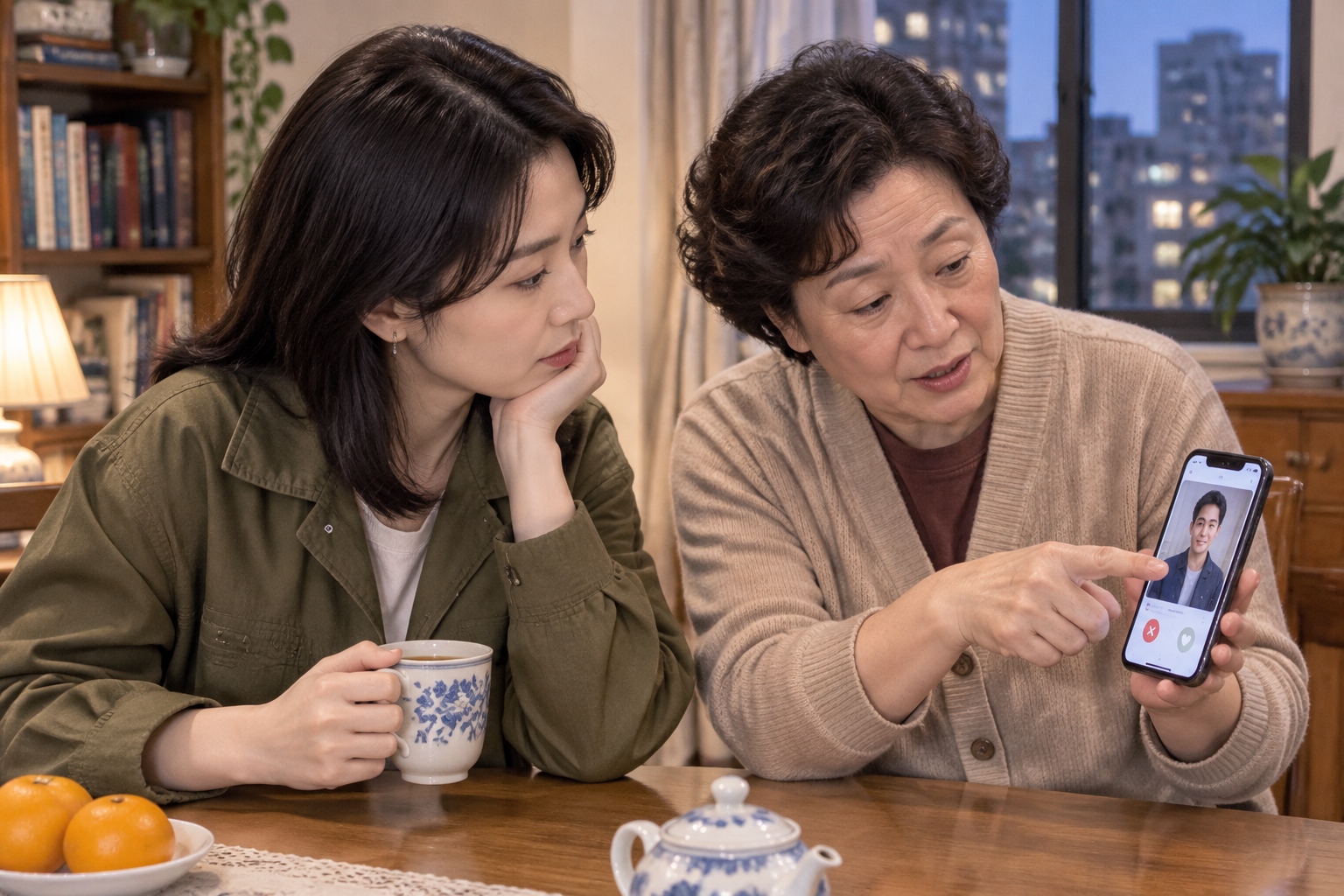
That small exchange is a better starting point than the old story of forced marriage. In China today, parents rarely arrange marriages in any legal sense. But they often shape the pipeline: who gets introduced, what facts are exchanged before two people meet, and how much their approval matters once a relationship gets serious.
How much say do parents really have? There is no single answer. It depends on the city, the family’s money, the adult child’s independence, and whether the parents were asked for help or are pushing without an invitation.
Who finds the match? Often a parent’s network
Lin’s introduction came through her mother’s former colleague, whose neighbor knew the engineer’s aunt. The two mothers exchanged basics first: age, height, hometown, job, whether the man had an apartment, whether his parents had pensions. Lin saw his photo only after that. For many young Chinese, a xiangqin — a “mutual seeing,” usually translated as a blind date — is not a dramatic family summit. It is a low-cost introduction, often managed by parents or relatives.
Young people are not passive. Dating apps, workplace romances, friend setups and hobby groups are common. But parental introductions have not disappeared. In Chengdu, a mother told me she keeps a mental list of “available” young people in her WeChat contacts. “I don’t force my daughter,” she said. “I collect possibilities.” Her 27-year-old daughter, a designer, sometimes asks her to look. “My mom knows which families are stable,” she said. “I know what I find attractive.”
Who decides whether the date happens? Usually the adult child. A parent can suggest, send a photo, or book a table. The son or daughter can say yes, delay, or refuse. The refusal may cost something — a lecture, a silent dinner, a mother’s sigh — but it is still a refusal. The real test comes after the first meeting.
Why housing and job stability come before “Do you like him?”
After Lin’s tea, her mother called before she reached the subway. She did not ask whether he was handsome. She asked: “What is his work like? Is it stable? Does he have a mortgage? How are his parents?” Lin laughed when she told me. “It sounds cold,” she said. “But my mother is not wrong. In Shanghai, falling in love is easy. Building a life is expensive.”
This is where parental influence becomes concrete. Housing is not just a status symbol. An apartment is tied to a down payment, a mortgage, school access, and a family’s sense of security. If parents help with a down payment, they often expect a say in where the flat is, whose name is on the deed, and how the loan will be managed. Even when they contribute nothing, they ask because they know how much a mortgage can shape a young household.

Job stability is discussed for similar reasons. A government job, a public institution post, a state-owned enterprise role, and a large tech company job carry different hours, layoff risks, and retirement benefits. A 32-year-old engineer in Shenzhen, whom I’ll call Zhou, said his parents in Hunan always ask whether a woman has a “stable unit.” He finds the phrase old-fashioned. “But then I remember my parents had no pension when they were young,” he said. “They are thinking about what happens if someone gets sick.”
Family background enters early, too: hometown, parents’ pensions or health insurance, whether the adult child is an only child, whether the two families live in the same province. Some of this is practical — childcare, elder care, holiday travel. Some is status. Families often pool money, time, and care, so these questions are not always snobbery. They are a way of asking what kind of life two people would actually share.
Lin puts it more simply. “I used to think parental approval was old-fashioned,” she said. “Now I think it is a risk report. I don’t have to follow it, but I want to read it.”
What parents call help, adult children call pressure
Lin’s mother, 58, sees herself as a researcher, not a manager. “I am not arranging her life,” she said. “I am helping her avoid obvious mistakes.” She screens for age, job, family, and whether a man seems serious. She also worries about time. Lin is 29. In her mother’s generation, 29 was late. “I don’t want to pressure her,” she said. “But I am her mother. If I don’t remind her, who will?”
Lin hears something different. “She says she is helping,” Lin said. “But when she sends three profiles in one week, it feels like a performance review. I want her help as a radar, not a steering wheel.”
That radar-versus-steering-wheel distinction came up again and again. Parents describe their role as gathering information, screening risk, and building networks. Adult children describe the same behavior as pressure. Both can be true. A parent’s network can open a door; it can also make a child feel watched. A question about a mortgage can be practical; it can also imply that love alone is not enough.

Some families negotiate clear rules. The Chengdu designer told her mother: send the profile, but do not call the other family until I say yes. “She mostly follows it,” she said. “When she doesn’t, I go quiet for a few days. That is our negotiation.” A 35-year-old consultant in Beijing stopped accepting blind dates after a fight with his father. “He kept saying he was doing it for me,” he said. “I told him: then let me decide what I want. We didn’t speak for a month. Now he asks less.”
Other adult children actively ask for help. A 30-year-old teacher in Suzhou said her parents helped her buy an apartment; in return, she includes them in serious relationship decisions. “It is not romantic,” she said. “But they gave me a floor under my feet. I owe them a conversation.” A couple in Nanjing said grandparents help with childcare, which makes their jobs possible but also gives the grandparents a louder voice in how the child is raised. “You cannot take the help and refuse the opinion,” the mother said.
Four families, four boundaries
The active helper
Some parents are asked to collect profiles and use their network. The adult child keeps the final yes or no. This suits busy young professionals who trust their parents on “seriousness” but not on attraction.
The advisory board
Some parents give opinions only after a relationship begins. They meet the partner, ask practical questions, and say their piece. Their power is moral, not mechanical. It comes from respect, money, or the fear of disappointing them.
The pressure cooker
In some homes, the pressure is constant: daily calls, forwarded profiles, reminders about age and family reputation. The child may go on dates to keep the peace, then withdraw. It is exhausting, but it is not the same as forced marriage. It is a negotiation with unequal emotional stakes.
The refusal
Some adult children say no and mean it. They move to another city, limit contact, or stop discussing their love life. Parental say shrinks — not because the parents changed their minds, but because the child changed the terms of the conversation.
So how much say do parents really have?
In today’s China, parents often have a lot of say at the beginning and less at the end. They are strong at sourcing, screening, and setting the terms of a serious match. They are weaker at forcing two adults to love each other, especially when those adults are financially independent and live away from home. The exceptions matter. When housing, childcare, or family money is involved, parental influence grows. When a family owns property or runs a business, the stakes are higher. When the adult child is young, underpaid, or emotionally close to the parents, the line between advice and pressure gets thinner.
Lin did not go on a second date with the engineer. He was polite, she said, but they had little to talk about. Her mother was disappointed. “She said I was too picky,” Lin told me. “I said I was being honest.” A week later, her mother sent another profile. Lin opened it on the subway. She did not say yes. She did not say no. She put the phone in her bag and went to work.
That pause is probably the most accurate answer. Parental say in Chinese dating and marriage is not a single command. It is a conversation that never quite ends — part care, part calculation, part habit, and part love. The adult child may hold the final pen. But the parent often helps write the shortlist.