

The scene that starts the argument
A hero in a long coat sprints at a stone wall, takes two steps up the vertical surface, flips backward over a tiled roof, and lands without cracking the teacup in his hand. It is a classic qinggong moment in a wuxia film—the Chinese genre of martial-arts fantasy—and it is built to make gravity look negotiable.
So here is the question that starts every argument after the credits: did the actor really do that? The short answer is more than you think, and less than the shot implies. The long answer involves wires, mats, editing, physics, and a group of Chinese stunt performers and athletes who can do genuinely impressive things with their bodies—just not the thing the camera seems to show.

Qinggong is not anti-gravity. It is a bundle of skills.
For readers outside Chinese film culture, qinggong often gets translated as “flying kung fu.” That translation is catchy and slightly useless. In wuxia stories, qinggong is a lightness skill: the ability to move over walls, water, roofs, and bamboo with unnatural grace. On screen, it is not one trick. It is a bundle of stunts and movement skills cut together—a run-up, a takeoff, a wall push, a climb, an airborne pose, a landing, and the camera rhythm that glues them into one impossible action.
Each ingredient exists in real life. The impossible part is the seamless combination, the altitude, and the energy bill. A human can sprint, jump, plant a foot on a wall, pull up, vault, and land. A human cannot ignore gravity for twelve seconds while a sword fight happens underneath.
Behind the camera, “light” is a technical department
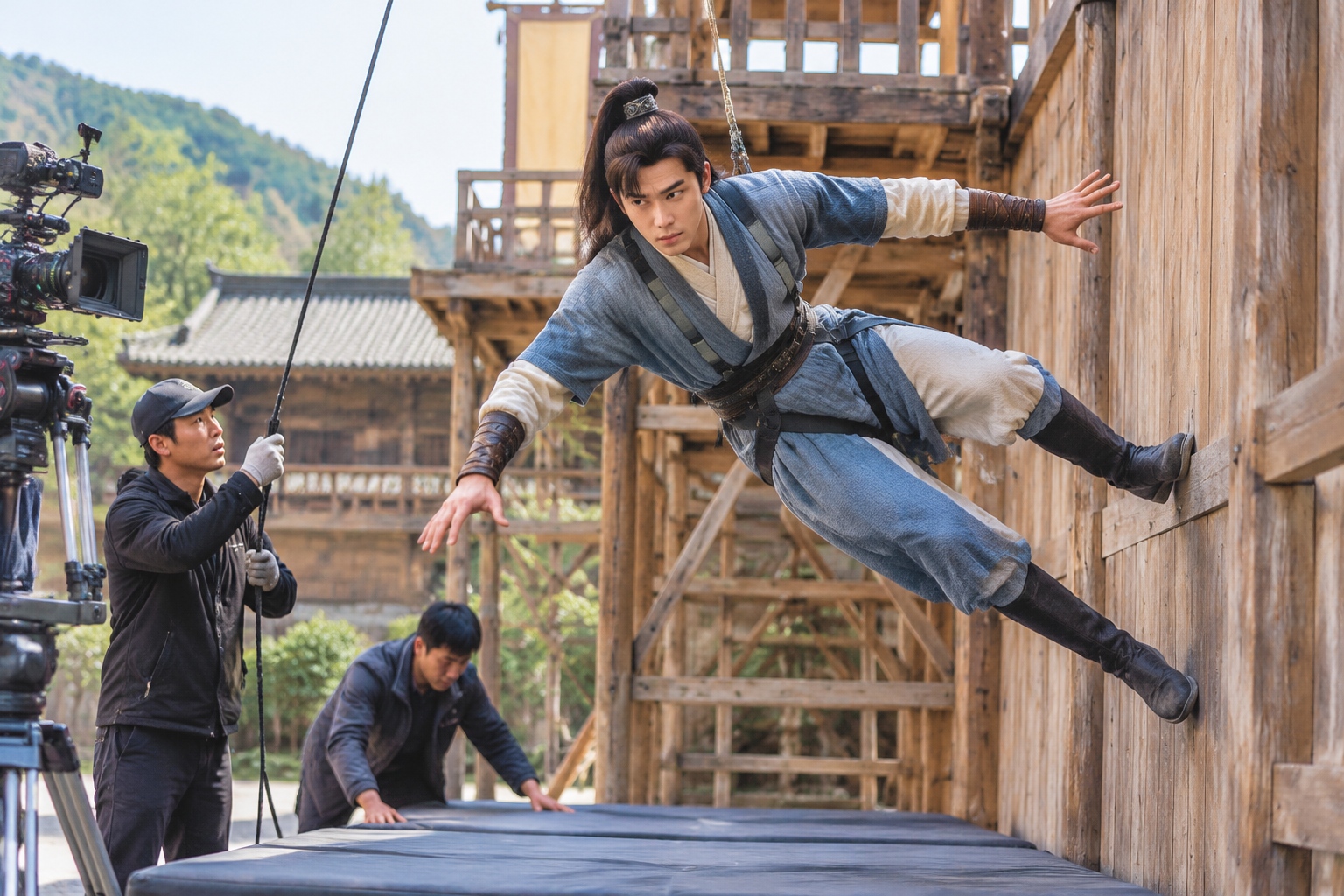
On a Chinese film set, wirework is usually called weiya. A performer wears a harness under the costume; cables run to pulleys, a counterweight system, or a crew of people who are about to get a very specific workout. Add a trampoline, a hidden platform, a ramp, or a padded box, and the body can leave the ground with less effort than the final shot suggests.
Then editing takes over. A jump that starts on a low wall can finish on a roof if the camera cuts while the performer is out of frame. A short fall can look long in slow motion. Safety mats disappear in post-production. A wide lens can make a courtyard feel taller; a low angle can make a two-meter drop feel like a temple roof. The actor may do the takeoff, the stunt double may do the flip, and the visual-effects team may erase the cable that made the coat billow at exactly the right moment.
None of this is a scandal. Film is not a physics demonstration; it is a mood machine. If you want to see the truth, watch a behind-the-scenes clip. The moment a harness appears, the mystery changes from “Can humans do that?” to “How did they hide the cable so well?”
The trainable ingredients are already in Chinese cities
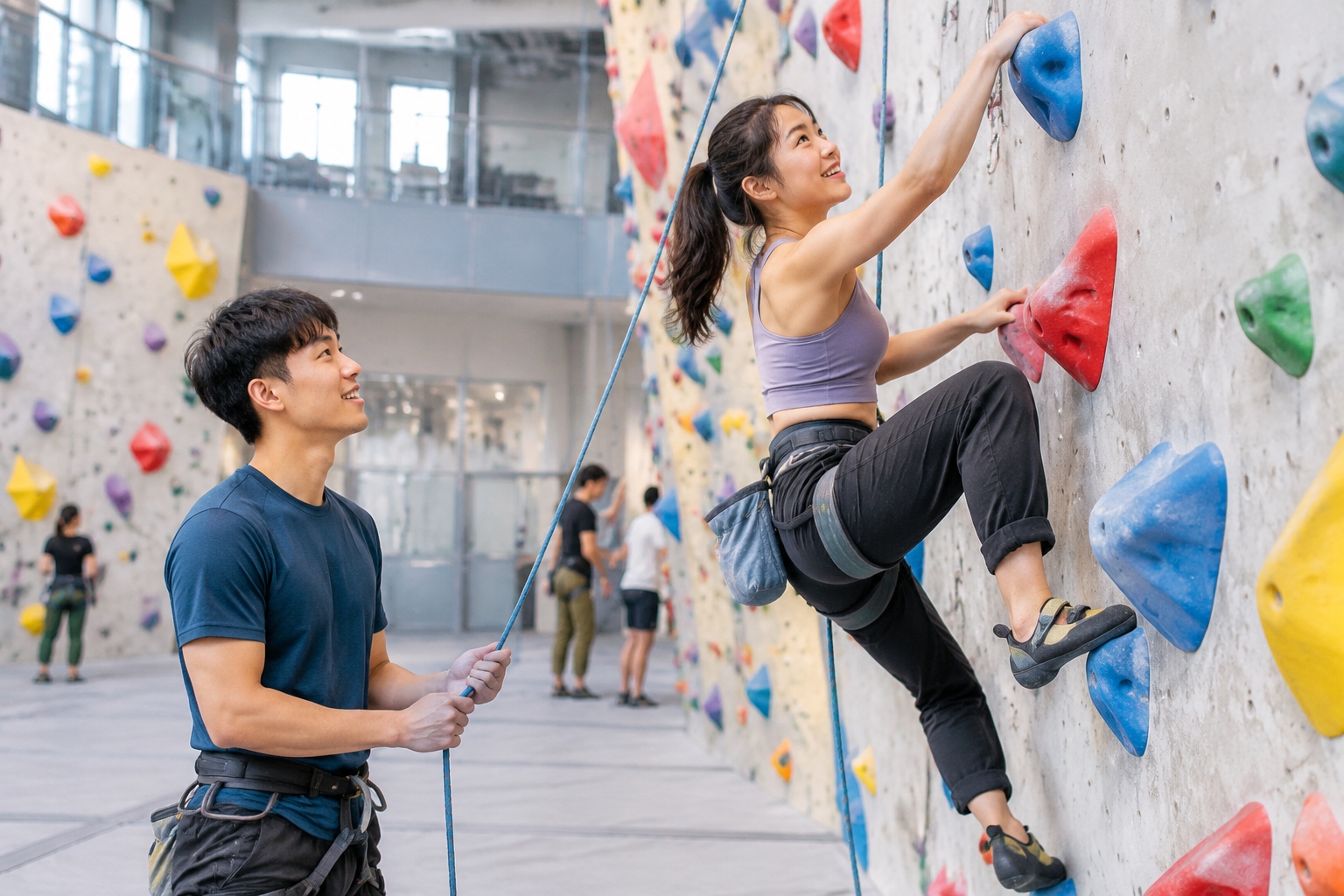
If you want to see the real parts of qinggong, skip the roof and go to a gym. On weekday evenings in Shanghai, Chengdu, Beijing, and Shenzhen, parkour gyms fill with young adults practicing precision jumps, vaults, cat hangs, and the unglamorous art of landing quietly. Indoor climbing walls are packed with people working on grip, foot placement, and the small decision-making that keeps a body attached to the wall. Wushu schools still drill jumps, stances, and falls. Gymnastics clubs teach body tension and spatial awareness. Firefighters train wall climbs and rope work for reasons that have nothing to do with cinema.
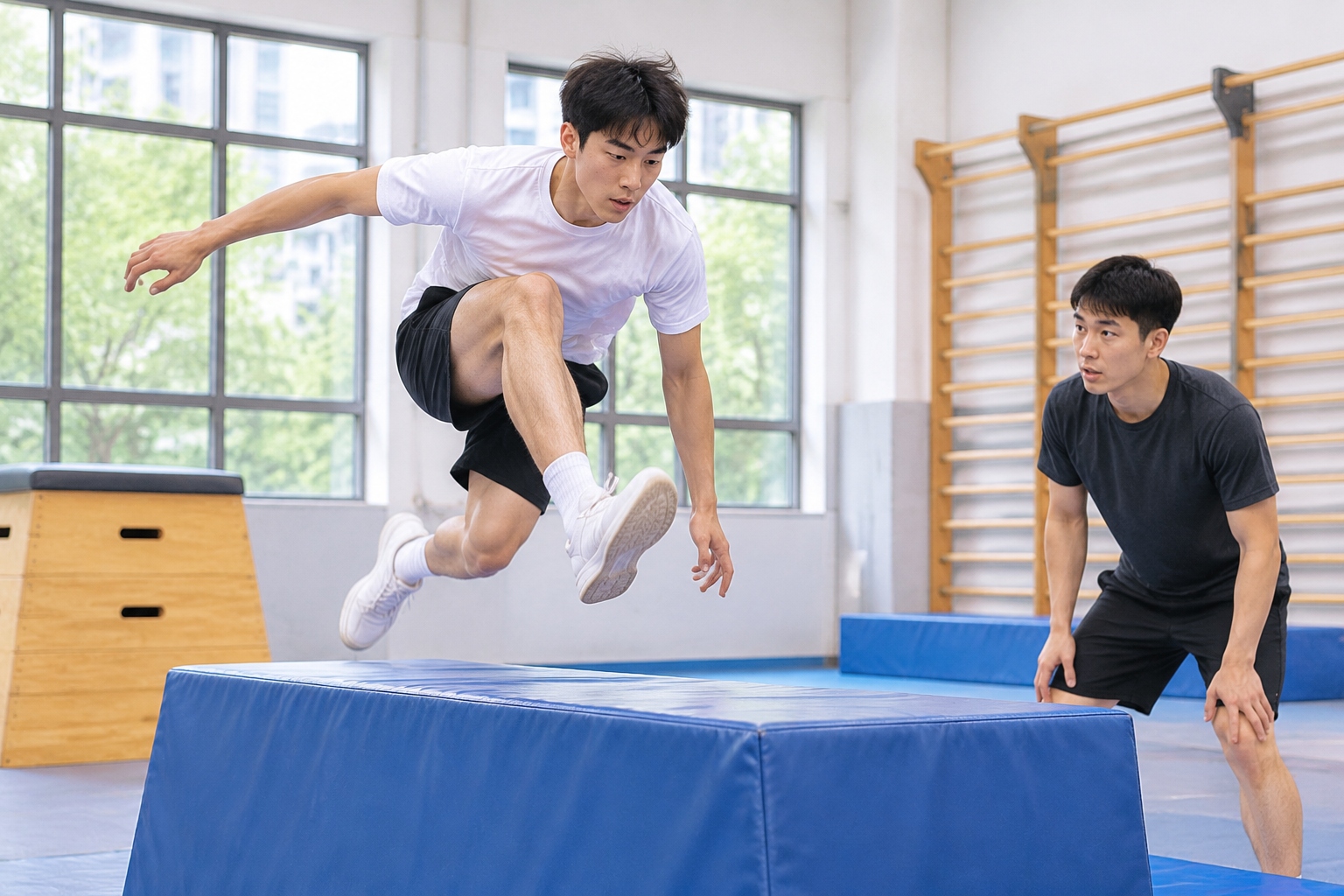
None of these people call what they do qinggong. But they are training the same raw materials: explosive takeoff, coordination, ankle strength, grip endurance, and the ability to absorb impact without folding like a cheap umbrella. That is the useful, unromantic core of the fantasy. The movies show the flight; the training shows the invoice.
Physics sends a very polite but firm invoice
Gravity accelerates a falling body at about 9.8 meters per second squared. Jump height depends on takeoff speed: to rise three meters, you need an upward launch speed of roughly 7.7 meters per second, before air resistance and the fact that your legs are not rocket boosters. The world record in the high jump is about 2.45 meters, achieved with a highly specialized technique and a soft landing mat. Most fit adults can jump far less.
Wall running has its own limits. Each step on a vertical surface needs friction and a push away from the wall. A runner with good shoes, speed, and technique can take a few steps up a wall and push off. That is parkour, and it is impressive. It is not a twenty-meter vertical sprint. The higher you go, the less speed you have, and gravity keeps charging interest.
Landing is where the fantasy usually ends. When you hit the ground, your body has to shed momentum. The force depends on how quickly you stop. A seventy-kilogram person dropping from three meters lands with an impact that can be several times body weight; bend your knees, roll, or use a mat, and you spread that force over more time. Land straight-legged on tile and your ankles file a complaint immediately.
This is why “jump high, land soft, climb fast” is trainable, while “fly over the roof” is not. Qinggong on screen is a beautiful accounting error. Real movement has a budget.
The people who train the movable parts
At Hengdian, China’s biggest film production base, stunt performers spend their days not flying but repeating. A fall has to look accidental on take three. A wall run has to end on the same mark every time. A harness has to be checked, adjusted, and checked again. The job is physical, technical, and often boring in the way that safety work is boring—which is exactly why it works.
Parkour coaches tend to teach in the opposite direction from the movies. First learn to land. Then learn to jump. Then add height, distance, and style. A teen in a Chengdu parkour gym may spend a whole session on small hops and quiet feet before trying a vault. At a climbing gym, a beginner learns to trust a foot edge before reaching for the next hold. A wushu student practices the same landing until the knees bend without thinking.
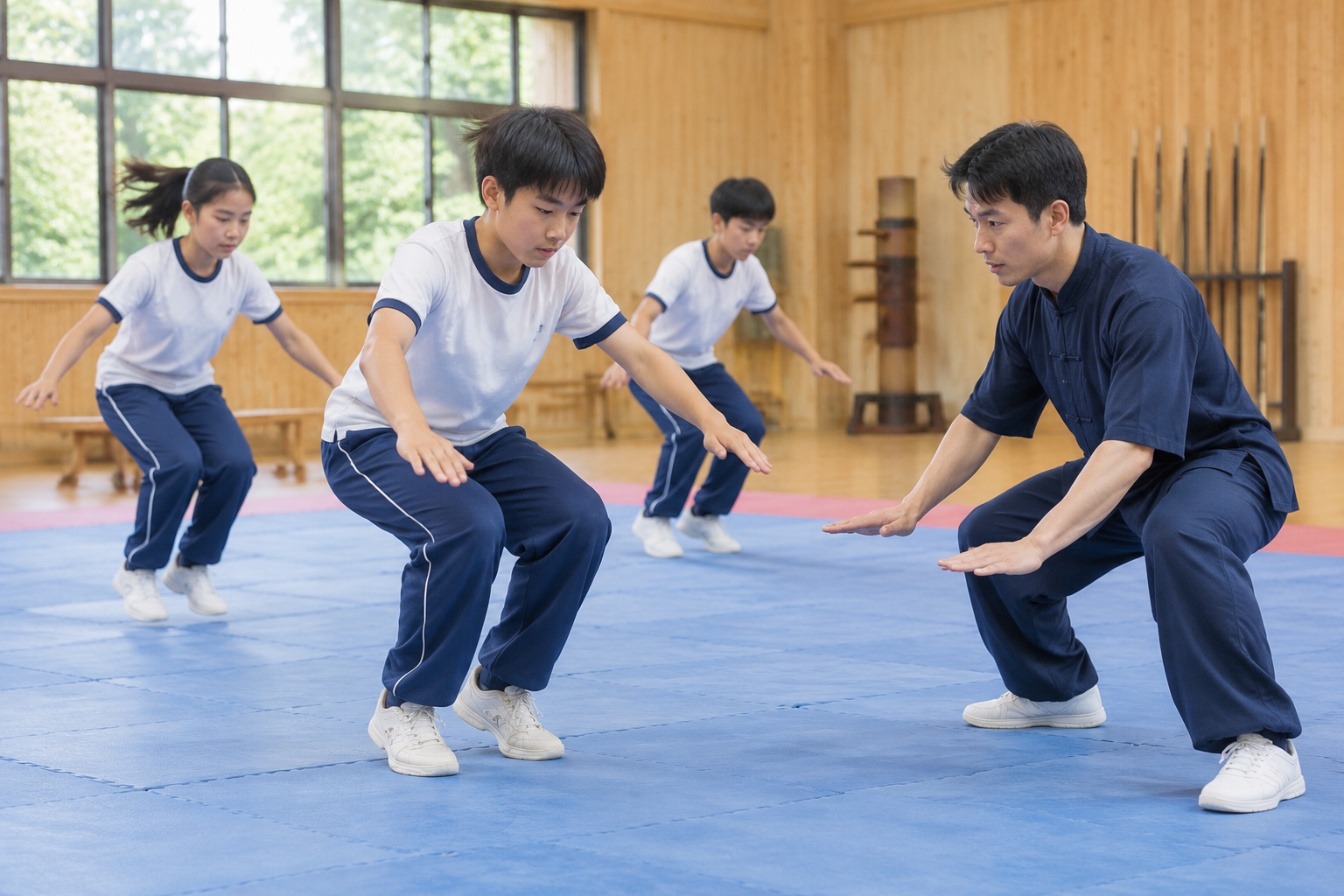
The gap between them and a wuxia hero is not talent. It is compression. A film squeezes years of training, several crew members, a harness, and a good editor into twenty seconds. That is fair. Movies are allowed to compress. The mistake is expecting the screen to be a training manual.
A quick field guide to watching qinggong
Next time a hero runs up a temple wall, try watching like a crew member. It does not ruin the fun; it adds a second layer of fun.
- Watch the takeoff. Real jumps have a clear preparation: a step, a crouch, a swing of the arms.
- Watch the frame. If the body leaves the shot just before the impossible part, suspect a cut, a platform, or a wire.
- Watch the landing. A soft, quiet landing from a big height is harder than a dramatic pose.
- Watch the clothes. Coats and sleeves are excellent at hiding harnesses and cables.
- If you feel inspired, find a parkour gym, climbing gym, wushu club, or gymnastics class. Do not test qinggong on a rooftop, a railing, or a construction site.
The safe version of the fantasy is still excellent exercise. It also teaches a lesson familiar in Chinese martial arts culture: skill looks effortless only after a lot of unglamorous repetition.
Why qinggong still looks beautiful
Qinggong survives because it expresses something wuxia audiences have always loved: freedom from weight. In a genre full of taxes, corrupt officials, family obligations, and very sharp swords, the hero who can step onto a bamboo branch is a hero who has briefly escaped the rules. The body becomes a poem. The roof becomes a road. The camera gets to be a bird.
Today that dream lives in several places at once. It is in film language, where a good wire rig and a smart cut can still make an audience gasp. It is in the growing Chinese parkour and climbing scene, where young people train the real ingredients without pretending to be immortal. And it is in the ordinary pleasure of watching someone land well—knees bent, weight controlled, teacup somehow still intact.
So can qinggong be real? Not the flying version. The trainable version is real enough: run, jump, climb, land, repeat. You will not soar over a tiled roof. But you might jump a little higher, climb a little better, and land a little softer than you did last month. Gravity will still send the bill. At least you can learn to pay it with better form.
Start the discussion at forum.chinacomes.com