

A Morning at the Acupuncture Clinic
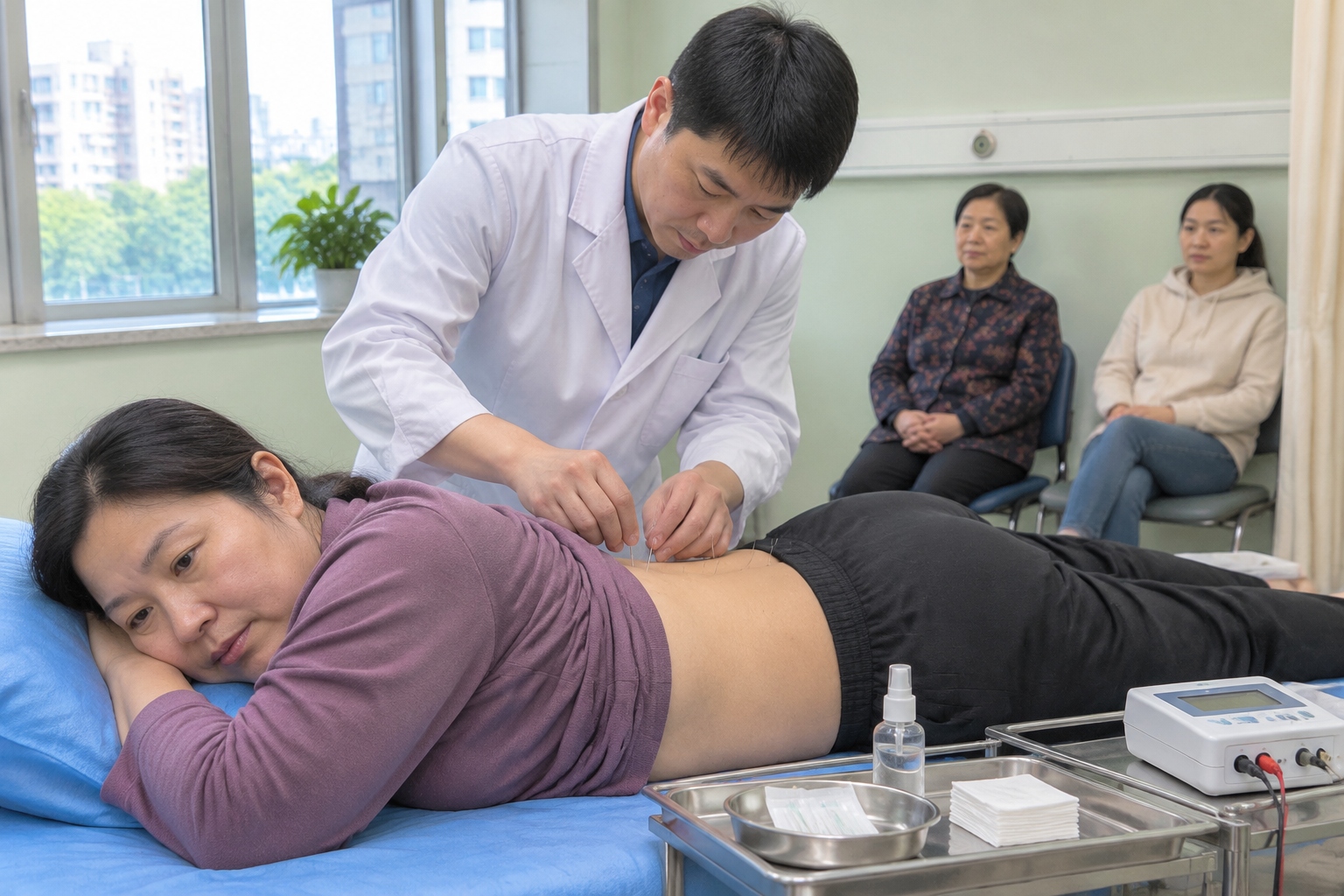
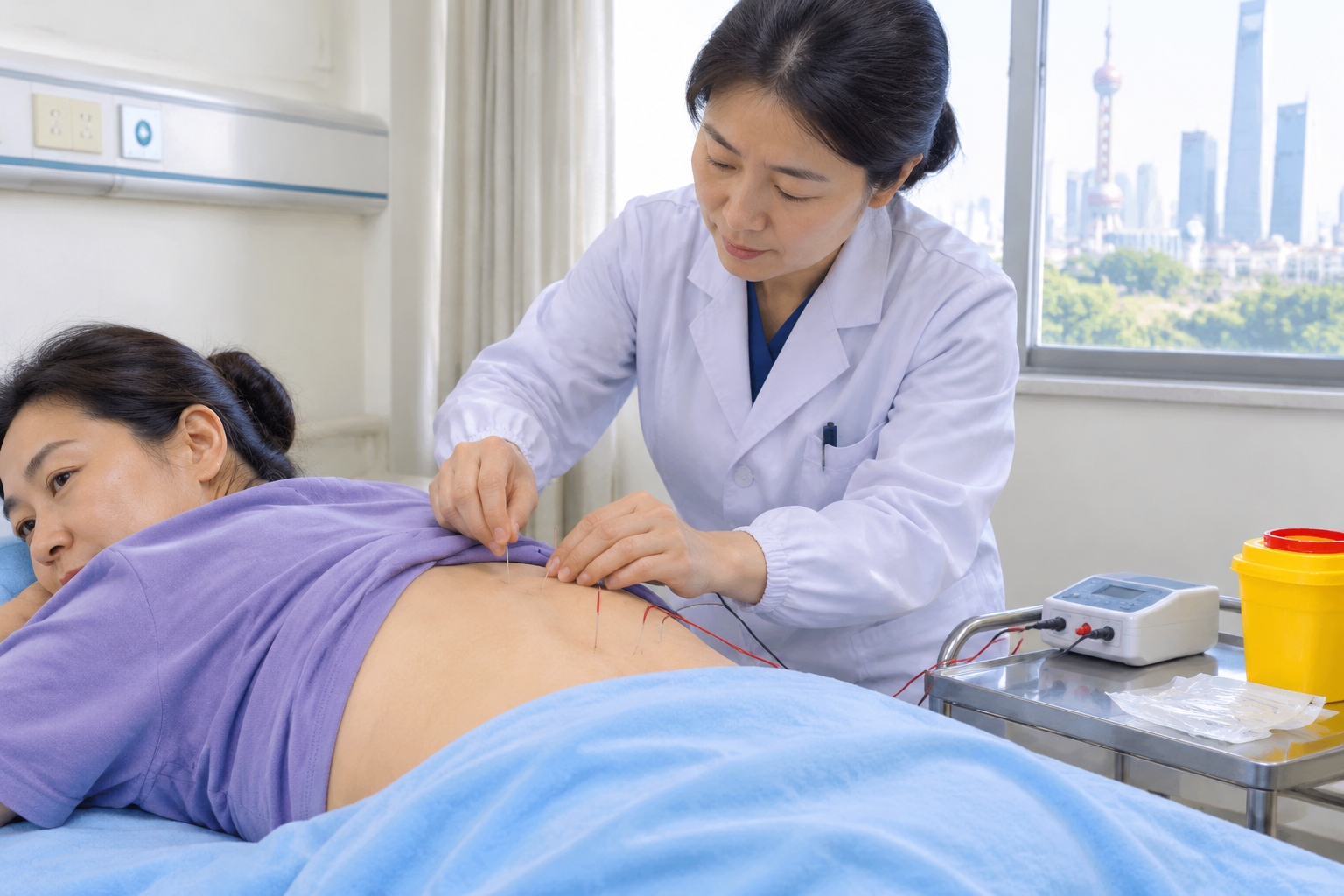
At 8:40 a.m., the waiting area of the acupuncture department at a public Chinese medicine hospital in Shanghai is already full. A woman in her fifties lies on her side on a treatment bed, her lower back exposed. The doctor swabs the skin with alcohol, tears open a sterile packet, and slides a hair-thin needle into a point beside her spine. He twirls it gently. “Sore?” he asks. She nods. He inserts three more needles — one in the buttock, one below the knee, one at the ankle — then connects two of them to a small electrical stimulator that hums softly.
The whole thing takes less than five minutes. She will lie there for twenty. This is a routine scene in hospitals across China: acupuncture is not a boutique wellness service here but a standard department in most public hospitals, covered by public insurance, and often busy before 9 a.m.
For a foreign reader, the harder question comes after the needles are in. What, exactly, is the doctor stimulating? The answer involves a model of the body that predates modern anatomy by more than two thousand years — and that still shapes how millions of people describe their own bodies today.
Meridians: A Pathway Model, Not a Hidden Organ
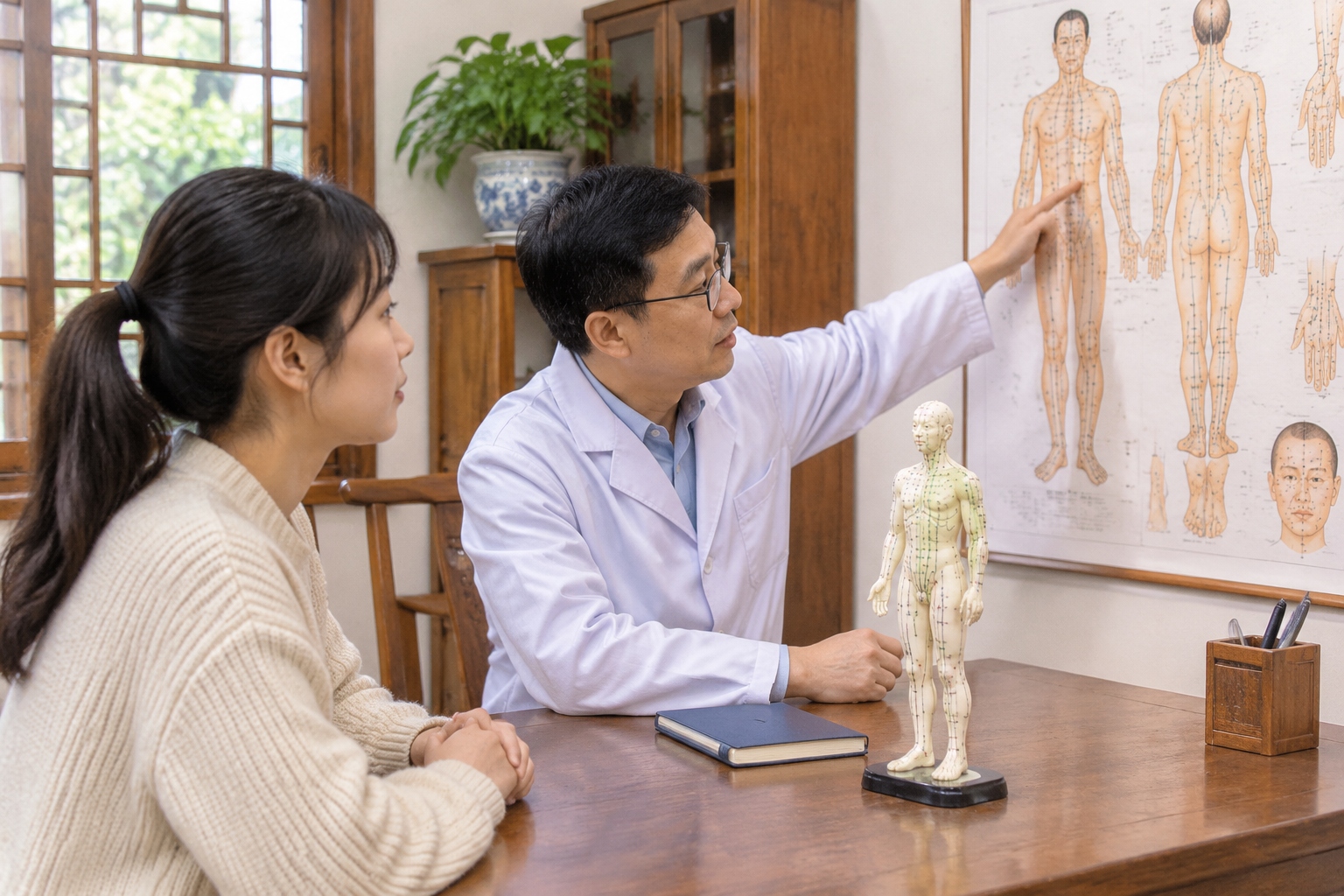
In Chinese medicine theory, the body is mapped by a network of pathways called jingluo (经络) — usually translated as “meridians and collaterals.” The main channels, twelve in the standard system, are said to run from the chest to the hands, or from the head down to the feet, connecting the surface of the body with internal organs. Along these pathways sit roughly 360 standardized acupoints (穴位, xuewei), each with a name and a location measured in body inches.
The language used to describe this system is functional. Meridians are said to “transport qi and blood,” “connect the interior and exterior,” and “regulate” the body. In classical texts, illness is often explained as a blockage or imbalance in this flow. Needling a point is described as adjusting it — moving stagnation, clearing heat, supplementing deficiency.
But here is the crucial point that gets lost in translation: the meridian system is not presented in Chinese medicine as a second, invisible set of organs hiding inside the body. It is better understood as a model of relationships — a way of describing how different parts of the body seem to influence one another, using the vocabulary available at the time.
When a doctor treats lower back pain by needling a point near the ankle, she is not claiming there is a tube running from the ankle to the back. She is applying a map that says: this point and that region are connected.
Where the Model Meets Modern Anatomy
Modern anatomy does not find meridians. Dissection reveals nerves, blood vessels, fascia, muscles, and connective tissue, but no discrete channels matching the classical descriptions. This is where a lot of confusion begins. Critics sometimes read the absence as proof that meridians are simply invented. Practitioners sometimes respond by insisting meridians are real but undetectable.
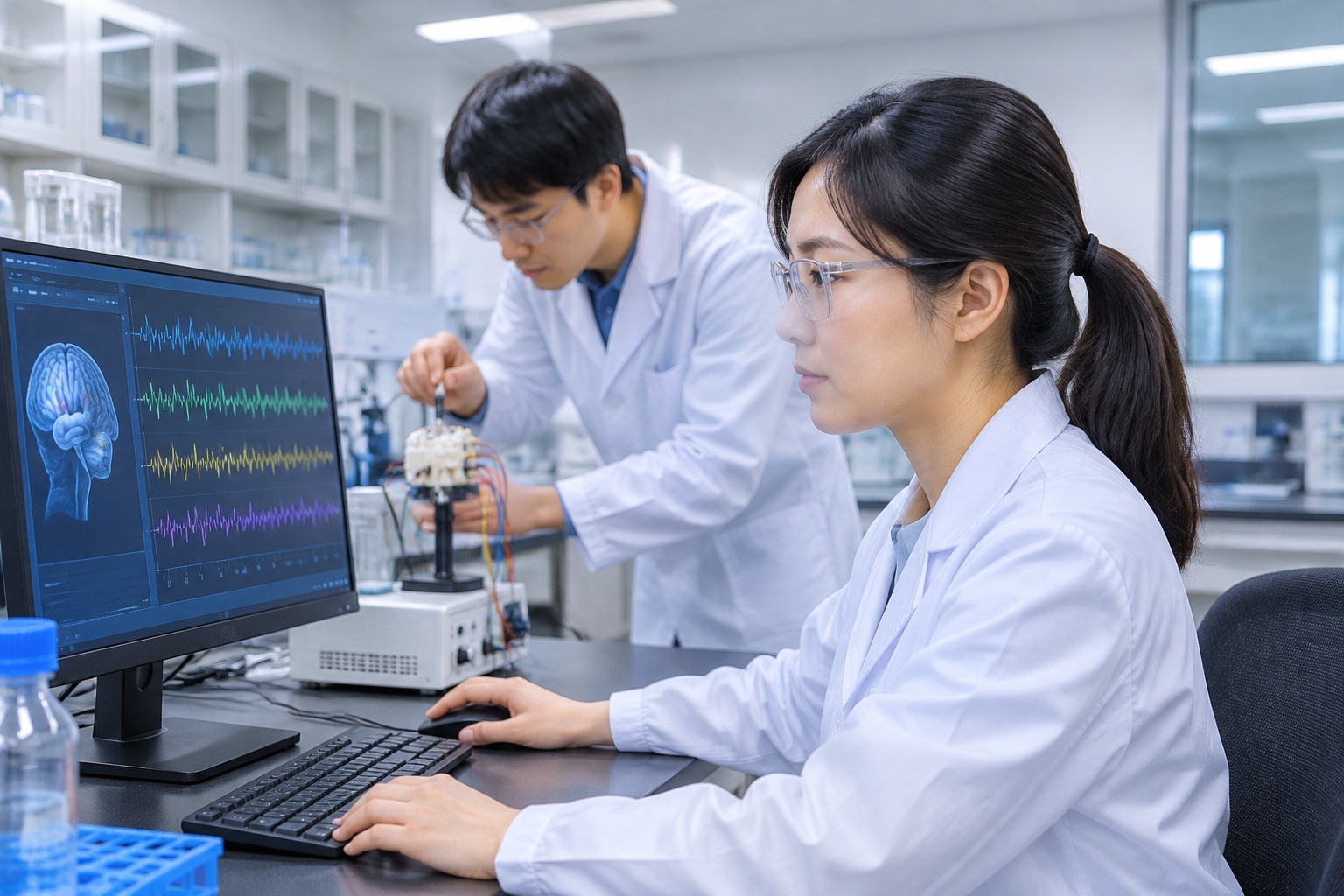
Both readings miss the more interesting middle ground. Over the past several decades, researchers have proposed that acupuncture points and meridians may correspond, loosely and partially, to features that anatomists do recognize. Some point to the concentration of nerve endings and mast cells at acupoints. Others study the role of fascia — the connective tissue that wraps muscles and organs — as a possible substrate for the “pathways.” Imaging studies have found that stimulating certain points produces brain responses in regions associated with pain processing, but these responses are not unique to acupuncture; they can also follow sham needling.
The honest summary is this: the meridian model and anatomical structures do not line up one-to-one. Some points sit near major nerves; others do not. The model’s value is practical and historical, not anatomical.
What Clinical Research Actually Shows
Acupuncture has been studied more than almost any other traditional therapy. The results are mixed, and the quality of evidence varies widely.
For some conditions, the picture is relatively consistent. Systematic reviews — including those by Cochrane — have found that acupuncture probably reduces pain for chronic low back pain, tension-type headache, migraine, and knee osteoarthritis, with effects that are modest but often comparable to standard treatments. For chemotherapy-induced nausea, several reviews support a benefit.
For many other conditions, the evidence is thin. Studies of acupuncture for infertility, weight loss, or smoking cessation have produced inconsistent results, often because of small sample sizes and weak designs. A recurring problem is the difficulty of designing a good placebo: patients can usually tell whether a needle has pierced the skin.
Mechanism research has made progress without settling the debate. A widely cited 2010 study in Nature Neuroscience reported that adenosine, a local signaling molecule, accumulates in tissue during needling and appears to contribute to the analgesic effect in mice. Other work has explored how electrical stimulation at certain points may activate the vagus nerve and trigger anti-inflammatory reflexes. These are real findings, but they explain specific effects in specific settings — they do not validate the entire meridian system.
That distinction matters. “Acupuncture stimulates adenosine release in local tissue” is a research conclusion. “Meridians carry qi” is a theoretical description. They belong to different kinds of claims.
Acupuncture Abroad: Clinics, Insurance, and Patient Experience
Outside China, acupuncture has followed a different path. In the United States, it is licensed in most states, practiced by both physicians and non-physician acupuncturists, and increasingly covered by insurance. In 2020, Medicare began covering acupuncture for chronic low back pain — a policy shift that surprised some observers and reflected years of lobbying and accumulating evidence.
In Europe, coverage varies widely. Germany’s statutory insurance covers acupuncture for chronic back pain and knee osteoarthritis. In the UK, the National Health Service offers limited acupuncture, mostly for pain, through some pain clinics.
Patients often describe benefits that are hard to capture in trials. In survey after survey of acupuncture users, many report improved sleep, reduced stress, and a sense of being cared for — effects that blur the line between specific treatment and the ritual of care itself. Skeptics note that these are precisely the kinds of outcomes that placebo-controlled trials are designed to filter out.
Both observations can be true at once. Acupuncture may relieve suffering through mechanisms that are partly physiological and partly contextual. That does not make it worthless. It makes it complicated.
How to Think About It Without Flattening It
The meridian model is not a scientific theory in the modern sense, and it was never meant to be. It is a clinical map, refined over centuries by practitioners who observed patterns in symptoms and responses. Some of those observations have held up under modern testing. Others have not. Many remain untested.
What is least useful is the two extreme positions: treating acupuncture as an ancient secret that modern science is too arrogant to understand, or dismissing it as pure placebo with no possible biological basis. Neither matches the messy reality of the evidence.
A more reasonable stance is to keep two questions separate. Does this treatment help this patient, for this condition? And can we explain why? The first is a clinical question that can be studied and, for some conditions, has been answered positively. The second is a scientific question that remains open.
At the Shanghai hospital, the woman on the bed has her own version of this. She has come three times a week for a month. Her back pain, she says, has dropped from an eight to a four. She does not know whether it is the needles, the rest, or the attention. She is not sure she needs to know.
The needles stay in for twenty minutes. Then the doctor removes them, drops them into a yellow sharps bin, and calls the next patient.
Start the discussion at forum.chinacomes.com