
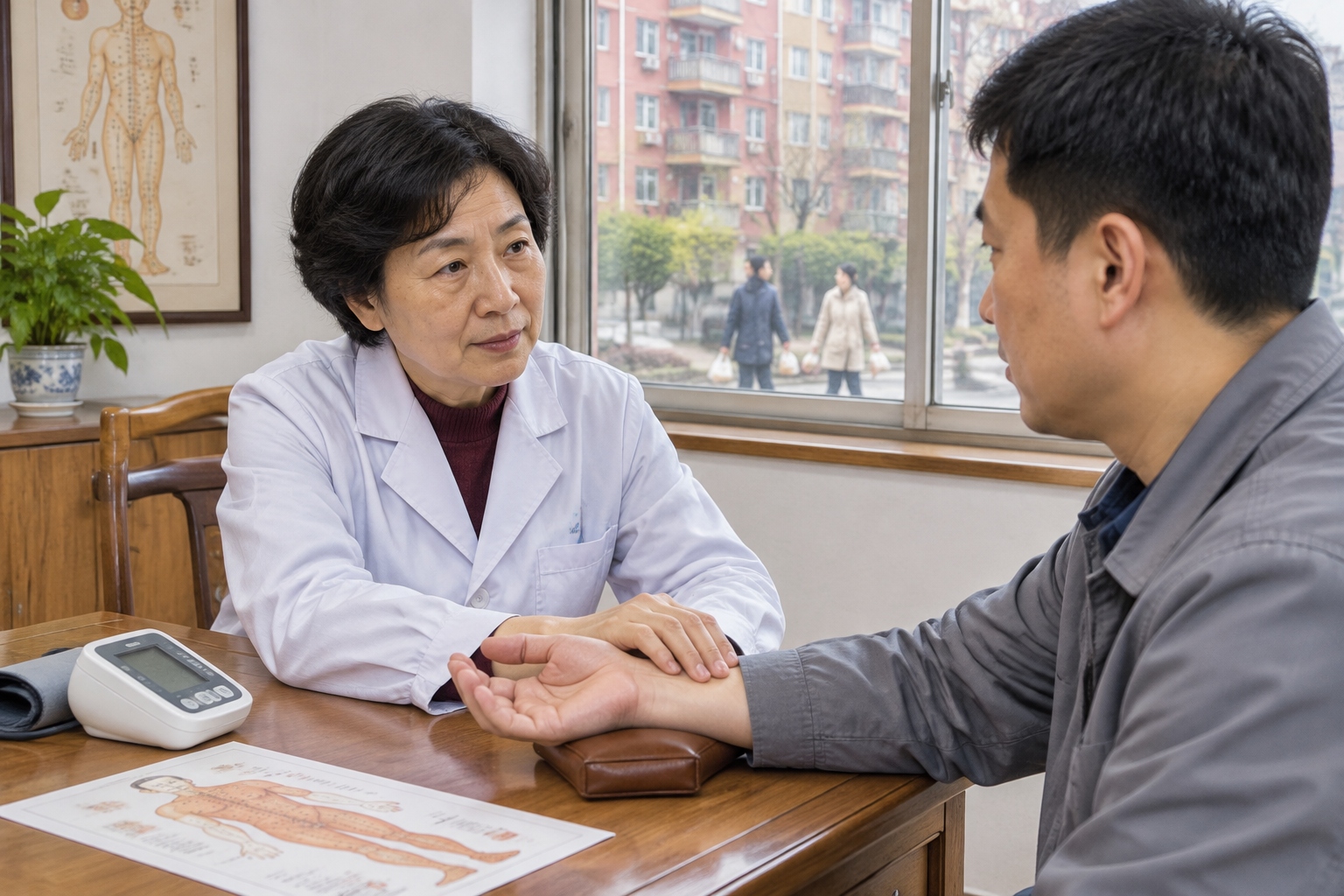

A morning at a Beijing community clinic
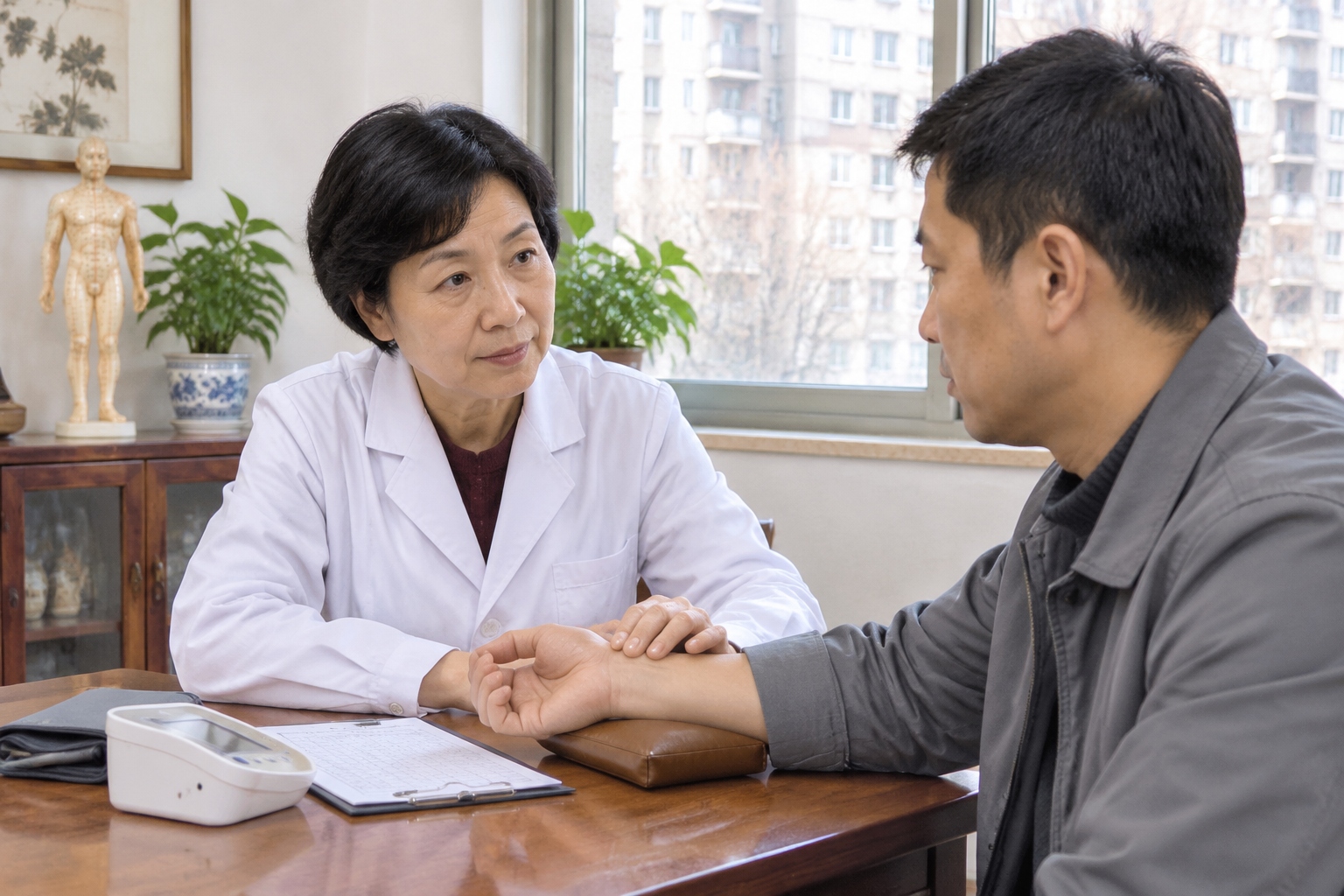
At 8:30 on a Tuesday, the community health center in Beijing’s Chaoyang District is already busy. In a small TCM room, Dr. Zhou, a 52-year-old physician with short black hair and a white coat, presses three fingers to the wrist of a 38-year-old patient, Mr. Chen. A wooden pulse pillow sits between them; a blood-pressure monitor hums on the desk. Outside, residents walk past with breakfast bags.
Mr. Chen has just returned from California. He points to the prescription and asks, ‘So is this kidney deficiency the same as kidney disease?’ Dr. Zhou laughs. ‘That is the question everyone brings through the door.’
If you come from the US or Europe, your mental model of medicine probably runs on pathology and treatment targets: a blocked artery, a bacterial infection, a tumor. TCM often speaks another language. That gap produces the questions overseas readers ask me most: Are the five organs real organs? Is yin-yang just metaphysics? Can pulse reading diagnose everything? If herbs are natural, are they safe? What is this detox everyone talks about? Do TCM and Western medicine actually work together?
This article takes those questions one by one, not to declare a winner but to explain where the systems differ, overlap, and run into limits.
Five organs are not five plumbing parts
The first misunderstanding is anatomical. In TCM, the five zang organs — heart, liver, spleen, lung, and kidney — share names with Western organs, but they are not identical categories. They describe functional networks more than isolated structures.
The TCM spleen is not just the organ that filters blood. It is closer to a system of digestion, absorption, and energy production. The TCM kidney includes growth, reproduction, bone health, and what old texts call essence. When a TCM doctor says kidney deficiency, they are not saying your kidney is failing. They are describing a pattern of fatigue, lower-back soreness, poor sleep, or low stamina that clusters around the kidney network.
The words are false friends. A Western doctor hearing heart thinks of the pump and coronary arteries. A TCM doctor may think of circulation, sleep, emotion, and the tongue. Same word, different map.
That makes TCM pattern-based rather than vague. Diagnosis is a constellation of signs, not a single lab value. The weakness is that the language can sound poetic and imprecise. The strength is that it can organize symptoms that do not fit neatly into one organ system.
Yin and yang are not a belief system
Overseas readers often ask whether yin-yang is religion, philosophy, or metaphor. In clinical practice, it is a relational language. It describes pairs of opposite but connected qualities: hot and cold, dry and damp, activity and rest, contraction and expansion.
A patient with a red face, thirst, constipation, and a rapid pulse may be described as having heat. A patient who feels cold, tired, and has a pale tongue may be described as having cold. These are not moral judgments. They are shorthand for clusters of signs and a direction of imbalance.
Compare it to how Western medicine uses inflammation or metabolic syndrome. Neither is a single disease. Both bundle symptoms, mechanisms, and risk. Yin-yang works similarly, though its evidence base and measurement tools are different.
The problem comes when the language is stretched into marketing. Balancing yin and yang can mean anything from sleep hygiene to an expensive tonic. In a real clinic, the terms should be tied to a specific person, pattern, and treatment plan.
Can pulse reading diagnose everything?
No. Pulse diagnosis is one part of the four diagnostic methods in TCM: looking, listening and smelling, asking, and touching. A good TCM doctor spends more time asking questions than holding your wrist. The pulse adds information about rhythm, strength, depth, and quality. It does not replace a blood test, an ultrasound, or a biopsy.
In China, this is not an either-or argument. At the same clinic, Mr. Chen will get his blood pressure checked, his blood sugar reviewed, and his wrist palpated. If he has severe chest pain, he goes to the emergency department. If he has chronic insomnia and acid reflux that have not responded well to usual care, he may try acupuncture or herbal medicine alongside it.
That is the everyday reality: TCM is not a parallel universe. It sits inside the same health system, with referral lines, prescription rules, and hospital departments. China passed a national TCM law in 2017, and TCM universities teach classical texts alongside modern biomedical science. That does not make every practice effective. It does make the mystical East versus scientific West framing too simple.
Natural does not mean safe
This is where overseas enthusiasm can run ahead of the evidence. Herbs are chemicals. They have doses, interactions, and side effects. Some Chinese herbs can harm the liver or kidneys. Aristolochic acid, found in certain plants, is a known carcinogen and nephrotoxin. Ephedra, used in some cold formulas, has been linked to cardiovascular risks and is restricted in many countries.
In China, herbal medicine is regulated as medicine, not as a harmless tea. Hospitals have pharmacy rules. Doctors are supposed to check interactions with blood thinners, diabetes drugs, and immunosuppressants. Good practitioners ask what else you take. Bad ones may not. The difference matters.
There is also a quality problem. The same herb can vary in strength depending on origin, harvest, and processing. Heavy metals and pesticides are real concerns in some products. My friend’s grandmother takes it is not a safety standard. If you are considering Chinese herbs, look for a licensed practitioner, a clear diagnosis, and a plan for monitoring.
Detox in the clinic and in the mall
In TCM, there are terms often translated as clearing heat or resolving toxicity. They refer to specific patterns: a sore throat with fever, a skin infection, a urinary tract infection. Treatment is targeted and time-limited. It is not a monthly membership.
In the commercial world, detox has become a generic promise. Tea, foot patches, juice cleanses, and herbal pills claim to remove toxins that are rarely defined. This is not unique to China. The global wellness industry does the same. But because TCM language sounds old and authoritative, it can be borrowed to sell products that have little to do with a real consultation.
If a clinic says you need to detox, ask what pattern they mean, what signs they are treating, how long it should take, and what counts as improvement. If the answer is vague, the advice is probably marketing, not medicine.
Two languages, two evidence systems, two goals
The deepest difference is not in the herbs. It is in the logic of evidence. Western medicine typically asks: does this drug, compared with a placebo, improve a defined outcome in a randomized controlled trial? TCM often asks: does this formula, adjusted to this patient’s pattern, improve the patient’s overall state?
Both questions matter. The first is better at proving cause and effect for a single intervention. The second is better at capturing individualization and complex symptoms. The weakness of the first is that it can miss context. The weakness of the second is that it can be hard to test and easy to exaggerate.
China’s approach has been to try integration rather than purity. In many hospitals, oncologists prescribe TCM for nausea and fatigue during chemotherapy. Rehabilitation departments use acupuncture for chronic pain. Respiratory departments use herbal formulas in some post-viral recovery programs. Some practices have randomized trial support; others do not. The honest answer is that the evidence is uneven.
That unevenness matters. TCM is not one thing. It includes herbal medicine, acupuncture, cupping, massage, dietary advice, and exercise systems like tai chi. Some have stronger evidence than others. Acupuncture has been studied extensively for chronic pain, though results vary by condition and trial design. Herbal medicine is harder to standardize because formulas are individualized and quality control is difficult.
What this means if you come from Europe or the US
Many overseas readers ask why Chinese patients seem comfortable mixing systems. Part of the answer is history: China never had a single medical monopoly. Part is practical: in a busy hospital, patients want options. Part is regulatory: TCM is part of the national health system, not a fringe practice.
But comfort with mixing is not blind trust. Chinese patients argue about doctors. They complain about expensive herbs. They check test results. They go to tertiary hospitals for second opinions. The system is plural, and people navigate it with hope, skepticism, cost calculations, and family advice.
For a visitor, the useful move is to ask better questions. If a TCM doctor says liver qi stagnation, ask what symptoms that explains and what will be measured. If a Western doctor says there is nothing wrong, ask what functional diagnosis might still be considered. The two systems are not competing for the same throne. They are often trying to answer different parts of the same human problem.
A conversation, not a verdict
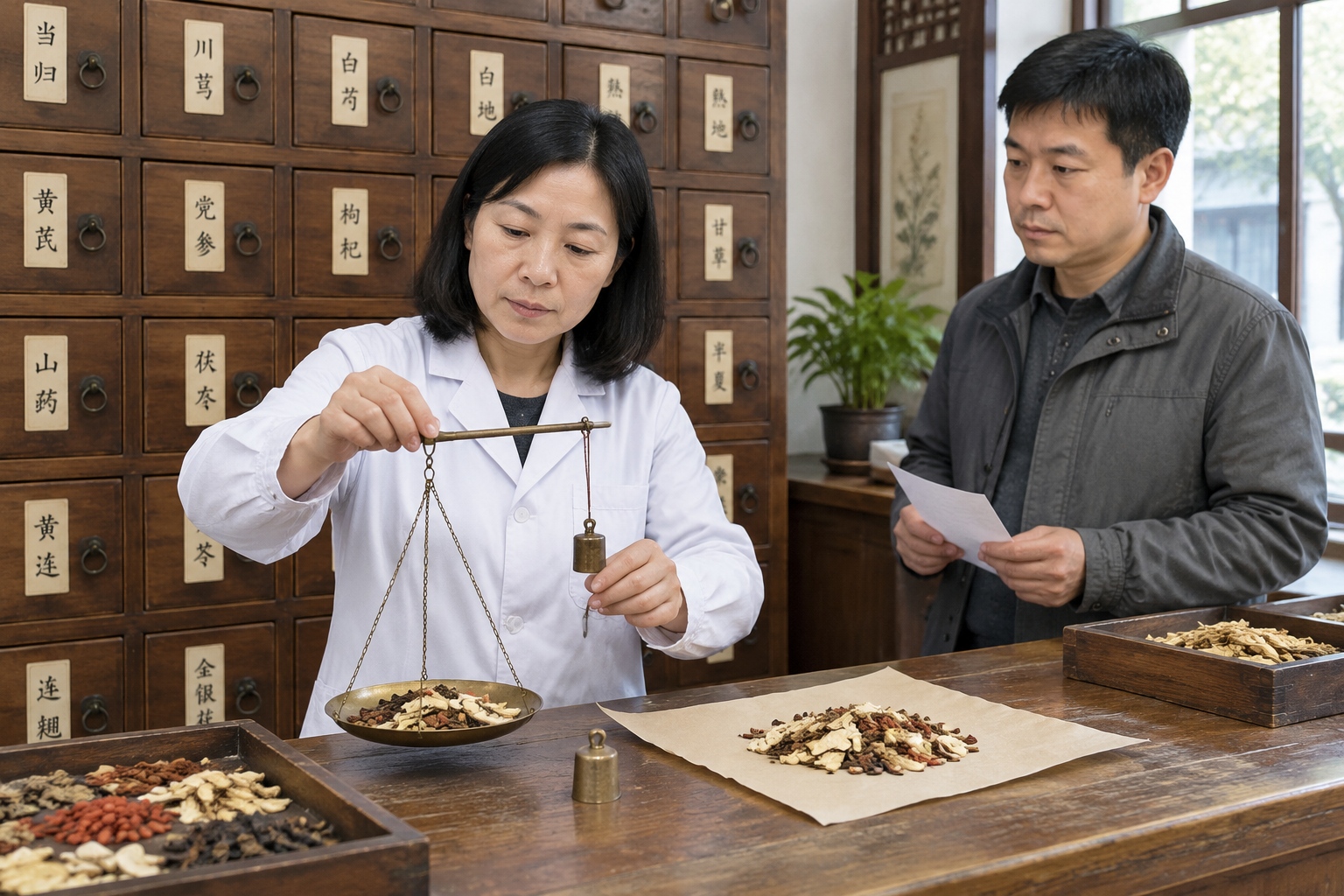
Back in the Beijing clinic, Mr. Chen leaves with a small bag of herbs and a lab slip for a kidney function test. Dr. Zhou has told him to come back in two weeks. She has also told him to keep taking his blood-pressure medication. Neither system has won. The patient has received two kinds of attention on the same morning.
That is probably the most accurate picture of TCM in China today: not a mysterious alternative, not a miracle cure, but a working part of a messy, plural health system. It has real insights, real limits, and real marketing problems. The best way to understand it is not to ask whether it is true in the abstract, but to ask what it does, for whom, and with what evidence.